
By: Jacob Filipkowski, University of Vermont
Most days in Kaziikini start early with morning transects, while the camp crew holds down the fort by prepping lunch and keeping camp in order. By the time the midday heat rolls in, camp life slows down to a steady rhythm of classes, tackling assignments, or just relaxing and heading over to the Mogogelo Restaurant. Evenings wind down with dinner prep and conversations around the campfire under a blanket of stars. The rest of our schedule consists of Community days and Workshop days. Community days give us the chance to immerse ourselves in local culture through hands-on activities hosted by our neighbors, while Workshop days give us the opportunity to teach our wildlife monitoring methods to local community members. Every single day is unique and brings its own flavor of adventure and connection.
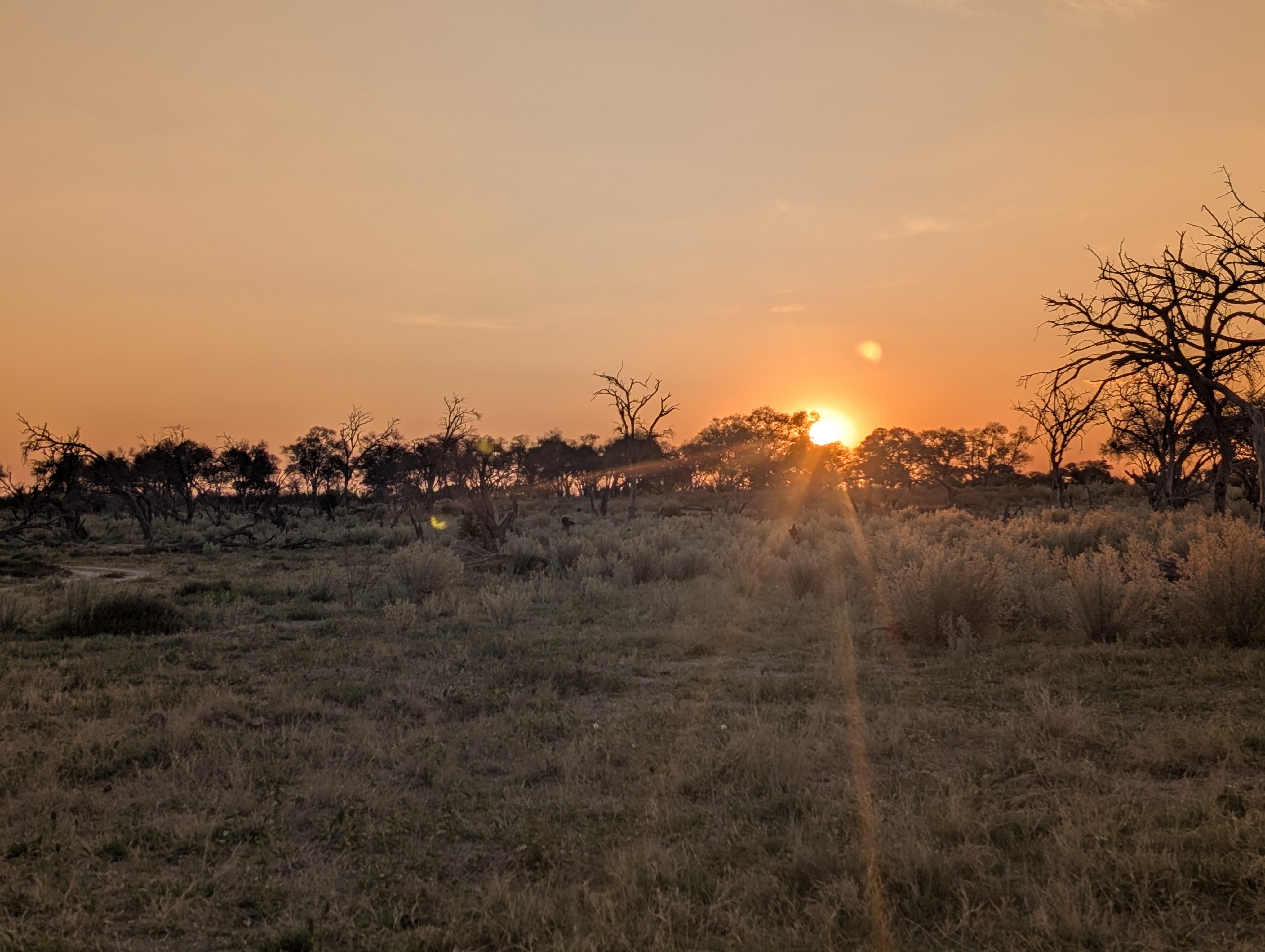
Transect days in Kaziikini started at 5:00am before the first rays of light hit the sand. You are immediately greeted with crisp morning air and an unmistakable chorus of spurfowls calling for the day to begin. After getting ready and scrounging up something for breakfast, we have to conduct vehicle checks to ensure that the trucks have all the necessary gear and are ready for transect. After this is completed, we head out to start the transect just in time for sunrise.
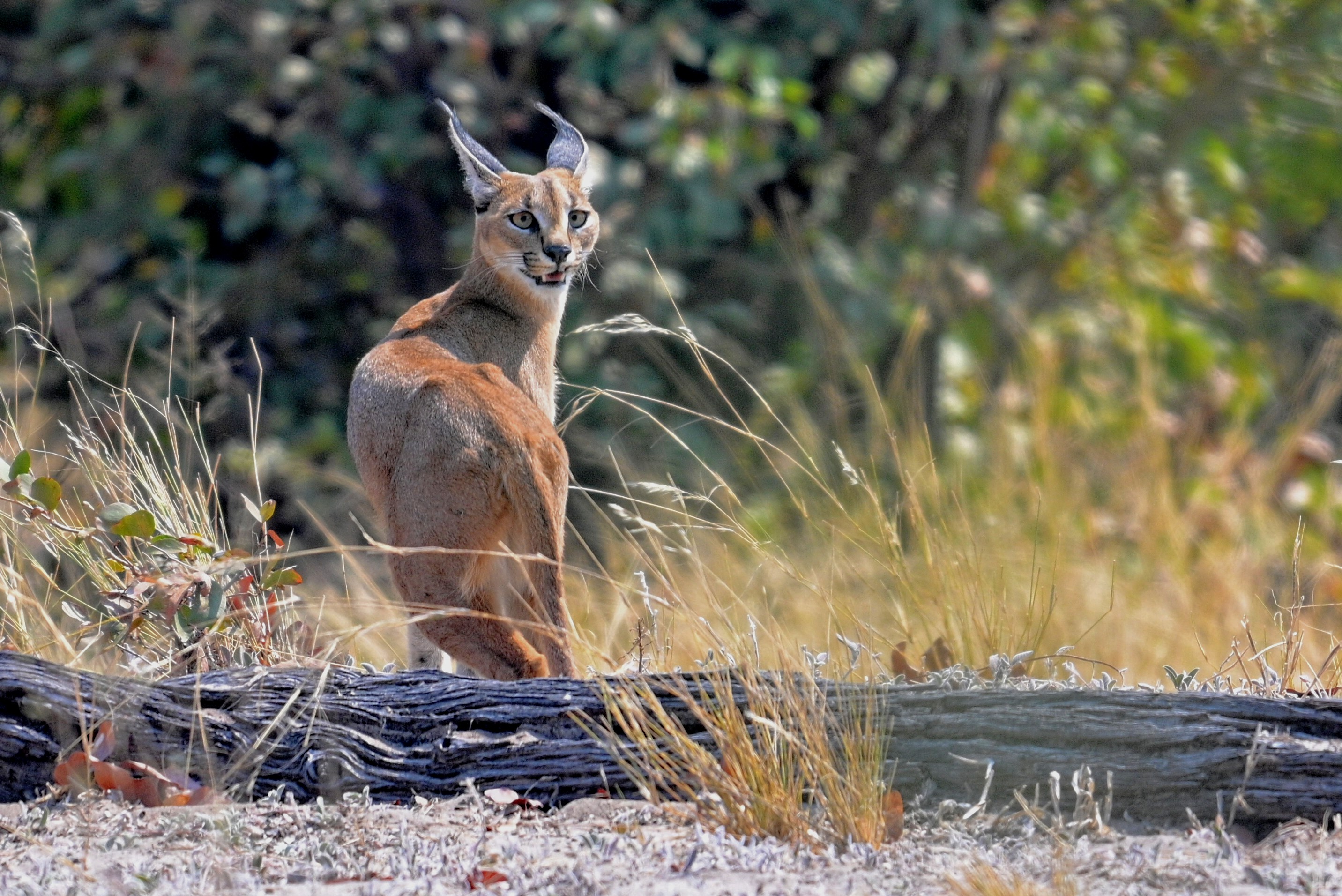
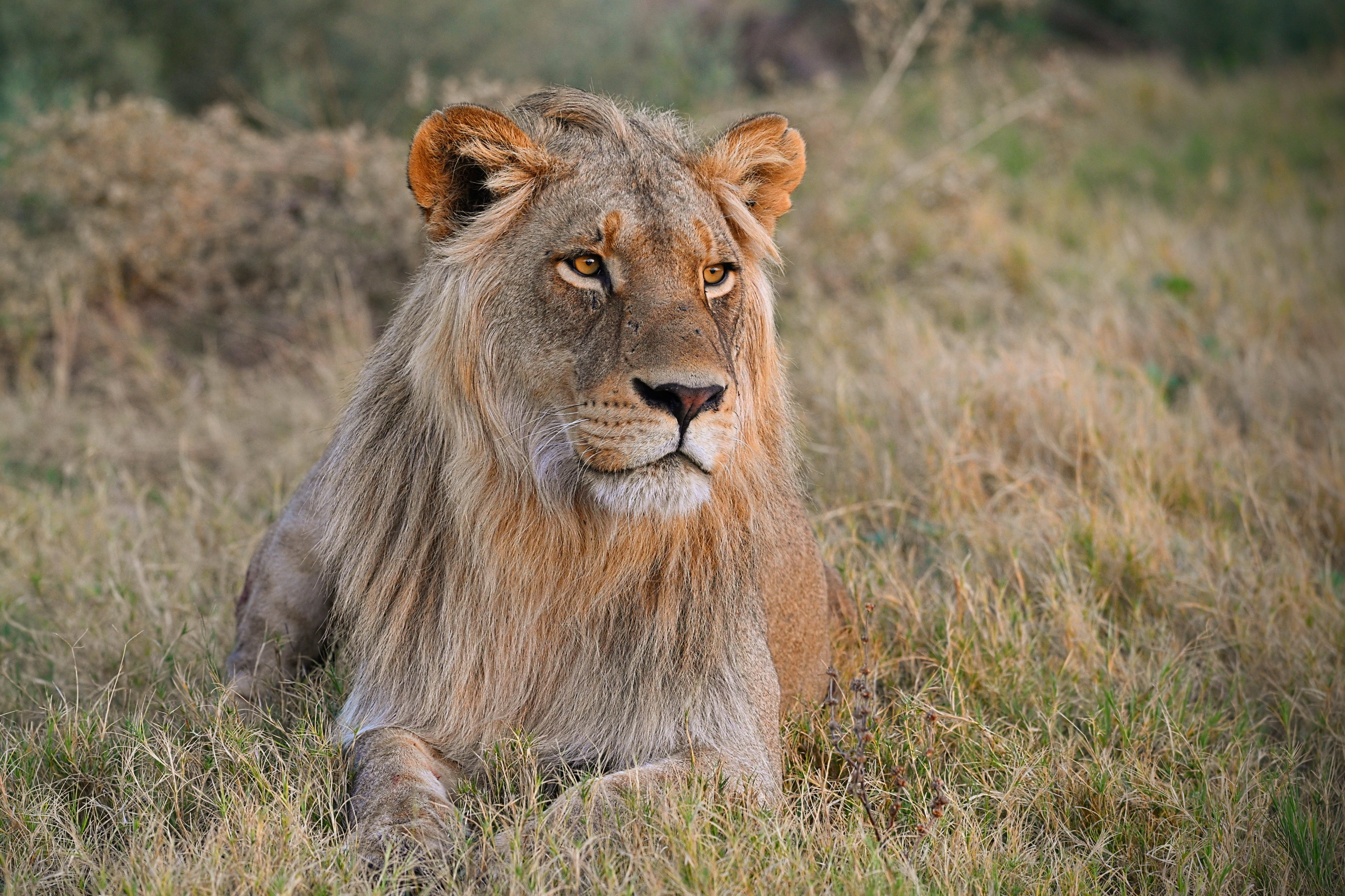
The next roughly five hours are spent slowly traversing our predetermined transect carefully searching for wildlife. While our primary mission is recording herbivores, we also take opportunistic data on any predators and birds of concern. Whenever someone calls out a sighting, we stop the vehicle, record the species, how many individuals, approximate ages and sexes, the GPS coordinate of the vehicle, the distance of the animals from the vehicle, and their angle from North in relation to the vehicle, and the surrounding vegetation type. It is meticulous work that pieces together who is using this landscape and exactly where they are. Some stretches are filled with classic herds of impala and zebra, but the bush always knows how to keep you on your toes. We have had incredible sightings of towering giraffes, flocks of ostriches, an elusive caracal, a pair of bat-eared foxes, and even a pride of lions. Elephants, the true icons of the Okavango, get an even closer look as we record detailed demographic data and age classes before the rising midday heat signals it is time to head back to camp.
After transects, we have to carefully enter our data into our database for recordkeeping.Once all the numbers and coordinates are safely logged into the database, our afternoons shift to coursework. Our academic curriculum here in Botswana covers five core classes: Natural History of Botswana, Applied Conservation Biology, Humans and the Environment, Community Based Natural Resource Management (CBNRM), and Intro to Biological Field Methods. While based in Kaziikini, our focus leaned heavily into Field Methods, Setswana, and Natural History. In Field Methods, we dive into the practical toolkit of wildlife biology—learning essential techniques like camera trap deployment, radio telemetry, diet analysis, and tracking sign through diverse terrain. For Humans and the Environment, Setswana language lessons gave us the foundation to communicate and connect directly with the community members we work alongside. Meanwhile, as part of our Natural History course, SB, one of our local instructors, took us out on nature walks to teach us the names, ecology, and traditional uses of native plants and signs of local wildlife scattered right around camp.
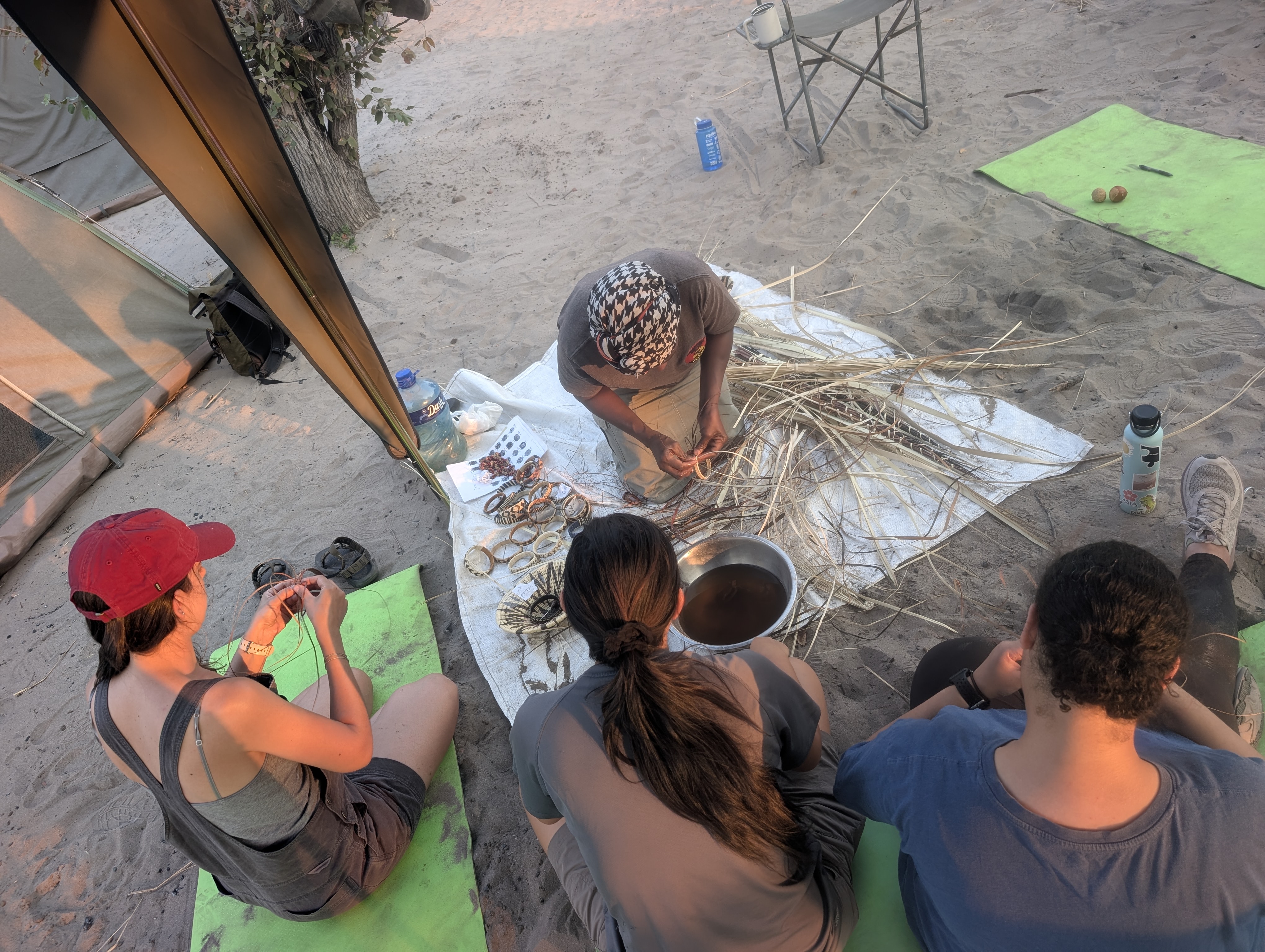
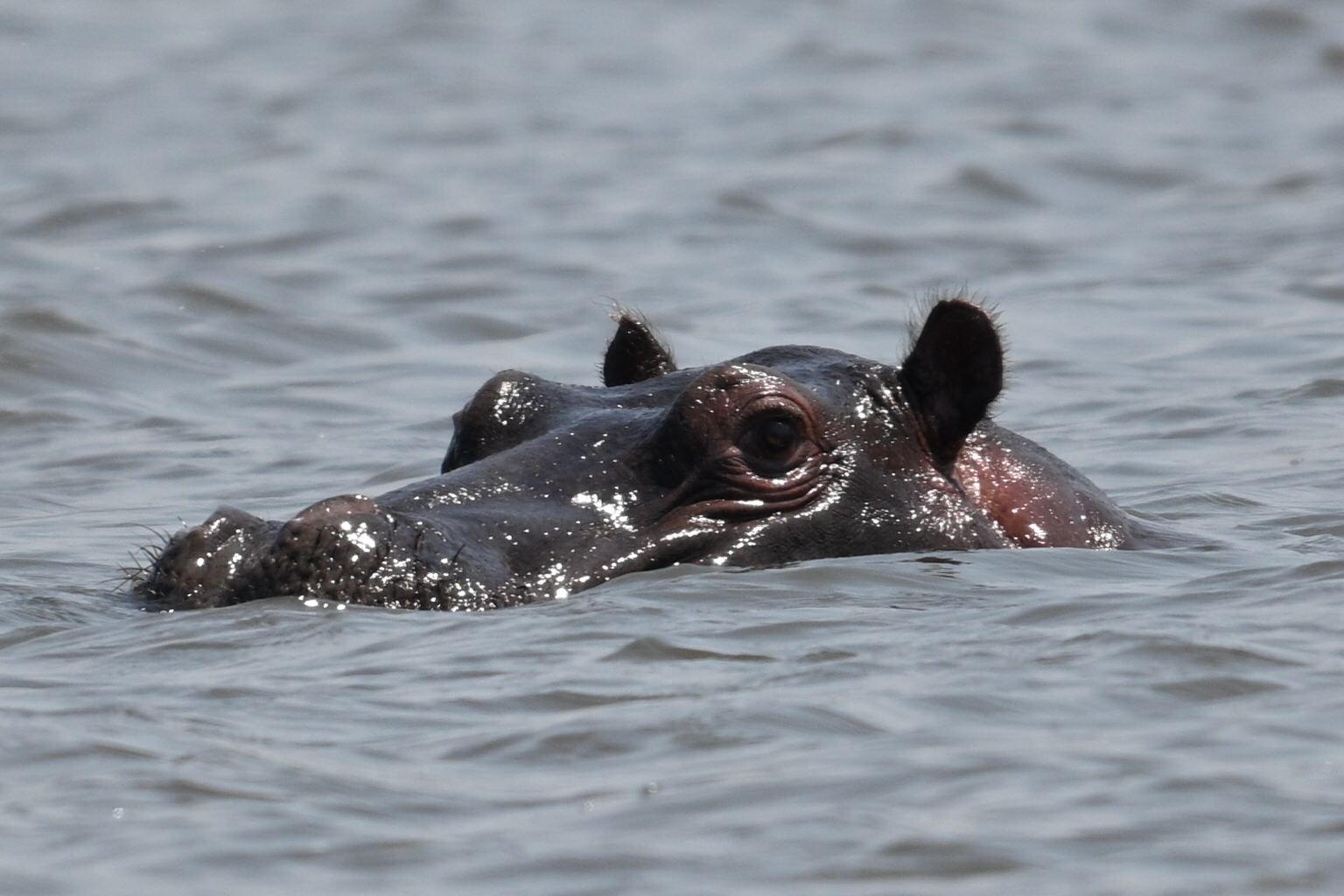
Community days offer an incredible change of pace and a chance to learn directly from the people who call this region home. In Kaziikini, we were taught how traditional basket weaving is done using real fan palm leaves, and were patiently guided through the process of weaving our own wearable bracelet. Another highlight was driving out to the Kaziikini Mokoro Station to take traditional dugout canoes onto the water. Gliding silently through the channels gave us a front-row seat to riparian plants and birds we hadn’t seen on land, not to mention a thrillingly close look at a pod of surfacing hippos! To top off an already unforgettable outing, we got some fresh tilapia, which made for a stellar campfire feast that evening.
Round River’s presence in Botswana stems from an invitation to assist local communities with their wildlife monitoring mandates, focusing heavily on building the skills and capacity for them to lead the effort independently. Workshop days are designed to facilitate this goal by allowing us to share monitoring techniques directly with community members.
Looking back, Kaziikini was an unforgettable first chapter in Botswana. In just two short weeks, the learning curve has been steep, rewarding, and packed with once-in-a-lifetime moments. Watching a pride of lions dialed in for a hunt, catching a rare glimpse of a caracal vanishing into the grass, and navigating the Delta’s backwaters in a mokoro are memories that will stick with me for good. It set an incredible foundation for the rest of our season in the field.