
By: Daniela Thompson, Weber State University
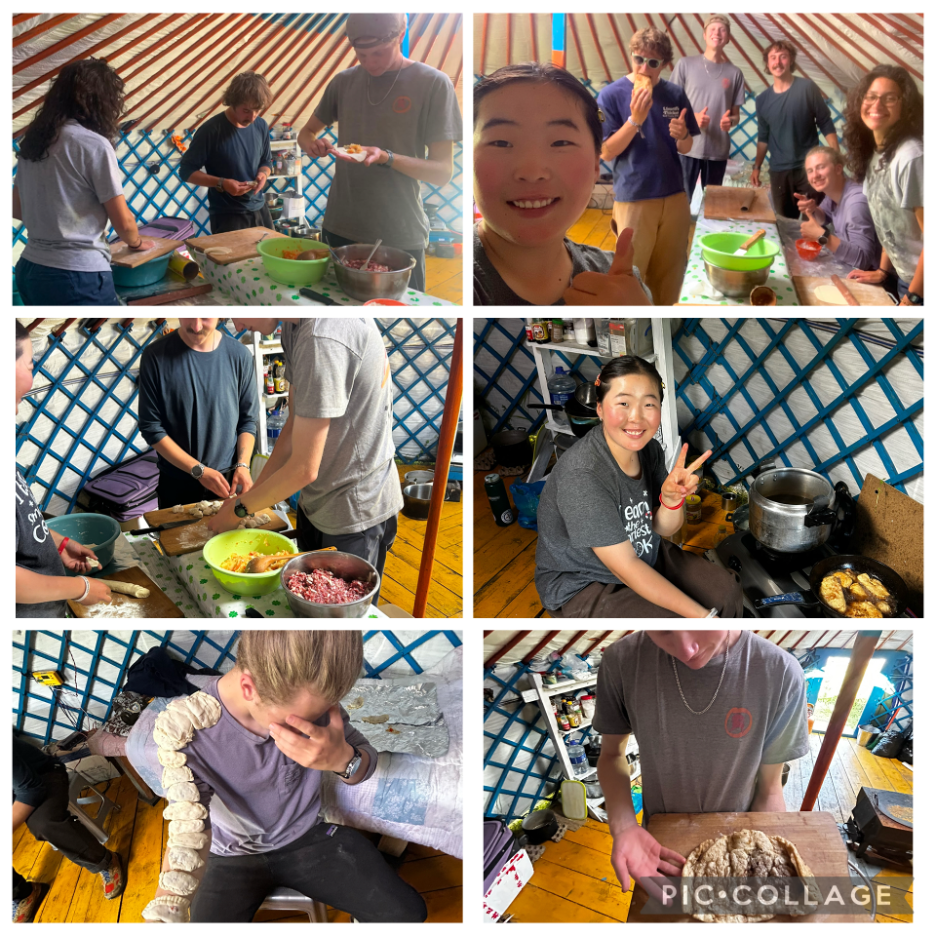
Our last week in the Darhad Valley has been fast and intense. After many days of hard work, analyzing data, writing papers, and editing presentations, on the last day, Degii taught us how to make khuushuurs. It was a great way to end all our hard work, especially since we’ve all been loving the khuushuurs throughout our time in Mongolia. We take any opportunity to eat khuushuurs. Degii taught us how to cut the dough into pieces, roll them out into a circle, and stuff it. We had a lot of fun making them, as well as creating interesting khuushuurs. Logan made the biggest one, that barely fit in the pan and Sam made a bagel with meat in it. There were also various techniques that were used to pinch the dough at the end. Some of us used a fork and others twisted the dough onto itself creating a swirl. By technique, you can obviously tell who were the pros. At the beginning, we were all worried that there wouldn’t be enough khuushuurs for everyone, but in the end that wasn’t a problem at all. There was so many, we even had leftovers.
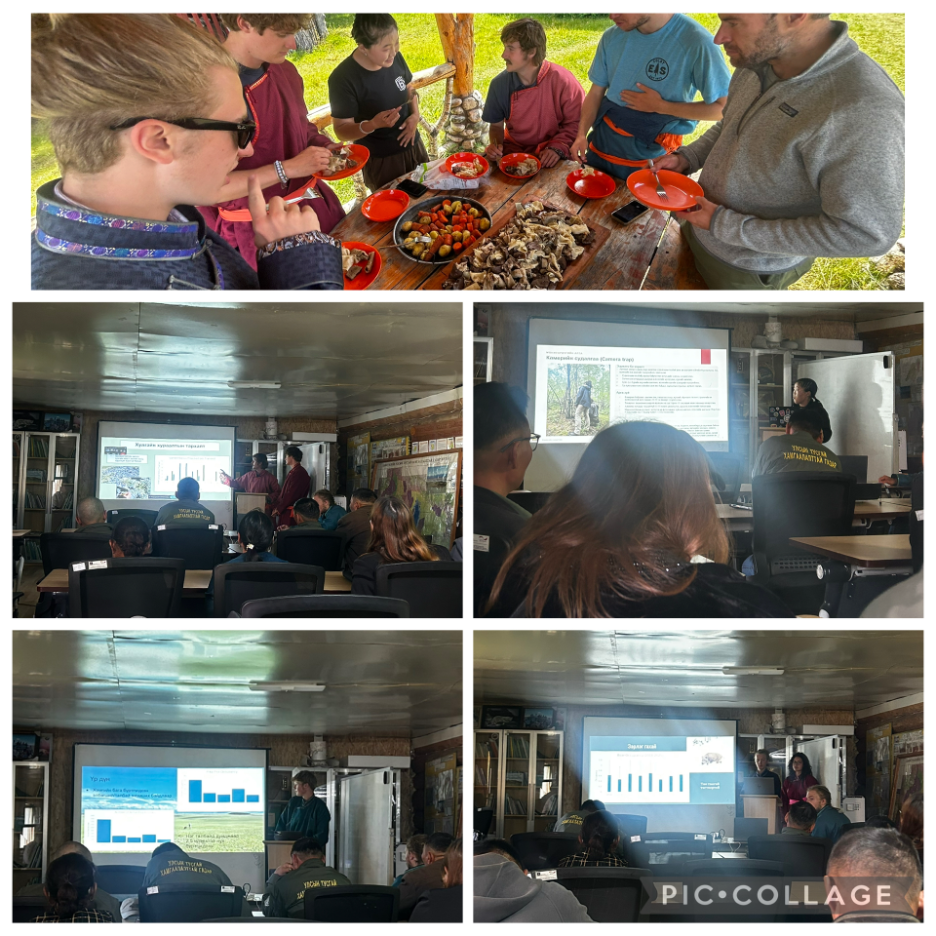
The next day was our big final presentation, where we presented to the locals of Ulaan Uul, including the rangers that have a big role in the protected areas. Sam and I (Daniela) were on the camera trap project, Jacob and Jaden were on the Vansemberuu project, and Logan was very brave to do the pikas all by himself. We all talked about what we did for each project, how it was conducted, the results, and explanations of the results. Sadly we were not fluent enough to present in Mongolian. Badmaa was amazing and translated everything we said during our presentations into Mongolian, even though she was 1000 miles away in the US. The Round River students weren’t the only ones who presented; Degii (our Mongolian cook and Biology student) has been there every step of the way, and participated in every project also presented. She did one big presentation that included pikas, camera traps, and Vansemberuu. Even though we couldn’t understand what she was saying, she did an amazing job at presenting. After we all presented, we were able to relax… the hard part of our semester was over. The next challenge was our lunch, ghetis. It’s a traditional dish that includes the organs (liver, kidney, intestine, blood sausage with lung inside, and heart) of the sheep… just the organs. Whenever they kill a sheep, they eat the organs first, then the rest of the sheep’s meat. Mongolians don’t waste any meat; they eat every part of the sheep, or animals in general. TJ sort of warned us, but all he said was, “OH! That stuff is … hardcore”. It was definitely hardcore. By the words of Jacob, it was “pain, suffering, and infinite chewing.”
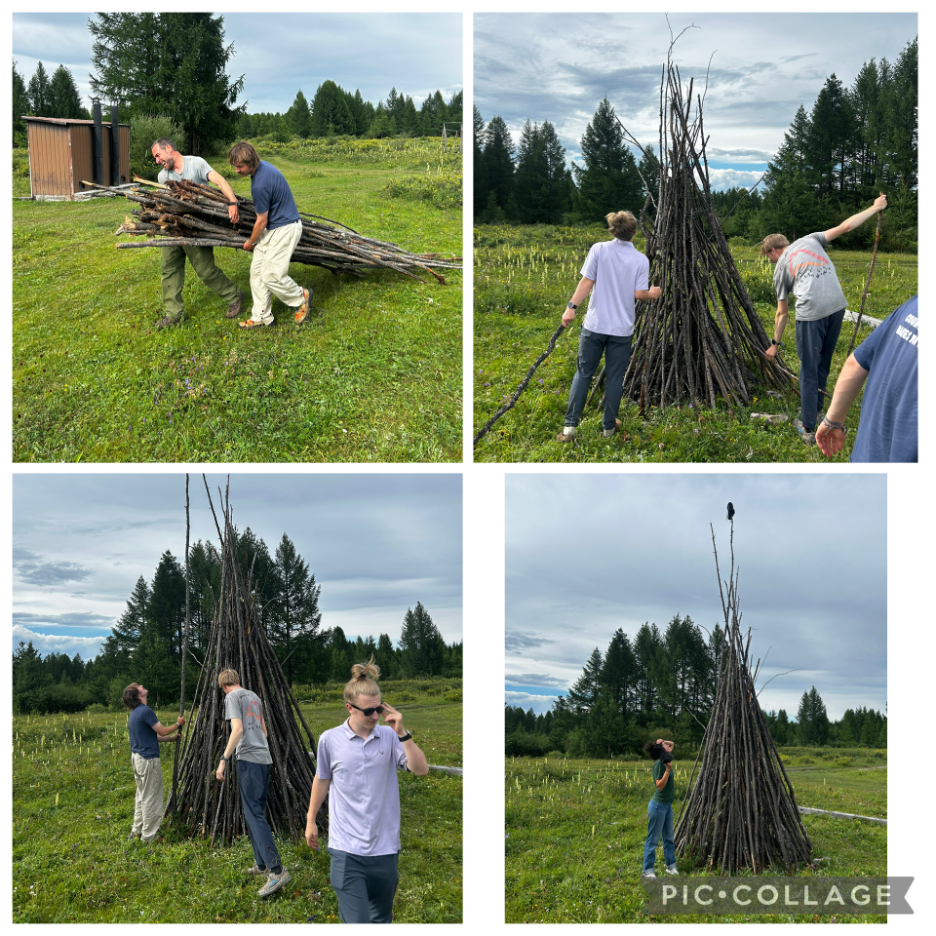
After lunch, we went back to base camp to pack up everything. We also added sticks onto our bonfire. Degii had us go into the larch forest nearby and collect wood. There were many dead young larch trees along the edge of the forest which we were able to bend over to snap. Some of the trees collected were very tall, but they were all pretty small in diameter. We made a huge pile and tried to bring it back with Degiis motorcycle, but it wasn’t working. So two strong men, Bob and Jaden, hauled the large pile around base camp to the bonfire. The rest of us grabbed the stragglers and were able to easily carry the rest over. I did have the tragedy of my shoes catching on fire during our prior Har Ost trip, so as a big final goodbye to my shoes, we placed one of them on the tallest branch.
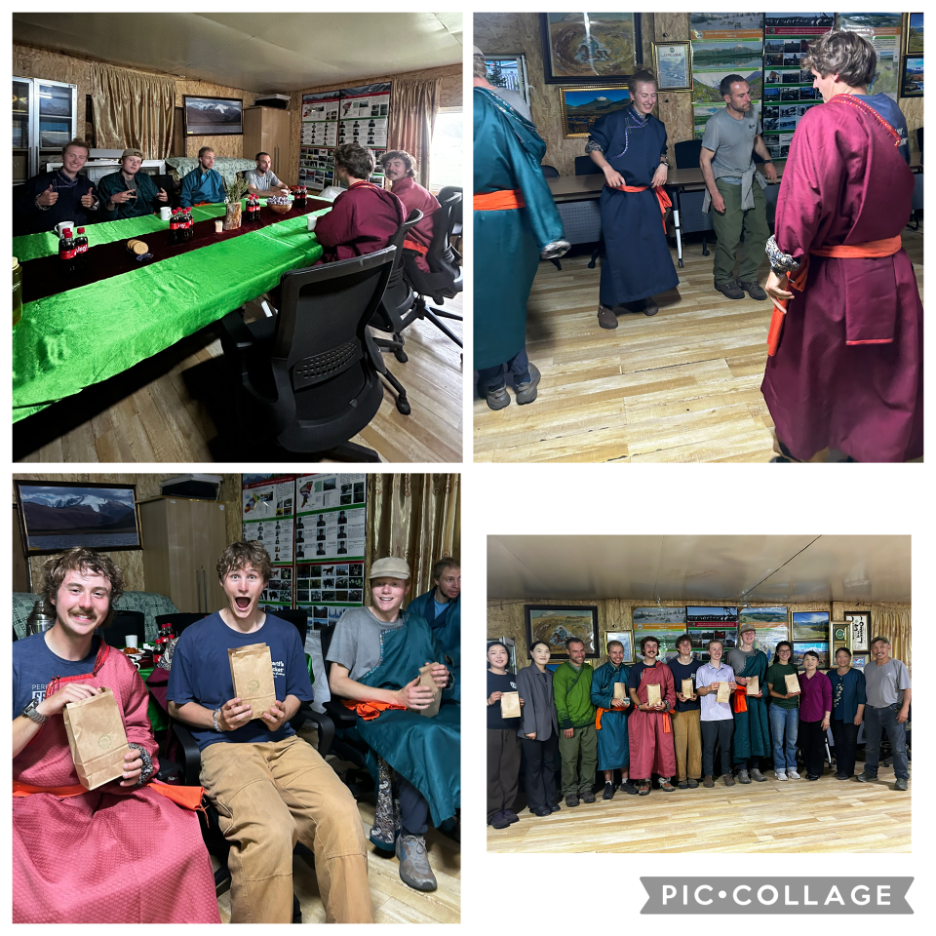
The same day, we came back to the research center to have dinner with a few of the locals, and partyyy!!! Since we had the organs of the sheep for lunch, for dinner we had the rest of the sheep. We all tried sheep’s tail for the first time… it’s just pure fat. Sam found that he really liked it, and probably ate more of it than anyone else. After eating dinner, we had a little dance party. Even though there were few people, we still had a lot of fun, and everyone (including the rangers) was dancing, no one was sitting down. The Mongolians played rave/party American music, which was fun, then switched over to traditional Mongolian music, which we danced the Russian Waltz to. They played the music interchangeably between these two genres. Degii had already gave us a little lesson on how to do the Russian Waltz, so we weren’t completely in the dark. At one point, they had a little break to give us gifts. They called each of us up and handed our gifts to us, including amazing yak socks, magnets, and stickers. The yak socks were very nice and was what people were most excited about. We continued to dance afterwards, and even did karaoke.
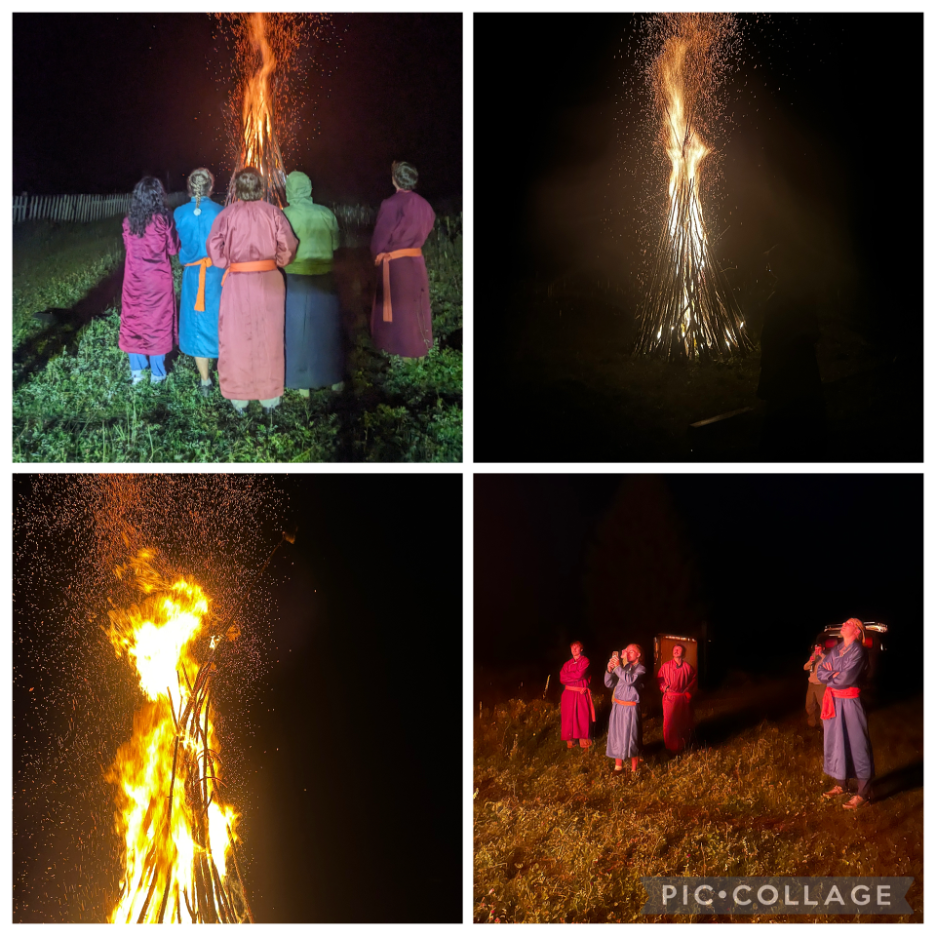
It’s a tradition that on the last night, and the night of the presentations, a big bonfire occurs. It was definitely a huge bonfire. My shoe was still on top, but it didn’t go up in flames according to plan. We all thought the fire would climb up and burn it, but instead, the branch broke before the fire could reach the shoe and it fell onto to the floor. It was kind of tragic that it didn’t have its moment, but I still threw it in the fire. We continued to watch the fire burn until it turned to coals. As we watched the fire burn, we all shared a favorite moment and something we will be taking with us from this experience. We all shared great moments we’ve had with each other, and memories of what it was like to first arrive, transitioning to camping with no running water or legit toilet, and now transitioning back.
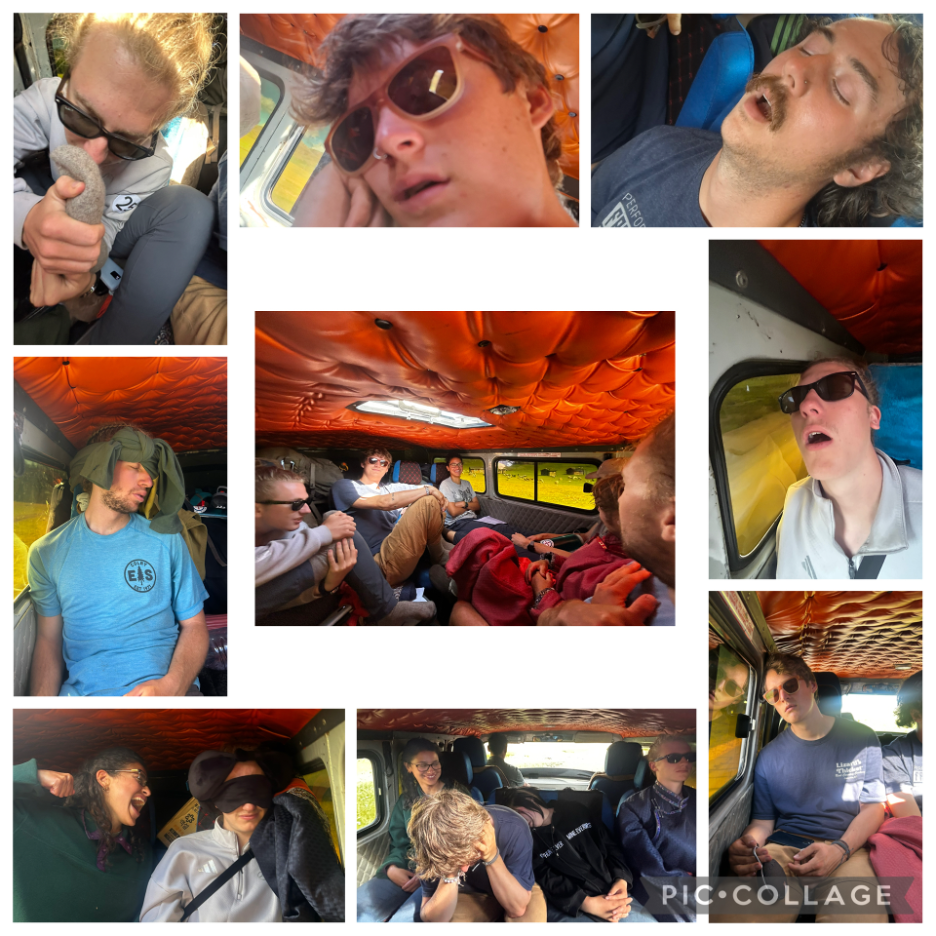
The next 2 days was traveling back to Ulaanbaatar. In total, we spent about 19 hours in the fergon van over the course of 2 days. The first day we drove a little past Murun, and the second day we went straight to Ulaanbaatar. Of course during a long drive people are going to fall asleep, and if you fall asleep, there is a risk of a photo being taken of you. As you can see, there were many moments of us falling asleep. Over time the fergon feels a little tight and small, especially since it was a full car. There was a lot of moving around and shifting. To entertain ourselves we would choose a song on the playlist and guess how many songs it would take until the chosen song was played. The playlist was sorted in alphabetical order, so it was a little easier to guess how many songs it would take. We were also on the look out for the Ruddy Shell duck (RSD). It has been many weeks without seeing them and two of us needed a sighting for our Grinell Journal species account. Fortunately, we came across them, but just once out of the whole drive. We eventually made it to Ulaanbaatar late that night. One of the first things we noticed was how loud it was compared to Ulaan Ul.
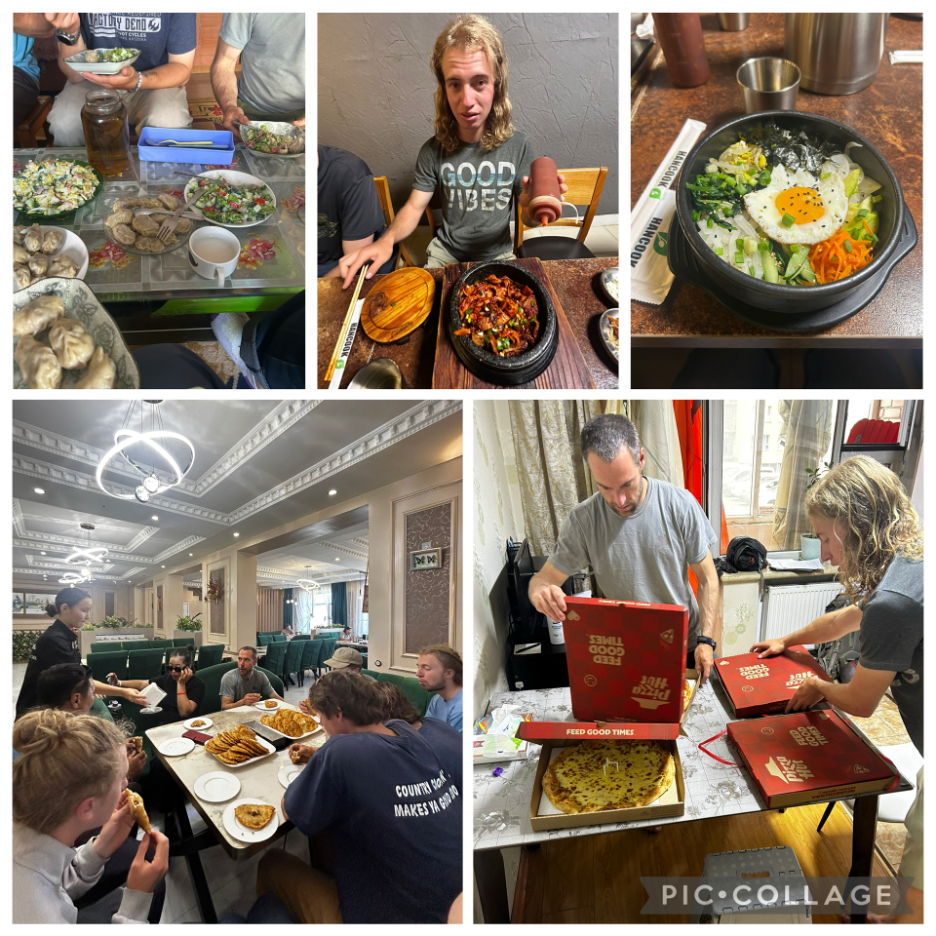
Of course we ate some khuushuurs one last time in Mongolia on the way back, and it was soooo good. I’m definitely going to miss eating them. In Murun, we stopped at Badmaas mother in laws house for dinner and she served amazing food. It was also one of the first times we’ve been able to eat fresh salad in 6 weeks. We all finished the salad bowl. The very first meal we had back in Ulaanbaatar was Pizza Hut… very American of us. The second was Korean bibinbop which was delicious. Sadly TJ ordered something that he did not like (cow intestine???) and wasn’t able to finish his dish. It is very rare for TJ to turn a dish away, so it was a shocker that he couldn’t finish it.
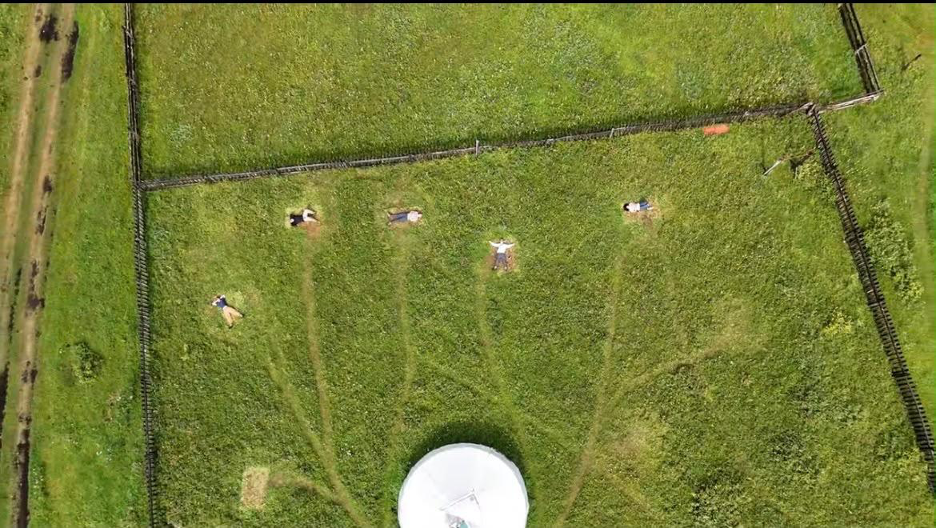
Being in Mongolia with these people was an awesome, once-in-a-lifetime experience. Over the past 6 weeks, we got closer, learned how to work with each other, and had a lot of fun. We learned so many new skills including camera trapping, field work, surveying, and collecting data in various habitats. We all have talked about coming back to Mongolia; hopefully it comes true in the future. We will miss Mongolia, all the people we’ve met, and the memories and friendships we’ve made. This picture shows where each person set their tent up and all of their own paths over the past 6 weeks.