This past spring, students in our Patagonia and Botswana cohorts joined ongoing research initiatives with our partner organizations, contributing to fieldwork and data collection on topics ranging from elephant habitat preference to guanaco population trends. Early in the term, each student selected one initiative to pursue in greater depth as their capstone project. Over the course of the semester, they built research skills in the field and worked toward findings that would directly inform our partners’ conservation efforts. By the end of the program, each student produced a written research report and presented their report to our partner organizations.
We’re excited to share these capstone projects and presentations from our Spring 2026 Patagonia and Botswana students.
Patagonia, Chile
During their semester in Chile, students worked across Patagonia National Park and surrounding public lands, collecting data to support the conservation initiatives of our local partners, Corporación Nacional Forestal (CONAF) – the Chilean National Forest Service, Rewilding Chile, and Raíces de Calafate.
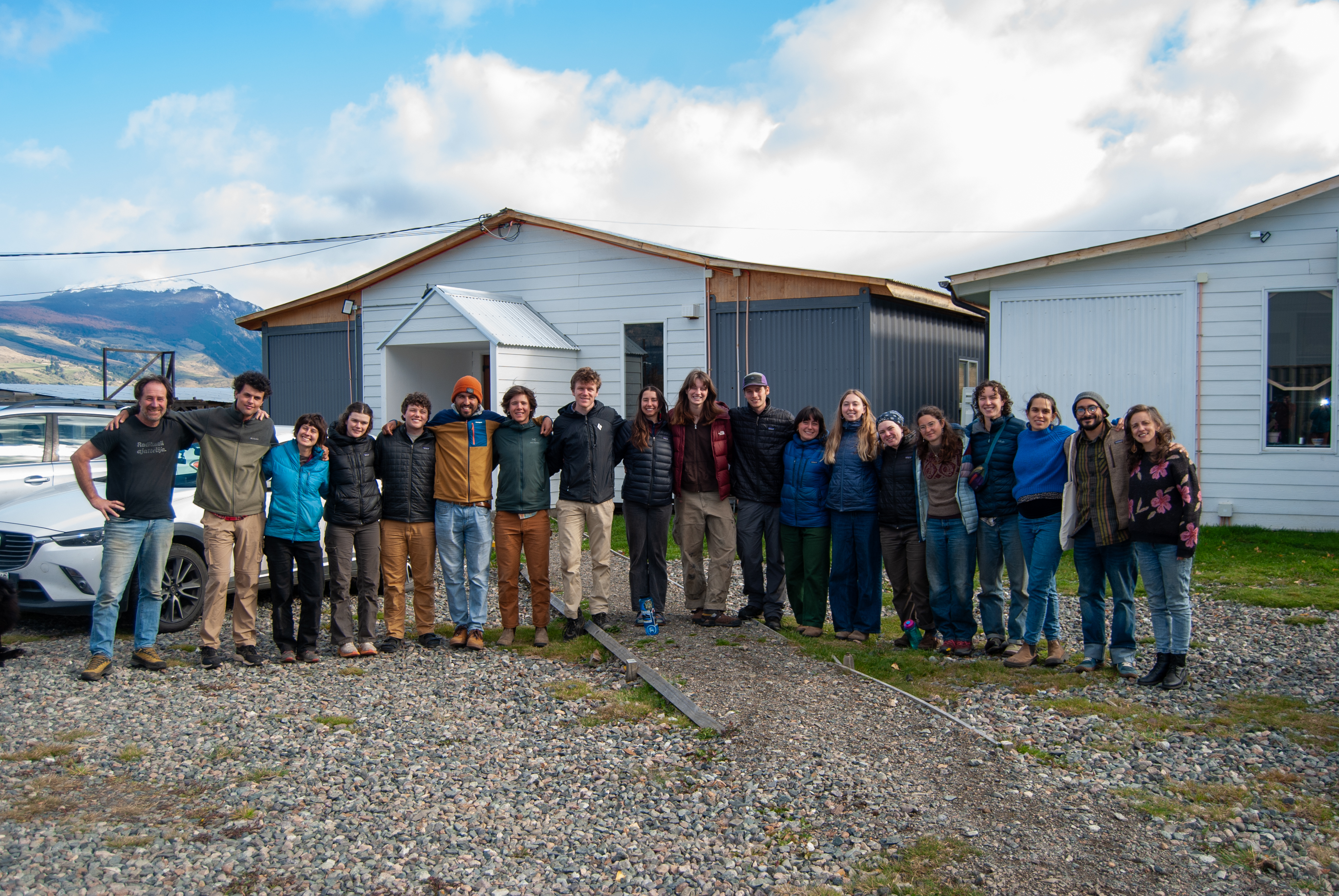
Their efforts culminated in a poster presentation to staff scientists at Chile’s Centro de Investigación en Ecosistemas de la Patagonia (CIEP) or the Patagonia Ecosystems Research Center. Students fielded questions and received feedback from CIEP’s scientists, getting valuable outside perspective on their research. Explore their research topics and poster presentations below!
Guanaco & Ñandú Population Trends
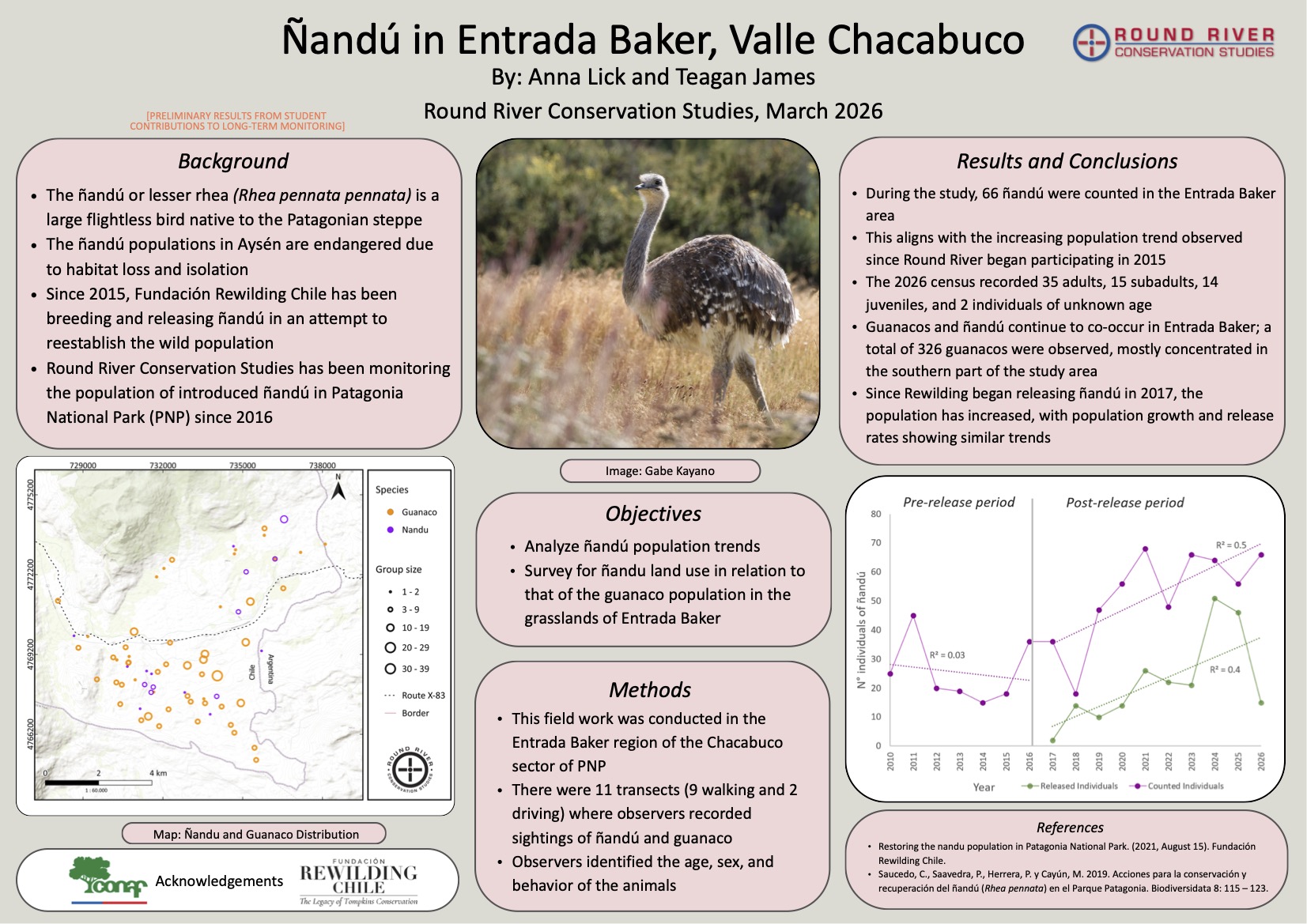
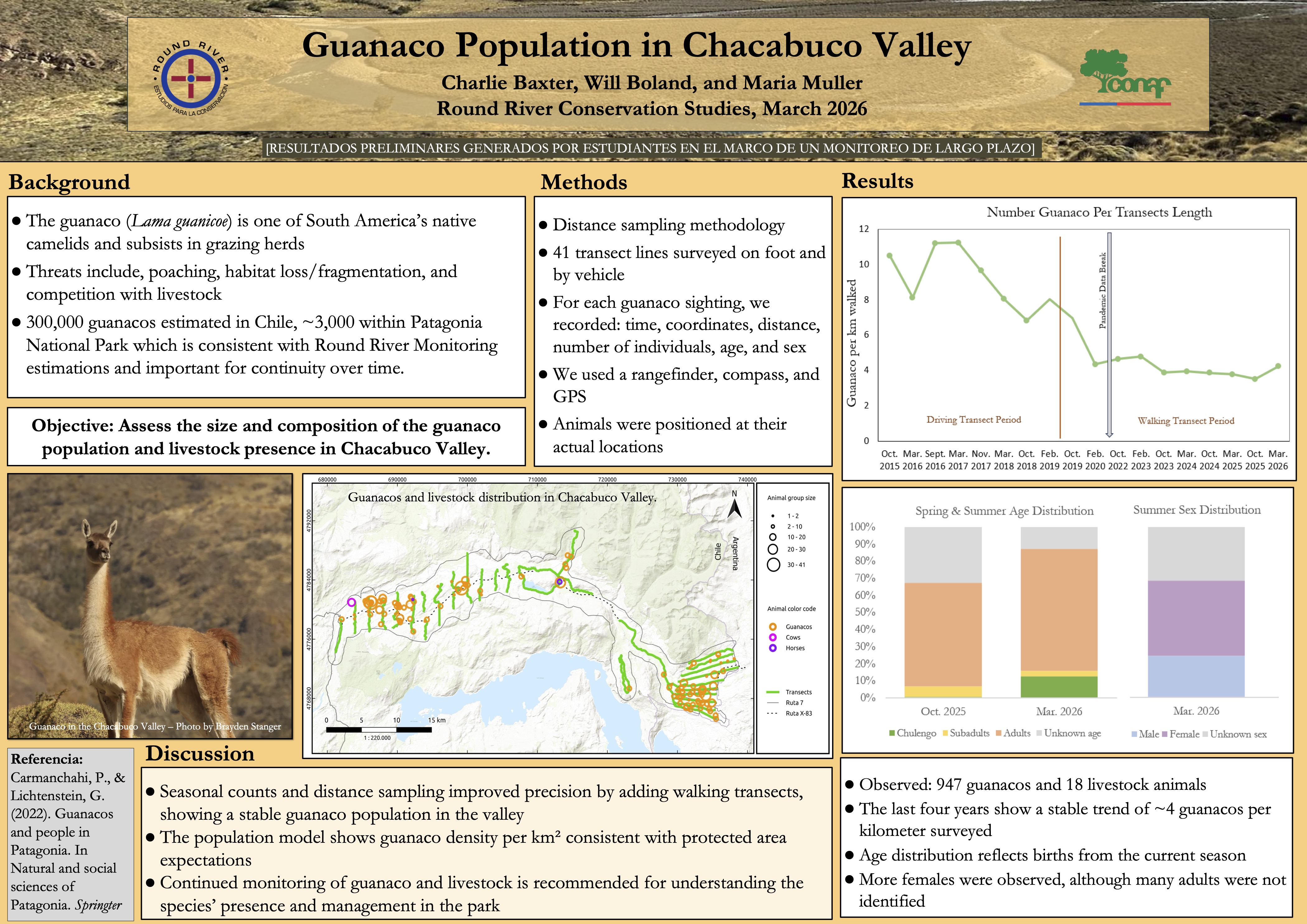
In the Chacabuco sector of Patagonia National Park, data collection lent insight into the population trends of two significant taxa: guanaco (Lama guanicoe), and ñandú or lesser rhea (Pennata pennata). For the past decade, students have contributed to the monitoring of these species as the Chacabuco Valley has transitioned from private ranch land to protected area. These findings support CONAF’s understanding of the species’ role in the park and provide Rewilding Chile with essential information to gauge the success of their ñandú reintroduction efforts.
Magellanic Woodpecker Habitat Use & Home Range
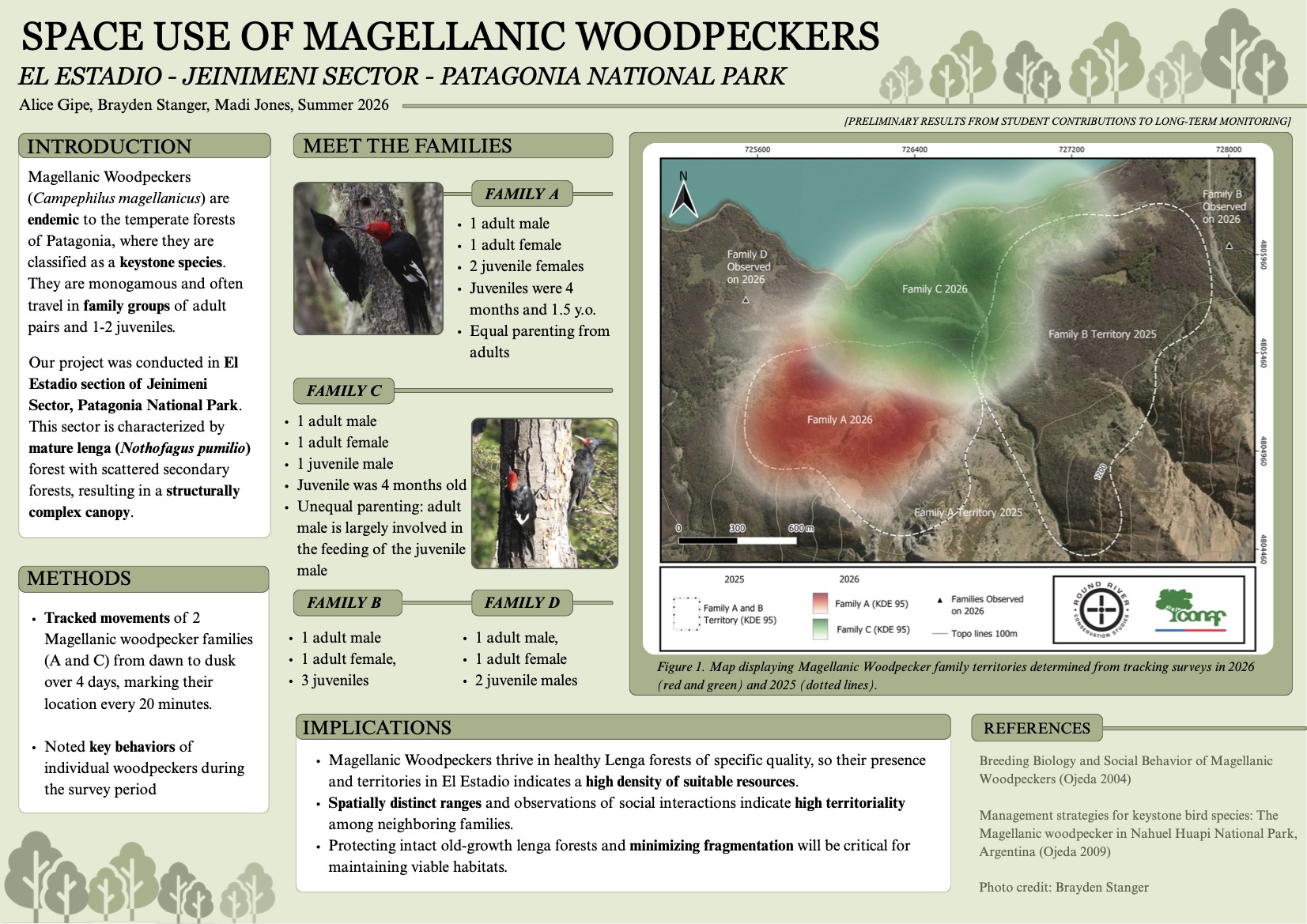
In the Jeinimeni sector of Patagonia National Park, student research on the Magellanic Woodpecker is ongoing, providing CONAF with a better understanding of their population in the park. This large and charismatic woodpecker is a keystone species and shows a strong preference for habitat dominated by mature Lenga, a type of beech tree native to the Patagonia region. There is not much known about the impact of habitat fragmentation on Magellanic woodpecker. This semester’s student project shared findings from data collection investigating habitat use and home ranges of the species, contributing to CONAF’s understanding of their habitat needs.
Limits of Acceptable Change
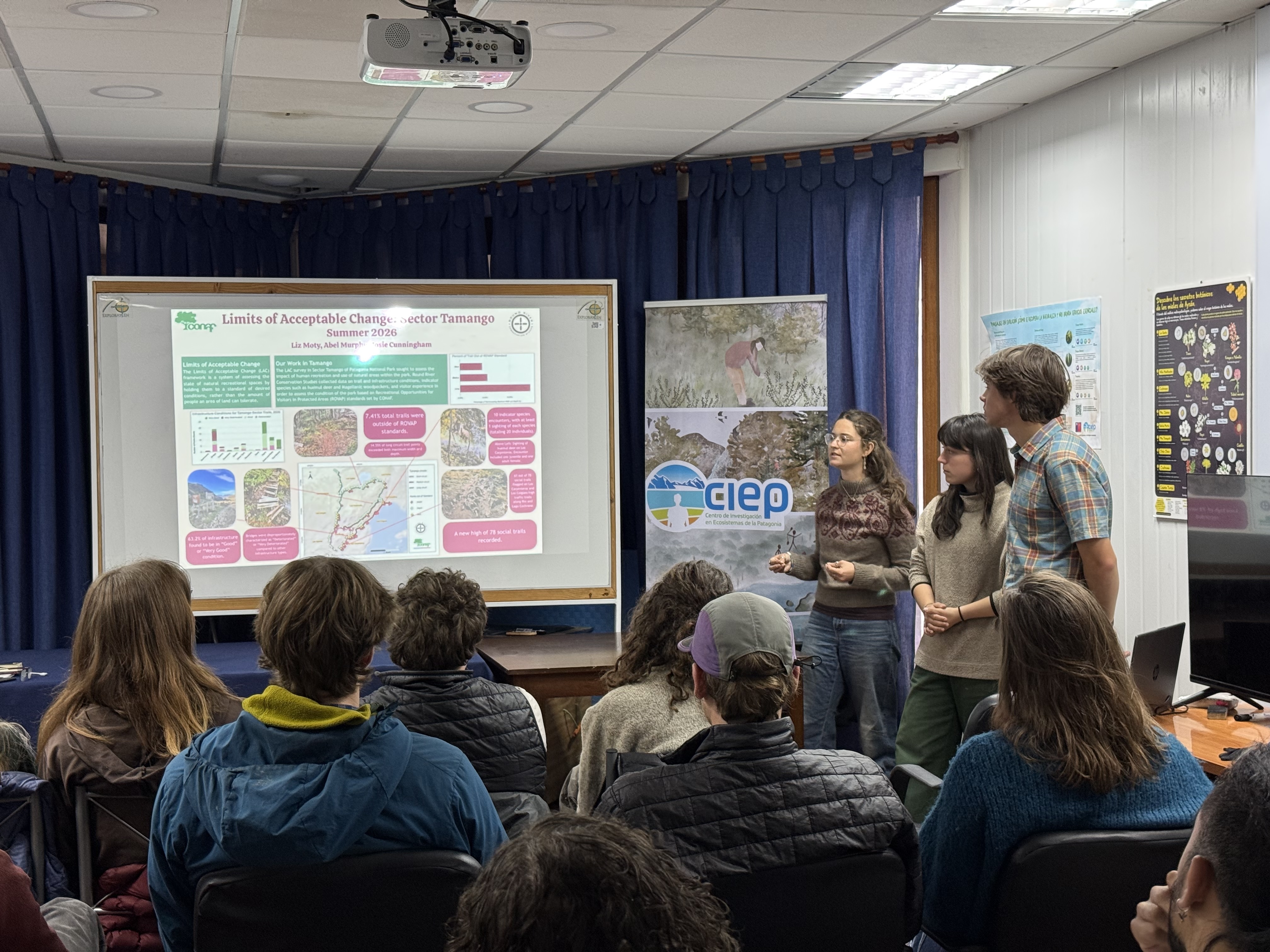
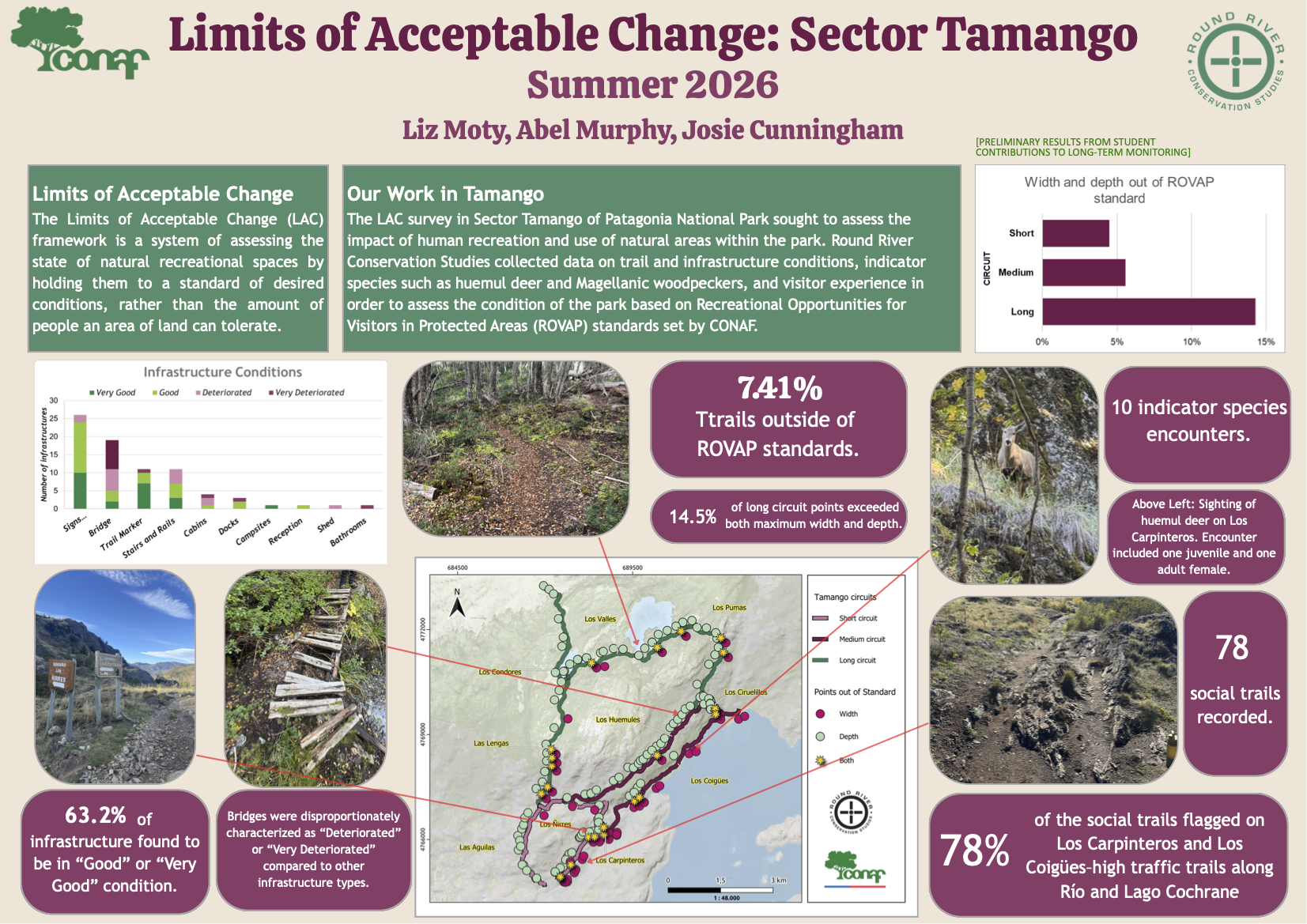
The Limits of Acceptable Change (LAC) framework is an assessment method that quantifies the impact of human recreation and natural resource use within a protected area compared to a standard set of desired conditions. For this project, students applied the LAC framework to the Tamango sector of Patagonia National Park, providing CONAF with actionable insights into infrastructure conditions and the impact or human use in the park.
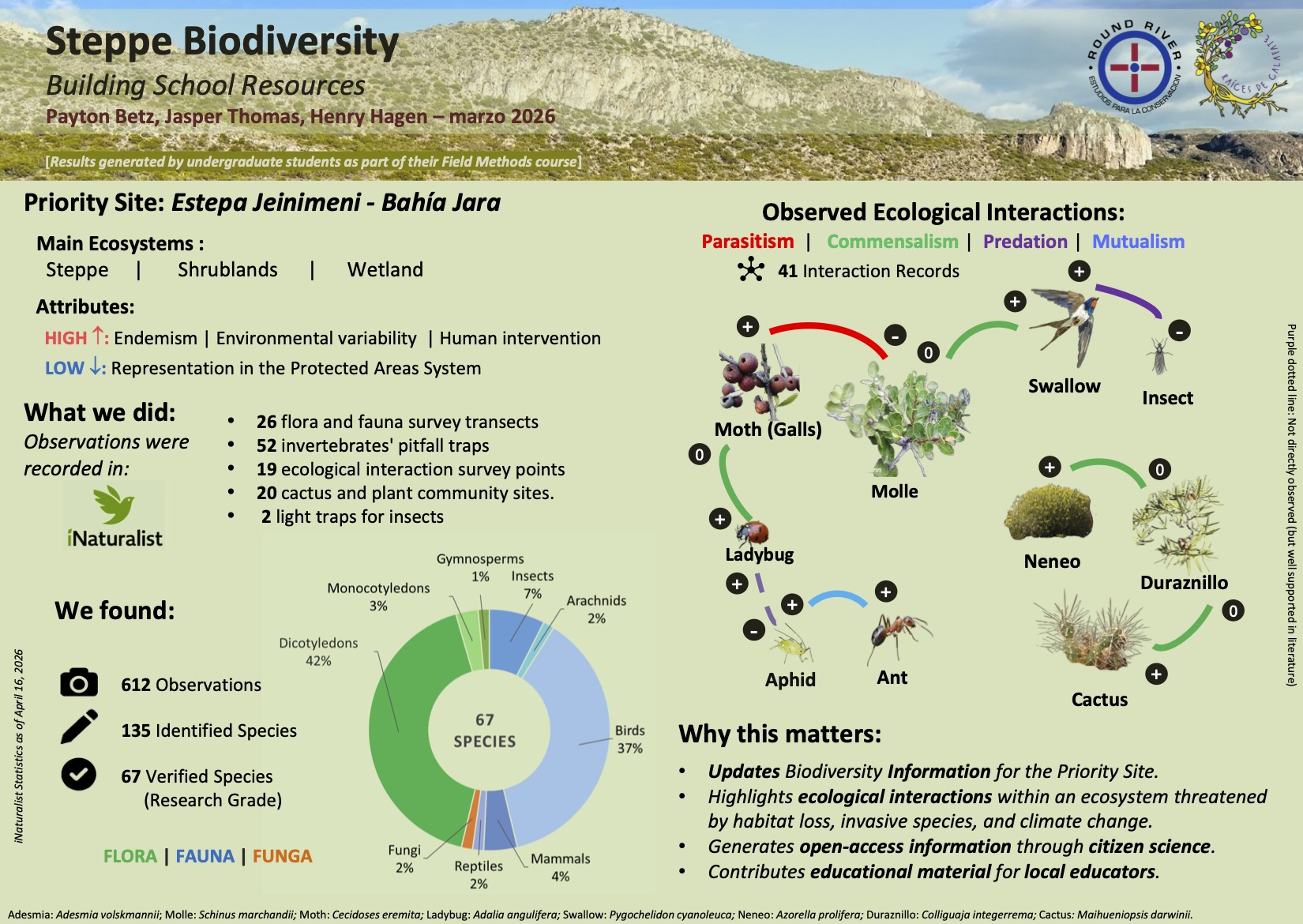
Bahía Jara Steppe Biodiversity
The Patagonian steppe is a ecologically significant and understudied habitat, providing critical habitat for threatened and steppe-adapted species and hosting wetlands that serve as essential biodiversity hotspots. At the same time, the landscape is sensitive to land-use change, habitat degradation, and shifting climate conditions, making it an important focal point for research.
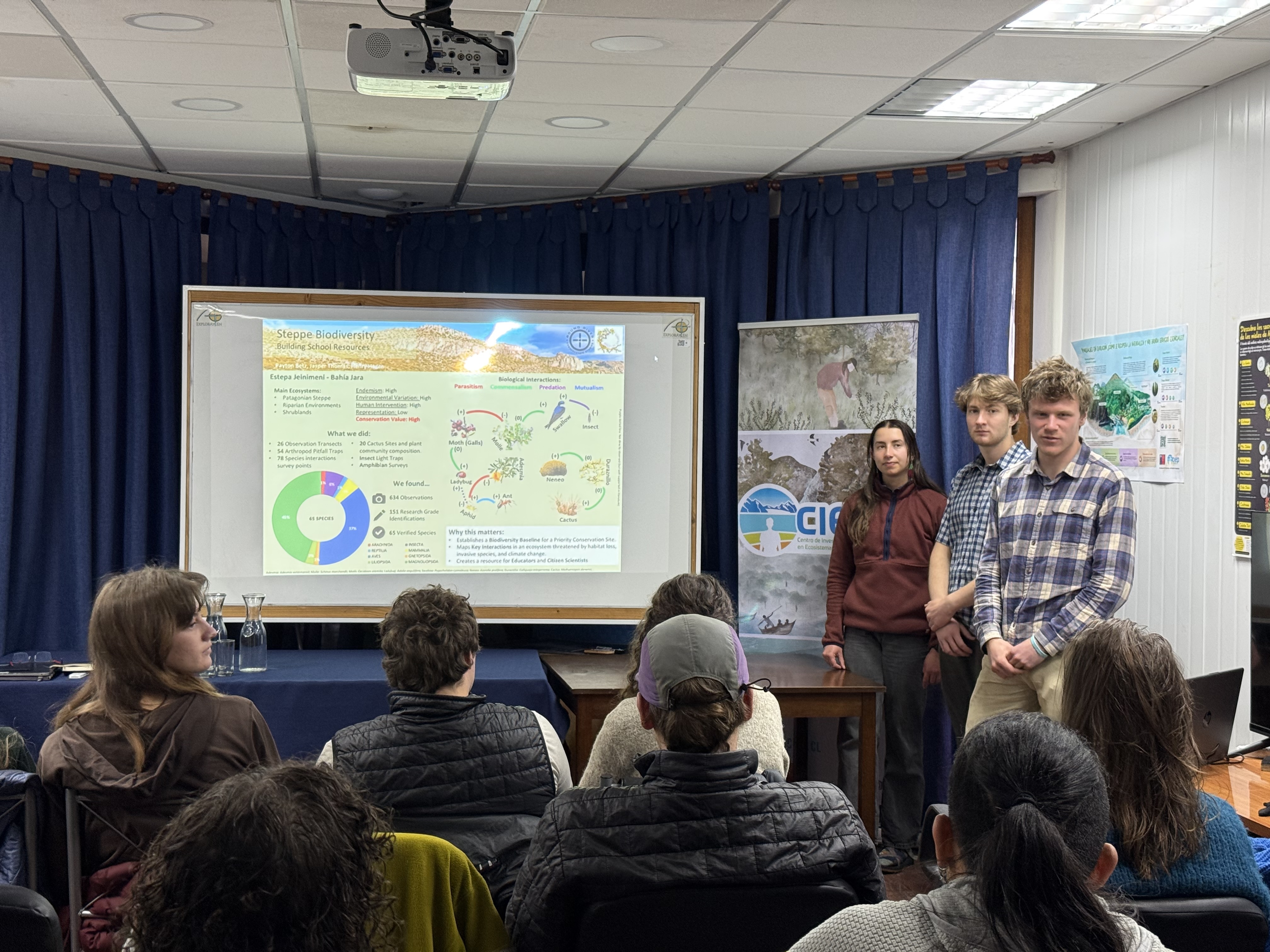
This semester, students spent three days conducting ecological surveys on the Bahía Jara steppe, walking biodiversity transects and recording all fauna, flora, and fungi they encountered. Their work provided important baseline information about biodiversity at the site and revealed new ecological interactions on the landscape. In addition, the data they collected contributed to the development of educational materials that serve as a reference for teachers and the community.
Okavango Delta, Botswana
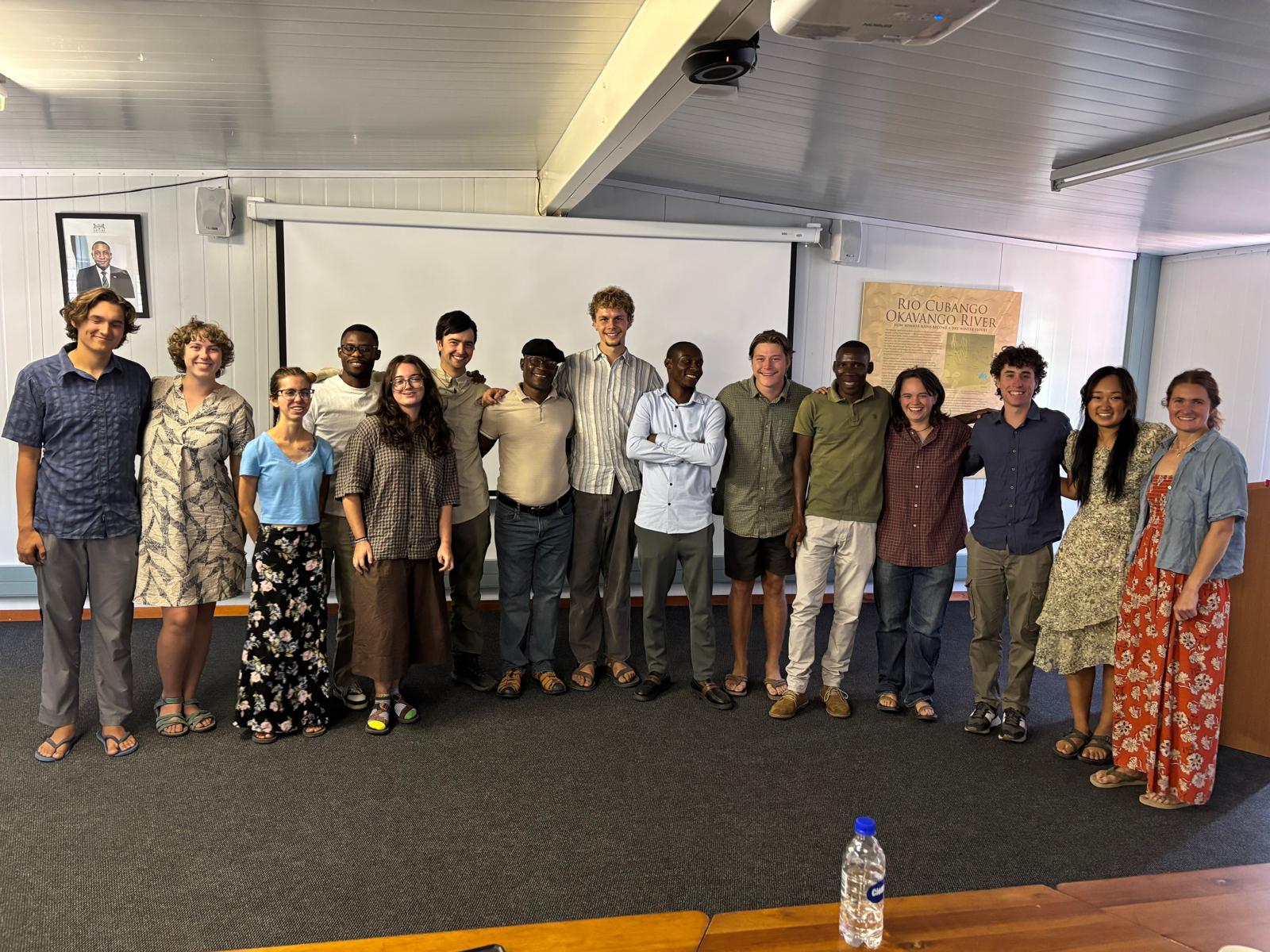
Our Botswana students spent the semester collecting wildlife monitoring data across the Okavango Delta, continuing research on herbivores that has been ongoing since 2012. This work helps establish long-term population trends, informing conservation management decisions in the region. Students collected data in partnership with four community-managed concessions: Sankuyo Tshwaragano Management Trust (NG33/34), Mababe Zokotsama Community Development Trust (NG41), Khwai Development Trust (NG19), and Khwai Private Reserve (NG18), managed by Natural Selection. The semester culminated in a presentation to our partners at the Okavango Research Institute and the Department of Wildlife and National Parks.
Elephant Demography & Habitat Preference
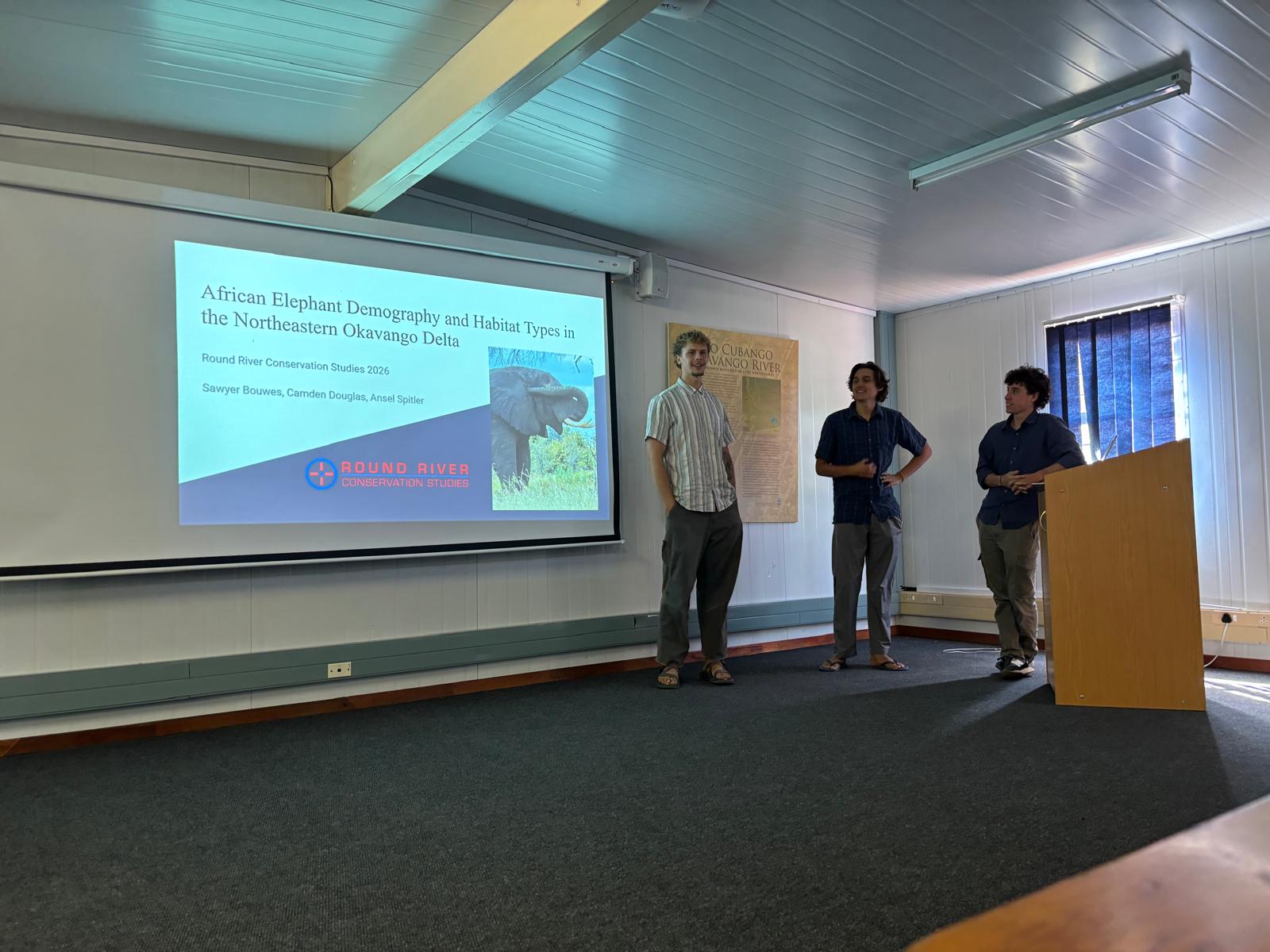
Botswana, and specifically the Okavango Delta and Chobe National Park, is home to one of the largest elephant populations in the world. Globally, elephants are an endangered species; however, their high concentration in the Okavango Delta presents challenges with human-wildlife conflict and environmental stress. Monitoring elephant demography and habitat preferences is a vital way to better understand the status of the elephant population in the Okavango and determine how elephants are using the ecosystem.
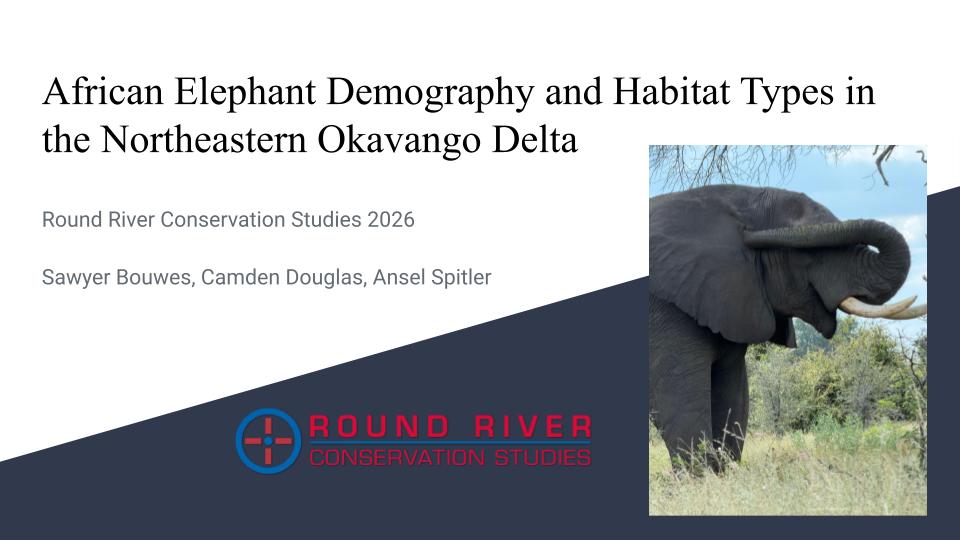
This semester’s student project focused on elephant demography and habitat preference data collected over the course of the semester, as part of Round River’s long-term monitoring efforts. Click on the image below to view the presentation!
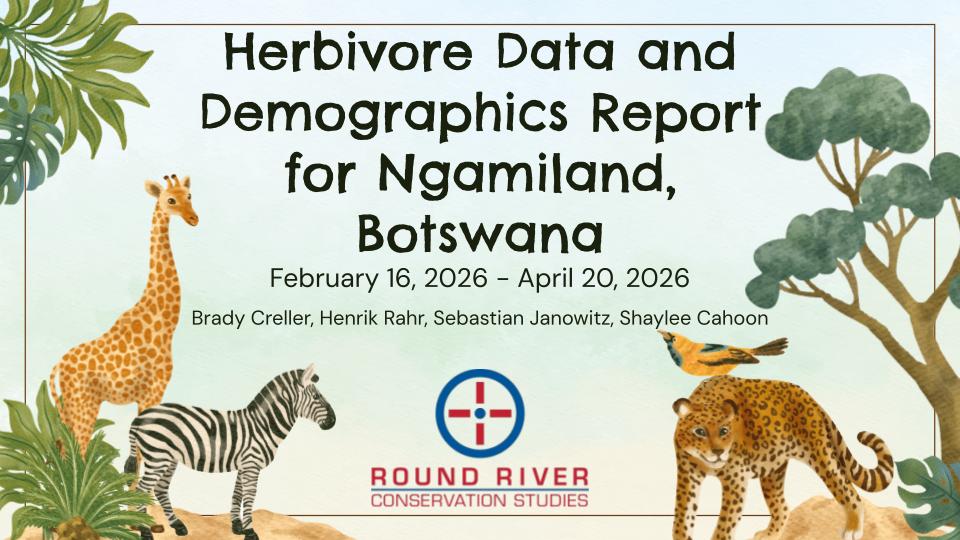
Herbivore Data & Demographics
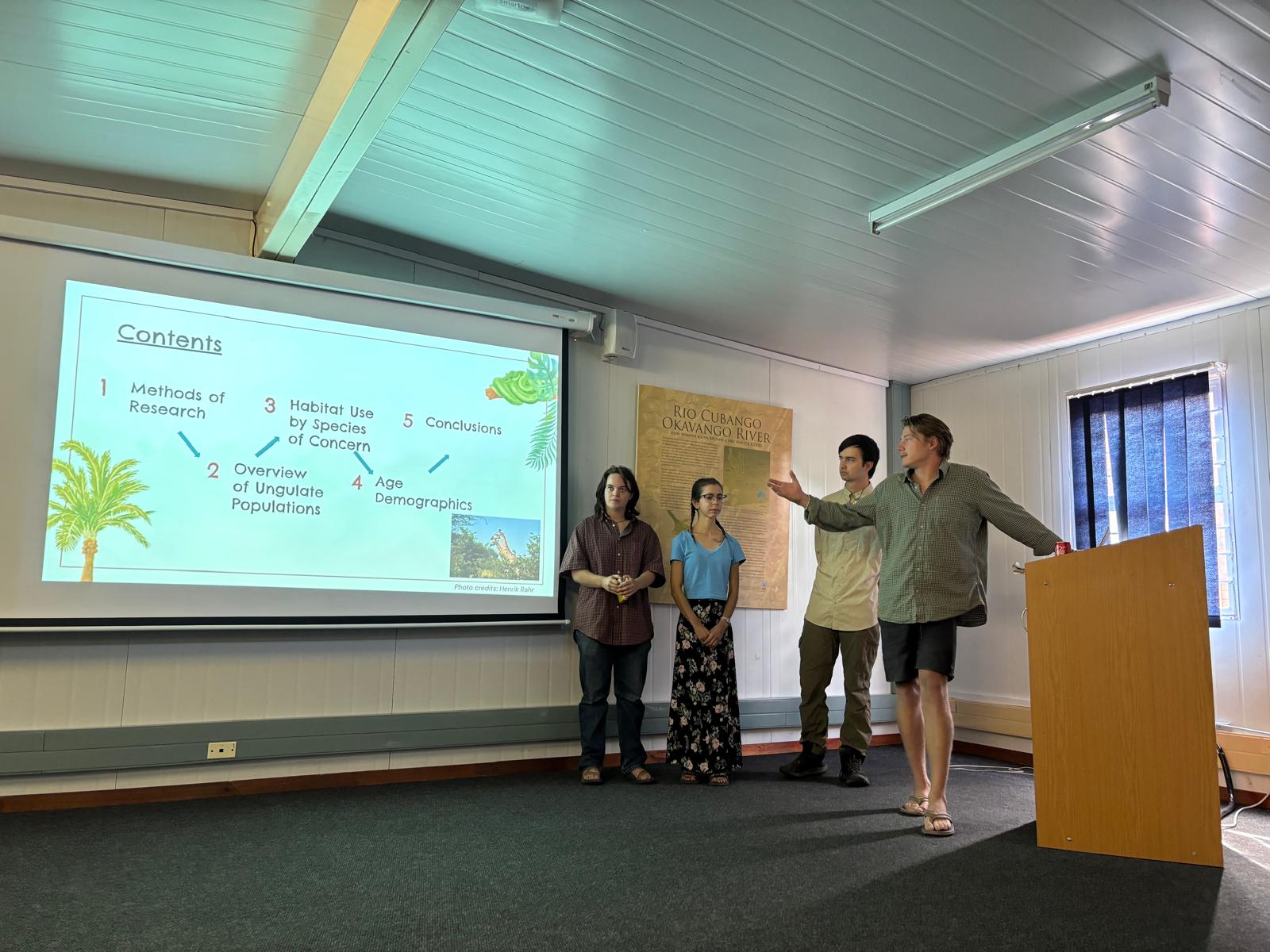
Since 2012, Round River has worked with community-based concessions in the Okavango Delta to support wildlife monitoring efforts, looking at long-term population trends. Data collection specifically focus on herbivores, as past survey efforts have suggested that several herbivore species in the Okavango Delta are in decline.
This semester’s student project reported on their herbivore monitoring data and its contribution to long-term monitoring efforts in the region. Click the image below to explore their presentation!