
By: Milana Krishnevsky, Macalester College
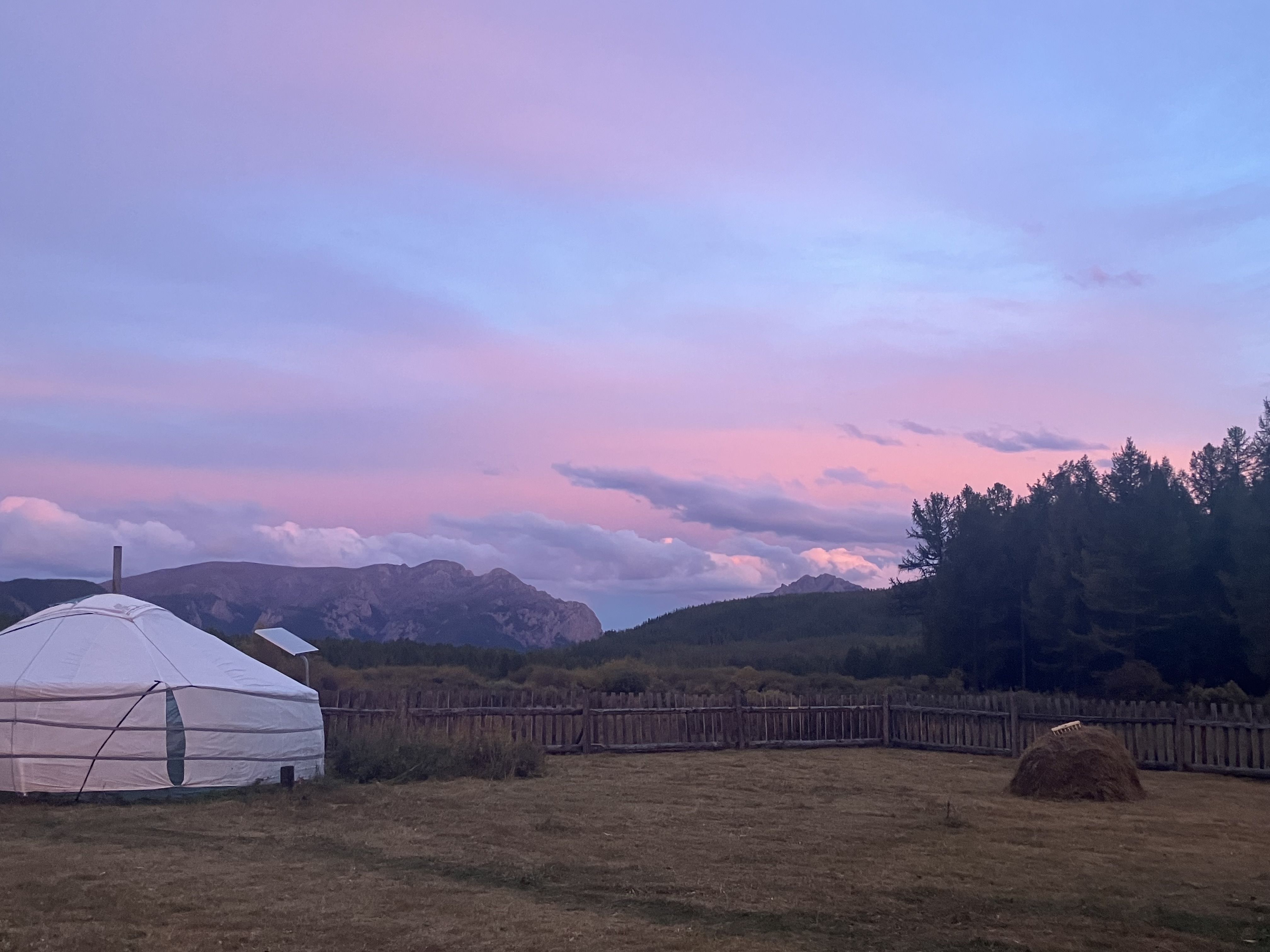
A new semester of the Mongolia Round River study abroad program is officially underway, with four students here to experience the magic of Mongolian autumn. Our group is small but mighty: Owen, Jamie, Tyler, and me, Milana.
Because our group is small, we each get to work on our own individual research project. Tyler got the climate change focused forestry, Jamie chose to analyze camera trap photos, Owen is researching pasture quality indication and activity of Daurian (pasture) pikas, and my project looks into the presence and activity of Talus (mountain) pikas and Vansemberuu, an endangered medicinal plant subject to poaching within the Horidol Saridag protected area we are doing research in.
In spite of there being only four of us, we have a diverse representation of the United States in our group. Owen is from Utah and goes to Westminster, Jamie is from Georgia and goes to Bowdoin, Tyler is from Virginia and goes to Roanoke College. I am from Wisconsin and go to Macalester.
Although we hail from different parts of the United States, we all came to Mongolia in search of a unique and fulfilling, research-based education. So far, this semester has been exceeding expectations.
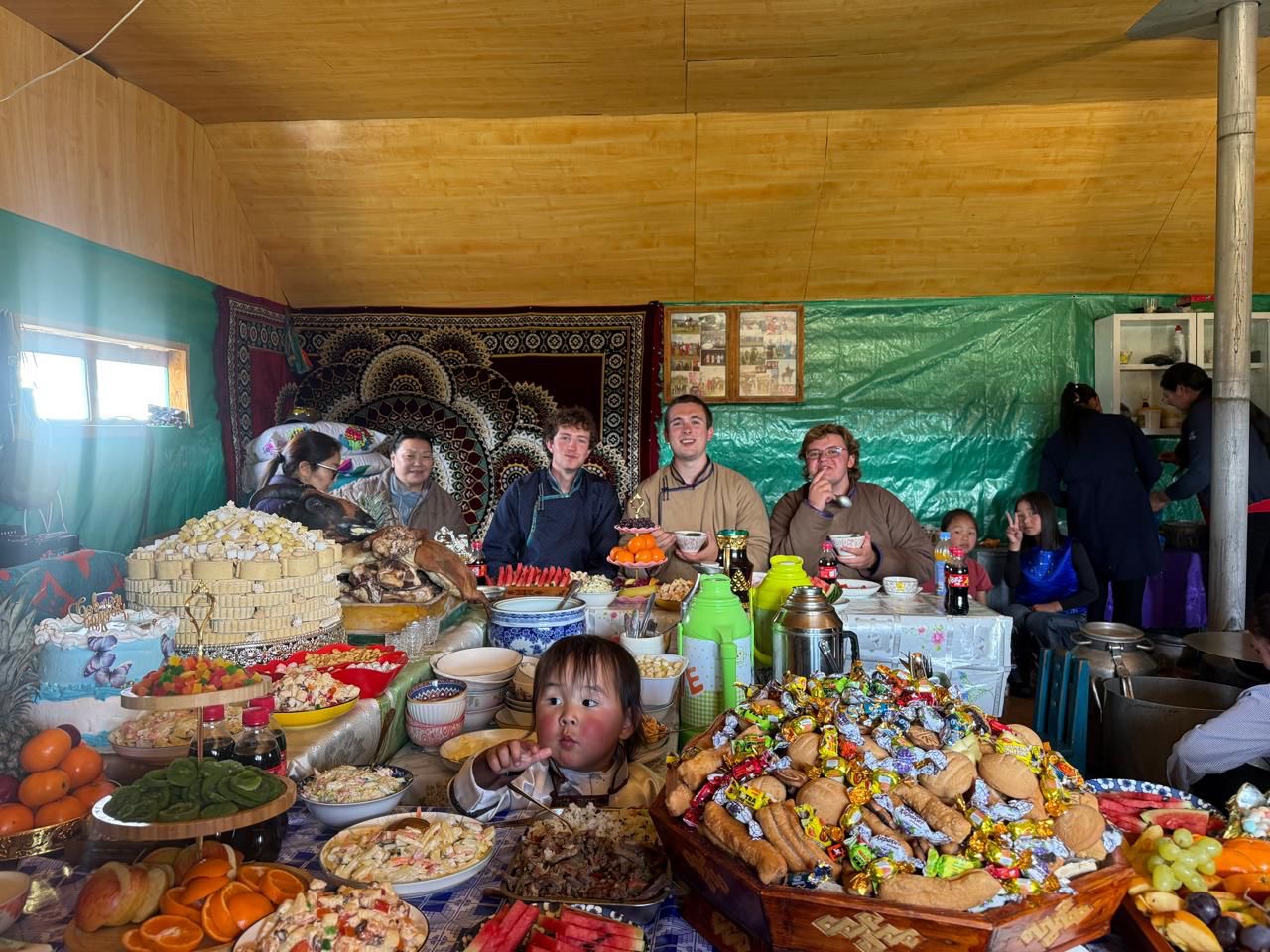
From seeing a wolverine on a camera trap to participating in a traditional Mongolian hair cutting ceremony, our first two weeks of the semester have been full of once-in-a-lifetime experiences. At the same time, our little “pen,” which keeps us in and the yaks out, has gradually begun to feel like home, and our group of four is growing ever closer.
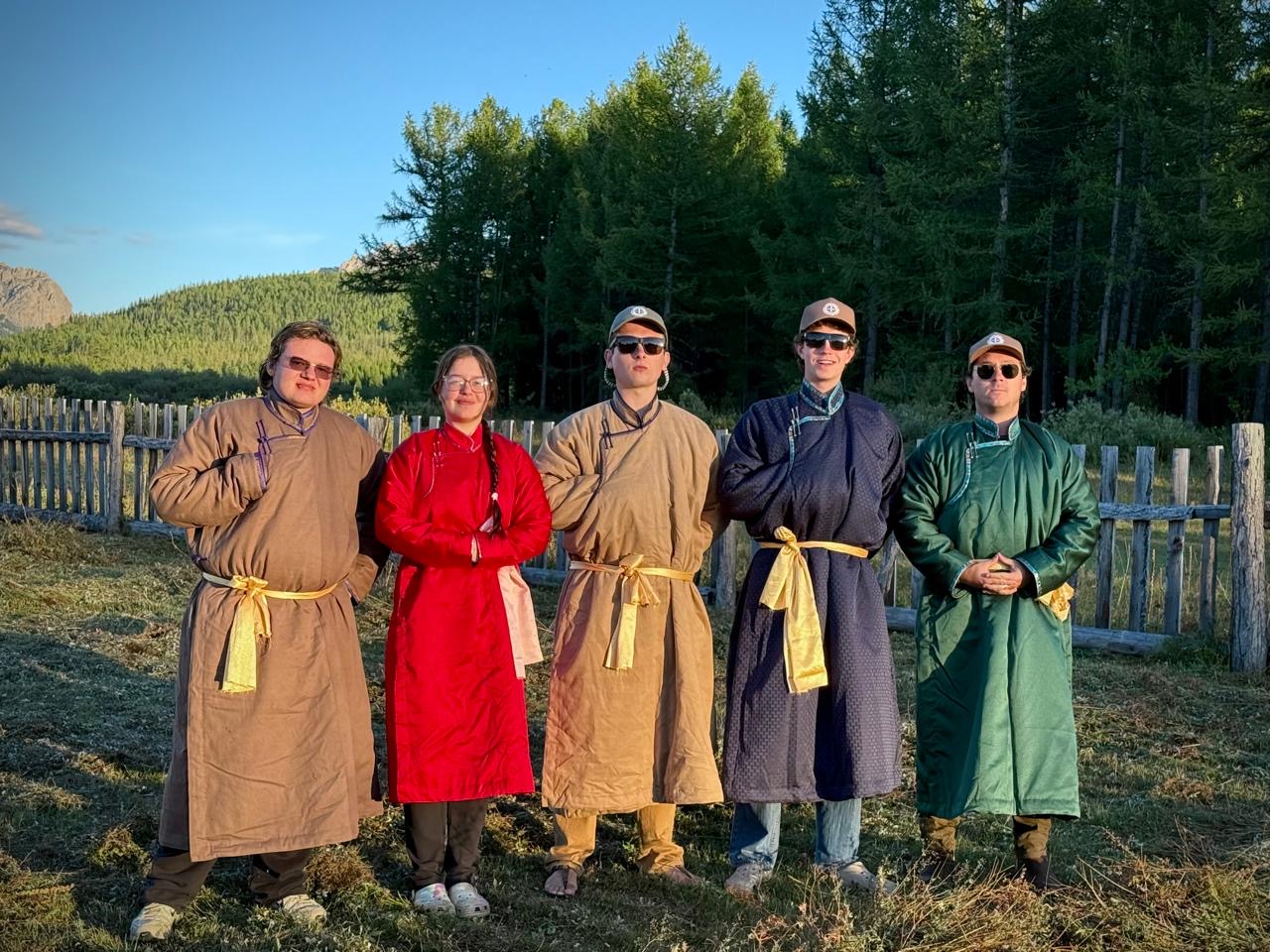
Our first day in Darhad Valley, everything was new. We were cautious of the yaks walking outside the fence, reveled at the delicious Mongolian food our cook Amka made for us, and lamented the lack of internet access. We also received our deels – gorgeous, and more importantly warm, traditional Mongolian clothes.
I have worn my deel more days than not since receiving it. Coming from the Midwest, I expected to be used to the cold, dry, and potentially changeable weather. I brought clothes to match. Reality turned out to be much colder and dryer than what I’m used to.
In our time here, the dry cold has been pervasive. It comes out at night, laying a blanket of star-filled frost on the ground. Every single morning, we open the frozen-solid rainfly of our tents to get to our ger and start a fire in the stove. In just a couple hours, the air warms up from the sun and we can take off our layers until evening, when the deel goes on once again.
Because of the cold and prospect of snow, we jumped into the research expeditions as soon as we could. First, a day hike to collect camera trap data along the Mungash River. Next, a five-day backpacking excursion to the Horidol Saridag area to collect data on Talus Pika activity and Vansemberuu poaching.
Being among the mountains during those five days felt somehow different from our situation at the base camp, next to our ger. Less boredom, more belonging. We finally had a chance to cook for ourselves, to our great distress. Even though the food we made was delicious, nothing can compare to Amka’s masterpieces.
The hiking itself was hard, but relatively short and entertaining. We set off each morning before the horses, watched them pass us along the way, and caught up to them at our next location. Amka was acting as our guide, and she stayed true to her motherly nature by feeding us blueberries along the hike.
The best part of these days was sitting around the campfire morning and night. Philosophical conversations are a natural part of campfire talk. Getting to sit around, sing songs, and talk with the rangers was its own separate experience, one that left me constantly wishing I knew more than the few words of Mongolian I’ve picked up these past few weeks.
When we didn’t have the translating help of our instructor Badmaa, we managed to get around the language barrier with Google Translate, a dictionary, and a good deal of guessing. One of the nights, a ranger nicknamed Bumba approached the few of us left around the fire: “need to catch horse”, pointing at Owen’s forehead, and some time later, we realized he wanted a headlamp. Soon, we were watching the headlamp bobbing in the night as Bumba rode a horse across the river to retrieve the runaway, then headed back to tie it up.
These moments, interspersed with the research, were what made these days so special to me. The research, meanwhile, has been both easier and harder than I initially thought.
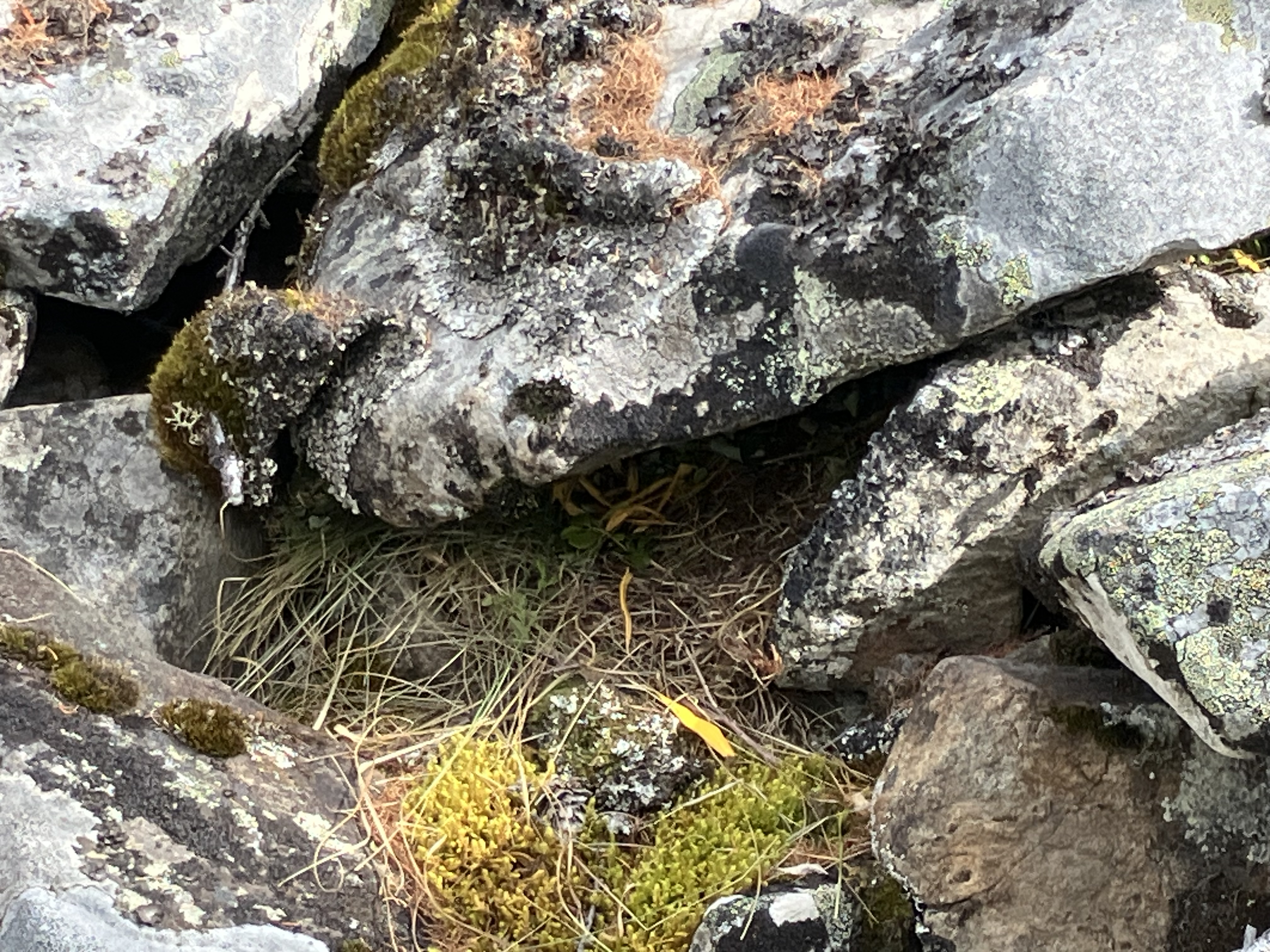
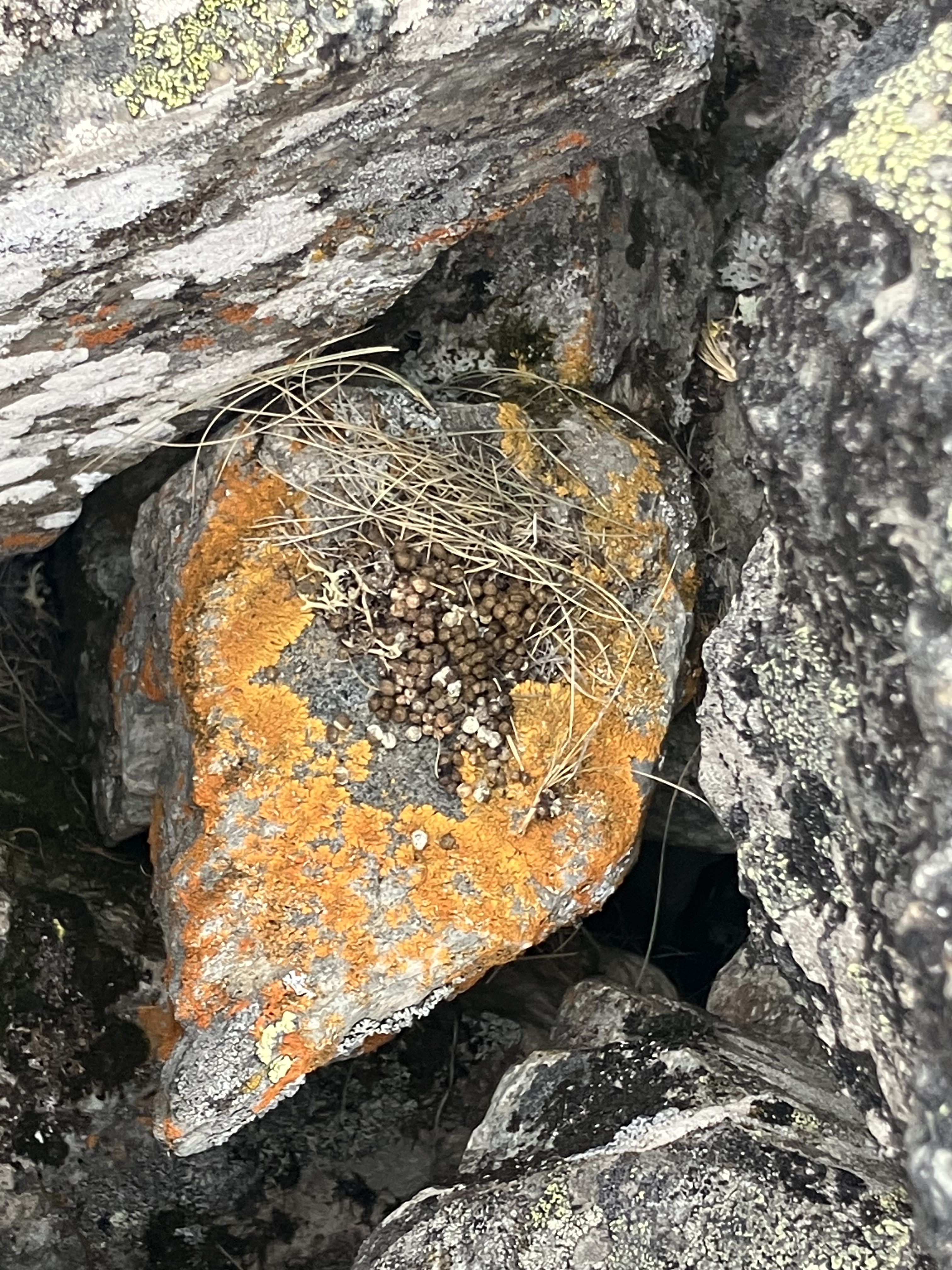
For Talus Pika activity, I expected the difficulty to lie in scrambling among the rocks to record the hay piles, which we use to determine pika presence and activity. This turned out somewhat true – recording the hay piles took some time, but not because of the scrambling. Within a couple days, we had all figured out the tricks to determining which rocks would move when stepped on, and were walking through the rocks as if on flat ground. Instead, finding the hay piles turned out to be the real challenge. Placed on ledges in between rocks, they are as inconspicuous as can be, and require careful attention to notice within the 30 m^2 plots we were working in. Once a hay pile is spotted, the work gets easy again. After all, one hay pile means many others nearby.
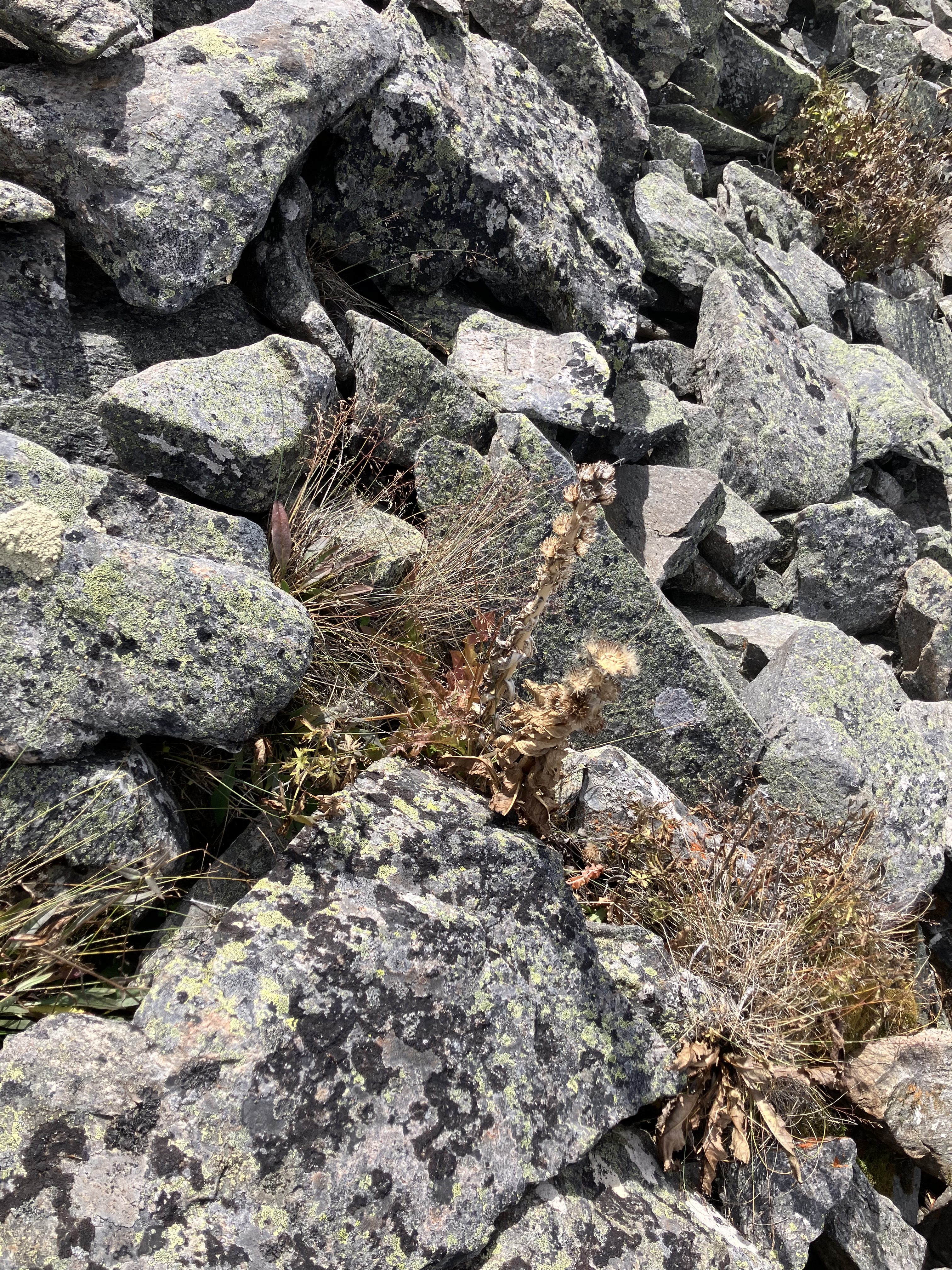
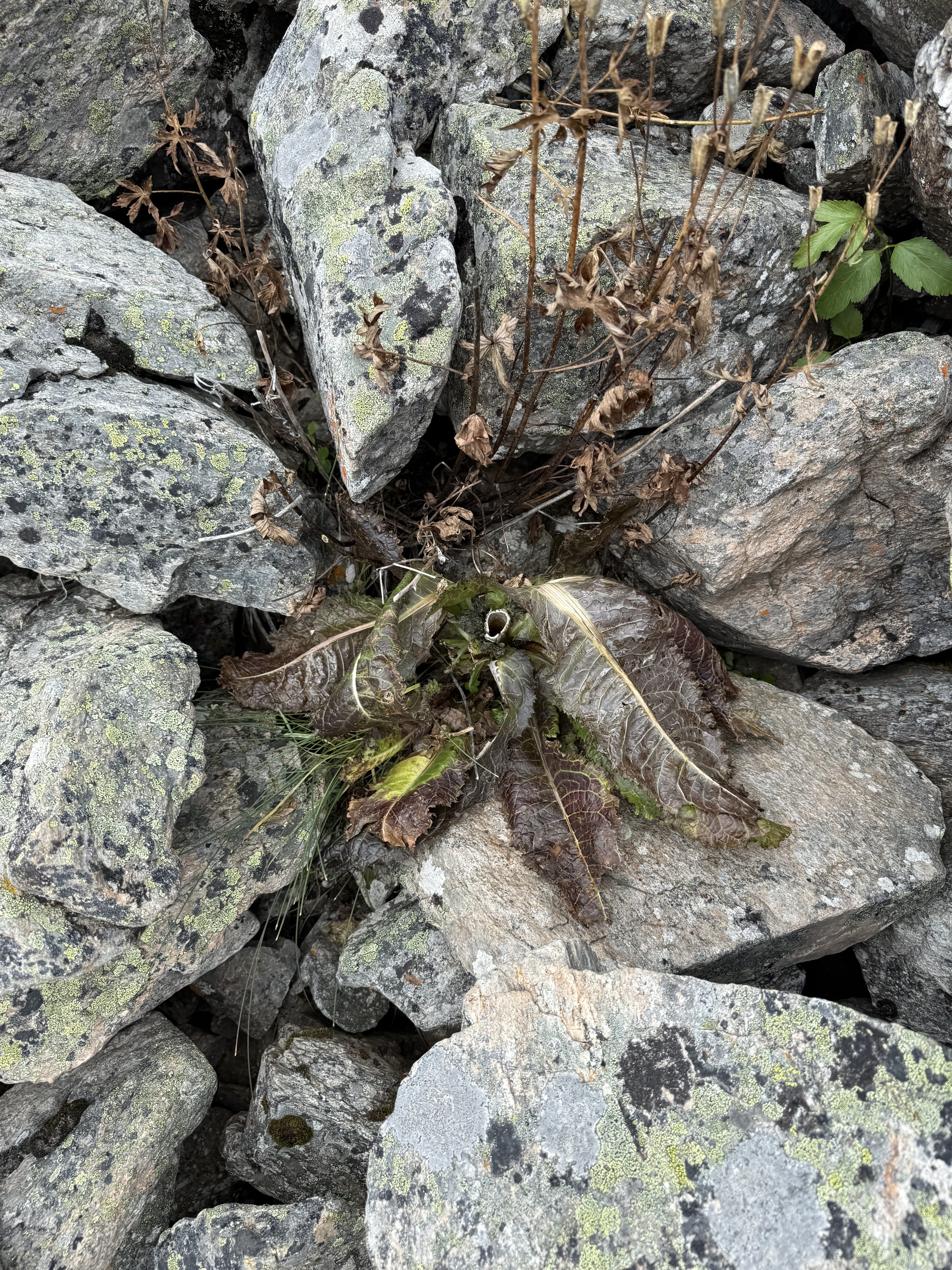
For the Vansemberuu, the situation was completely different. Working in transects rather than plots meant that the plants were spread out along a mountain slope. Thankfully, we had GPS tracking for the tagged plants. Unfortunately, the GPS tracking had a 10 m inaccuracy. On a slope, this meant potentially scrambling back up if the plant was higher than the GPS showed. Or walking in circles looking for the tagged plant among the many tagged from previous years or located slightly outside the transect. Meanwhile, the fear of the scrambling difficulty for Talus Pika plots came true during the Vansemberuu work instead – at one point I was crawling down the slope because of the steepness.
Despite all the difficulties, the research turned out to be exactly what I wanted. Hard but fulfilling in a way a lab could never be. Meaningful in the preservation it entails with beautiful sights and sightings accompanying us along the way.
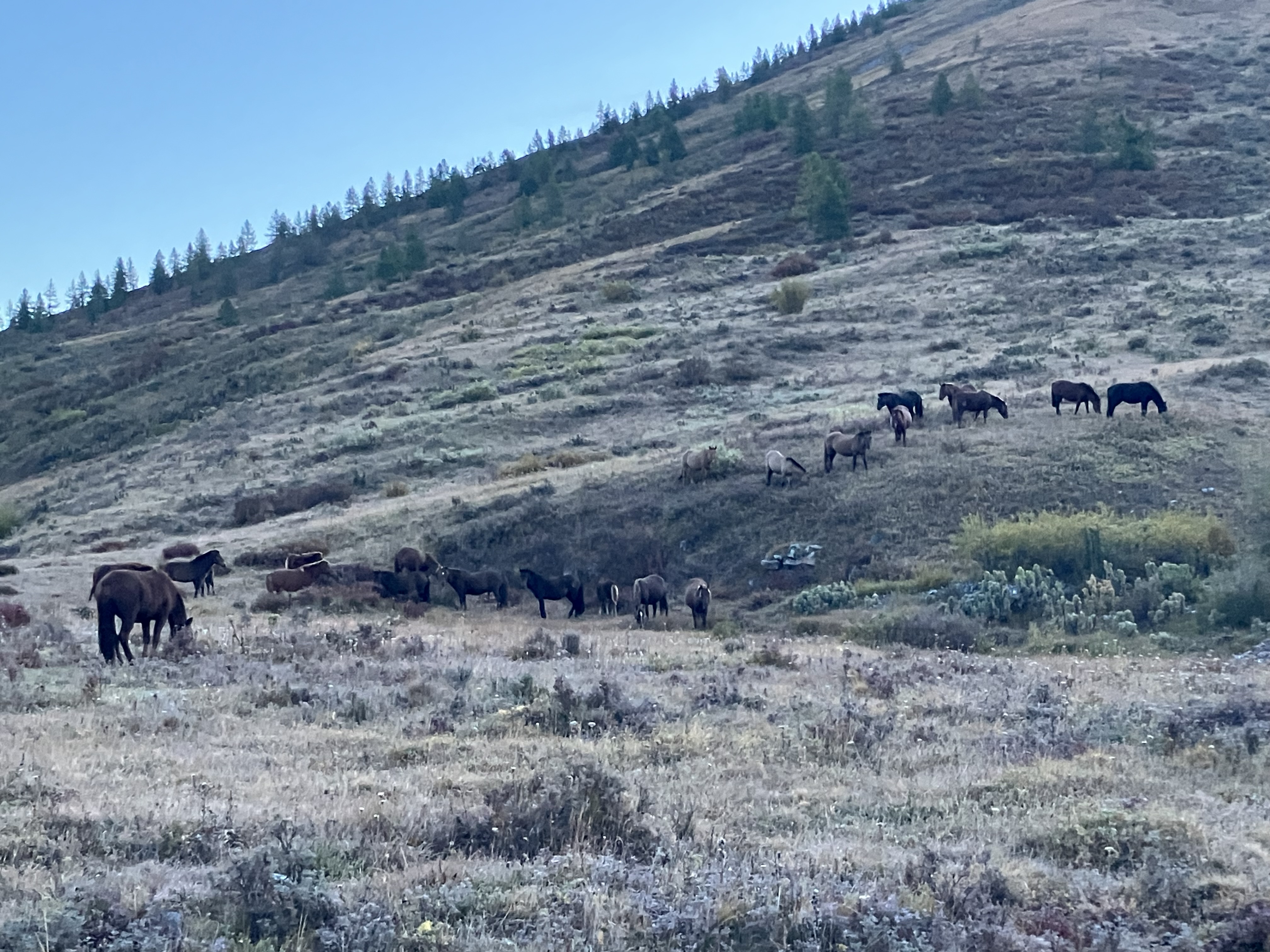
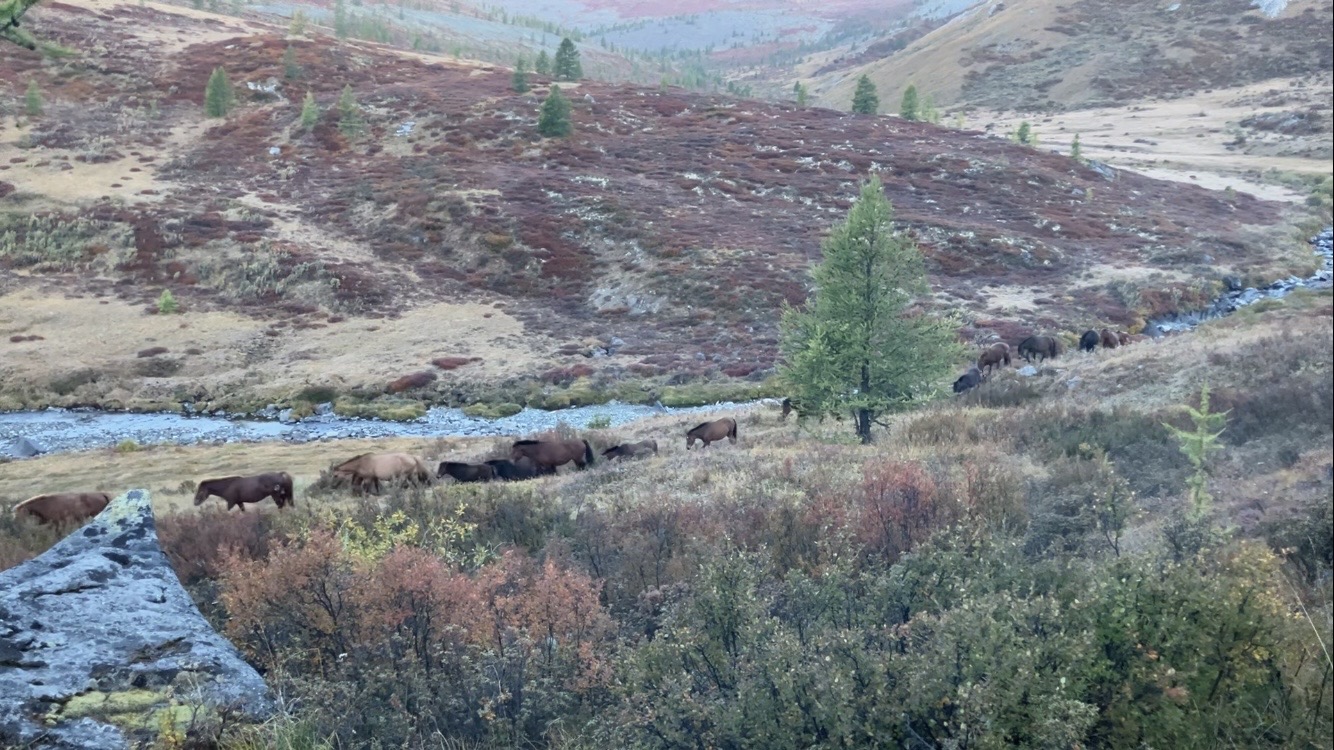
In just two weeks, we have seen multiple Lammergeiers and Talus Pikas, a Booted Eagle and a sable. On one morning, I woke up to a herd of horses outside our camp. Not to mention the amount of scat we have seen so far: wolves, boars, deer, elk, moose, and even eagle!
This fall semester in Mongolia has superseded all expectations so far and will, I’m sure, continue to do so. Just yesterday, the felt went onto our ger, a sign of cold to come. Today, we are setting out on another expedition. Despite this life being vastly different from what most people would call the norm, I am already dreading the day we leave this beautiful land. Things might change, but for now, all I can say is that I wish I could stay here forever. Let this semester never end.