By: Payton Betz, University of Montana
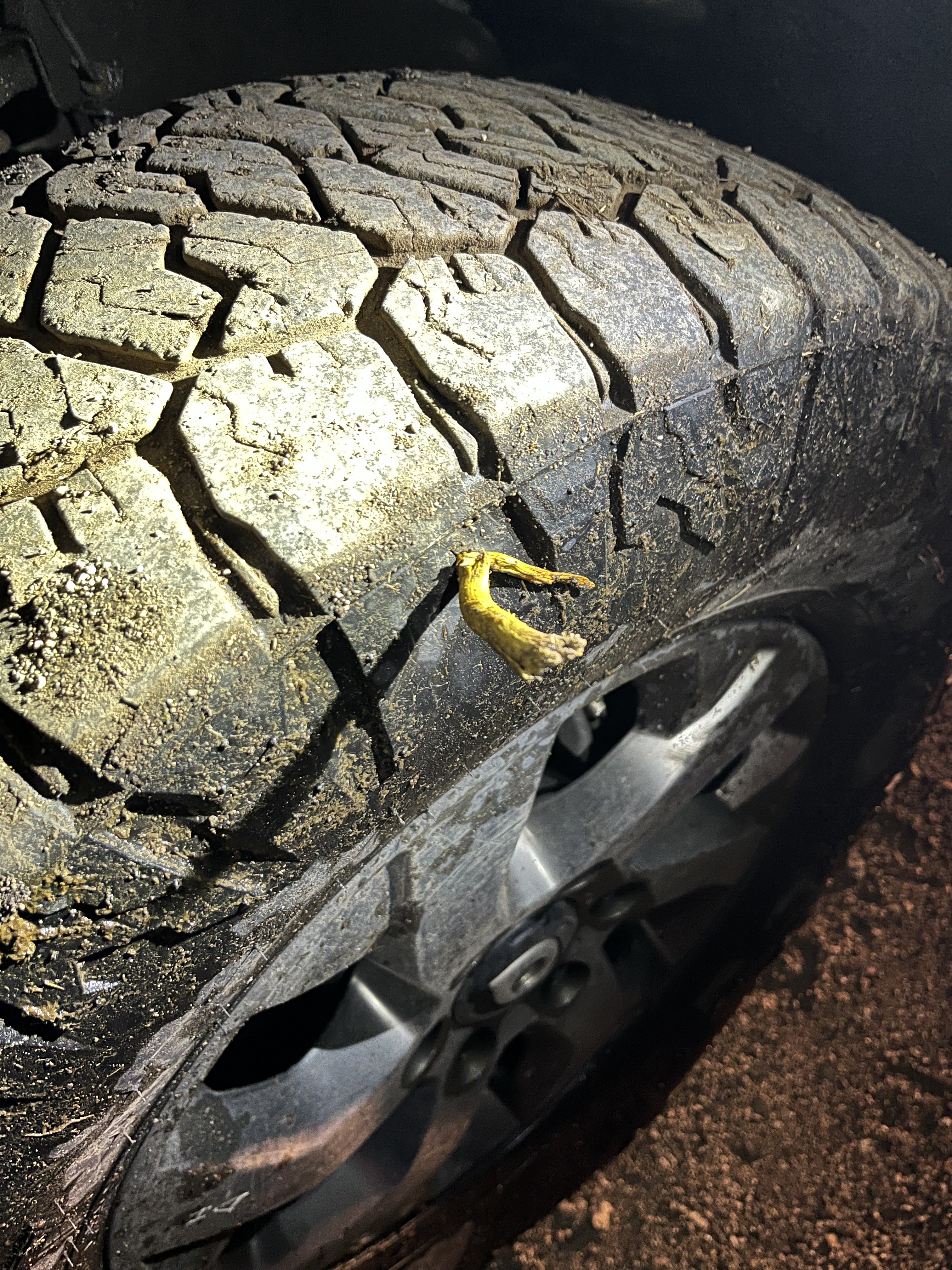
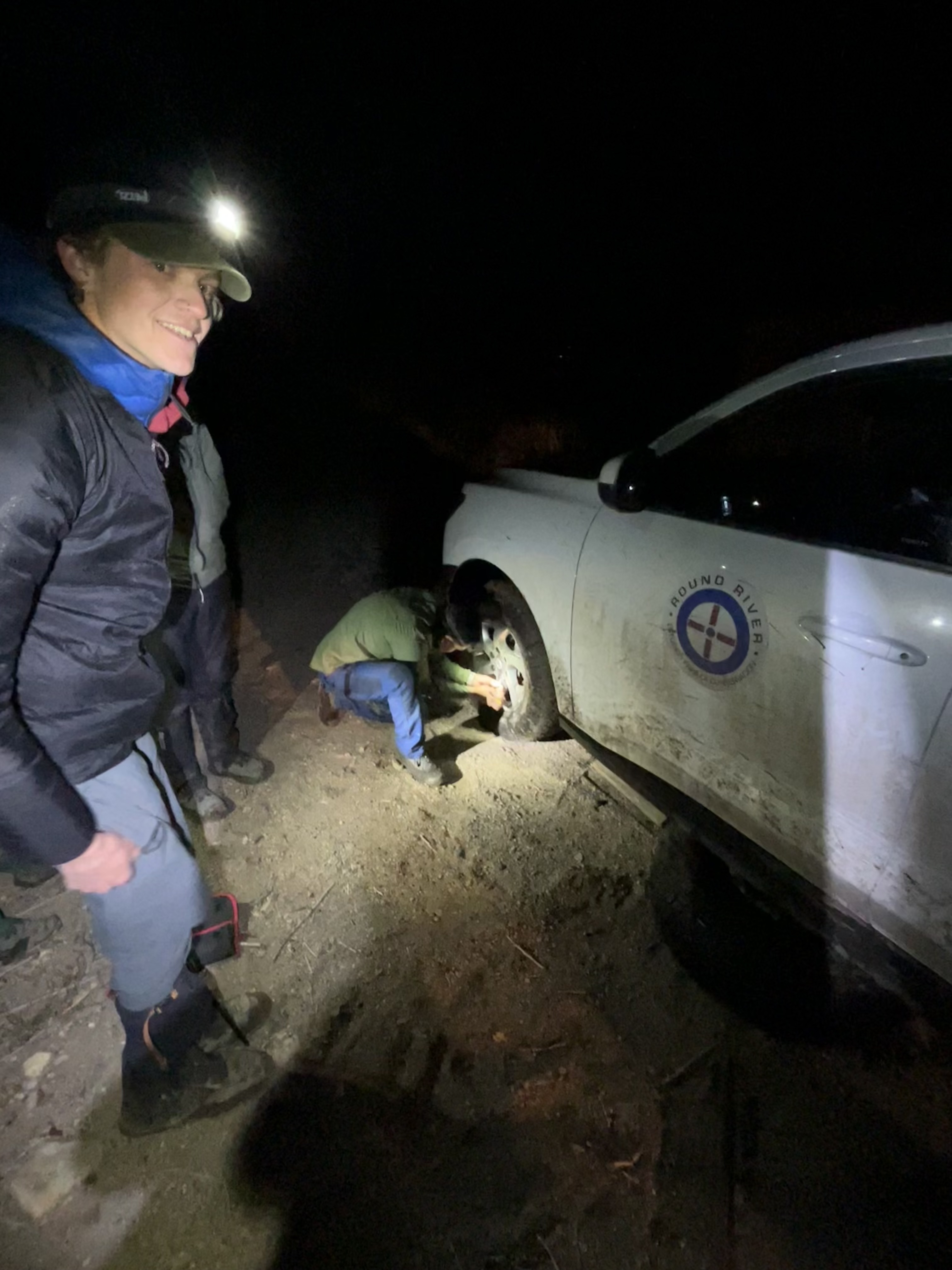
At 10:30pm, we stood shining our headlamps to study the front left tire of our Round River rental truck. We had almost made it back to the main road from our transect location in Bahia Jara when a sharp branch punctured the tire.
Students gathered round, taking turns setting up the jack, loosening lugnuts, removing the tire, and putting the spare tire on. This, after all, was not the first flat tire Round River instructors had encountered during the semester and were happy to teach this skill to their students.
Despite our exhaustion, spirits remained high, and soon we were back on the road leaving Bahia Jara for a late dinner at the hostel.
After an afternoon of digging pitfalls and walking along transects we spent the evening setting up a light trap for insect observation and looking for amphibians. The light trap consisted of two vertical metal poles, a white sheet tied between poles, ropes stabilizing the poles, a light bulb, and cord.
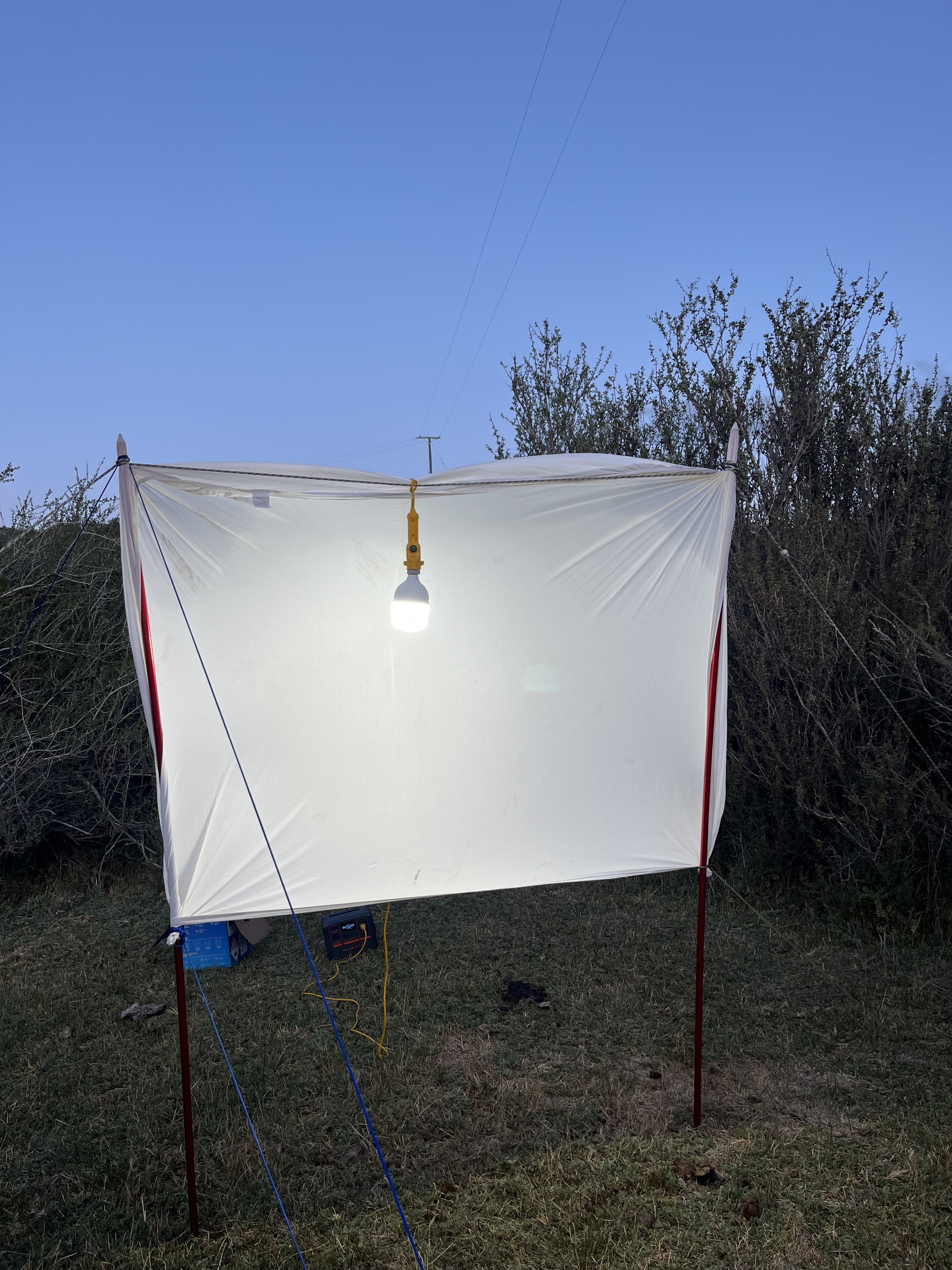
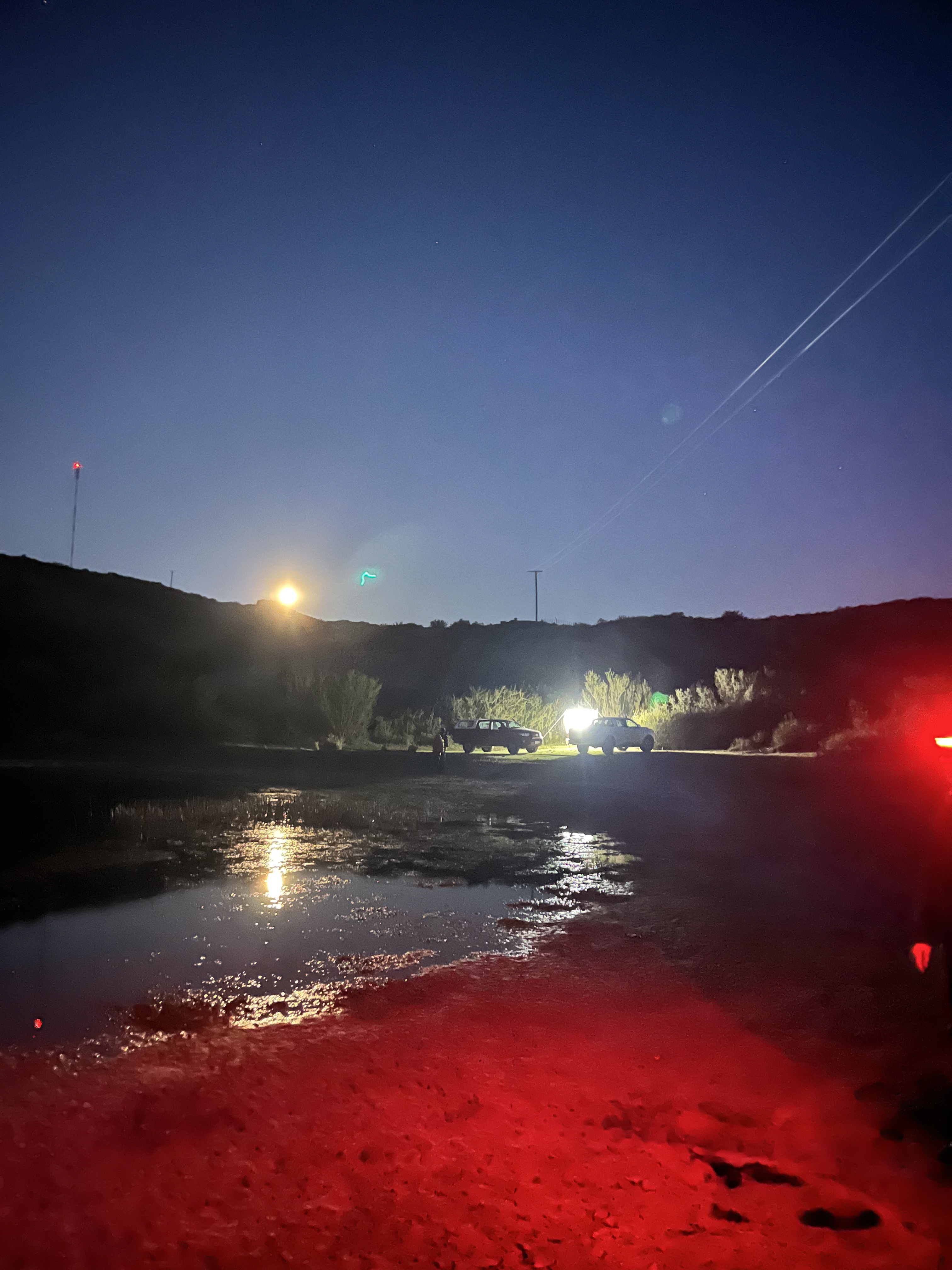
While waiting for bugs to fly towards our artificial light and land on the sheet, we walked alongside a lagoon for signs of amphibians. Despite our best efforts, we only found a lot of mud and one dead scorpion. Upon returning to our light trap, we were again unsuccessful, due to a blustery evening and a bright moon that distracted from our artificial light.
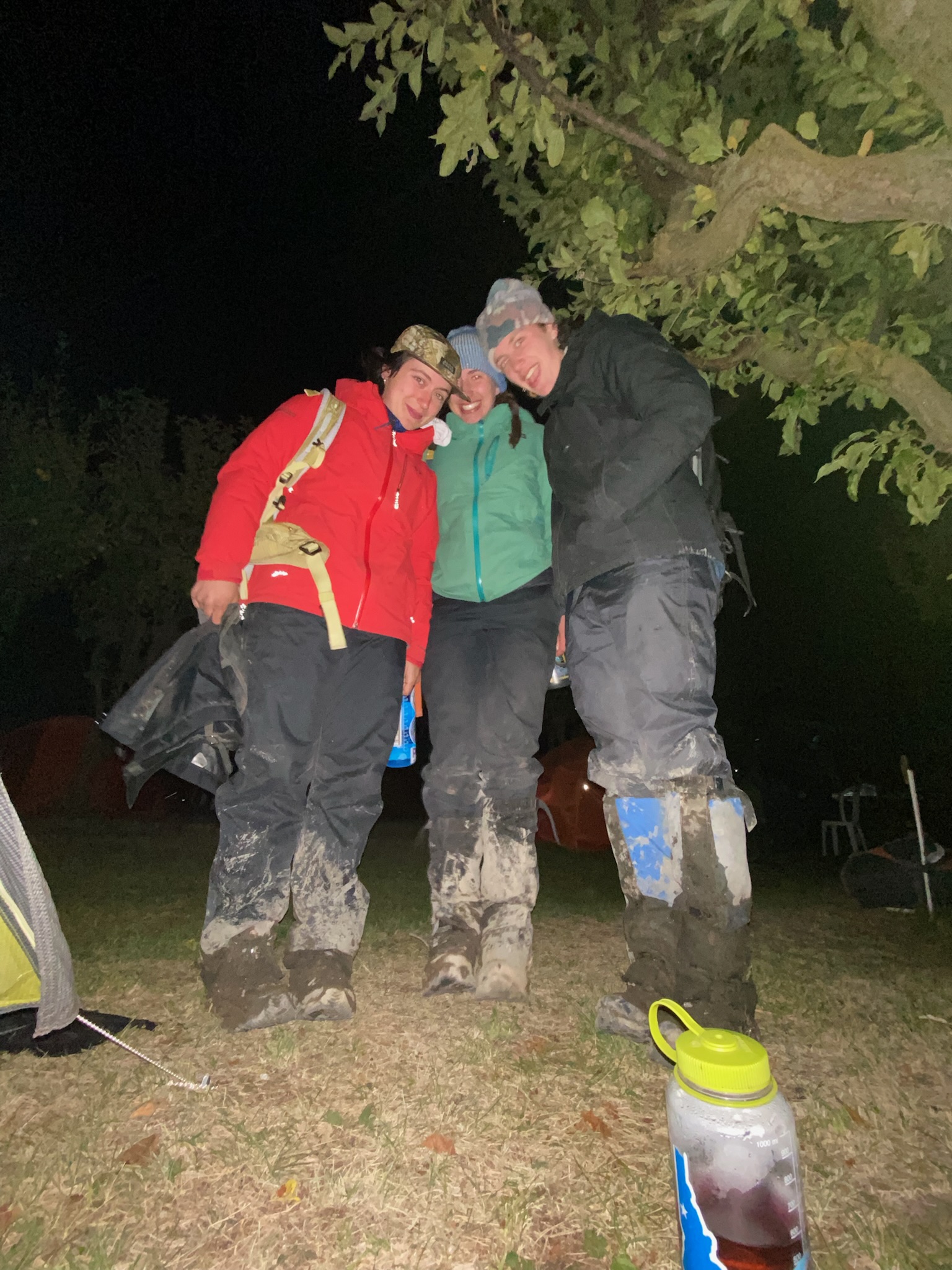
After changing the punctured tire, we arrived back at our camp, covered in mud and ravenous. We quickly ate dinner and changed, before setting our alarms for 4:50am for a quick turnaround (the turn and burn) of more pitfalls and transects.
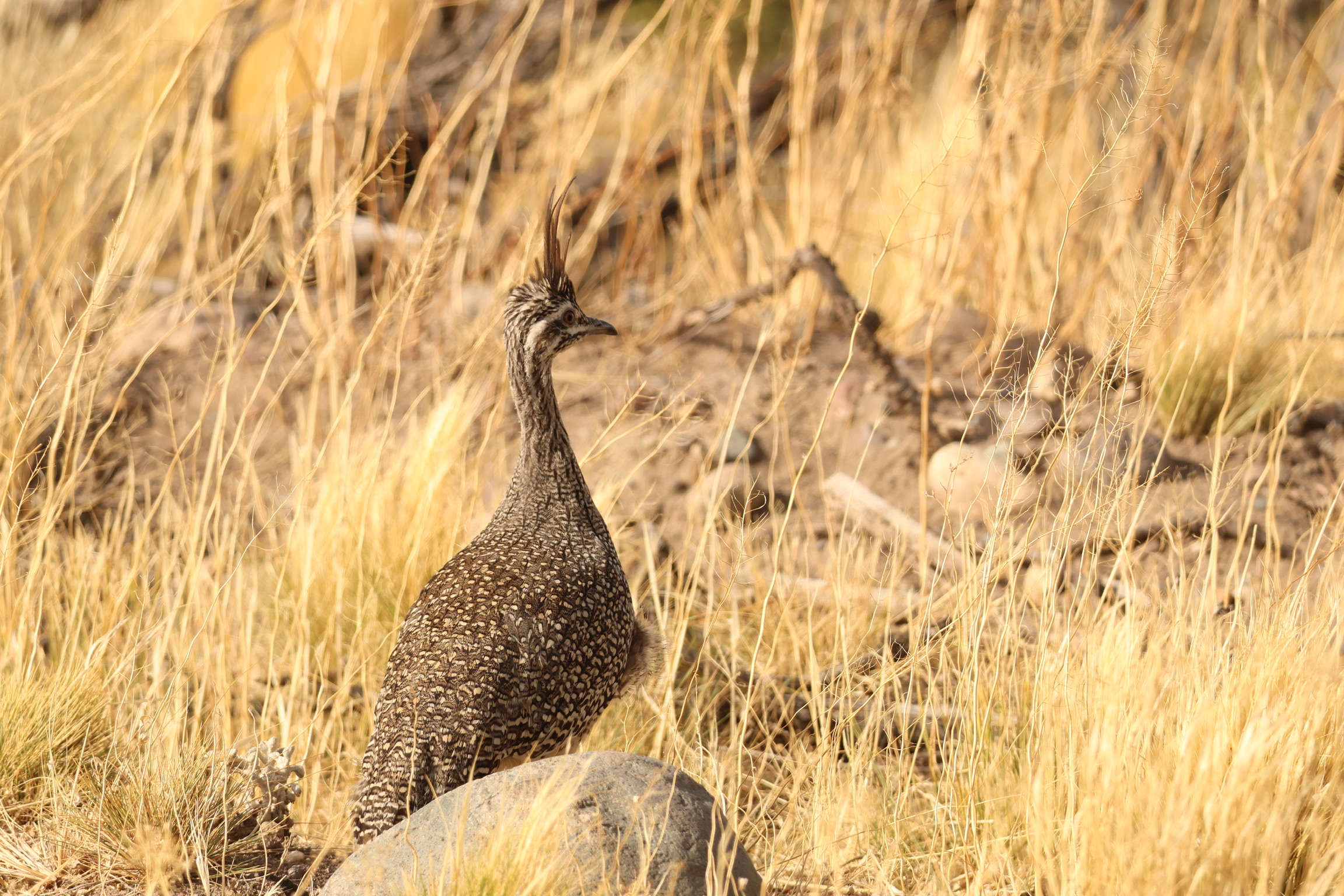
Back at the hostel, our alarms rang at 4:50am, to start our next day. My group had a quick turnaround from last night’s excursion to an early start (the turn and burn crew). This morning my group would focus on digging pitfall traps, walking transects, and prioritizing bird diversity. From our camp, we took a short drive to the outskirts of Chile Chico, where we put on our headlamps and walked out into the steppe. The morning was tranquil; quiet except for the calls of black-faced ibis (Theristicus melanopis) and dogs barking in the distance. We bushwhacked through calafate (Berberis microphylla) and willows (Salix alba) navigating to each of our transect points.
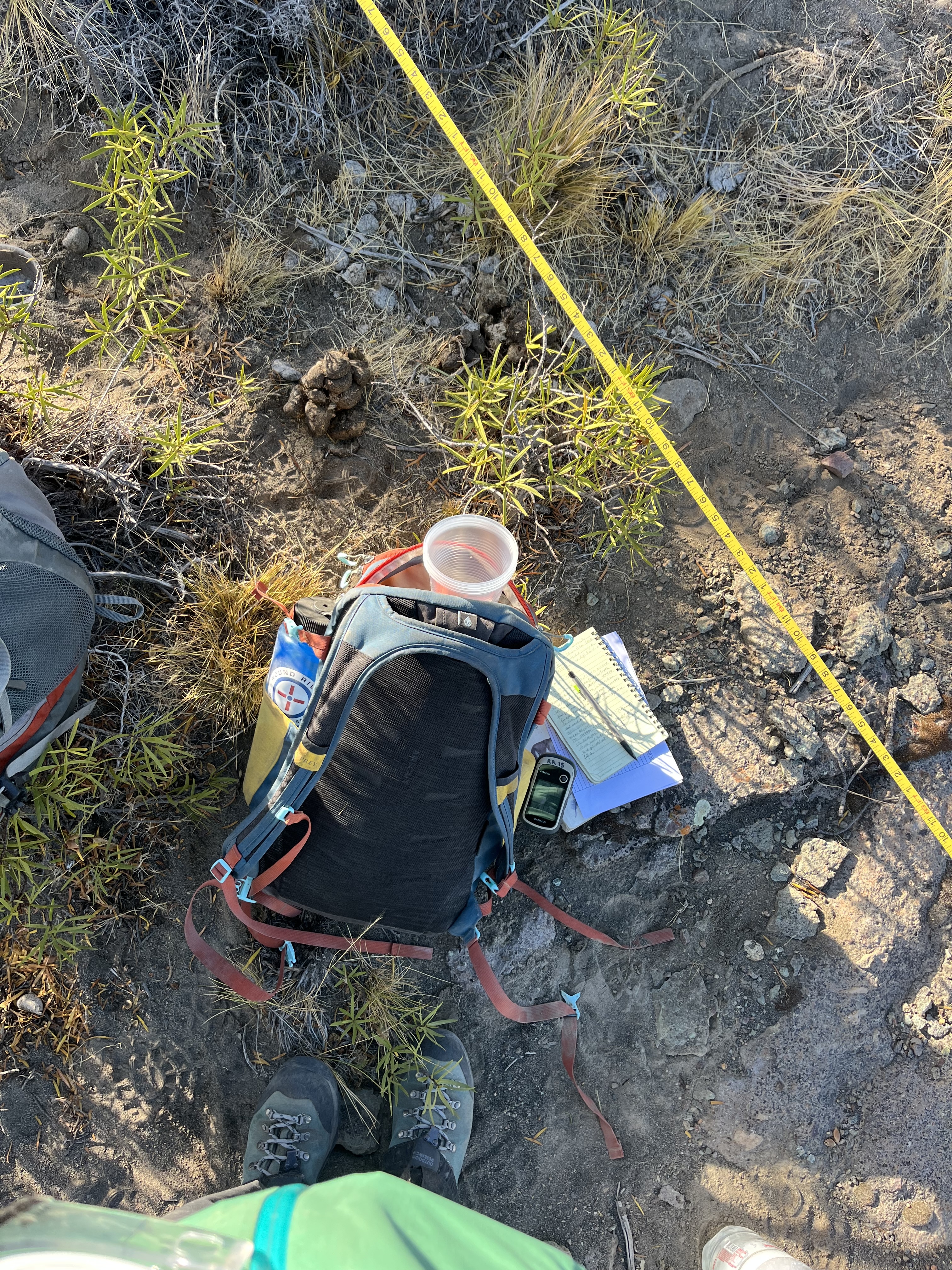
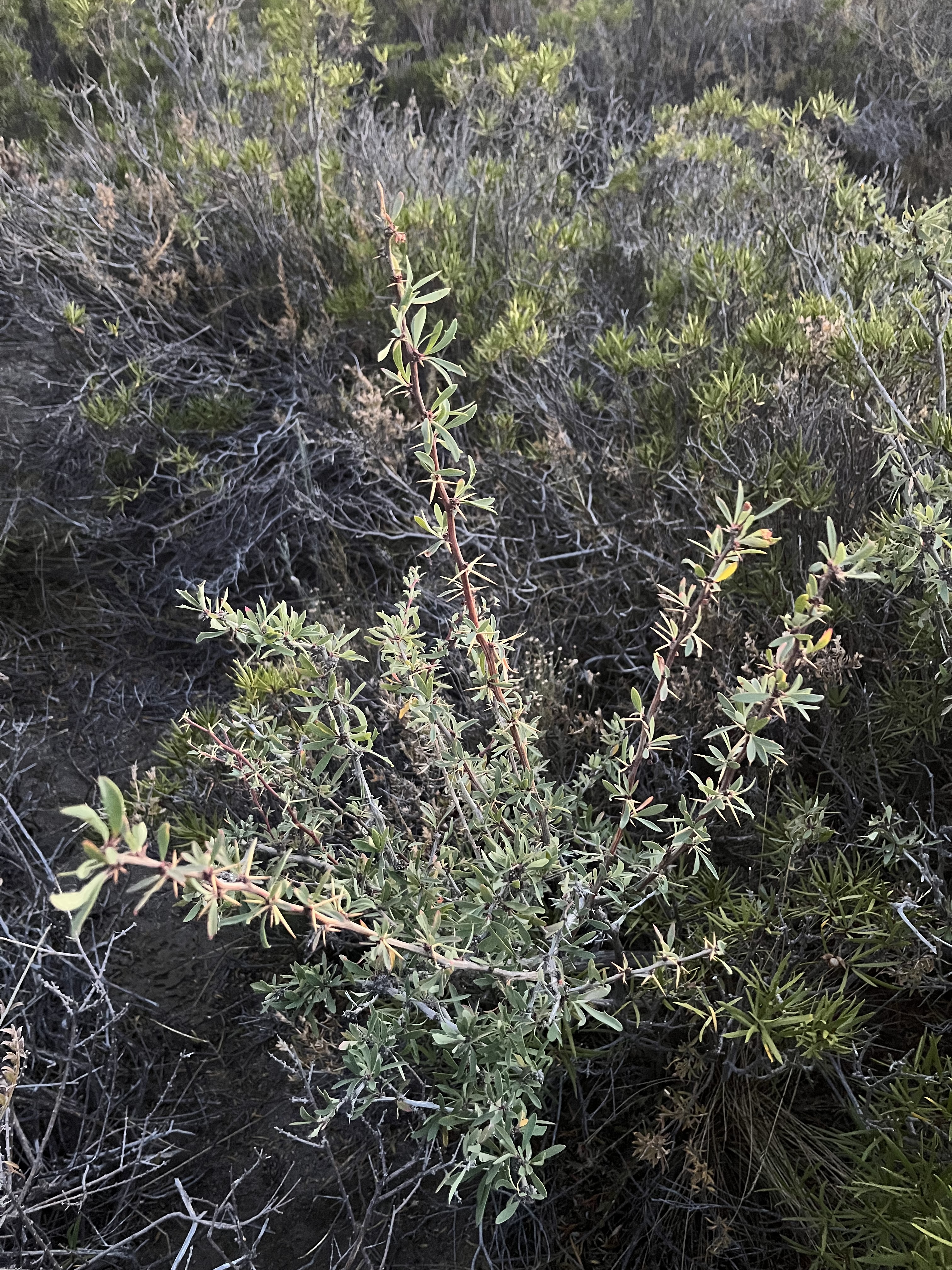
On our way from our first point, we looked up on a cliff to see something way up high. At first, we thought it might be a bird nest with babies, but upon further inspection with our binoculars, we found two viscachas (Lagidium wolffsohni) high up on the rock. Viscachas are rodents that are about marmot size but have longer ears shaped like a rabbit. It was incredible watching these rodents moving high above us on a small ridge of rock. The rest of the morning we spent digging our pitfalls. We hiked onto a sandy hill and saw different birds of prey swoop in the sky above us. Below us we found multiple lizards who dashed across the sand and observed many plants.
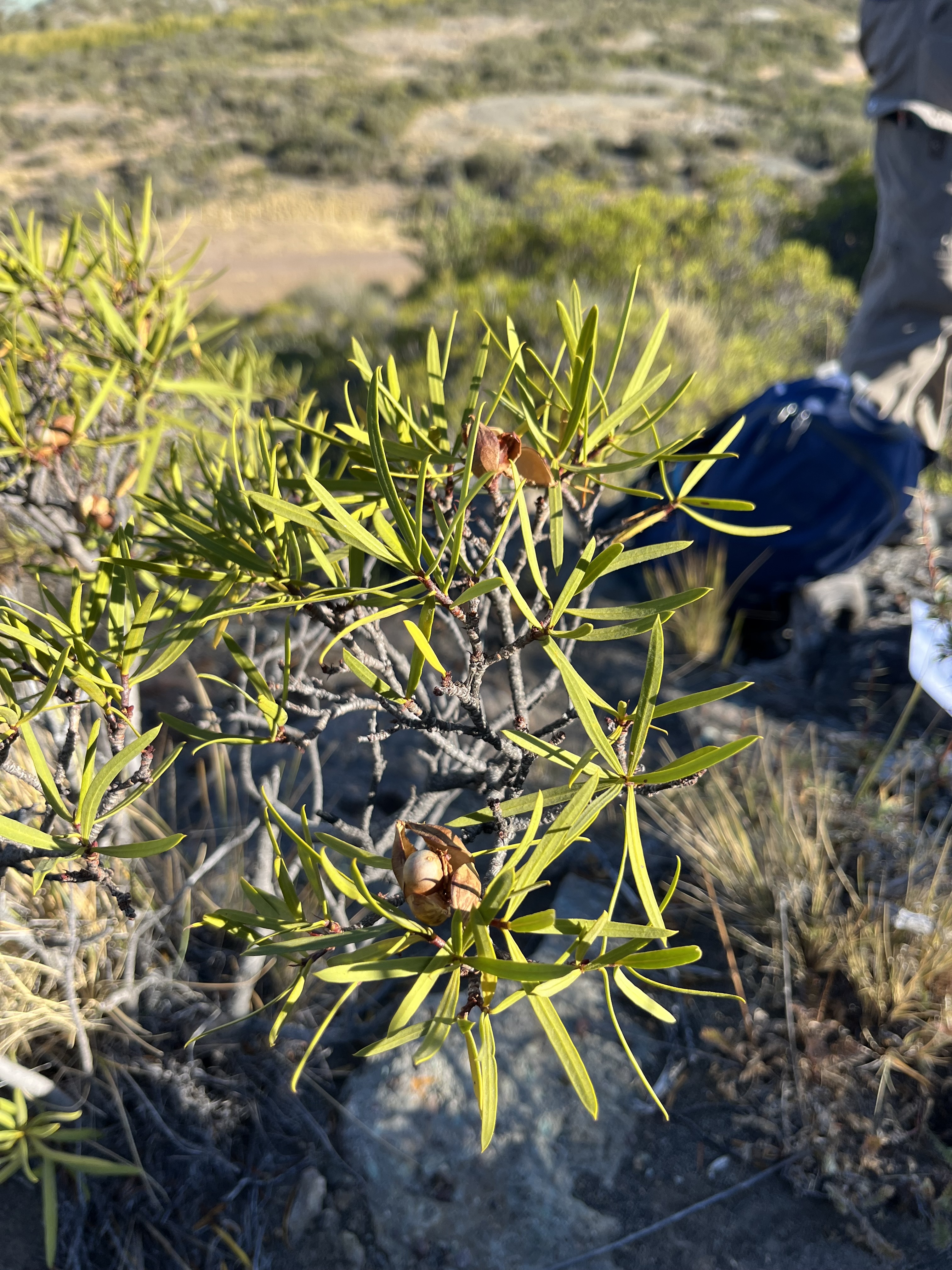
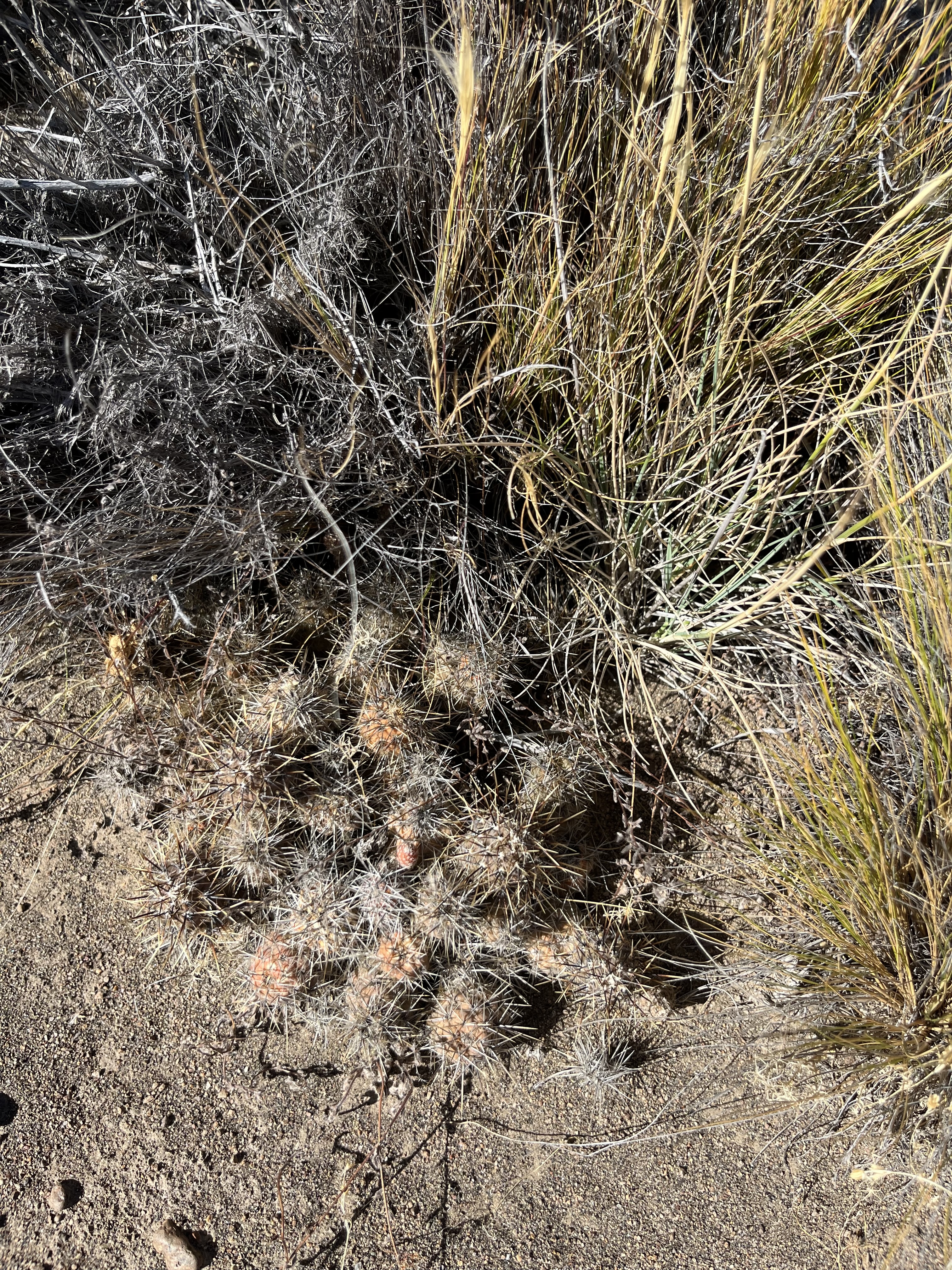
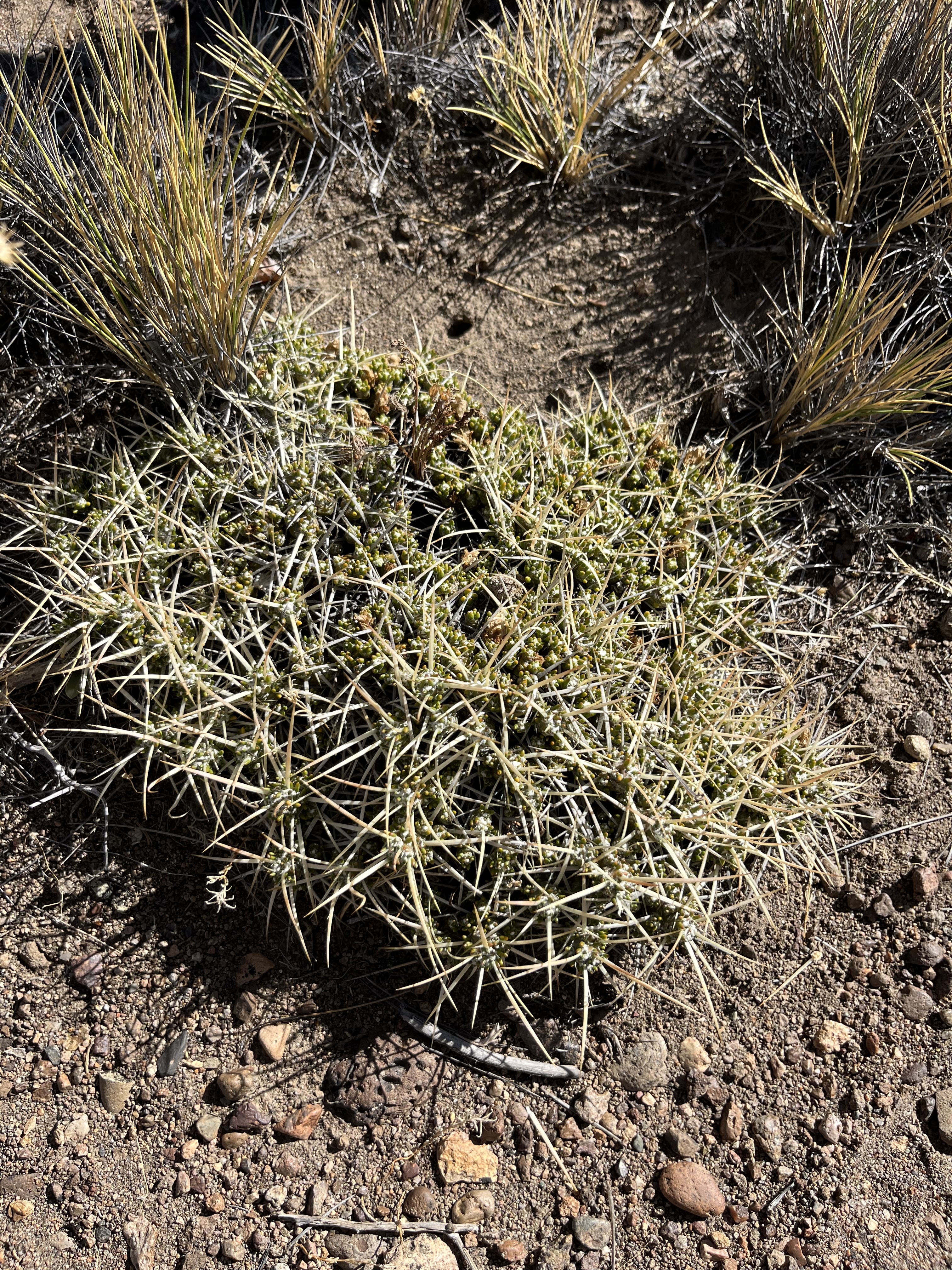
Our project in Chile Chico focused on identifying biodiversity and observing interactions in the steppe environment of Bahia Jara and outside Chile Chico along with a survey looking at threatened cactus species on the steppe. Along with conducting research in the area, we partnered with Raices de Calafate, a local school and nonprofit, hosting a community based educational activity in the steppe. During this project we found an abundance of species richness and a variety of species interactions.