
By Sophia Adami-Sampson of Bowdoin College
My name is Sophia Adami-Sampson and I am a completing my degree in Biology from Bowdoin College with the Round River program in Mongolia. Before our journey to base camp in the Darhad Valley, we gathered for a few days in the capital city of Ulaanbaatar to collect our bearings and our visas. Jetlagged, we sprawled our sleeping pads on the floor of the unfurnished apartment and got acquainted with one another. Eating boortsog (biscuits) and jam, we discussed our hopes for the weeks ahead and the shared love of natural history which brought us together. Conversation flowed freely as we poured over field guides for Mongolian mammals and birds, expressing our admiration for this animal or that. Soon we were collecting inside jokes and chortling with delight.
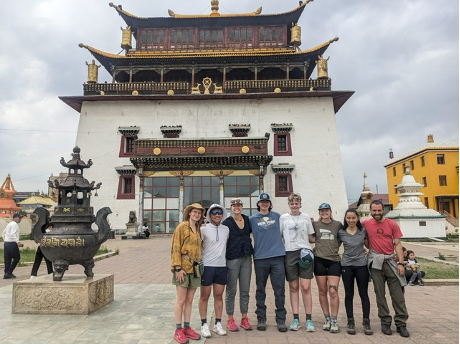
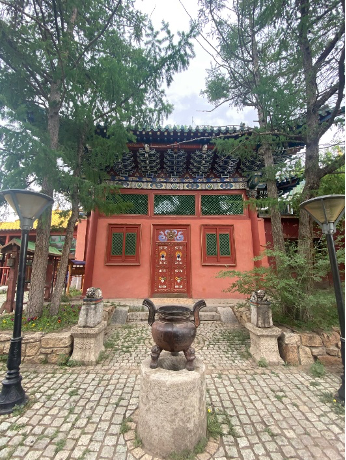
Apart from the glimpse of green mountains from our apartment window, the concrete jungle of Ulaanbaatar felt worlds away from my vision of Mongolia. Ulaanbaatar is home to roughly two-thirds of the nation’s population, who live in an eclectic mix of former Soviet buildings and modern Western skyscrapers. Dodging the endless traffic of lifted Priuses, we practiced reading Mongolian as we wandered this unfamiliar city’s streets. Despite the novelty, none of us were sorry when it was time to take the train into the countryside. Our last stop in Ulaanbaatar was a peaceful sojourn at Gandan, the largest Buddhist monastery in Mongolia. Inside the gates of Gandan, the city hubbub disappeared, and I was overcome with a sense of calm. As we spun the traditional prayer wheels, I murmured wishes for a safe and joyful summer in the Darhad.
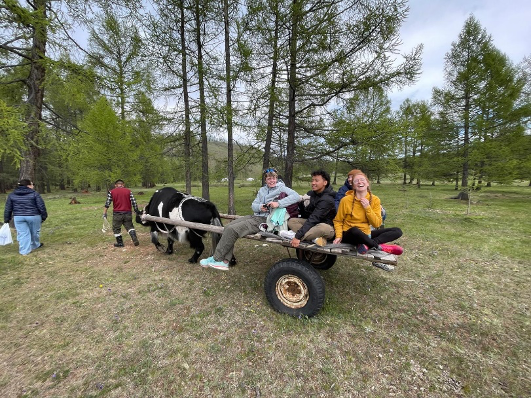
Soon after, we boarded the train heading north, all of us eager to spend our first night in a sleeper car. Dotted with gers and herds of livestock, the steppe rolled by as we crammed into one train car and giggled over card games and riddles. We arrived the next morning in the town of Erdenet and piled into vans heading toward Lake Hovsgol. The largest body of water in Mongolia, Lake Hovsgol holds two percent of the world’s freshwater. Because spring arrived late this year, the ice melted only last week, just in time for our boat ride across the lake to camp. When we landed on shore, our hosts greeted us warmly and escorted us to camp on a cart pulled by a hainag. This last little joyride completed our fourth form of transportation in one day: train, car, boat, and the hybrid of yak and cattle.
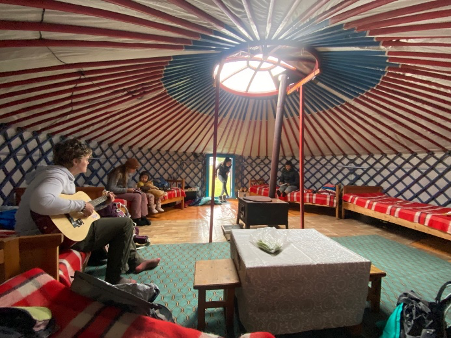
After tucking into a delicious dinner, we relished the heat of a wood-fired sauna with intermittent dips in the 40-degree Fahrenheit lake. That night we retired to sleep in the cozy felt-lined gers for the first time, refreshed and relaxed.
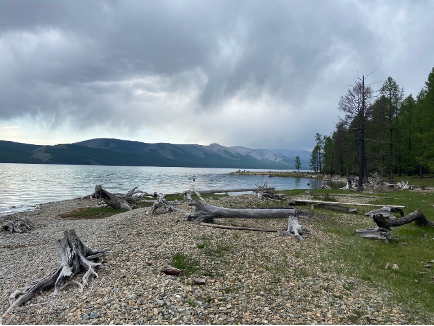
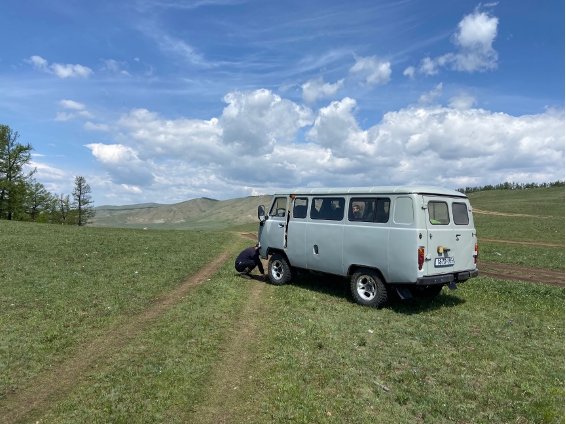
In the morning we were up early to search for birds among the larch trees, listening for songs and identifying flowering plants. After a quick ride back across the lake, we were introduced to our main form of transportation in the Darhad: the furgon. Over the course of the subsequent seven-hour off-road journey, we became very familiar with these former Russian military vans, and all their nausea-inducing quirks. As we traveled the rutted, muddy route to the Darhad we attempted to distract each other with endless questions and games, with moderate success. Mercifully, none of us lost our lunch, but we were all thrilled to be stationary when we finally arrived at basecamp.
Nestled in the south of the Darhad Valley near the small town of Ulaan Uul, our camp faces the western edge of the striking Horidol Saridag mountain range. We pitched our tents in a field of yellow buttercups, encircled by a fence to keep out wayward yaks. Our home is completed by two gers, one for classwork and the other a kitchen for our talented cook Amkaa. Exhausted from our lengthy journey, we settled into our tents and a deep sleep. A black kite wheeled overhead as the sun set on our first night in the Darhad, igniting the mountaintops in the distance. I have enjoyed chronicling our first few days in Mongolia and our exciting journey to the Darhad and look forward to the coming weeks.