
by Joey Abreu, of Northland College
photos by Adam Spencer, Round River Instructor
The confluence,
where the light and the dark meet.
We can learn from this.
A river confluence, where two rivers meet and move forward together, is something we humans can learn from, and apply to our own lives. The Nakina and Sloko Rivers can teach us. They are very different in appearance; the Nakina is a river you would imagine in any wilderness setting, a pristine bluish-green gentle flow of water full of life, rocks, and eddies. The Sloko appears very different; it is wide, powerful and bright whitish-blue, full of glacial sediments. These rivers contrast each other, but meet and combine to form an even stronger force of nature.

Rain stands among the swirling waters of the Nakina-Sloko confluence.
An elder in the Tlingit community, Jackie Williams, who had lived within the vastness of this wild place, took great meaning from the confluence of the Sloko and Nakina Rivers. Jackie passed away earlier this year, but from meeting other member of the community and learning about the Tlingit people, his presence and influence will always remain. Jackie grew up during a dark time when the government forced First Nations children into residential schools, where they were forbidden to speak their native languages or practice their traditions. Jackie’s grandfather, however, took Jackie deep into the Taku watershed and hid him from the government, raising him in the traditional ways and teaching him the oral history of the TRTFN. It was a painful period for the Tlingit people and all First Nations of Canada, in efforts of forced assimilation to the European way of life. Yet despite the horrible history and its aftermaths, the distrust between the Tlingit and white people, Jackie believed that the confluence of the dark Nakina River and the white Sloko River held great power, and carried the message that the Tlingit and white people need to work together to move forward in a positive direction.
After experiencing and interacting with the confluence, through fishing, hiking and drinking of their waters, I felt the power Jackie described.
The only fishing I had ever done in my life was from a small dingy in the waters of Lake Michigan. Small rod in hand, I’d stare intently at a motionless bobber floating in the calm water. Being a Wisconsinite and resident of the Great Lakes region, I have a lot of passion and love for that place, but the way I felt in connection with these two rivers in the Taku felt different.
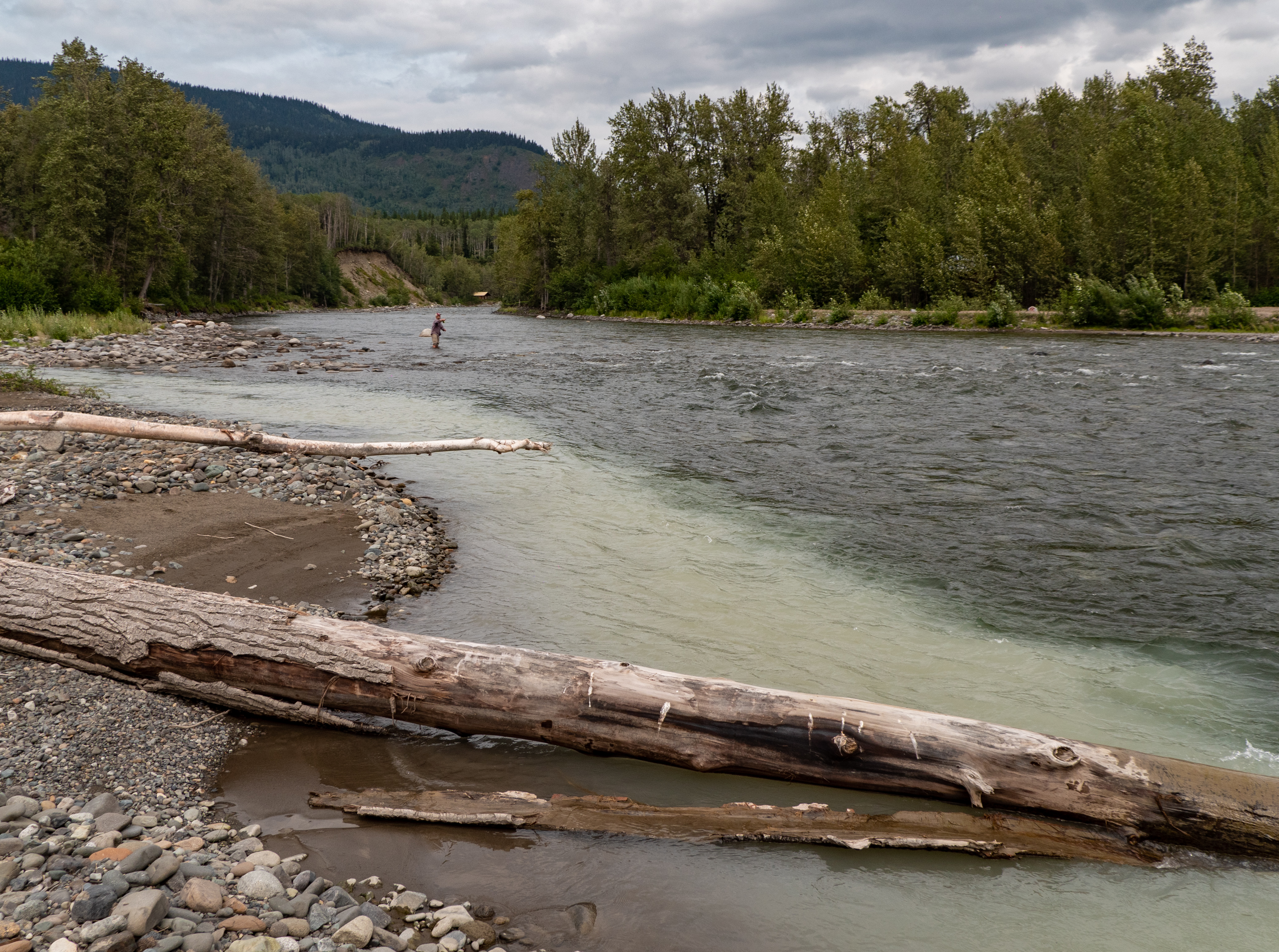
A white finger of the Sloko merges with the dark waters of the Nakina River.
The first time I fished the confluence I was not expecting much. We arrived on the beach in between these two powerful forces, set up our small camp spot, and each person went their own way to experience the place. I had borrowed a spinner reel from our instructor Doug to use for the day. After dropping my stuff off I rolled up my corduroys, undid a few bottons on my shirt and set out to the smooth-stoned shore of the Nakina. Wearing my water-proof boots, I hopped from stone to stone until I found a larger rock I could post up on and began to try using this fancy new kind of fishing rod. I sent my first two casts a little ways upriver, so that my spinner could float down the middle of the river as I evenly worked the reel on my rod. I felt confident in the mechanics of the device and threw my line out once again. As I reeled I was looking about, enjoying the sight of the beautiful scenery that surrounded me, not really paying attention due to the fact I had low expectations of anything to happen besides seeing my spinner return to the end of my pole. But when my spinner was about halfway back to me from my initial cast I felt a strong tug. It genuinely surprised me, thinking to myself, “what is this, witchcraft?” I hesitated for a moment and felt it again. This time I sprung into action, gave a firm tug on my pole, only to feel resistance and see the satisfying bend in the fishing rod. I tugged on the rod, making sure I had a secure hook in the creature that found itself at the end of my line, then began reeling in with intense focus.
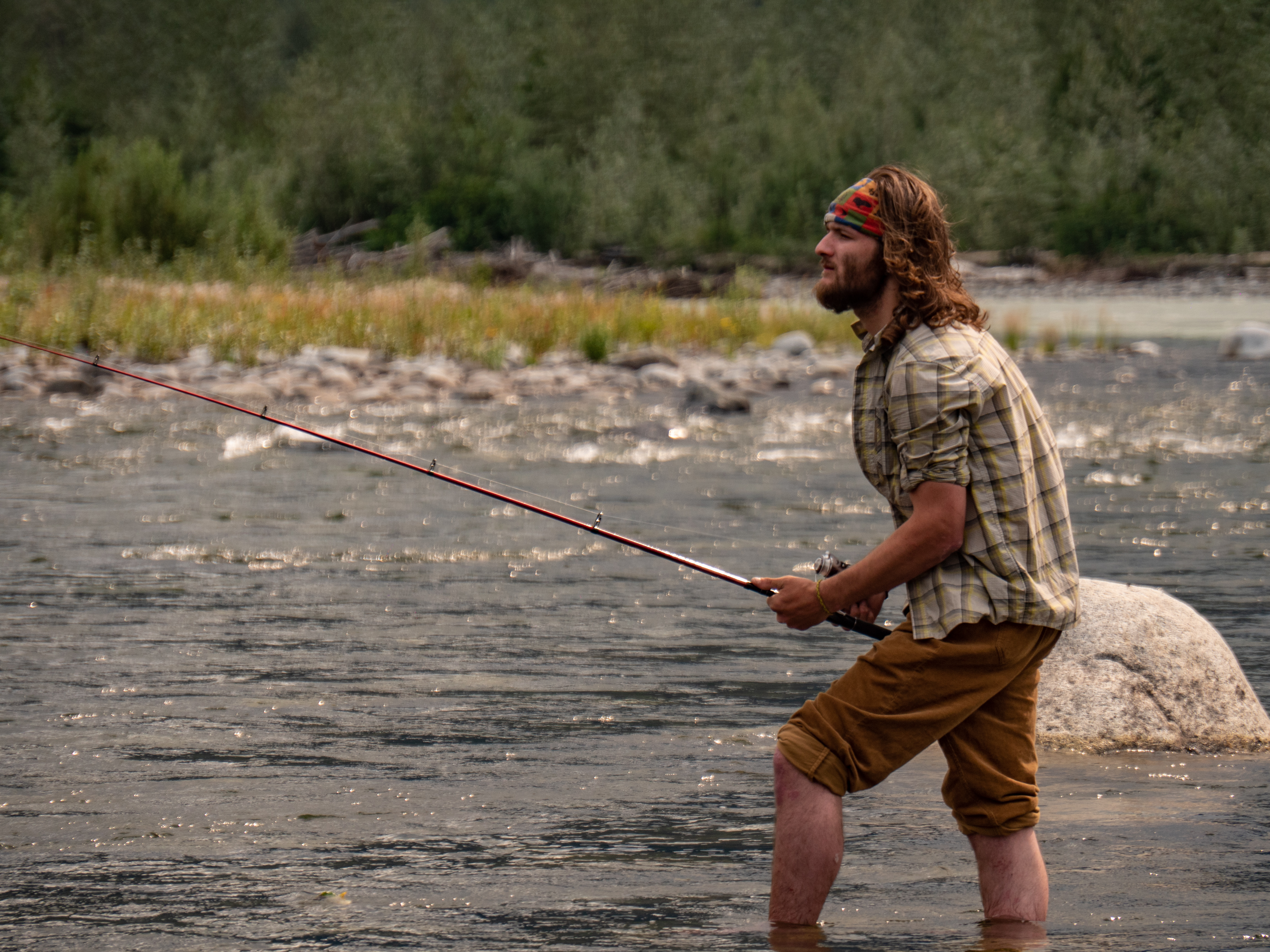
Focus of a fisherman
My posture went from casually standing up, to a determined stance, knees bent, rod pointed down and eyes focused forward. The excitement and anticipation to see what have hooked itself on the end of my rod was nearly uncontrollable. I reeled and reeled until I could make out a shining silver blur, fighting and jerking my line about under the surface. As I brought the fish in close it jumped and splashed with power, fighting with all its strength, provoking feelings of respect and wonder. It was a rainbow trout, and the largest fish I have ever caught.
I had never seen such a beautiful fish up so close. A bright silver body, speckled and blazed with a pink stripe down the side of its body. I was truly taken back by it. When the fish was close to the rock I was perched on, I held its body so I could remove the hook caught in its lip. While I was doing this I talked to the fish, almost without consciously realizing it. With reassuring little phrases, in an attempt to communicate my peaceful intentions, I talked to the fish like one does with a bear. After having a secure hold on the trout’s body I was able to free the hook from its lip, thank it for allowing me to catch it, and let it slip off through the water.
The feeling of catching the trout and being able to release it back into its home was pleasant and accomplishing, and I chased those feelings for the rest of the day on the confluence, walking up and down the banks of the Nakina casting in my line and repeating the process.
During our three days camped on the Nakina, everyone was able to catch a fish, and have similar feelings and experiences that I had from my third cast onward.
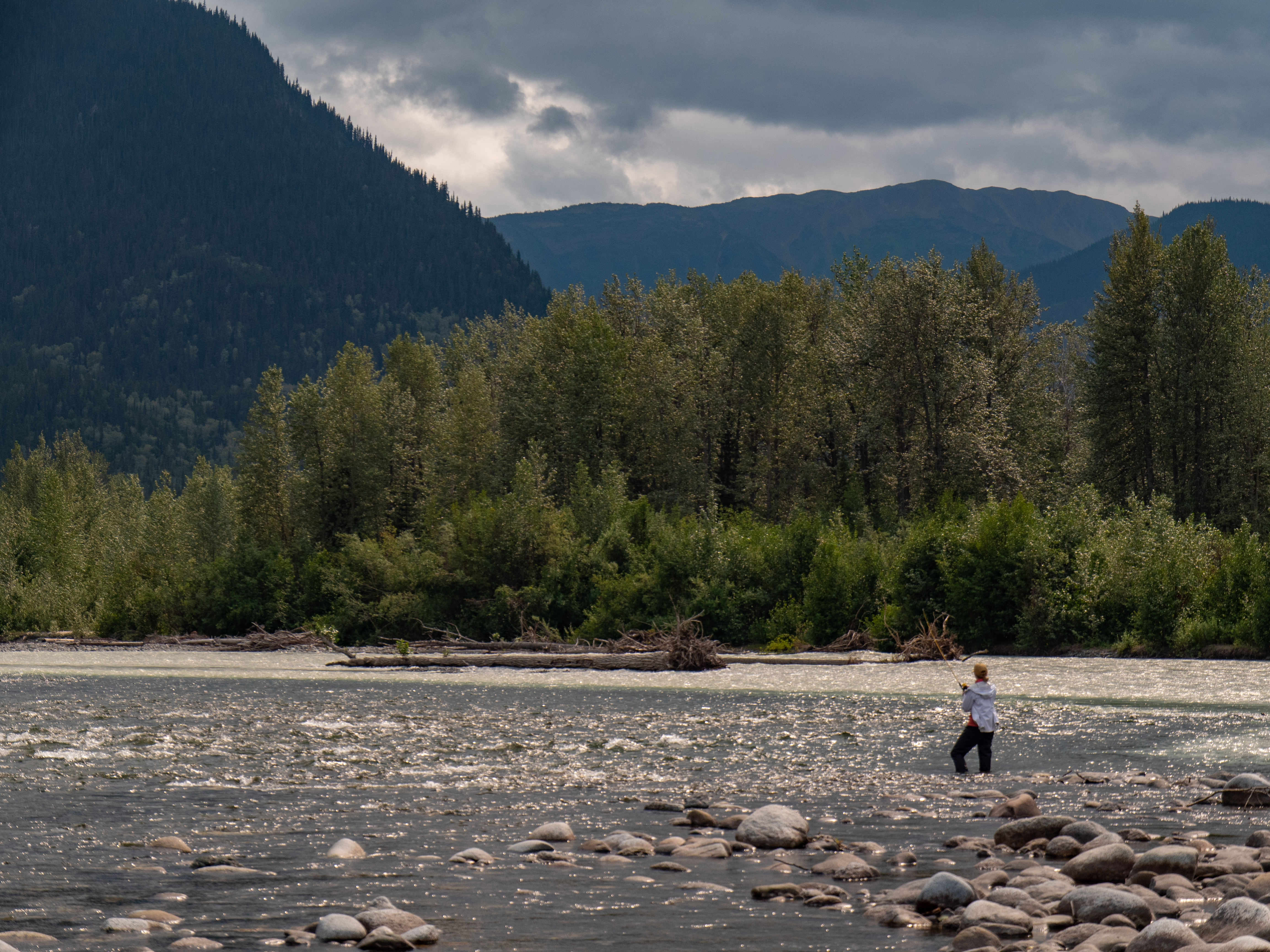
Katherine casts into the confluence.
The two rivers and their joining together symbolized strength and unity. After feeling this power, Jackie’s outlook on the rivers made even more sense to me. The confluence is a spiritual place that we can apply to our own lives, and the lives of others around us, especially when working together with those who are different from ourselves.
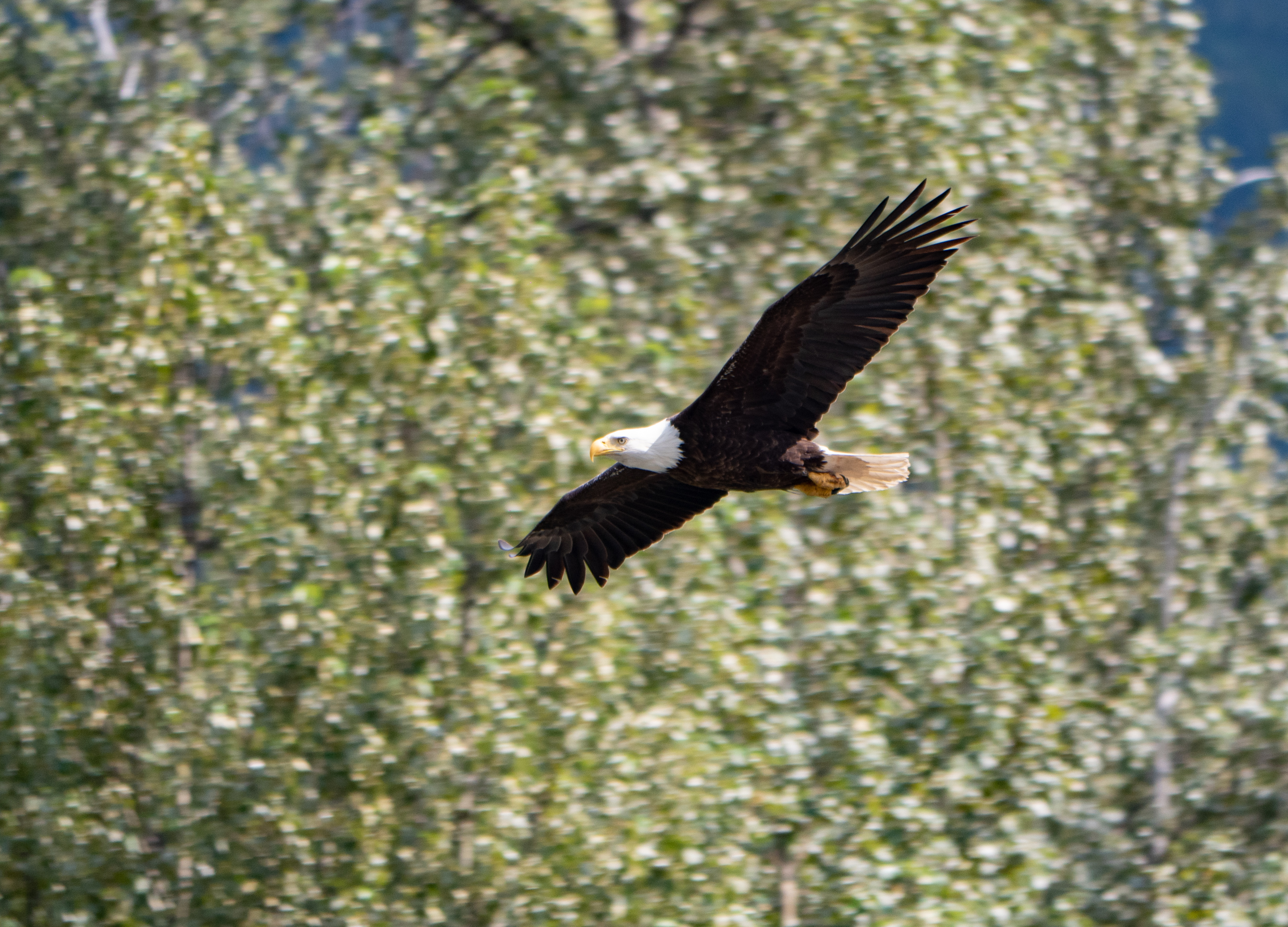
A pair of eagles flew over us, in their travels up and down the Nakina River.