
By Lily Simko of the University of Montana
Back in March, Jack and I were dropped off at Norma and Gavino’s campo. We were nervous, excited, and unsure of what to expect. One-week later Sara would arrive to find Nellie and Santiago. We smelled of farm and cigarettes, had a new vocabulary of Spanish curse words, and were eating lamb we’d held alive in our hand’s days earlier.
I didn’t know what to expect going into homestays. The instructors had mentioned some homes would have beds for us and it took me no time at all to imagine spending a week in a home with gardens, hot showers, and a sweet family. But after we had broken down, willed the green truck over a mountain, and were greeted by two serious men on horseback, I realized this week wasn’t going to be what I expected. We got out of the truck and Gavino greeted me with a kiss on the cheek and Jack a handshake before hopping back on his horse and leading the final stretch to the house.
The house was small. There were solar panels in the yard, piles of stuff, and a scraggly fence with a gate you needed to wrap a piece of rope around twice to close. Animals were everywhere, cabra (goats), gallinas (hens), pavos (turkeys), perros (dogs), y patos (ducks). Norma’s greeting was friendly but not the warm grandmotherly one I’d fantasized. Creases lined her face, there was a rasp to her voice, and though welcoming she had a gruffness born from self-sufficiency. She promptly told us where to set our bags and we headed inside. The conversation flowed faster than my small Spanish vocabulary could make sense of. Norma and Gavino had thick accents and even Claudia, our instructor, had trouble understanding them. Eventually we hugged Claudia goodbye and watched her disappear over the mountain. I stood there silently panicking with the realization my lifeline, my source of communication was gone. We were on our own. So, standing there I began the countdown. Seven days.
It’s only seven days.
I can make it.
Seven days.
Little did I know how meaningful those seven days would be. There is a negative association with the word discomfort, but I would describe my week with Norma and Gavino as uncomfortable in the best way possible. It’s awkward to stay in a stranger’s home, but to be dropped into a stranger’s life practically mute and deaf supersedes awkward to straight up uncomfortable. I have never felt so incapable and incompetent as I floundered to understand and ask the simplest questions. Norma and Gavino likely used a year’s worth of patience on me during that week, but they never showed it and I soon noticed their twinkling eyes and caught on to their humor. At dinner on our first night, we managed broken conversation and decided on “siete y media” for mate the next morning. This was the start of a running joke about meeting earlier, “Why not 6 or 4?” My initial apprehension began to melt as we chuckled together.
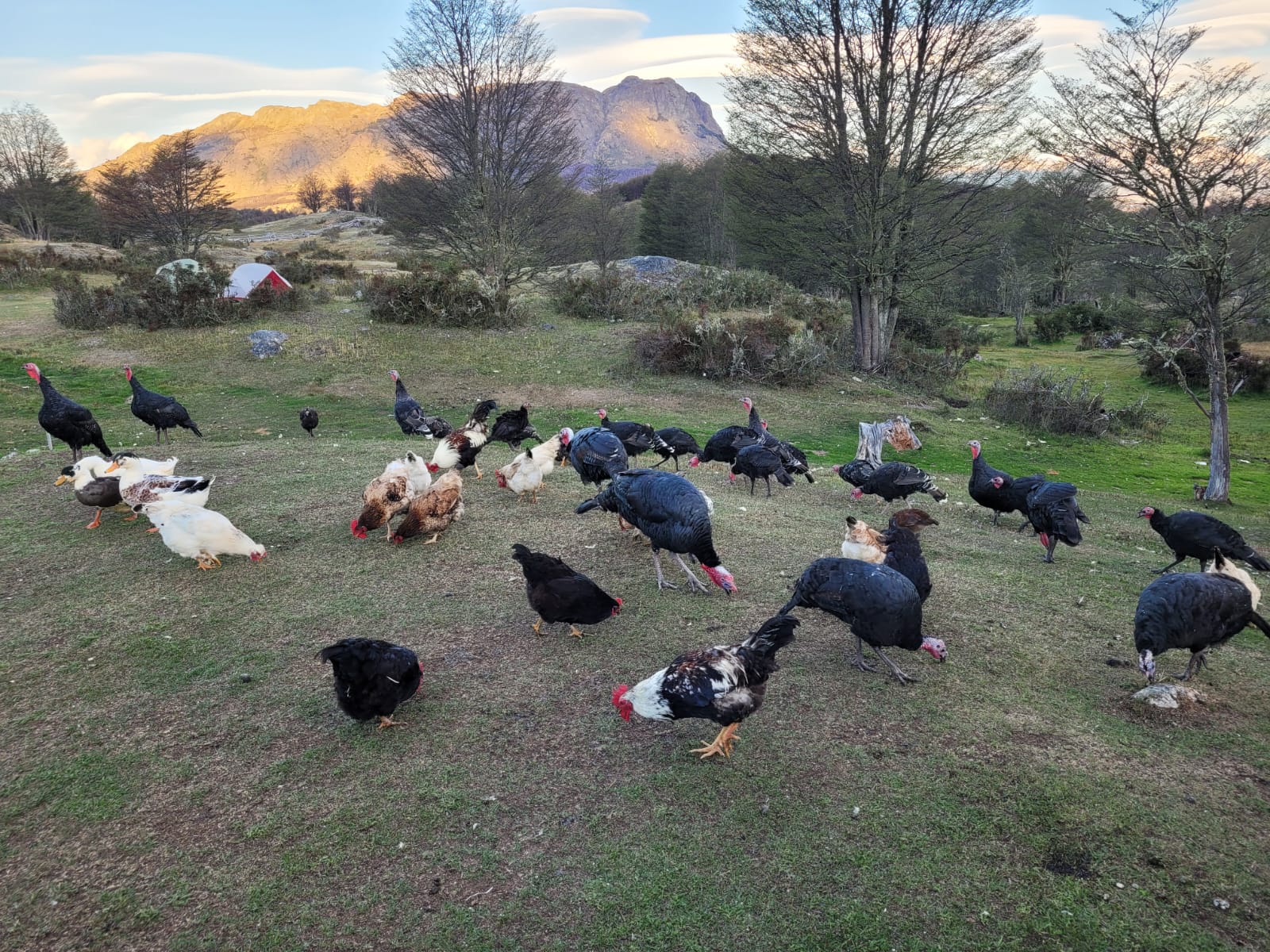
Seven thirty always came quickly and we’d struggle out of our sleeping bags, past the wheelbarrow layered in ice, and inside to hot mate. We’d sit in comfortable silence not yet ready to begin the effort of communication. Around 8 Norma would turn on the radio, and by 8:30 the morning check in was in full swing. The operator reached out to each household by their radio name. Our house was Cerra Negro named after the mountain to the East of the campo. Some days we’d get messages and Norma would switch to another channel to talk with a friend or neighbor.
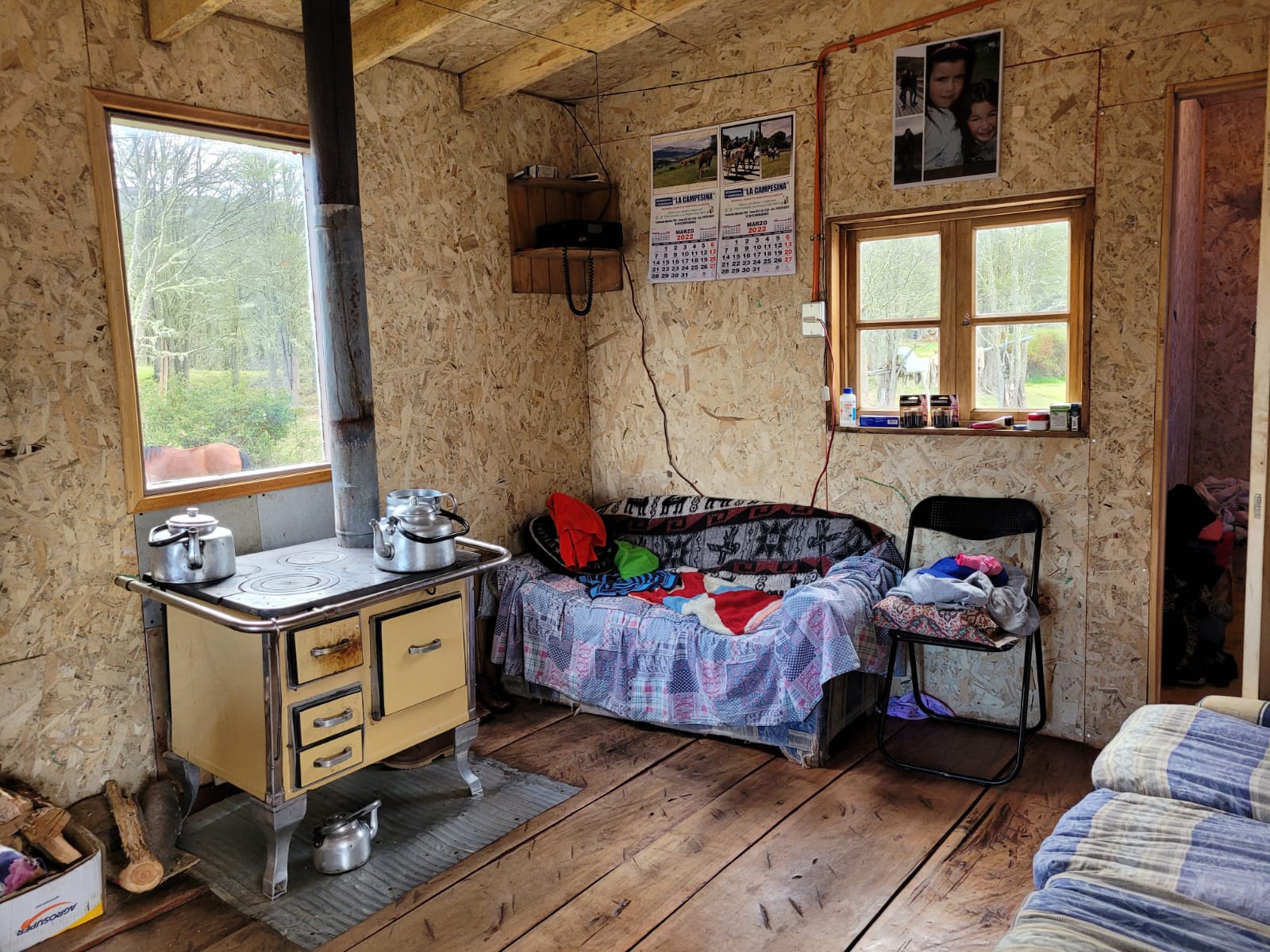
Slowly our brains warmed up to Spanish. Jack caught on faster than I did. The first few days were a complete guessing game for me. Norma says something while we’re doing laundry, I pick up the hose. She says something else, I lower it slightly. Her tone speeds up, I raise it. Nothing. I reach for the handle, she says something else. I move the hose above a different bucket, “Eso, eso es la cosa.” Ding, success! Repeat for all small, medium, and large everyday actions. By the end of each day, I was exhausted. Yet soon words became more familiar and my questions less broken.
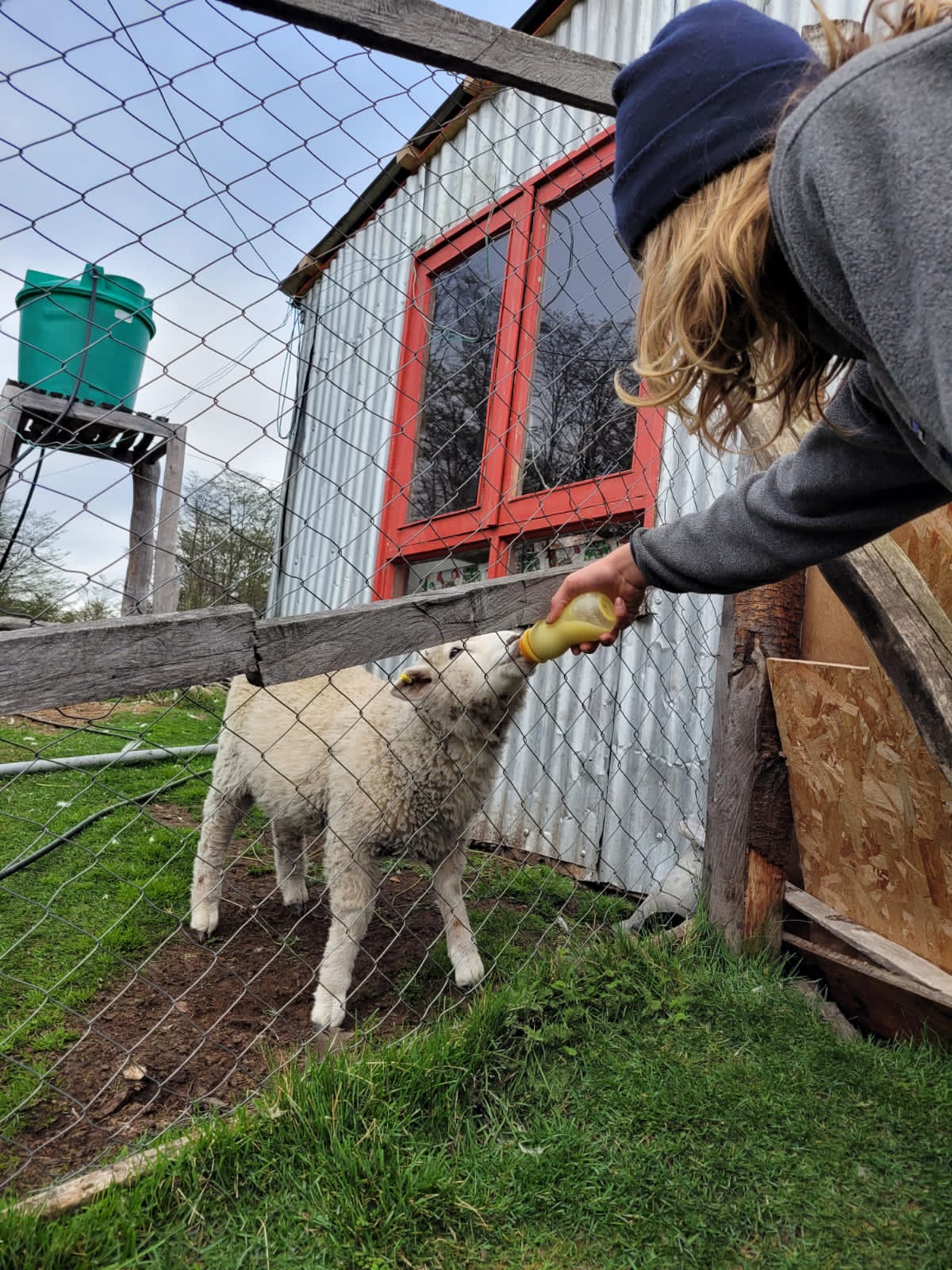
The afternoons we spent with Gavino. We helped him clean up a corral, shod a horse, collected firewood, and tried not to get in the way as he rounded up sheep and cows. He seemed to be a part of the landscape and knew every inch of the campo. Several days we went up and over the mountain behind the house to move cows and sheep closer to home. Gavino would carefully survey the valley from a high point before we navigated down to round up the animals with the help of the dogs. The dogs did most of the work with the sheep, but the cows were ornery. Gavino would turn to us calmly saying “Espera me un momento” before flying off on his horse through trees and fallen logs with shouts of “Arriba!” Though he never told me directly, I could see the immense pride he had in his campo. Not just its beauty with San Lorenzo and other glacial peaks rising in the distance, but it was ingrained into his identity and reflected a life of independence and self-sufficiency.
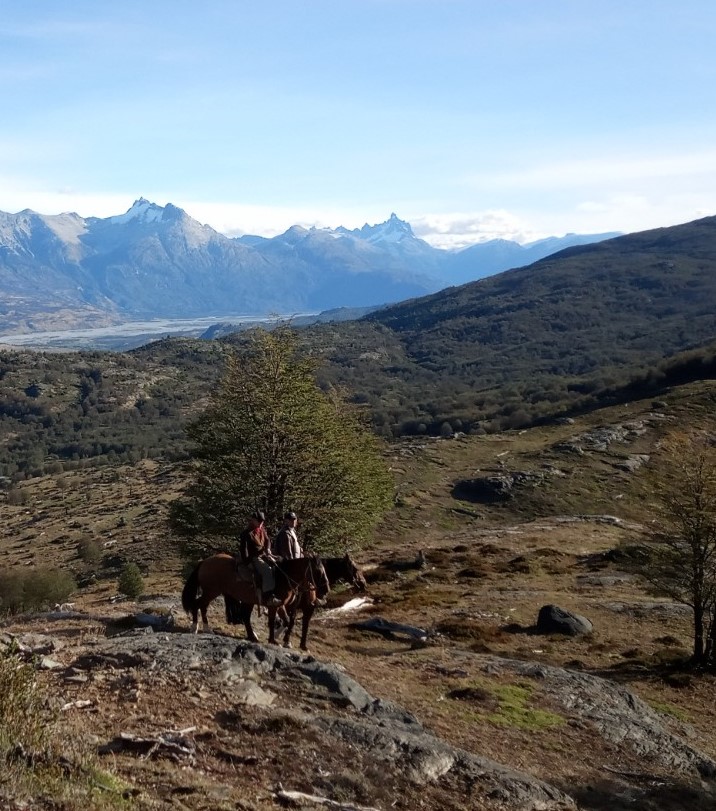
The first time Gavino told us we were going to “matar un cordero” I thought he was joking about slaughtering the lamb we bottle fed each morning. I was only partially relieved to find out we weren’t going to be killing that lamb, but a different one. After finishing our afternoon mate, we went out stopping at the galpón (shed) to sharpen two knives. We walked up to the pen where we had herded the sheep earlier. Gavino slowly made his way between the sheep and eventually grabbed one by the back legs, flipped it over, and handed the front legs to me and the back to Jack. We carried it to where we’d left the knives and positioned its head over a pot. Never have I been so close to an animal that was about to die. I could feel it’s blood pumping beneath where my fingers grasped and felt it looking up at us. I figured there was a 50/50 chance I’d cry, but this was a part of their life. So, I silently said thank you to the sheep and tightened my fingers around its legs. Gavino sliced directly through its neck with one motion. I can’t say it was instant as it let out a final bleat, but it was fast. The blood that drained into the pot was the brightest red I’ve ever seen and afterward Gavino offered it to the dogs. Slicing up the legs and torso he peeled the hide from the carcass. The only thing that went unused was the fur matted with burrs. We hung up the meat in the galpón and I fed the dogs slices of stomach and intestines while the cats got the kidneys. We would eat everything else.
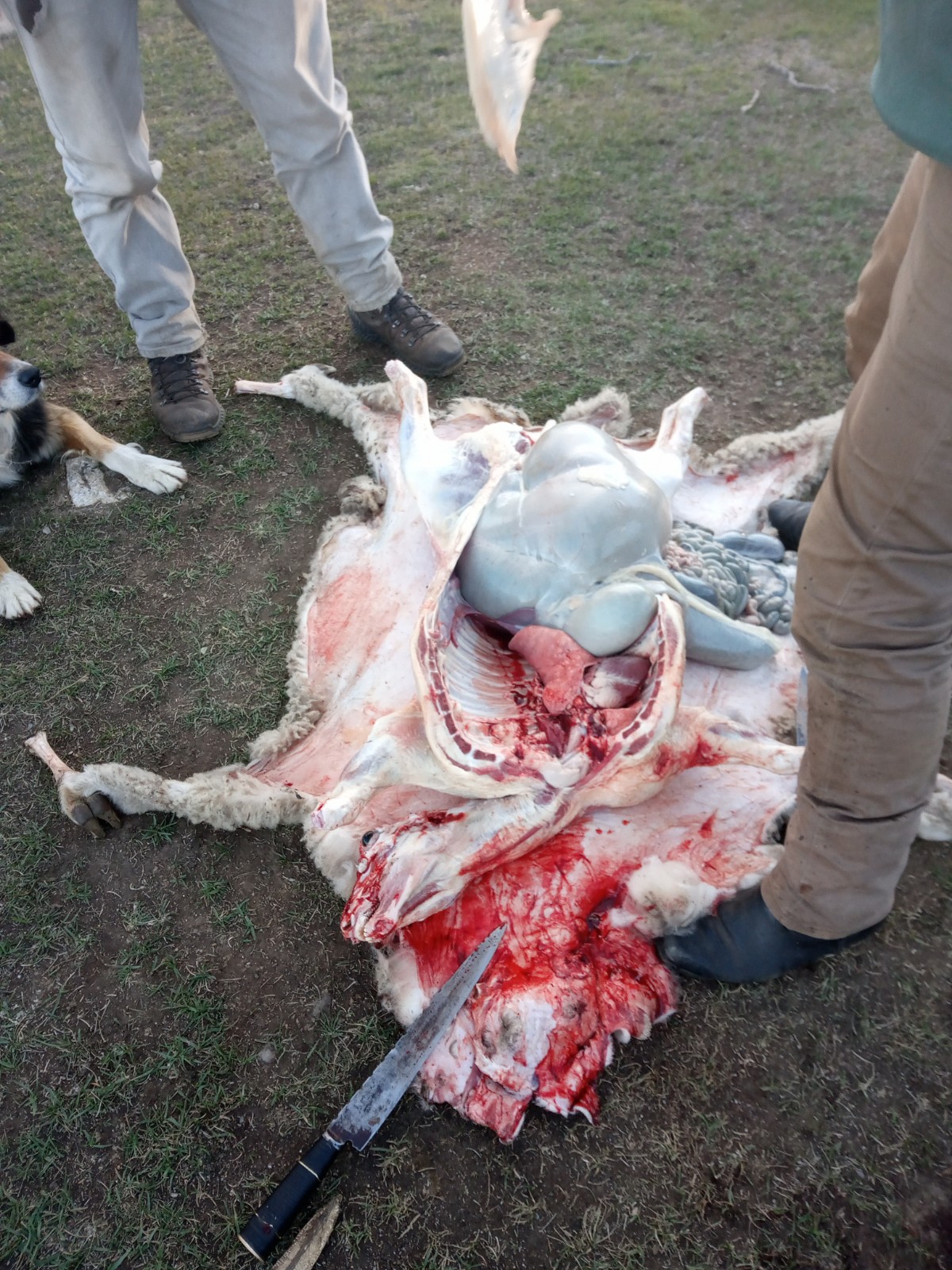
That night we sat around the table finishing the ribs I’d watched rise and fall hours earlier. While “good” sounds like an insensitive word to describe killing an animal it was a good experience. There was a strange peace in knowing we held it as it died, that none of it went to waste, and it had lived a life roaming the campo.
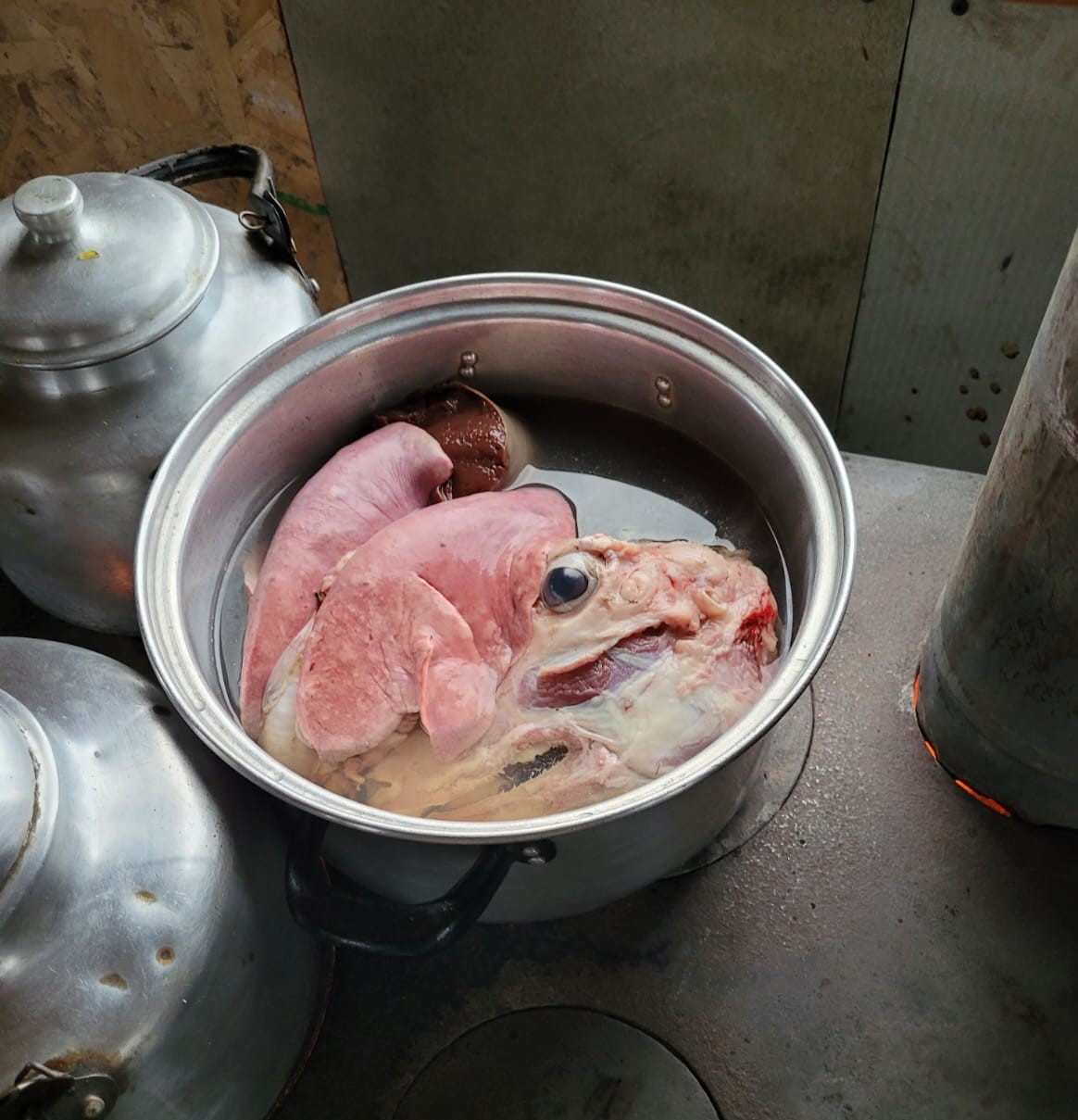
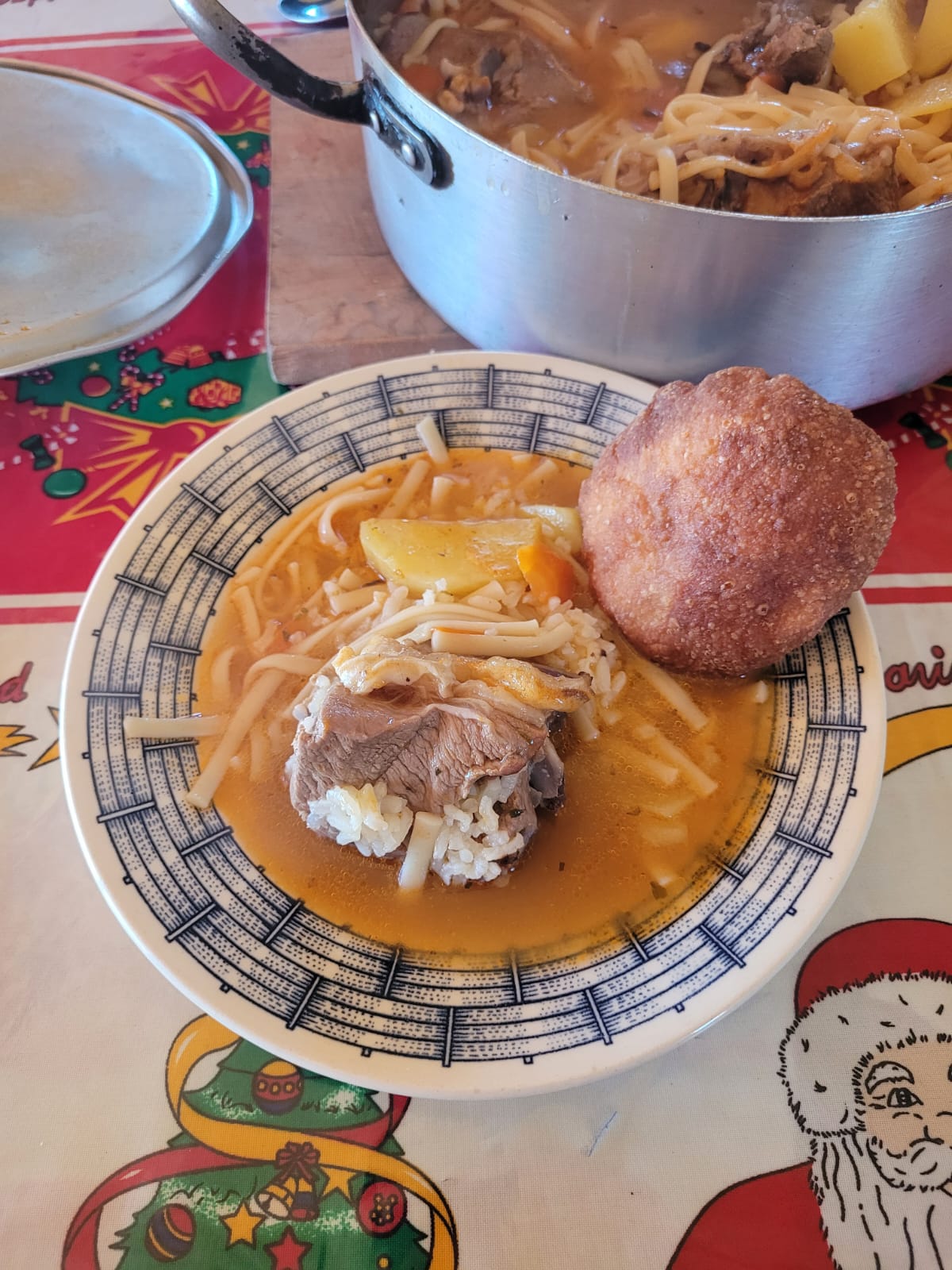
Cordero was the base for our lunch stews along with rice, pasta, potatoes, and carrots. Sopapillas, a fried bread, were our breakfasts, sides for lunch, afternoon snack, and sometimes dinner. Norma introduced us to homemade rosehip jam and pan dulce. Though we only ate one large meal a day we were never hungry. Mate, tea, and coffee were always handy. Strangely, I never saw either of them drink a single glass of water.
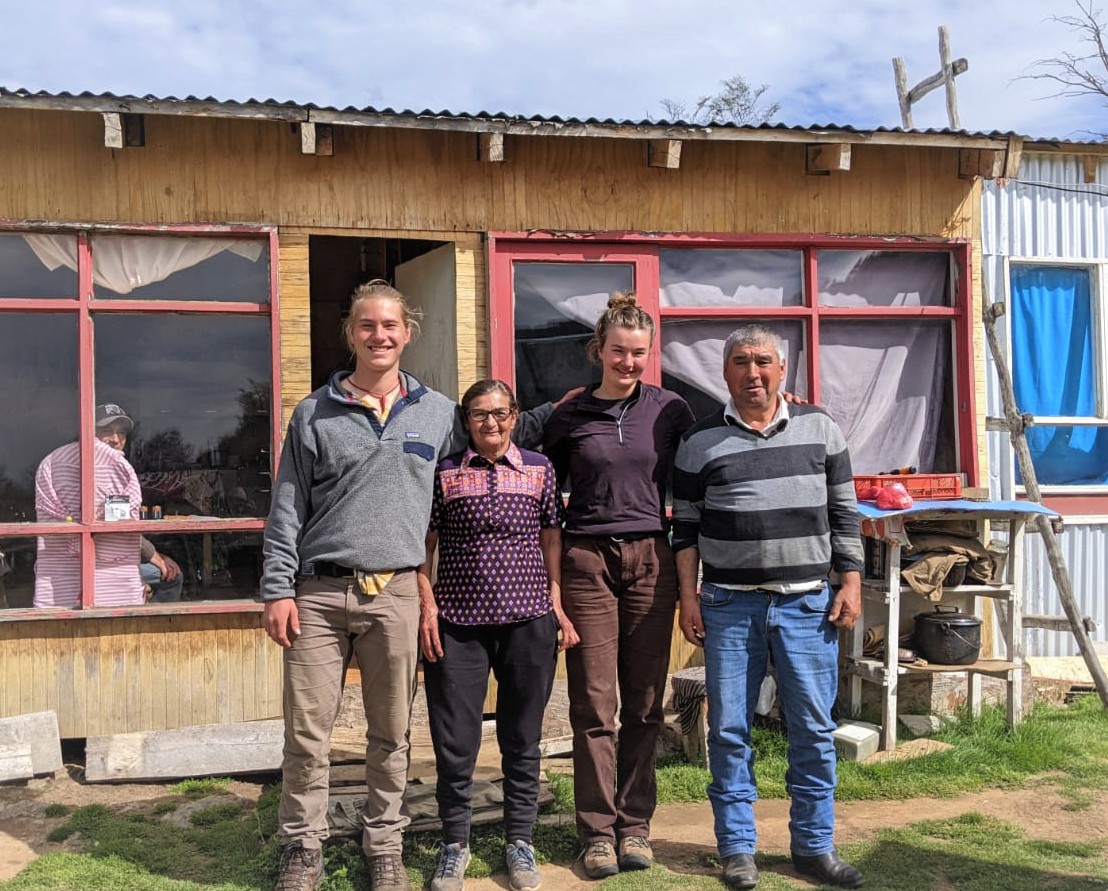
As the week came to a close, I was surprised to find myself holding a strong affection for two strangers I could hardly understand. When Sara arrived to pick us up it felt like I’d lived another life. We were now Nellie and Santiago, after all. She sat down at the table as we finished lunch and Jack and I were shocked at how well we could understand her clear, clean Spanish. We made our way to the yard and Gavino told us if we ever come back to Chile to come to the campo. We finally hugged and kissed them goodbye, and they stood in the yard as we loaded up. As I turned around to wave out the window, it was hard to believe I might never see them again.
The following days the impact of the week began to sink in. I was exhausted and dazed. Jack and I would catch each other staring off and comment, “They’re probably having mate” or, “I wonder what Norma’s washing now.” While I never would have suspected when I began my seven-day countdown, I miss them. I miss morning mate and sweeping chicken poop. I miss Norma’s sopapillas, her halo of cigarette smoke, and sharp “Callete mierdas!” she’d yell at squawking animals. I miss Gavino’s humor and conversations where he didn’t give up explaining until I understood. Though we hardly spoke the same language, their generosity and kindness weren’t something words communicated. They shared their home with open hands extending patience, humor, and mate. I can’t help but think of them often, and my heart will always be grateful for the seven days our lives overlapped.