
Bernardo O’Higgins National Park (BNP) is the largest in Chile, protecting the vast Southern Patagonian Icefield and the expansive fjords and temperate rainforest ecosystems to its west. The park protects the some of the last great refugia of the Huemul, a deer species whose total population is thought to number less than 2,000 individuals. Like many endangered species, their story is one of progressive habitat loss and hunting pressures after the arrival of Europeans. Fortunately, the protection of the Huemul in Chile enjoys broad support, as it is featured on the Chilean seal and seen as a national symbol of pride.
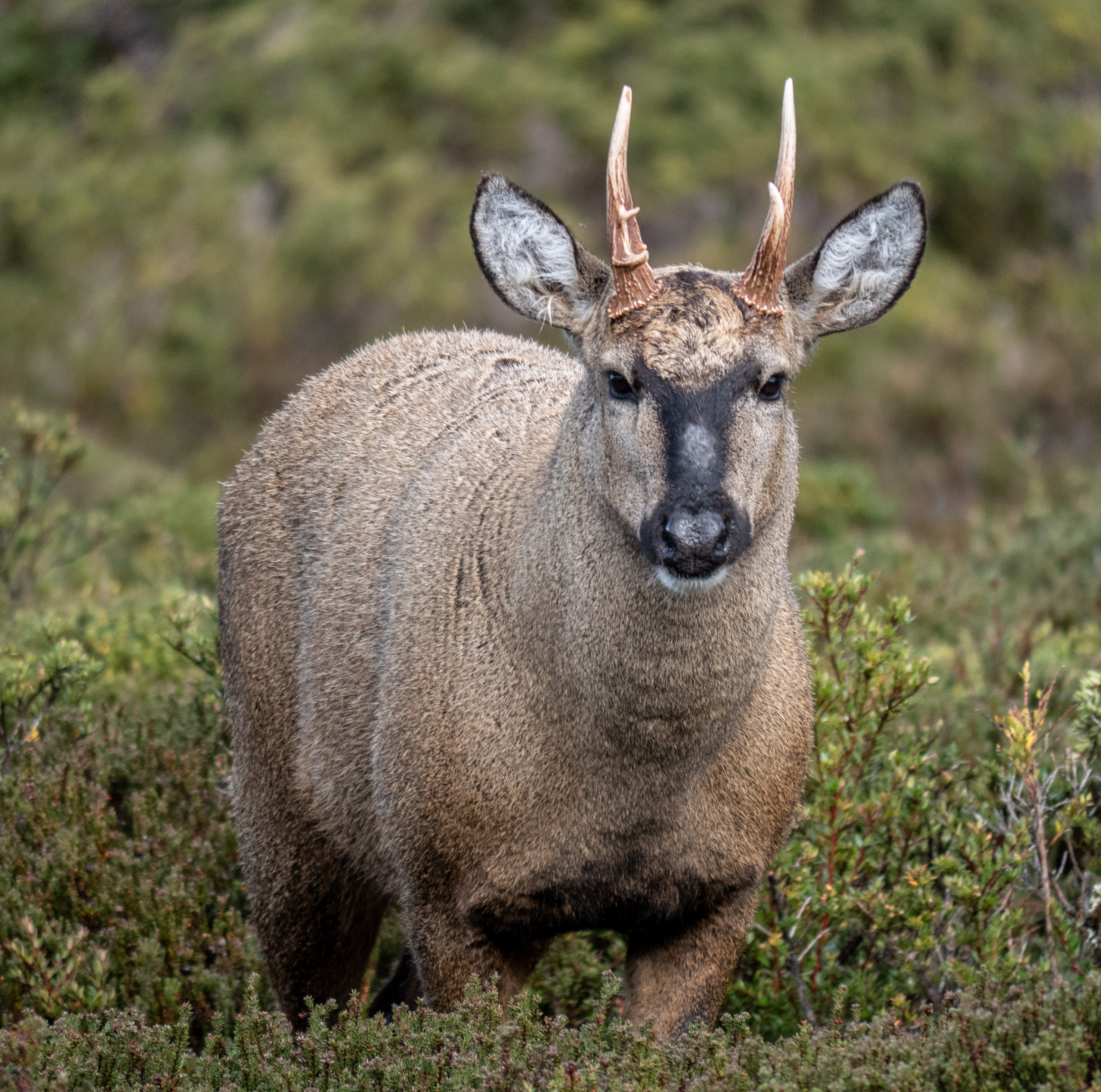
A male huemul deer. Photo by Adam Spencer
The location of this week’s trip, the Bernardo Fjord within BNP, hosts the largest population of Huemul in the world. When managing an endangered species, large populations can function as a “source” population which can help re-populate smaller, isolated populations through migration. For this reason, the preservation of Huemul within the Bernardo Fjord plays a key role in overall preservation of the species. This past week, we surveyed over 60 kilometers of terrain of terrain for Huemul and documented 45 individuals – an increase over last year’s census, and great news for the population.

A female huemul with her 3-month-old baby. Photo by Adam Spencer
The modern day-conservation of Huemul in Chile displays many parallels to the past conservation efforts to save Bald Eagles in the United States. Both are viewed as animals of national pride and have been threatened with population losses and extinction. In the United States, the Bald Eagle, was used as a symbol to mobilize a broader conservation movement that succeeded in in passing stricter environmental regulations. In Chile, the Huemul continues to face threats from habitat loss, grazing and predation from stray dogs. While Huemul protection appears to be nationally popular, it does not seem like a cohesive conservation movement has yet formed around it’s protection. Using the Huemul as a symbol of conservation could both preserve their habitat and also advance a broader conservation movement within Chile.
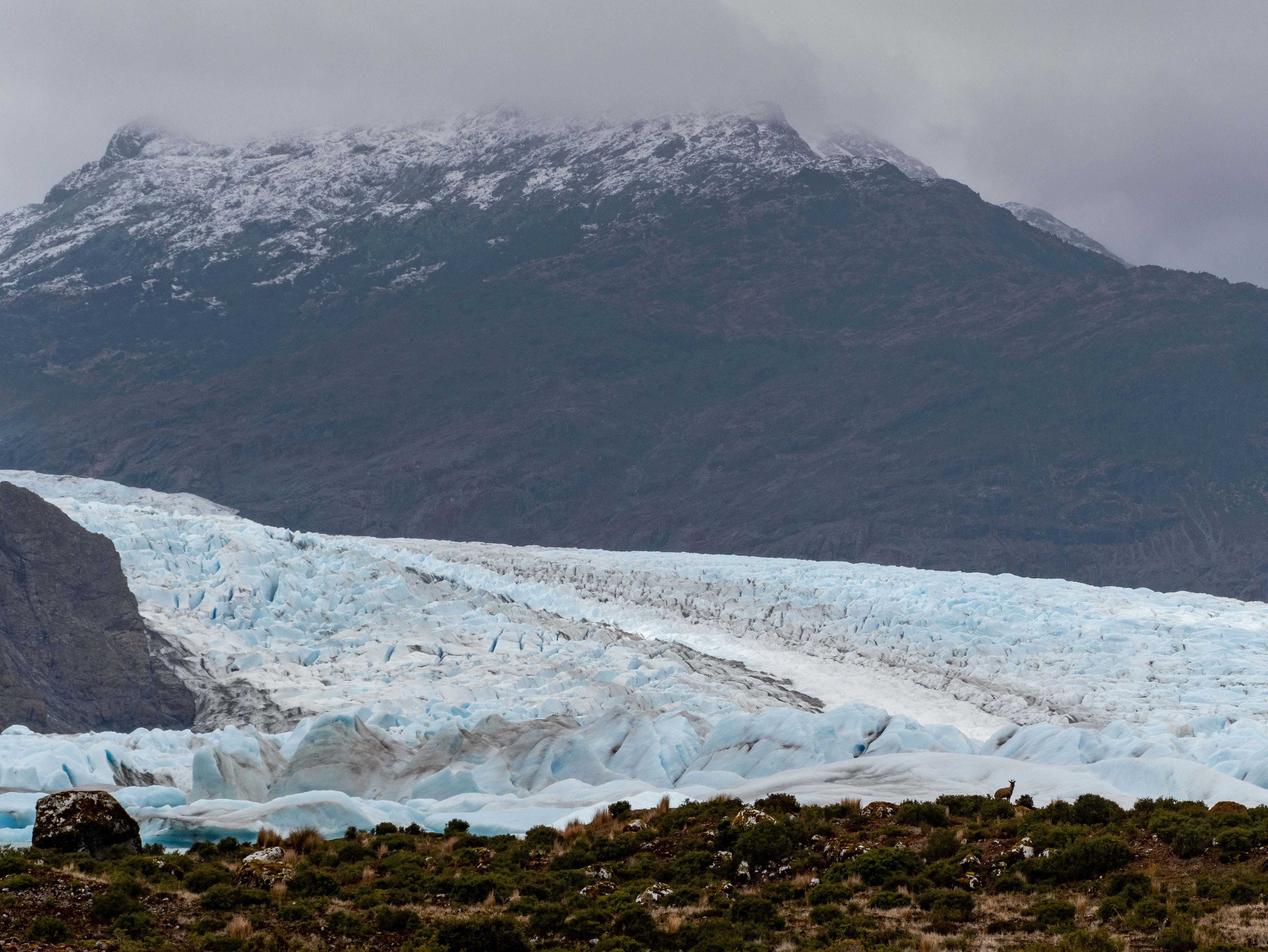
The Bernardo Glacier has protected this vital population of huemules. Photo by Adam Spencer
In some ways, visiting national parks like Bernardo O’Higgins or Parque Patagonia today, must feel like visiting Yellowstone or Yosemite in the late 1800s. Chilean national parks are comparatively young, and despite protecting an incredible landscape and unique ecosystems, there are few tourists and practically no infrastructure. It is inevitable, however, that tourists will continue to discover the incredible natural marvels of Southern Chile, and I think the challenge for these parks is to strike a balance between ecological protection and tourism development. In the US, I think in national parks have sometimes tilted a bit too far towards tourism development. Already, Torres del Paine National Park in Chile has an over-crowded Yosemite feel, and I worry that without further environmental protection laws, others will soon follow.