
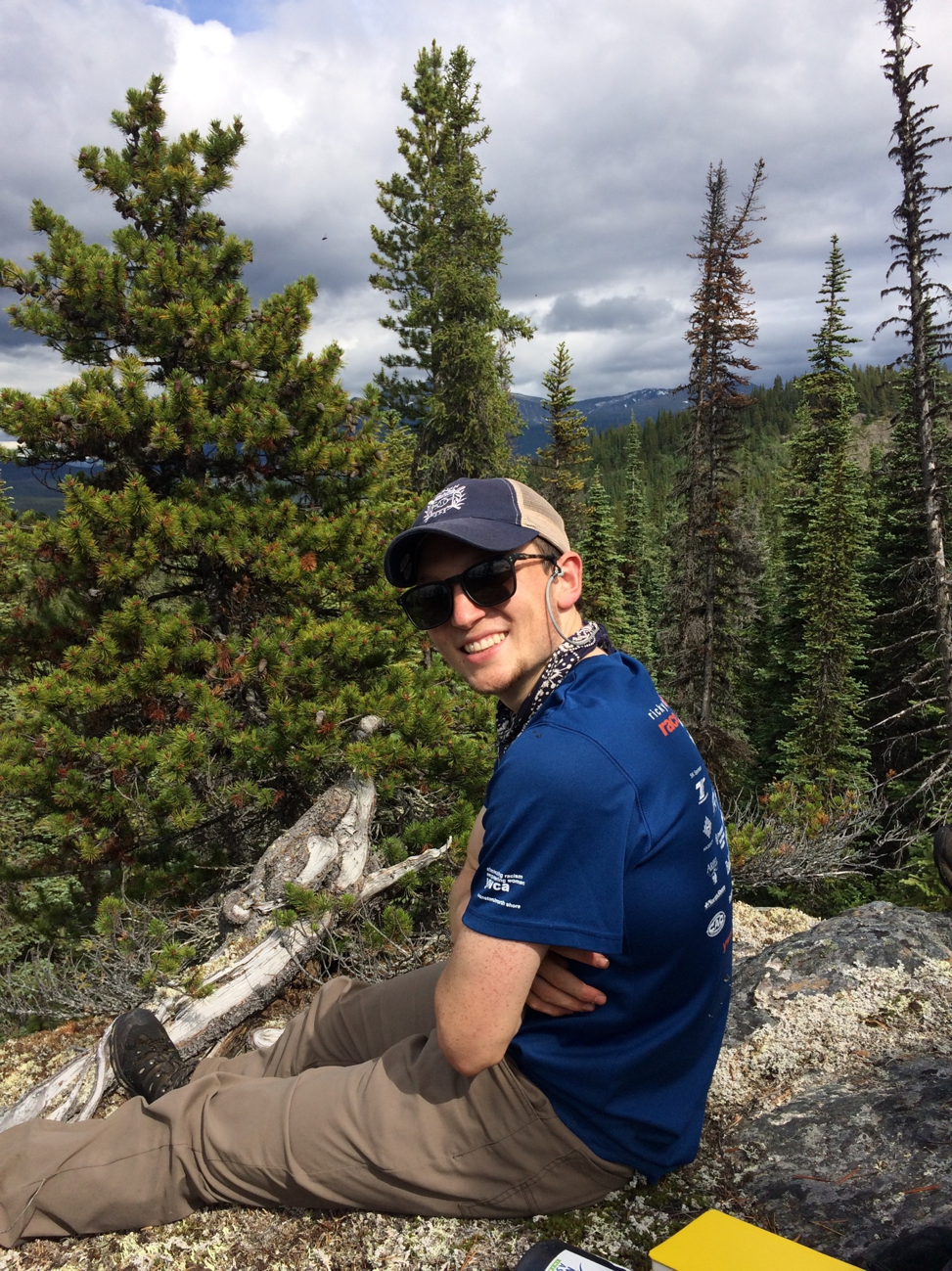
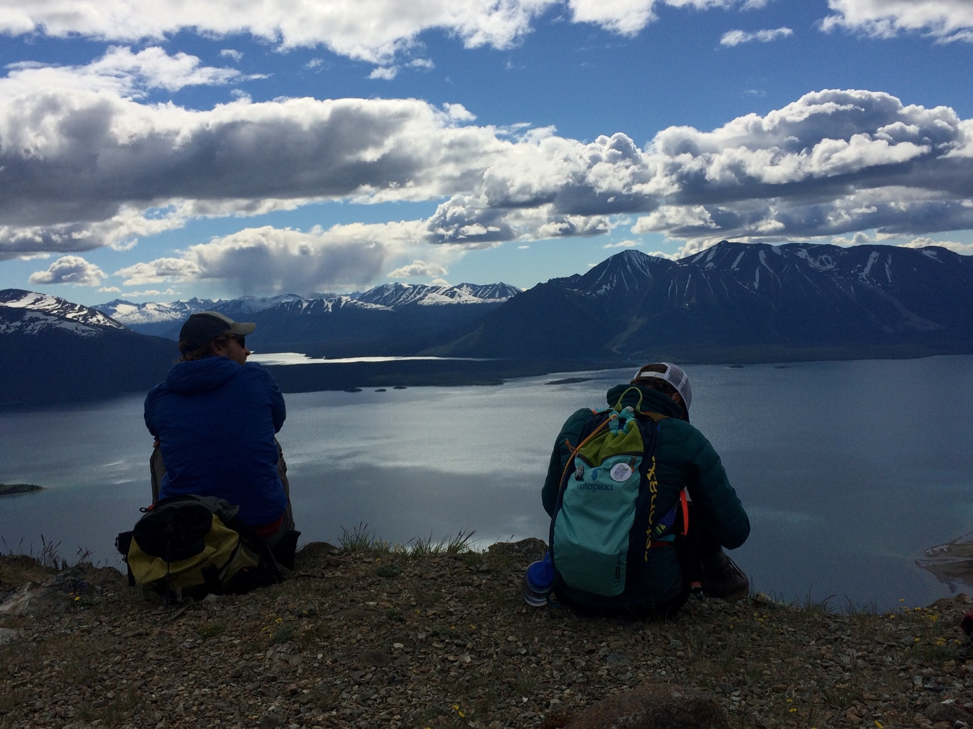
Above: Atlin Mountain and Atlin Lake and my toes. Below: Me, foreground, and a Haliateus Leucocephalus (common name Bald Eagle), background, on the “Home Stretch” of the Nakina Walk.
About a week prior to the close of our summer program, as we car-camped at Consolation Creek, my fellow peers and I were given time for a reflection of our time in Atlin. We were prompted to discuss how this summer changed, shaped, or reaffirmed our views on conservation. As someone entirely new to conservation, I was jazzed to flesh out my own experiences on paper. Here is an excerpt of what I wrote:
‘Entering this summer without any academic background in biology, ecology, geology, botany, or conservation, I was excited to formulate my own opinions on these topics. I was starting with a clean slate, whereas many of my peers came equipped with prior knowledge and well-established opinions on these subjects. This had many advantages, as well as disadvantages, but I can say that this program has helped me grasp a firm understanding of conservation. My views on conservation varied often throughout the course of this program and have come to rest not in a static state, but a dynamic one. Through formal and informal conversations with the Taku River Tlingit community, other residents of Atlin, and the Round River family, I have realized that conservation is a tricky, fluid, and unique study, greatly based on circumstance.
…
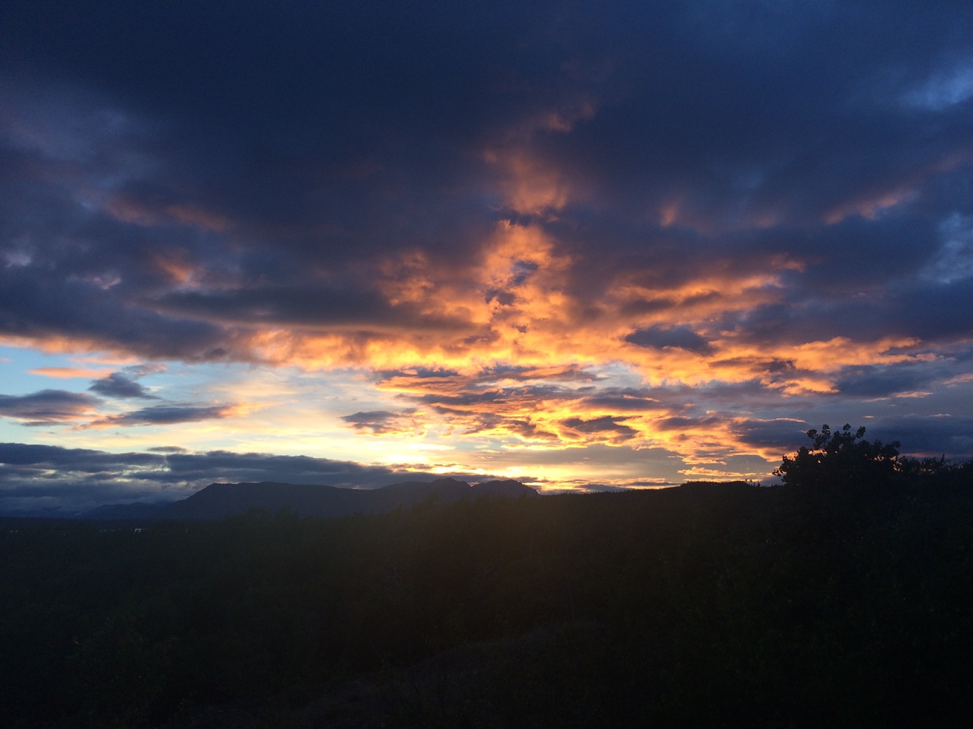
Sunset outside of Phil Timpany’s house, our field work base camp for the summer. #nofilter
As part of our academic coursework, I read and led a discussion on highly interactive species, which provoked me to think more about the connectivity of the environment and complexities of conservation. For example, to properly conserve land, one cannot only look to the land. I remember an article about traditional ecological knowledge (TEK) and discussing the many ways in which it is abused and misused by individuals with corrupted motives. There is a plethora of factors that influence land-use, such as existing social structures, traditional cultural values, and the ever-changing relationship between communities and the environment, and each one must be considered. Conservation requires a holistic approach to adequately address the complex web of inter-related factors that constitute land.
…
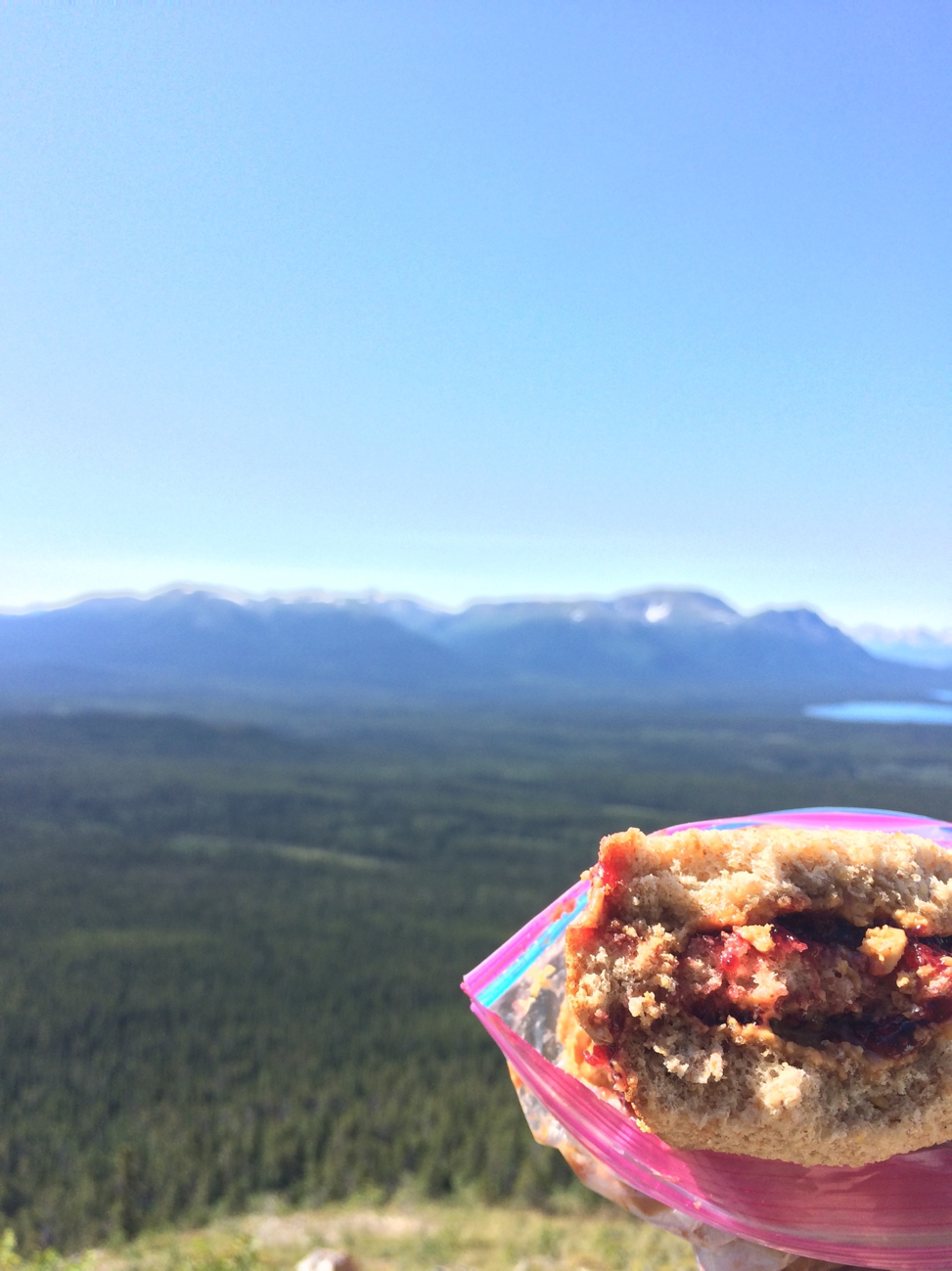
A triple decker PB&J somewhere in the Johnson Range
My experiences in Atlin and its surrounding wilderness have taught me that conservation can be easily manipulated as a tool for less worthy human endeavors. However, this land and the Tlingit people who have shared their stories and time with us have also showed me how conservation can be a collaboration, fostered by conversations and open dialogue. Conservation is not static. It is changing as frequently as the environment itself changes. Elder Jackie, the eldest living Tlingit member in Atlin, discussed the significance of the Nakina River joining the Sloko River at the confluence. Jackie explained that this is a metaphor for the collaborative relationship between the Taku River Tlingit community and the White Man. Each of us must work side-by-side, in unison and concert, to accomplish shared goals. I have come to realize that conservation must be a balanced alliance and can be an invaluable mechanism in the pursuit of common interests.’
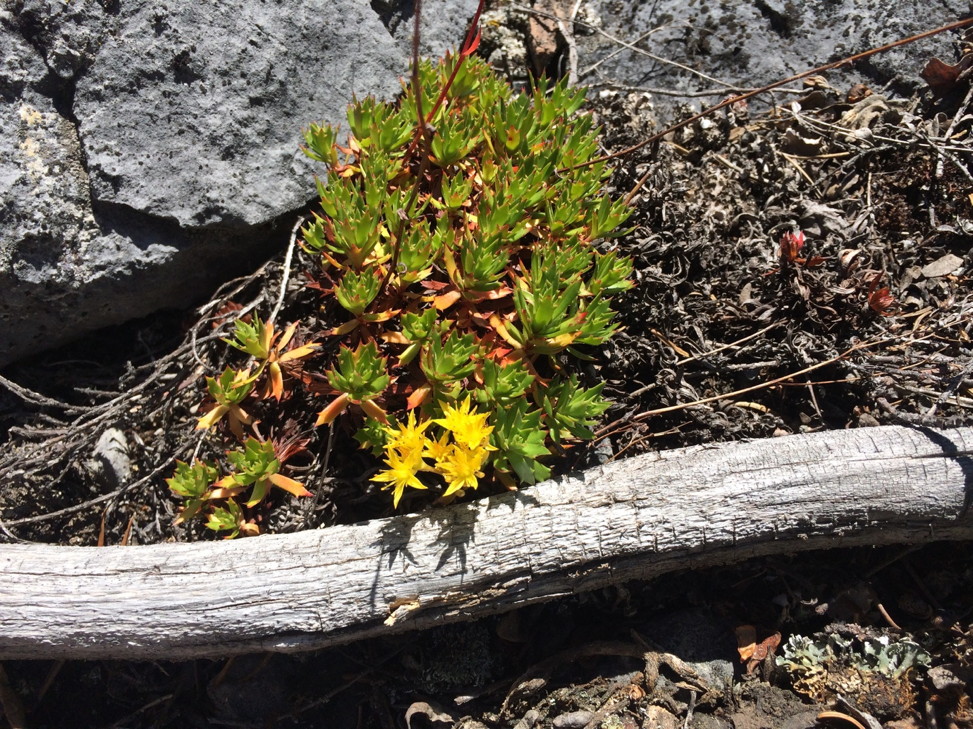
A lance-leaved stonecrop (Sedum lanceolatum), yellow, attempting to pass as a three-toothed saxifrage (Saxifraga tricuspidata). Fat chance.
As I sat down to write this blog entry and before choosing to include my reflection, I felt a strong desire to highlight the single defining characteristic that made my summer so amazing. I’m not sure what influenced this urge, but I wanted to focus on one aspect whether that was the acceptance of the Taku River Tlingit community, the enthusiasm and creativeness of my fellow peers, my isolated and unplugged interactions with a pristine wilderness, or a myriad of other reasons. I thought that if I focused on a single characteristic it would be a more cohesive blog and easier to follow for someone who had never been to Atlin.
After writing, and subsequently trashing, a handful of introductions that each had a separate and distinct emphasis, I became frustrated with this idea. Each introduction was so narrow that it failed to address my larger experience. This sentiment was echoed on the very last day of the program. One of our instructors, Will, asked us, “If someone from home asked you what you did this summer, what would you say?” After struggling to describe our summer in a few succinct sentences, we realized that it was extremely difficult. I thought back on the past 6 weeks and failed to find a single defining trait that rose above the rest. It was at this time that I remembered a conversation that we had with a Tlingit elder, Ed, less than a week ago.
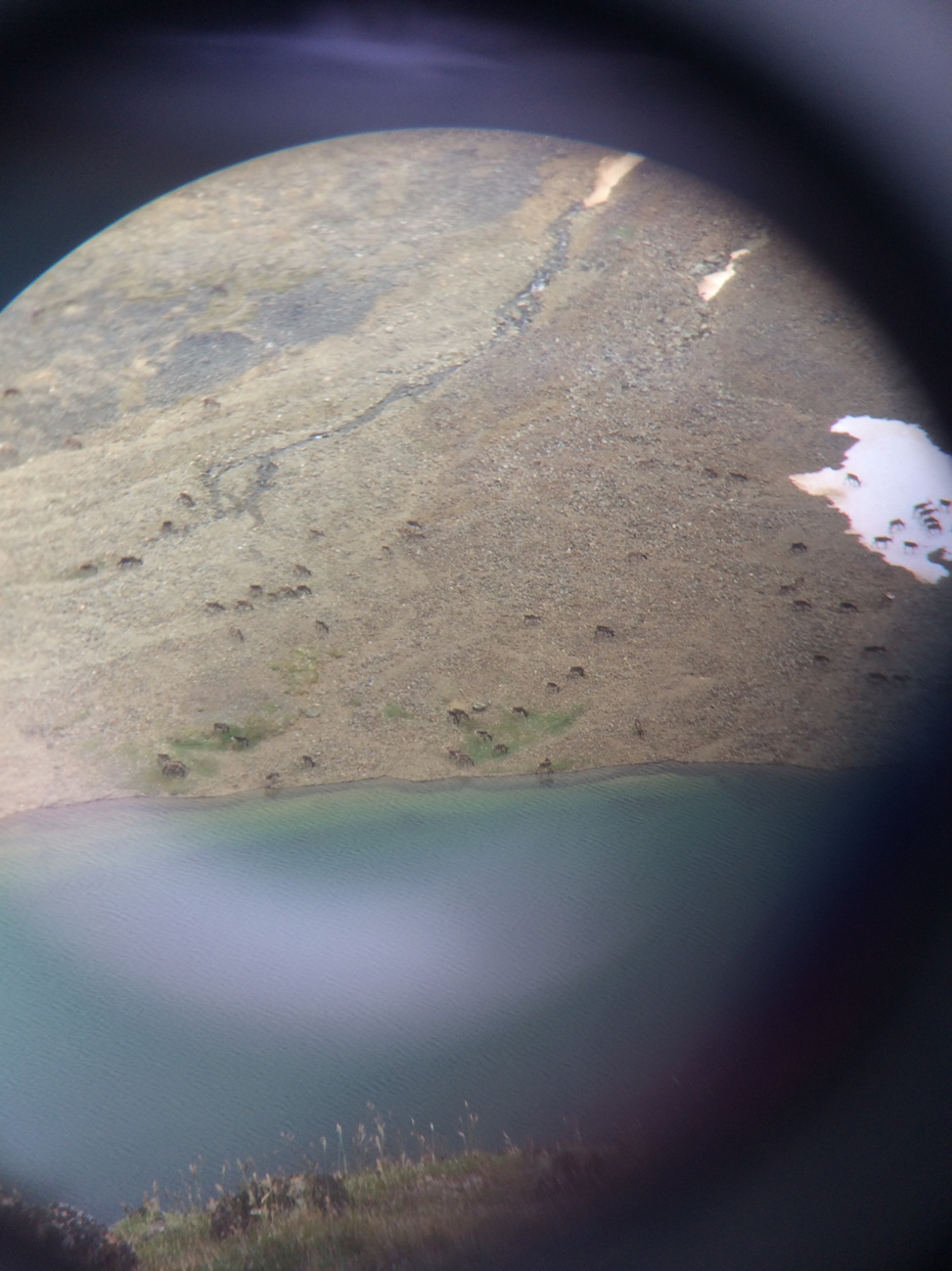
~50 of the 98 caribou (Rangifer tarandus caribou) we saw at Consolation Creek, seen through binoculars.
Ed was an inspiring speaker who covered a wide range of topics. Of Ed’s many stories, his discussion about the power of synergy resonated with me and tied into many of the thoughts I had been having about this summer. Synergy, as defined by Ed, is the collaboration and harmony of differing perspectives toward a common goal, resulting in a product that is greater than the sum of its parts. Synergy was also a theme in Jackie’s visit with us and synergy was what made this summer memorable.
In isolation, the discussions I had with the Tlingit community were moving, the memories I made with my peers helped me grow as an individual, and the studies I focused on as a conservationist were inspiring. Yet in concert, these interactions merged and united to form a summer experience far greater the sum of its parts. The synergy of Atlin is difficult to describe in words and rightly so. It is a complex, inter-related web of ever-moving parts, far too many to ever nail down at one time. However, it was synergy that carried weight behind our interactions in Atlin and left us more motivated to help than ever before.
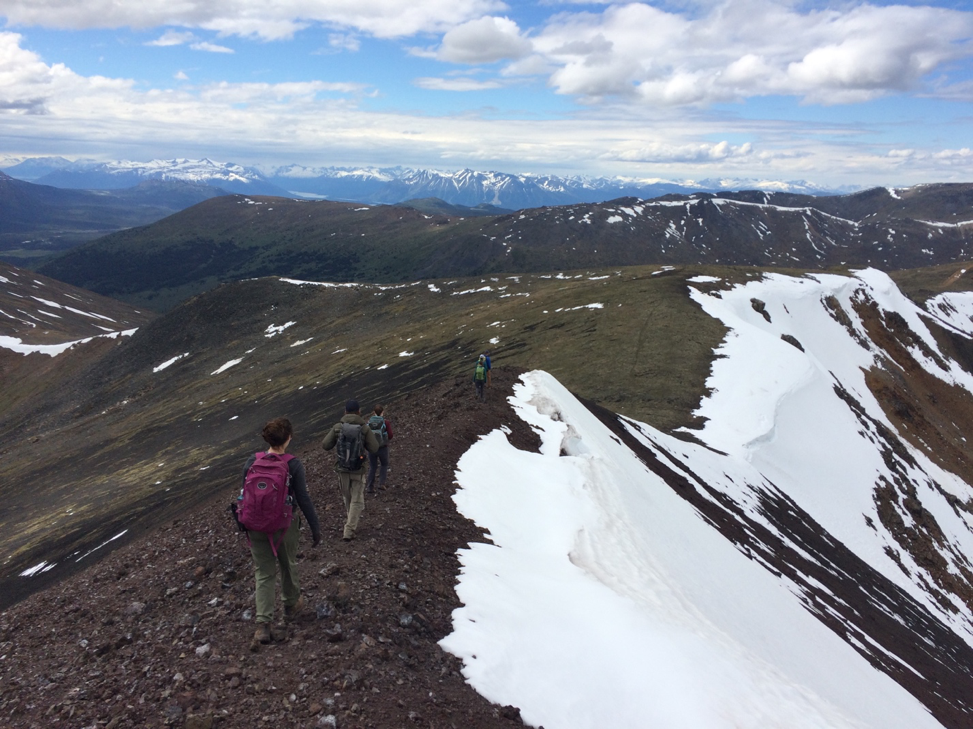
Aliza et al. leading the charge on the top of Ruby ridge.
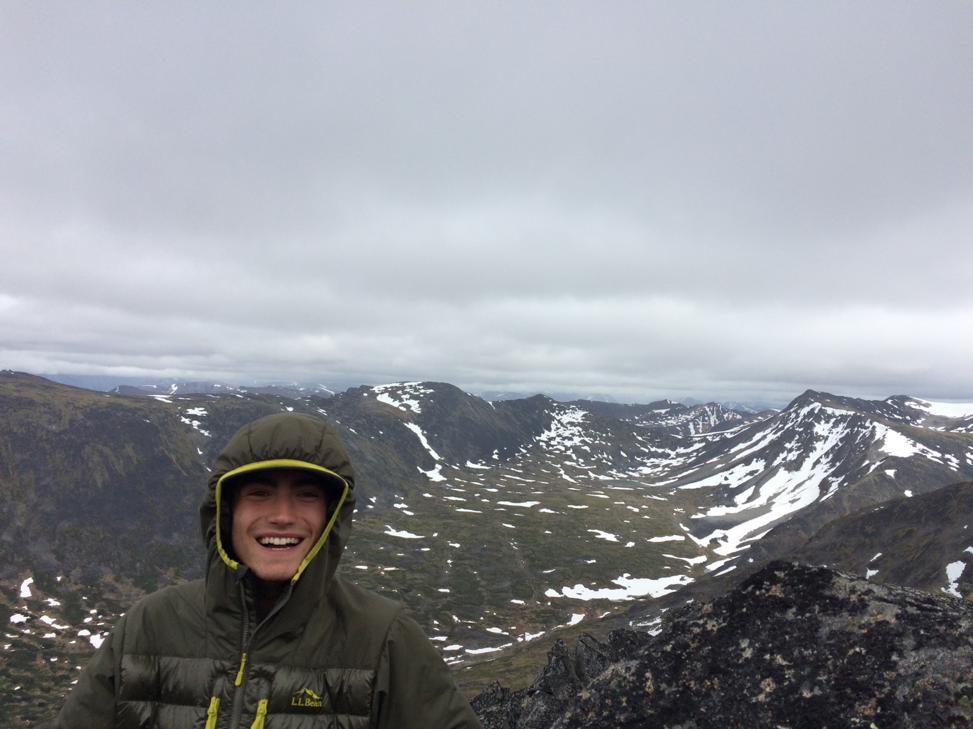
Joesph Gallucci looking really upset atop Mount Vaughn.~
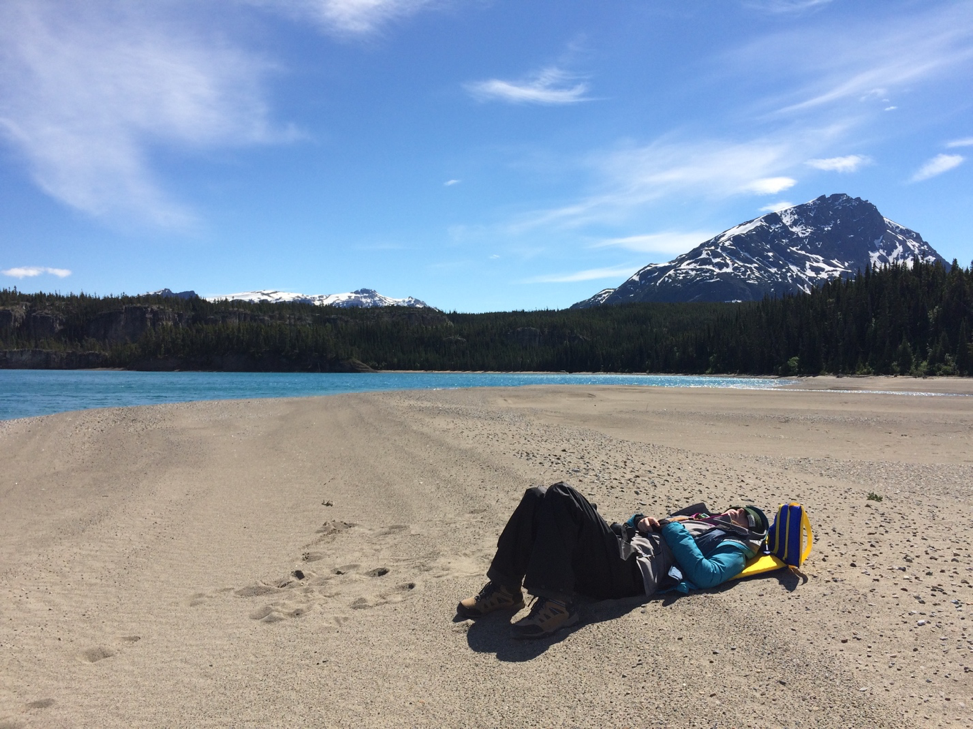
Morgan Brown taking a cat nap at No Bug Island.
Will Kevin Tyson (WKT) and Morgan Durbin atop Monarch Mountain.