
by Alex Railic of the University of Vermont
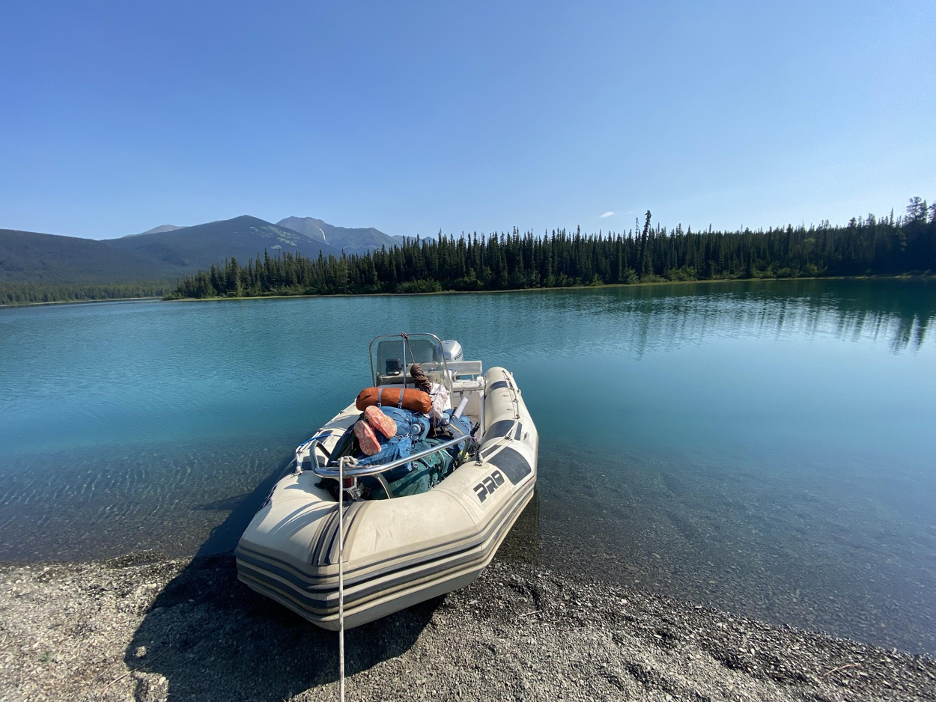
In the first week of arriving in Atlin, there was some discussion about our group arriving at the south end of Atlin Lake – an area rarely visited by even the locals, and an ecological mystery. When the time came for us to leave Phil’s cabin and start preparing for this journey, it came to us as a surprise with only two days to prepare. Logistically it seemed like a near impossible undertaking. We had to prepare meals for ten people over the course of five days, and an extra meal in case weather was bad and we had to stay longer. This meant that over one-hundred-fifty meals had to be planned out and carried between everyone, as well as gear for fieldwork and personal gear. My initial thoughts about this was that there was no way everything would fit in our packs. However, by a stroke of luck or brute force, every last bag of pasta, oatmeal, and sausage managed to snuggly fit in the confines of our packs. The first obstacle of our journey has been completed, and we haven’t even left Phil’s cabin yet. The next challenge that we faced was getting all ten of us and our packs into a small inflatable boat the Tlingit generously allowed us to borrow. Trevor, who is Taku River Tlingit and piloting the boat to drop us off, was optimistic that all of us would be able to arrive at the south end of the lake in one trip. Everyone else, including myself, were wholly prepared to split the group up so that two trips would be needed. The boat was put to the test. At first we loaded up all of our packs onto the boat and the boat managed well. Then, one by one, we put on life jackets and hopped in. Although the boat dipped with the weight, it slowly made its way away from the shore with all of us on board. As it floated away, I contemplated the swimming distance between us and the shore in case the boat’s strength gave out. But once again our initial doubts were for naught. The boat’s engine sputtered to life, we started slowly picking up speed, and off we went. With all of the people and our packs, the boat’s speed maxed at 23mph, but we were on the move.
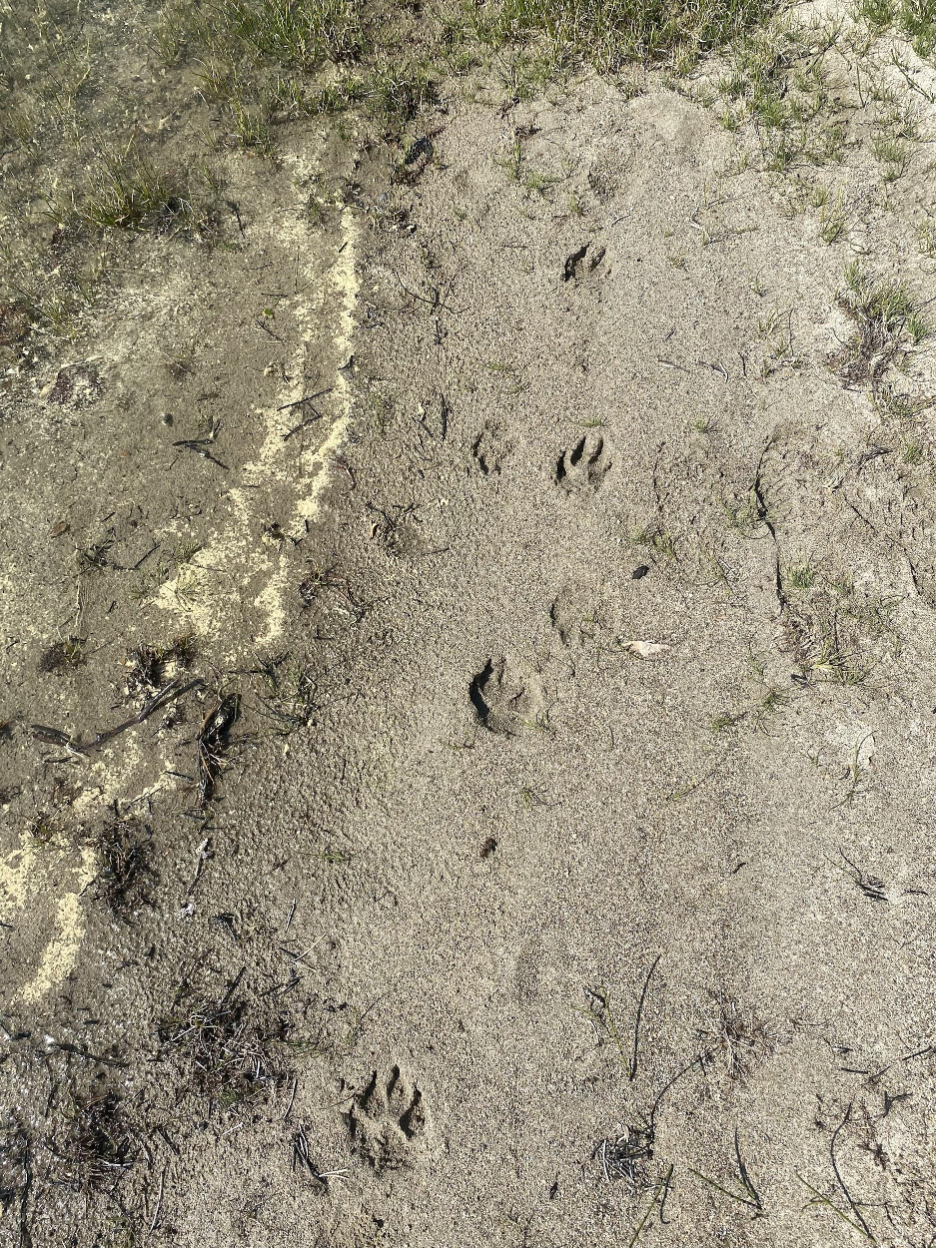
On the way there we went past many small rocky islands that hosted birds we haven’t seen before such as the Pacific Loon, Arctic Tern, and Red-breasted Merganser. On one of these islands we stopped to stretch our legs for a bit and have lunch. There was a sandy shore and the Llewelyn glacier was visible in the distance. All across the sand were the evidence of wolf and moose tracks. The tracks were recent, because they were very clear and defined despite them being near the shore or even visible in the water where erosion could quickly occur. A beaver made his way past us, carrying a bundle of sticks to his dam that was up river. With all the signs of lives other than our own around us it became apparent that we were guests to this area. It was clear that although where we were standing was unfamiliar and strange to us, it was the home of the other living beings around us. It was a reminder of why we were here and the general power people have in saying what happens to the wildlife around us- how fragile it is. I think it does us and this place well to be here and experience an area untouched by human development. After this stop by the island, we returned to the boat and headed for our destination – the south end of Atlin Lake – to discover more about this area and what we can learn from it.