by Adriane Mason of the University of Vermont
Many interconnected parts make up an ecosystem. Since I arrived in Botswana, my group
has been fully immersed into all aspects of the Okavango Delta as we have entered and explored
many diverse ecosystems. Of all the organisms we’ve observed, one particular part grabbed my
attention: birds. Prior to Botswana, I had never paid much attention to the birds even though I’ve
been returning to the bush every other year since I was born. I knew they were there, but I didn’t
see them. However, once I opened my eyes to the complexities and magnificence of the avian
world, it was as if I had discovered a whole new part of the bush that I was a stranger to. Though
no ecosystem can be fully understood, my understanding of this one has grown deeper.
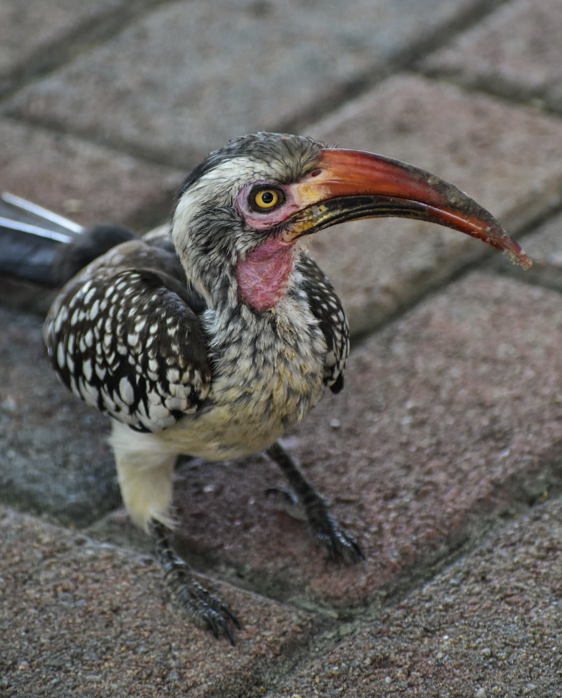
In the first week of the program, Gen told us about the nesting behaviors of hornbills. I
was intrigued but didn’t grasp how totally awesome they are until I was in the field on transect
with Dix in Mababe. He suddenly stopped the car and pointed to a tree; I saw nothing out of the
ordinary. He urged me to look closer. I scanned the tree and noticed a small opening. I realized
that it was a hole covered with mud with the exception of one tiny crack. Hornbills nest in empty
tree holes. The female remains in the hole with the chicks, while the male carefully builds a mud
wall to seal them inside. The tiny hole functions as an entry for the males’ bill; the male brings
food back to the female until the chicks are large enough to leave the nest. We observed the
opening in the tree for five minutes before a male southern red-billed hornbill returned to the tree
with an insect to offer the female. For the remainder of the semester, I searched for these tiny tree
holes, enamored each time at this beautiful phenomenon in nature that I surely wouldn’t have
noticed before.
When we arrived at Mopane camp in NG34, one of the first things I noticed was the
abundance of bees. There must have been a hive close by; we had to stay on high alert for the
entirety of our stay to make sure nothing sweet was left out of the kitchen tent. One morning, I
had the day off from transect and was enjoying a cup of rooibos by the campfire. I suddenly
heard Dix very stealthily run into the bushes, seemingly chasing after something. About 45
minutes later, they re-emerged out of the bushes. The greater honeyguide was the culprit of this
behavior displayed by Dix. As the name suggests, this species can lead you to a beehive, a
method traditionally practiced by locals. We never found the hive, but the honeyguide continued
to return to our camp, each time causing one or more of us to follow.
Just two weeks ago, I was on a bird count transect with Dix and Abby. We were on our
way to the first count location when we encountered a large male leopard standing very stoically
in the road. I couldn’t believe my eyes; this sighting caught me so off guard as I had been
dreaming of a moment like this all semester. Dix later asked me to think about the events prior to
the encounter. During the first few weeks of the program, I wouldn’t have put much more
thought into this. However, my awareness has grown. We had observed two impalas attempting
to mate just 200 meters away just before the leopard. The female impala was very alert, her ears
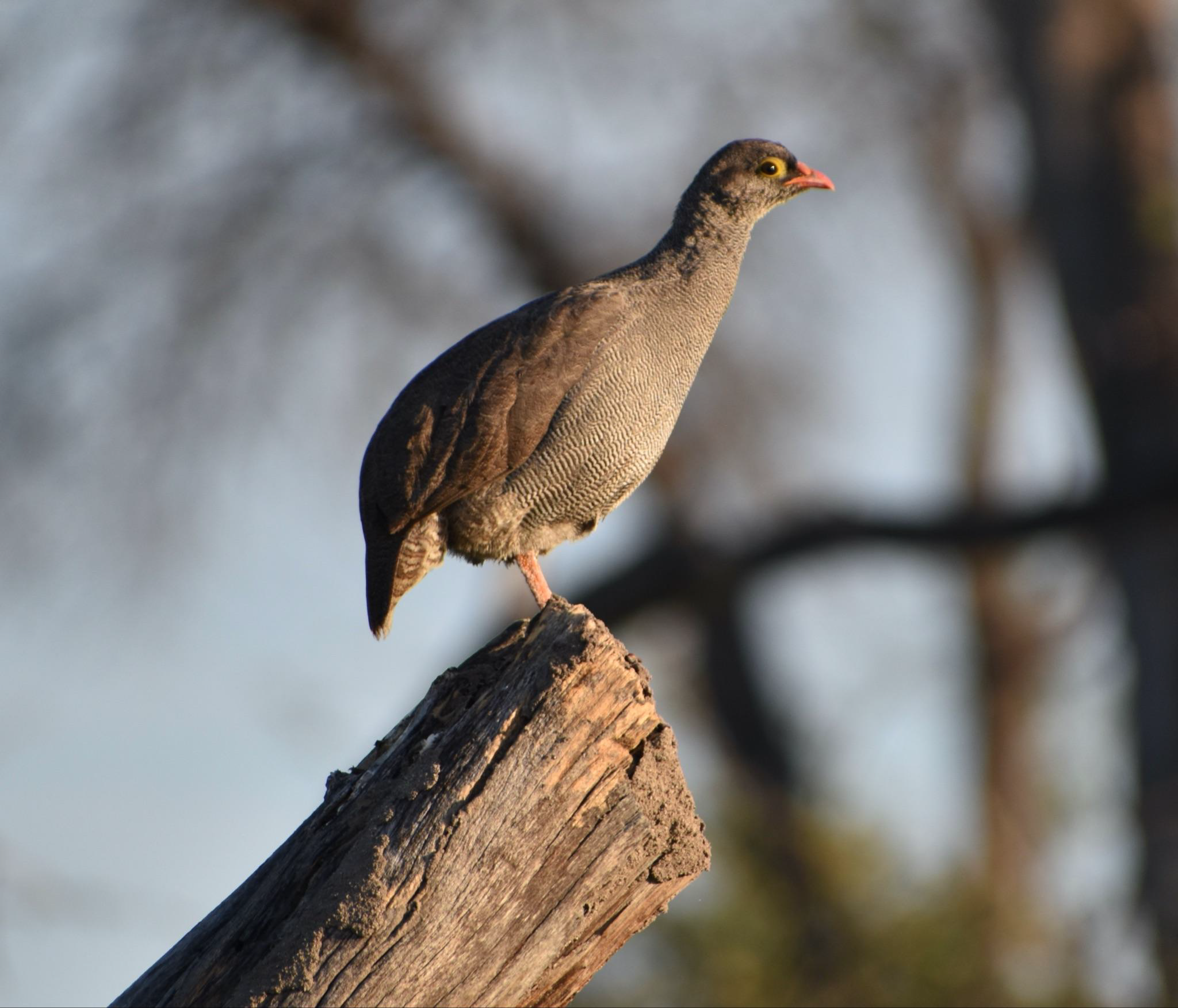
turning in different directions. Her nervousness was a result of several red-billed spurfowl alarm
calling nearby. This was a similar experience to one I had had a few days before when a wildcat
ran across the road with a grouping of hornbills, fork-tailed drongos, and arrow-marked babblers
trailing behind. They were alarm calling, attempting to alert other species of the predator’s
presence and to distract the cat. The leopard sighting wasn’t as simple as I had thought; the start
of the sighting began with the alarm call of the spurfowl.
Once you open your eyes and ears to the birds, it opens up another world to the
ecosystems that make up the bush. It’s easy to focus entirely on the massiveness of an elephant or
the fierceness of a lion, but you must pay attention to the birds. They can teach you things; they
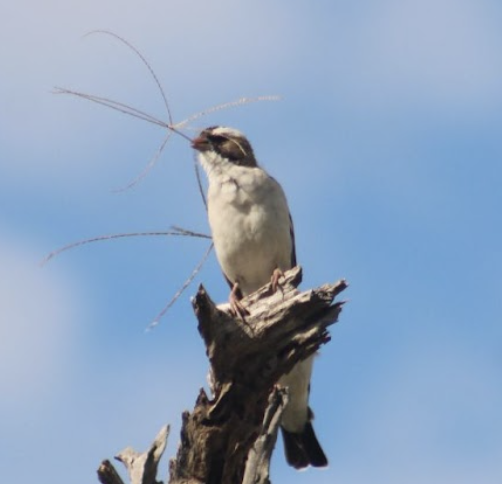
can guide you. Take the white-browed sparrow weaver, for example. They build their nests on
the west sides of trees; if you are lost or traveling somewhere, these nests can show you the way.
Birds have absolutely bizarre, awe-inspiring behaviors. During our first week, I was on transect
when I suddenly saw a bird falling out of the sky as if it had been shot. I was horrified, thinking I
had just witnessed a gruesome death. Little did I know that this is a common aerial display
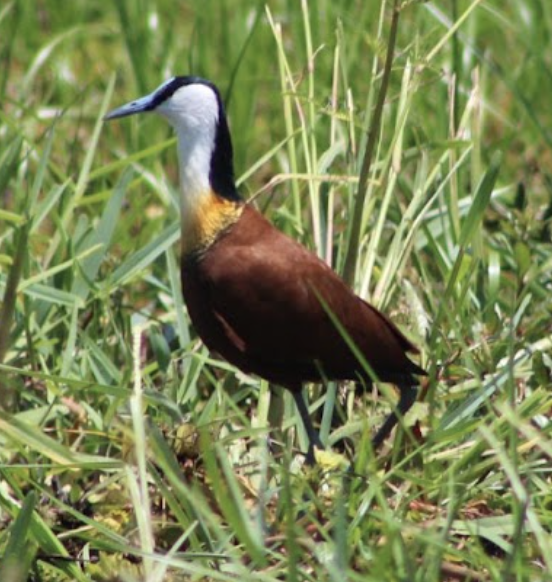
performed by the male red-crested korhaan. Or take the African jacana, where the nesting roles
are reversed. The female mates and has access to multiple males, lays her eggs, and then leaves
the nesting duties up to the males. Ultimately, birds are just a small part of the greater system that
makes up the Okavango Delta. My perspective of the bush, the ecosystem I love deeply, has been
expanded greatly thanks to the birds. My experience is a reminder to acknowledge all aspects of
an ecosystem. And the best part? There are no limits; there’s always more to learn.