
by Isaac Schumann, of Reed College, Fall 2019 Mongolia study abroad
I’m writing this blog on the darkened plane from Seoul to Seattle, though I’ve been thinking about how to write it for the entire trip. From the beginning, I knew that trying to put the capstone on three months of experience would be difficult. Now at the end, I realize that it is impossible. Even the way we said goodbye, in ones and twos as people went to their airline gates, subdivided the task. Only now are the emotions sinking in: wonder at the life-changing experiences of the past months; gratitude for what I’ve learned; and love for the people who truly defined the experience.
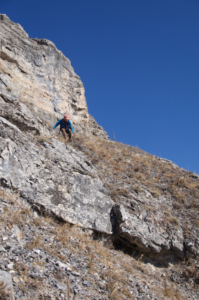
As I got up to give my final presentation, I looked around at the people in the room, pulse slightly elevated. The turnout this year was the best ever for the program, including government officials from all four soums of the Darhad. Much more than upholding a reputation for Round River, I wanted to make everybody proud. All of the people I had come to care about, rangers and park staff, instructors and fellow students, had made my project possible. They deserved the best presentation I could give. As I summarized the results of my research on vansemberuu, I could tell that it was an issue important to everybody there by the way they leaned in. Answering questions about poaching risks asked by environmental officers reinforced the value of this project continuing in future years.
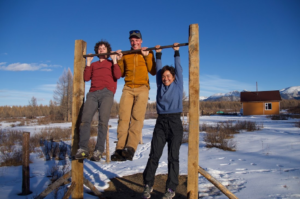
The next to present were Micah and Klara, speaking on talus pikas. We probably spent more hours gathering data for this project than any other, trekking on foot to each plot. The complimentary skills of this team played a huge role in making everything run smoothly. Micah was a valuable leader to the group, powering up even the steepest trails. Klara was a dynamo of group morale, who would always say yes to the next talus patch no matter how long the day. They brought these traits not only to their own project but to every group activity. Their research was both statistically rigorous and presented charismatically; an audience member commented that they had never thought much about pikas until that day.
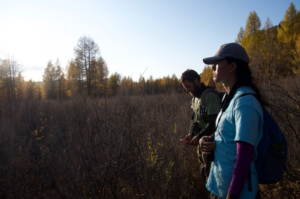
After lunch, Qingqing gave her presentation on migratory waterfowl. Watching this presentation was like taking a full class on waterfowl in thirty slides. The study and results were made accessible to the people who see these birds every year yet placed in context of natural history and the scientific literature. Qingqing’s attention to context, definitions, and details, as demonstrated in the presentation, kept us honest throughout our academic discussions. Her enthusiasm for birds was so infectious we were waking up before breakfast to go birding. May the Del and Ornithology Club spread worldwide!
I think we all felt some ownership of Sophie’s project. Not only was the data collection grueling, but the data entry was as well. Out of all the presentations, this was the one we most wanted to succeed. Sophie did an amazing job of handling this overwhelming project in a well-balanced way, divvying up the jobs among us and making sure we followed through. She was a conscience to the group over the whole program, staying even-keeled even during the most hectic times. Her presentation was sensitive, since it tied pika declines to overgrazing, an issue relevant to most in the Darhad. A combination of charismatic presenting and bulletproof data made pika habitat preferences seem undeniable.
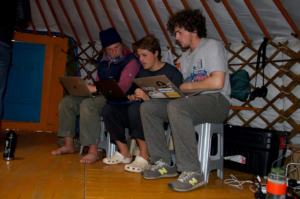
Saving the best for last, Rosie, Noah and Lonnie gave their camera trap presentation at the end of the day. We put them in the last slot because we knew everything else would seem boring after their results, which are both relevant (microhabitat usage of roe deer) and exciting (photos of wolves, bears and moose). This project did reflect the fun-loving personalities of all three, but I was also impressed by their attention to detail. They would spend an hour setting up one of the game cams, testing and re-testing it, while the rest of us picked at moss and played charades. This was selfless, because the photos taken by those cameras will be used by next year’s students. Regardless, this project team was always paying attention to the details and making sure things were right, and it showed, with the whole audience literally leaning forwards to watch their presentation.
A lot happened after the presentations were over, but that day felt like the last day of the program to me. We celebrated the completion of our projects by eating a Mongolian barbeque and waltzing late into the night. The Darhad had become such a community to us that, although we were in Mongolia for another week, driving past the ovoos and over the pass was the moment I felt like I had left. I’m proud of everybody for their success over the past few months, and excited to come back to my daily life carrying their lessons with me.