by Ella Mighell, University of Vermont
Puerto Eden – remote and isolated might be word associations for a traveler who spends half an hour walking the limited boardwalks of Isla Wellington as the ferry unloads barrels of petroleum, rolls of building insulation and limited boxes of fresh food. In return, the fishermen of Puerto Edén load dozens of bags of shelled, bunched, smoked mussels, hoping this round of testing does not reveal the continued presence of a toxic algae that’s shut down their fishery for months.
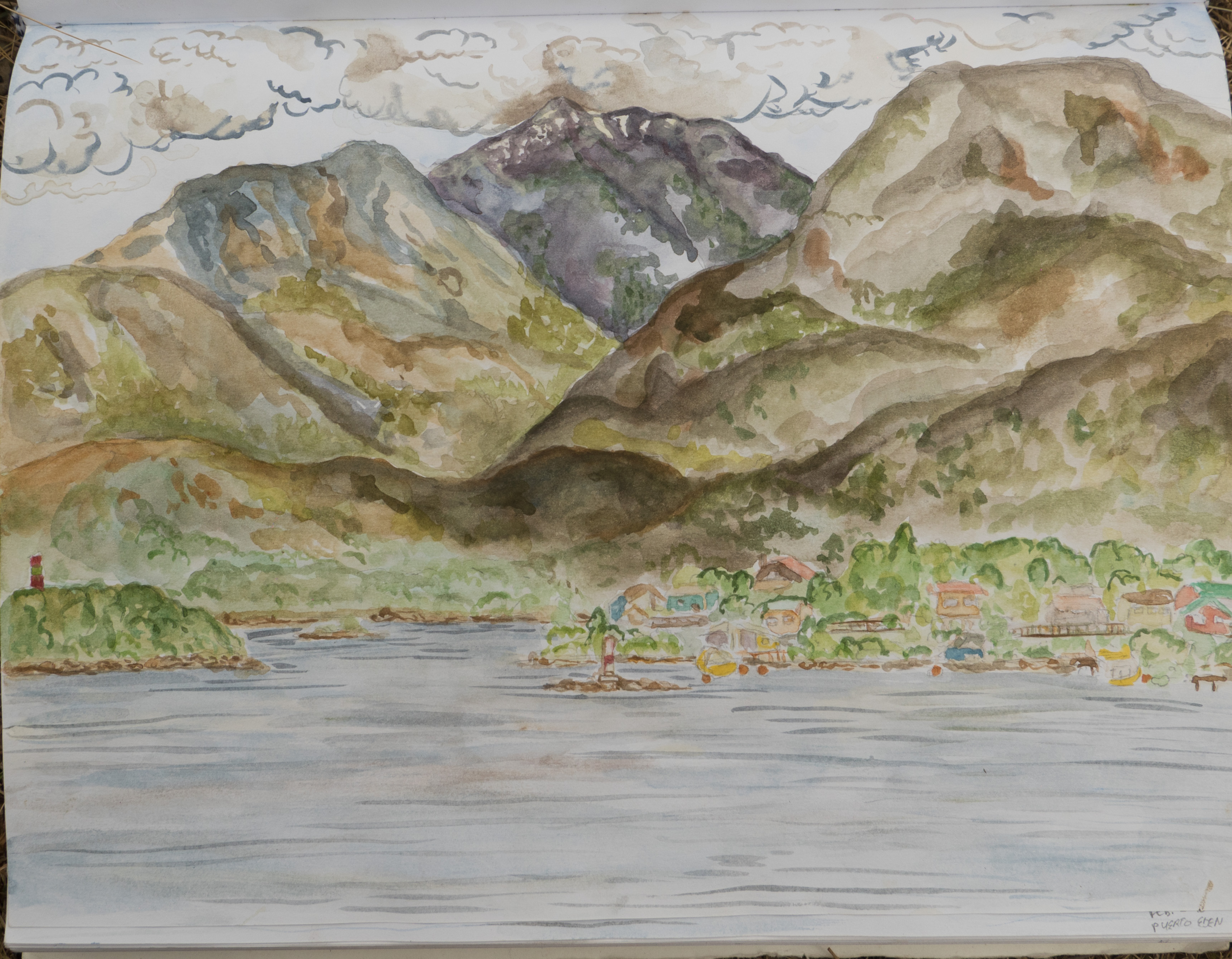
Puerto Edén doesn’t end at the boardwalk – its people’s domain is on the water. Watercolor by Ella Mighell
After spending two weeks as a visitor and student on this fishing island in the fjords with 9 other Round River students and 5 instructors, I am continuously taken aback by the braided complexities that this community faces, along with the awe and beauty of the surrounding glacier-carved, sun-spotted landscape, and the deep reverence and love that many local people hold for this seemingly forgotten place.

Cerro Pancheto oversees the daily life of Puerto Edén – on clear days. Water color by Ella Mighell
Round River was originally invited to Puerto Eden in 2016 by Juan Avila Jr., who was then the president of the local fishers syndicate and was raised in the small town. He asked Round River to help identify alternative economic livelihoods, as the fishery has been increasingly affected by “red tide.” Red tide, a lethal algae bloom that bioaccumulates in filter feeders, first became apparent in Puerto Eden in 1996 with the deeply saddening death of a local fisherman. The population has drastically decreased from 600 to 60 in the past 20 years since the tragic incident.
Additional complexities tangle within the history of Puerto Eden and the indigenous Kaweshkar people of the Patagonian fjords. The small town was essentially established as a highly-incentivized resettlement program in the 1960’s. Located within Bernardo O’Higgins National Park, many of the livelihood necessities, such as the cutting of coigue and cypress trees for firewood to smoke mussels and for central heating, along with fishing itself, is, on paper, illegal in most of the surround waters.
Round River is present in Puerto Eden as students, not as teachers, nor enforcers of law or conservation saviors on a mission.
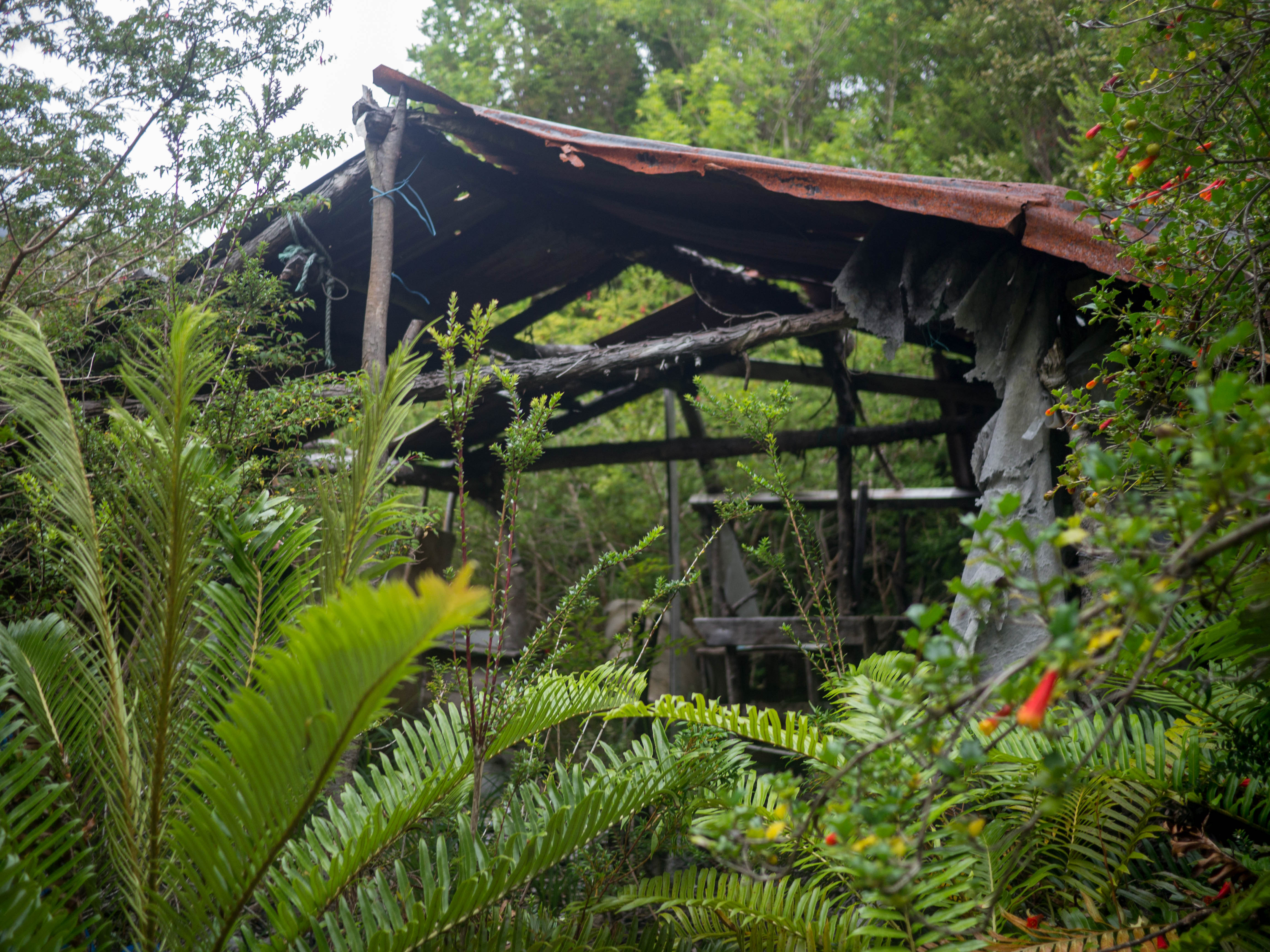
Fishers in Puerto Edén maintain a network of “Ranchos Cholgueros,” or “Mussel Stations,” where they harvest, process, and smoke mussels for export. Part of our research on this expedition was to create a map of the Ranchos throughout the area near Puerto Edén. photo by Shalynn Pack
How can we best use our resources and privileges to support community supported and driven conservation? Can this be done? Can it be sustainable?
These are questions that lose clarity but gain importance with each semester stay.
As I walk on the boardwalk I hold gratitude closely. I am thankful for the families of Puerto Eden who see our good intentions and teach us the practice of making sopapillas and weaving ñapo (a local reed) into baskets. I am thankful for the ñapo, a new plant species to us that our relationship starts with the memorization of a Latin name (Marsippospermum grandiflora). I’m thankful to the community members who are understandingly wary of our presence, but greet us with kindness and permission. And I am thankful to the grey clouds and surrounding glacier mountains who take my breath upon every glance.
We hold the dreams of a common goal: to protect and increase the wellbeing of the community, and the conservation of the park, for current and future generations… to finding balance on the knife’s edge.

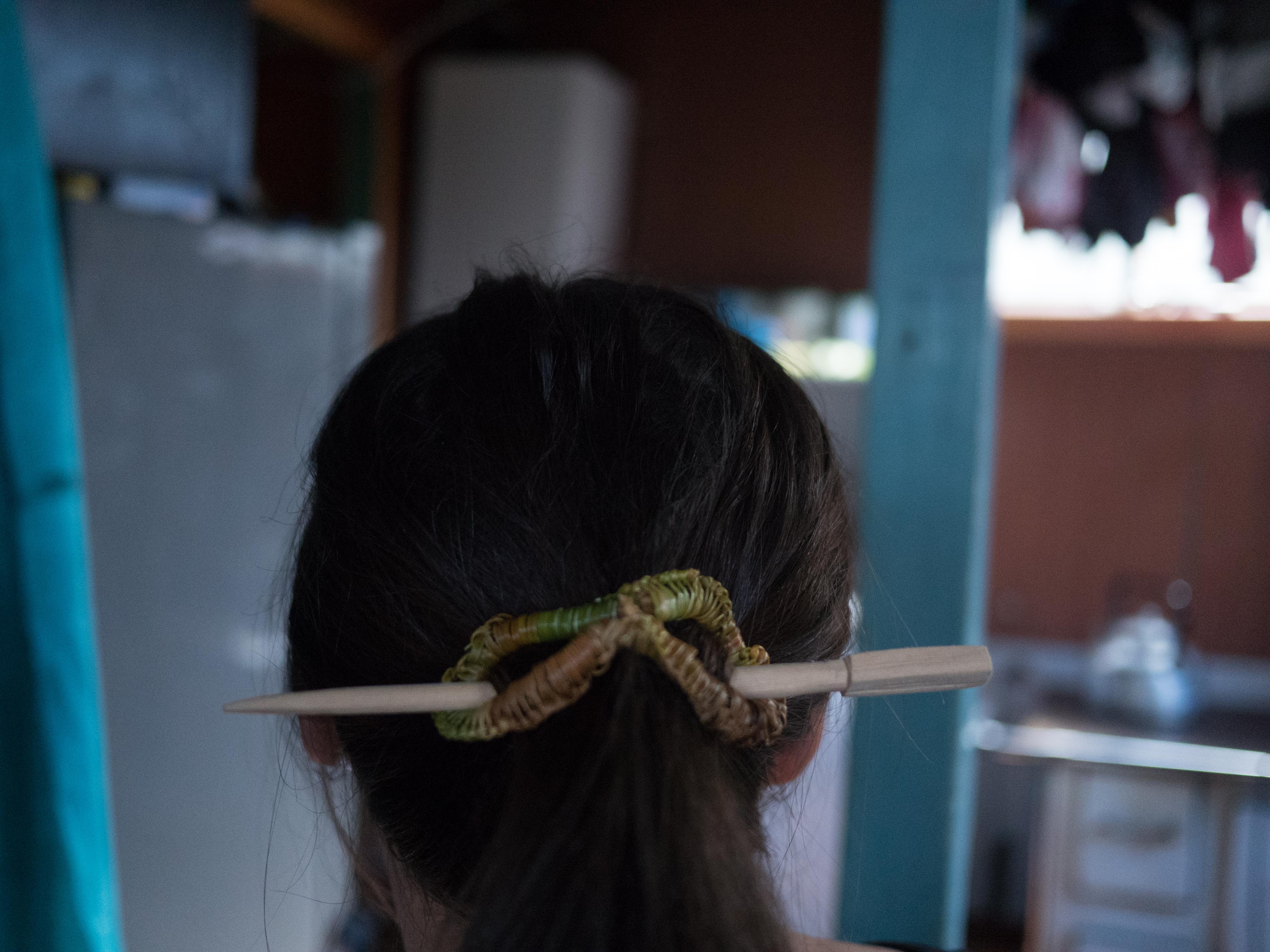
Isabel taught us how to weave ñapo to make hair clips. photo by Shalynn Pack
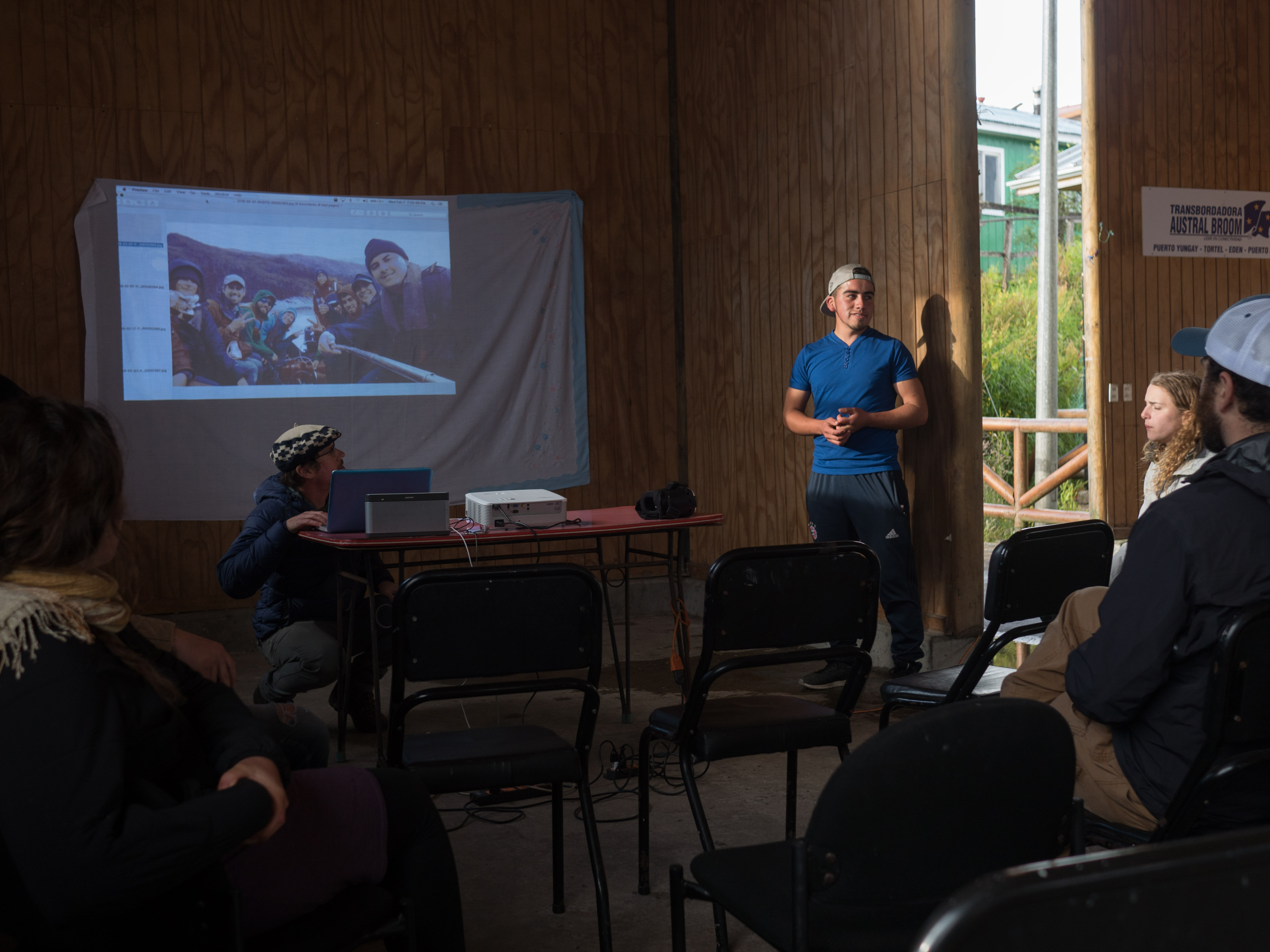
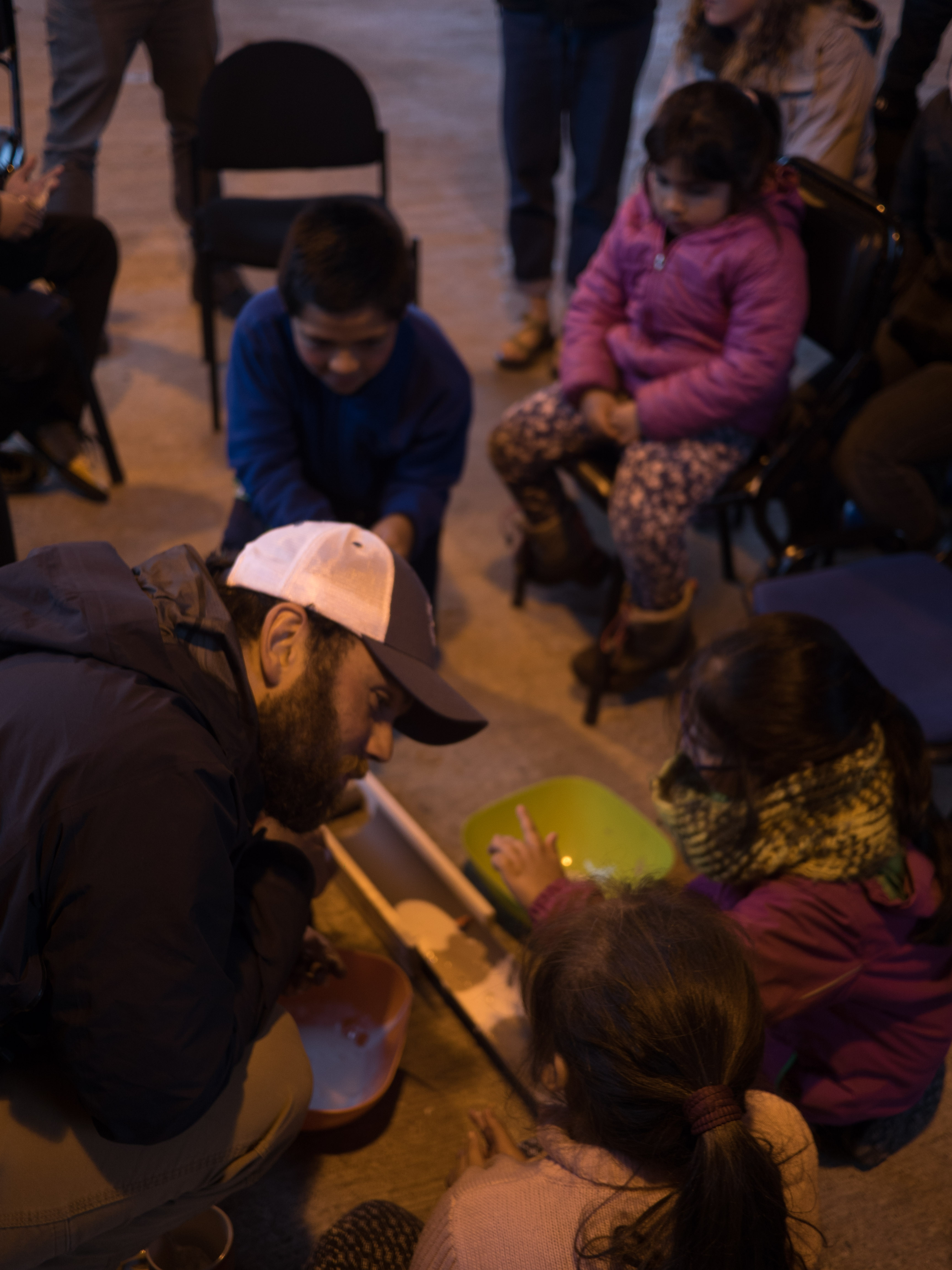
Esteban shares some of his photos from our trip to the Pío XI Glacier at a presentation we organized. photo by Shalynn Pack