
By Ian Nadel, of Westminster College
A recent fascination of mine has begun since coming to the Okavango Delta. This comes photographing the tops of the heads or mouths of some of the most well known herbivores in this area. That’s right, I’m talking about horns and tusks. Firstly, the difference between the two is tusks are enlarged teeth, specifically incisors, while horns are part of the skeletal system and are protrusions from the skull containing nerves and feeling. Both horns and tusks develop over the course of an animals’ lifetime and take a great deal of trial and error to master the individual uses of these unique structures. Tusks, or the lack of, are not a dimorphic trait, however the makeup and size can vary between sexes. Horns on the other hand can be the separating factor between males and females of some herbivore species. In this blog, I am going to list some uses and behaviors exhibited by herbivores with tusks or horns seen around the Delta.
Kudu, impala, and red lechwe all only display horns on the males. All three species use their horns as a sign of power and this power is one way they are able to find a mate to pass on their genetic material with. Of the three, kudu are the least confrontational amongst others of its kind, and it is quite rare for kudu to seriously fight for dominance. Younger bulls may spar with each other to get used to using their horns, though there have been instances where two kudu have entangled their twisted horns and are unable to free themselves- resulting in death for both. Another use kudu horns serve is assistance in grazing, as they are able to pull down higher vegetation to a reachable level with their horns. This can be a significant advantage to having longer horns. The longest kudu horn recorded was just over 1.8 meters long.
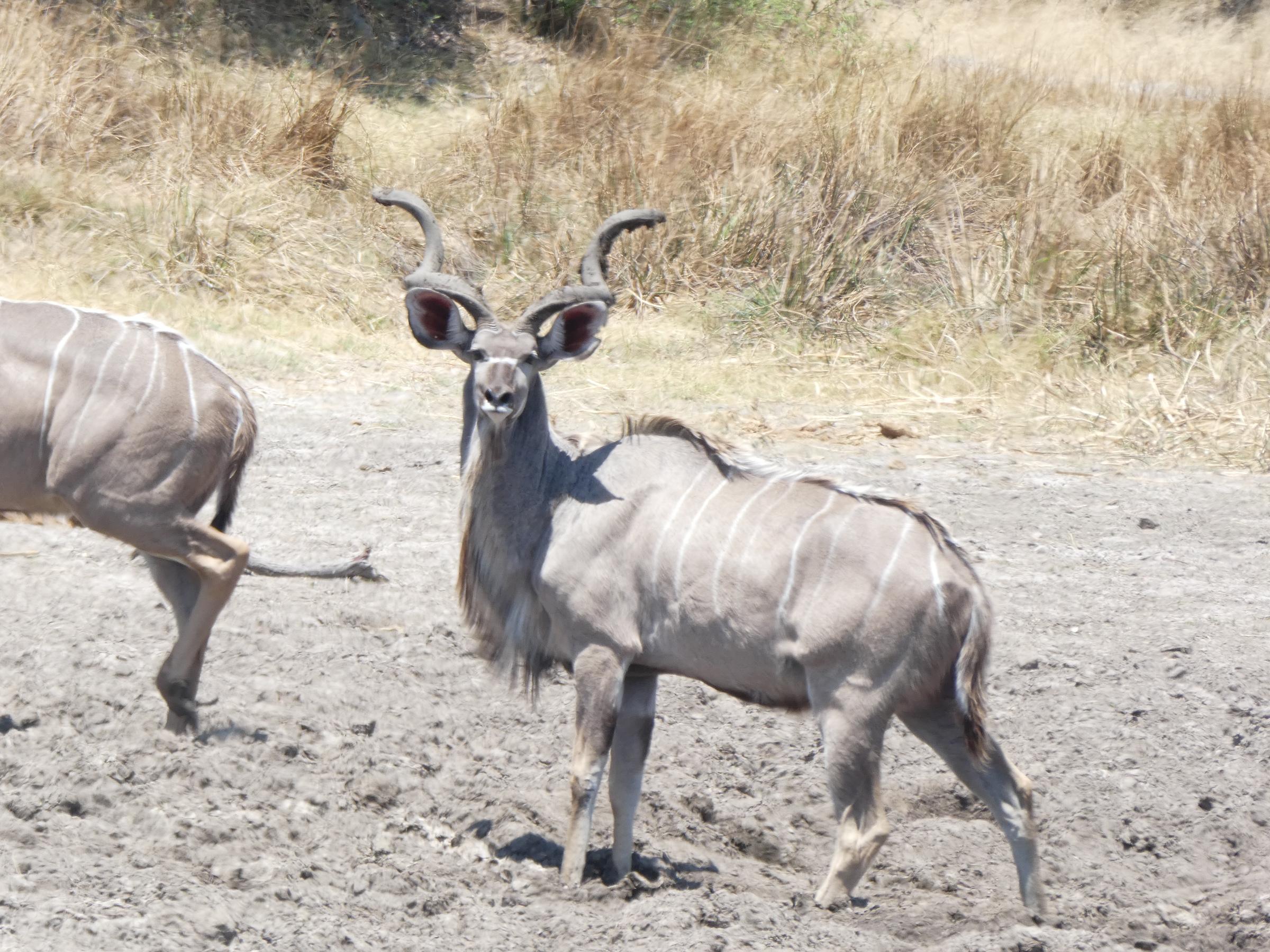
A male kudu standing tall
Impala and red lechwe use their horns in a similar nature, mostly to fight for dominance amongst other males. Fights occur both for territory and power, and with those come the best females to reproduce with. This is where having larger horns is an advantage, because a larger set of horns can be better used to gain this power and territory. Impala have a unique mating behavior where males fight with each other to determine what males are the strongest and best fit to create offspring. This is called a “rut” and pre-rut males will spar among themselves fitting into fighting categories based on size and ability. During the rut itself, smaller males will not challenge those who are larger and outside of their group, in order to conserve strength and energy. The fights are serious, often times resulting in broken horns or injury, though seldom resulting in death to the impala.
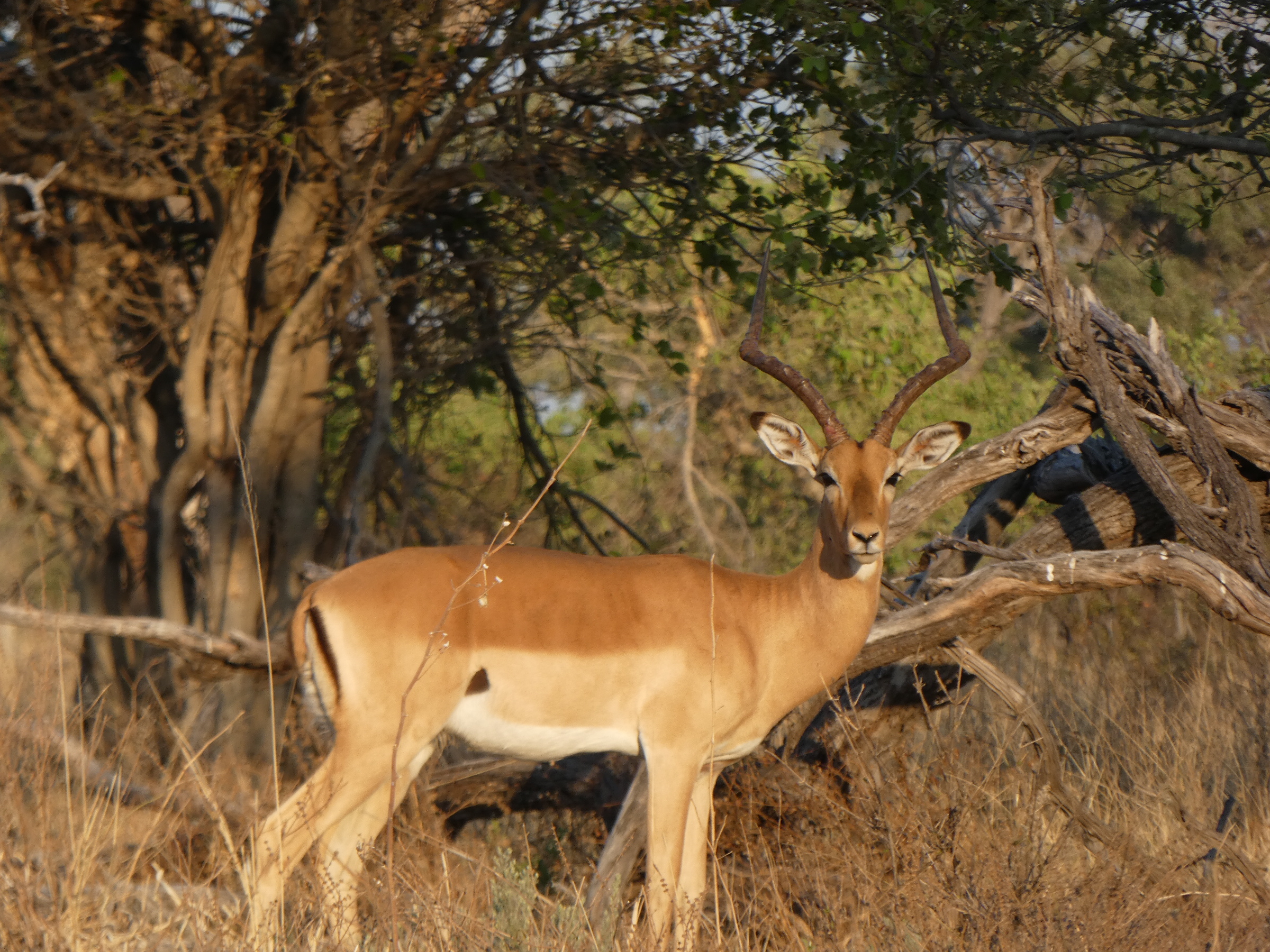
An adult male impala.
Red lechwe are water dependent and spend the majority of their time in close proximity to water bodies. This means their grazing is focused more on the longer grasses and reeds found in riverine habitats, and they have been known to use their horns to clear pathways through this tall vegetation and find the best sprouts this way.
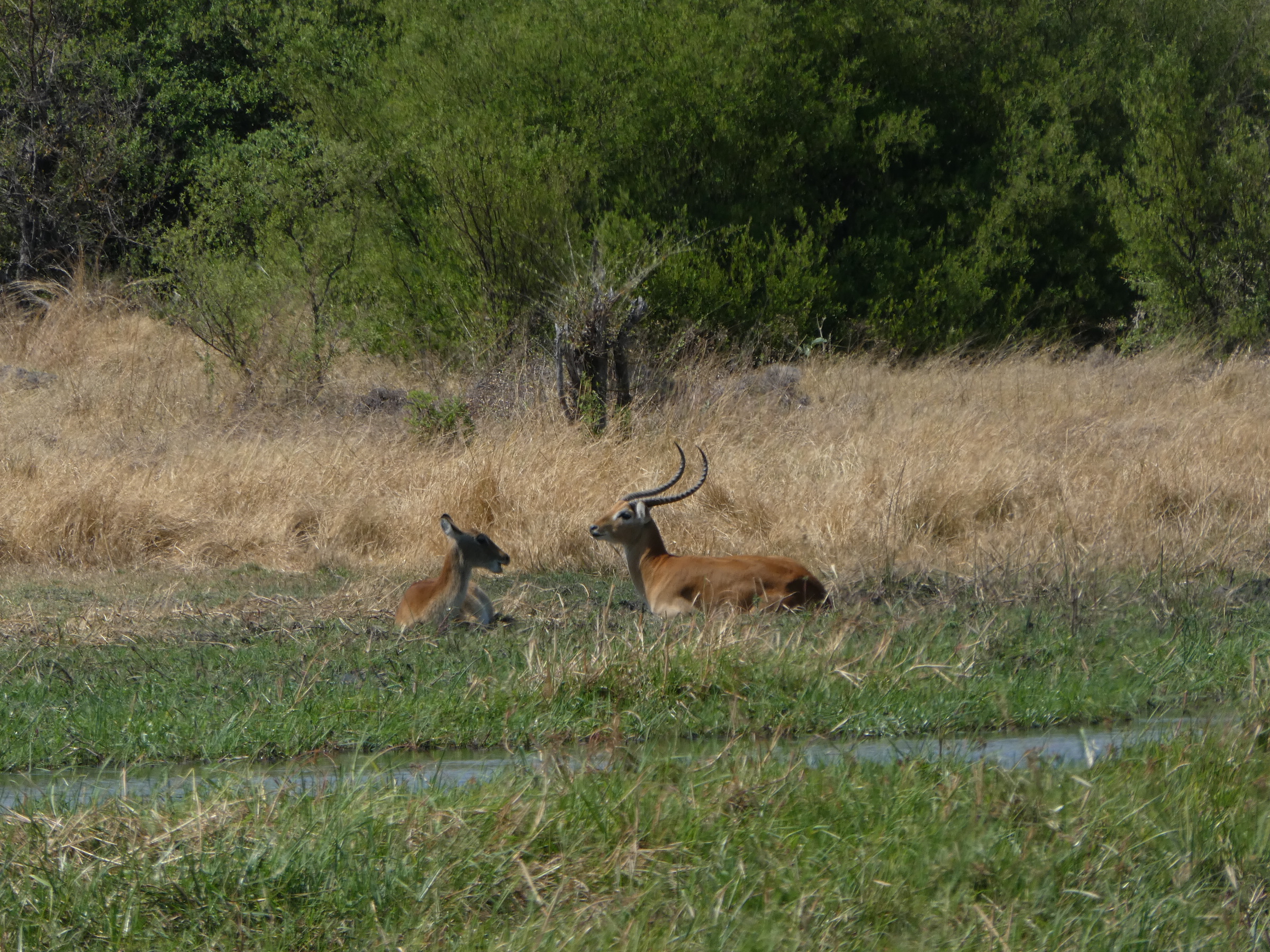
A male and a female Lechwe relaxing by the river.
Two species that have horns present in both sexes use their horns in a different manner. The Cape buffalo and the sable antelope may have different looking horns, but their tactics of defense are quite similar. Both are mainly preyed on by lions, and both tactics begin by backing themselves into a thorny thicket, to cut down on the ambush predators angle of attack. The Cape Buffalo have a wide set of horns that curve inward, and the males have a helmet like “boss” between that protects their skull when engaged in fighting. Once they are backed into the thicket, they charge their attacker at speeds up to 30km/hr- bucking their head in an attempt to hook and toss whatever is making them feel threatened. They are referred to as the most dangerous animal to encounter on foot because if they feel threatened, they will not stop their attack until they are long gone or the opponent is dead.
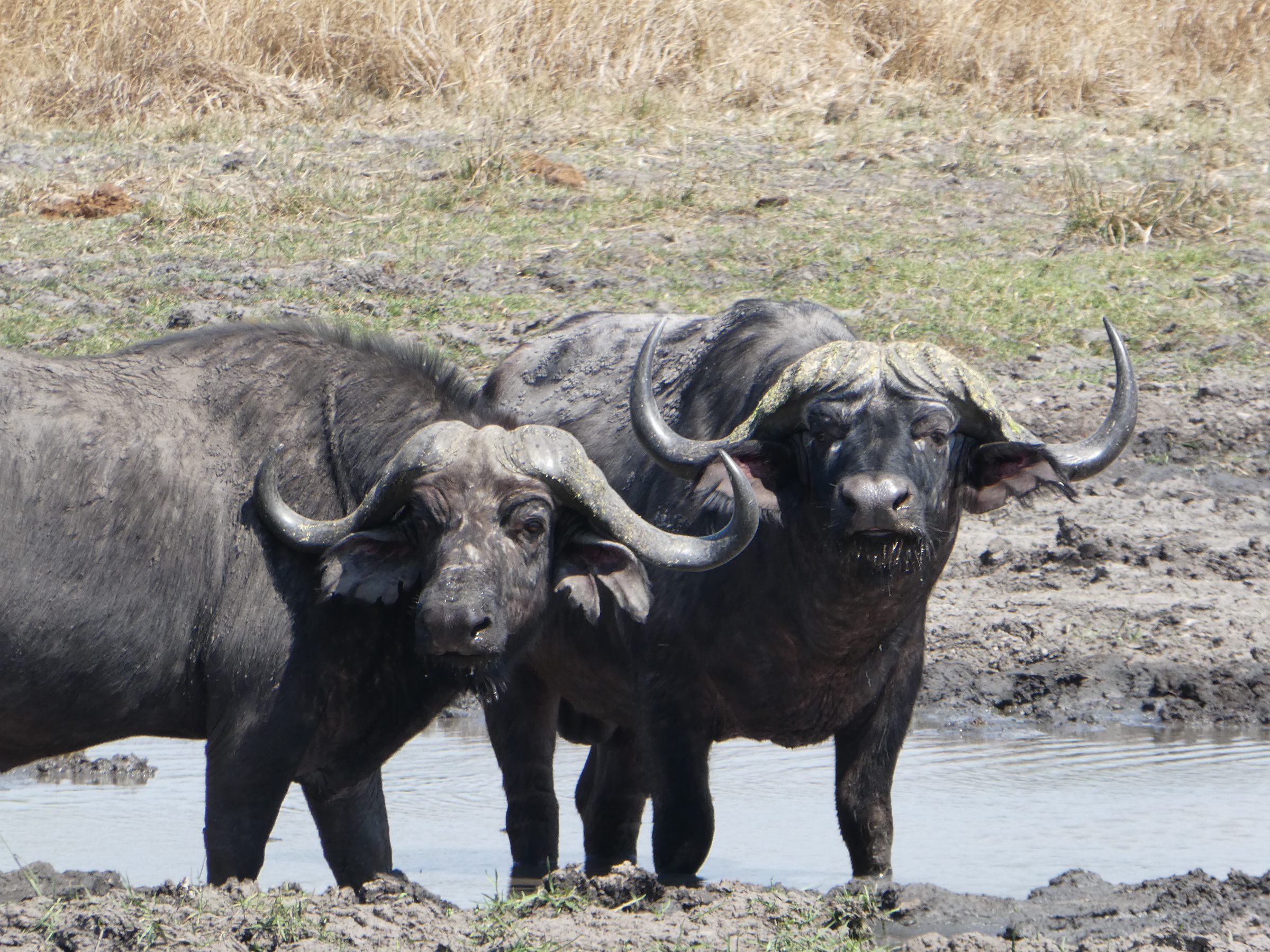
A male (right) and female (left) Cape Buffalo.
The sable antelope is a rare species of antelope that is almost mythical looking, with enormous recurved horns. They stay backed into the thicket and drop their head, waiting for their attacker to make a move. When the time is right they begin to slash upwards with their massive horns, hoping to pierce the flesh of the predator. The males have larger horns, but the females still are able to use them in a similar nature to defend themselves and their young.
Sable Pic “Female Sable showing off her horns”
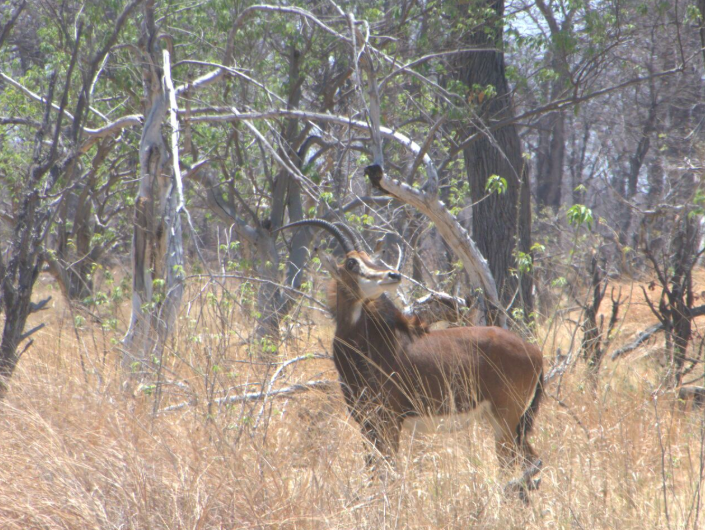
Female sable showing off her horns
Horns may also be used to determine the sex of an animal when nothing else is tell-tale. Blue wildebeest, tsessebe, and giraffe are all difficult to sex if it weren’t for the pointed tips coming from their skulls. In the instance of tsessebe and wildebeest, the male’s horns are wider and predominately larger. Male wildebeest mark their territory by scraping their horns in the sand and also scrape bark off of trees within their territory. This may also give the horns a red tint, coming from the barks inner-cambium.
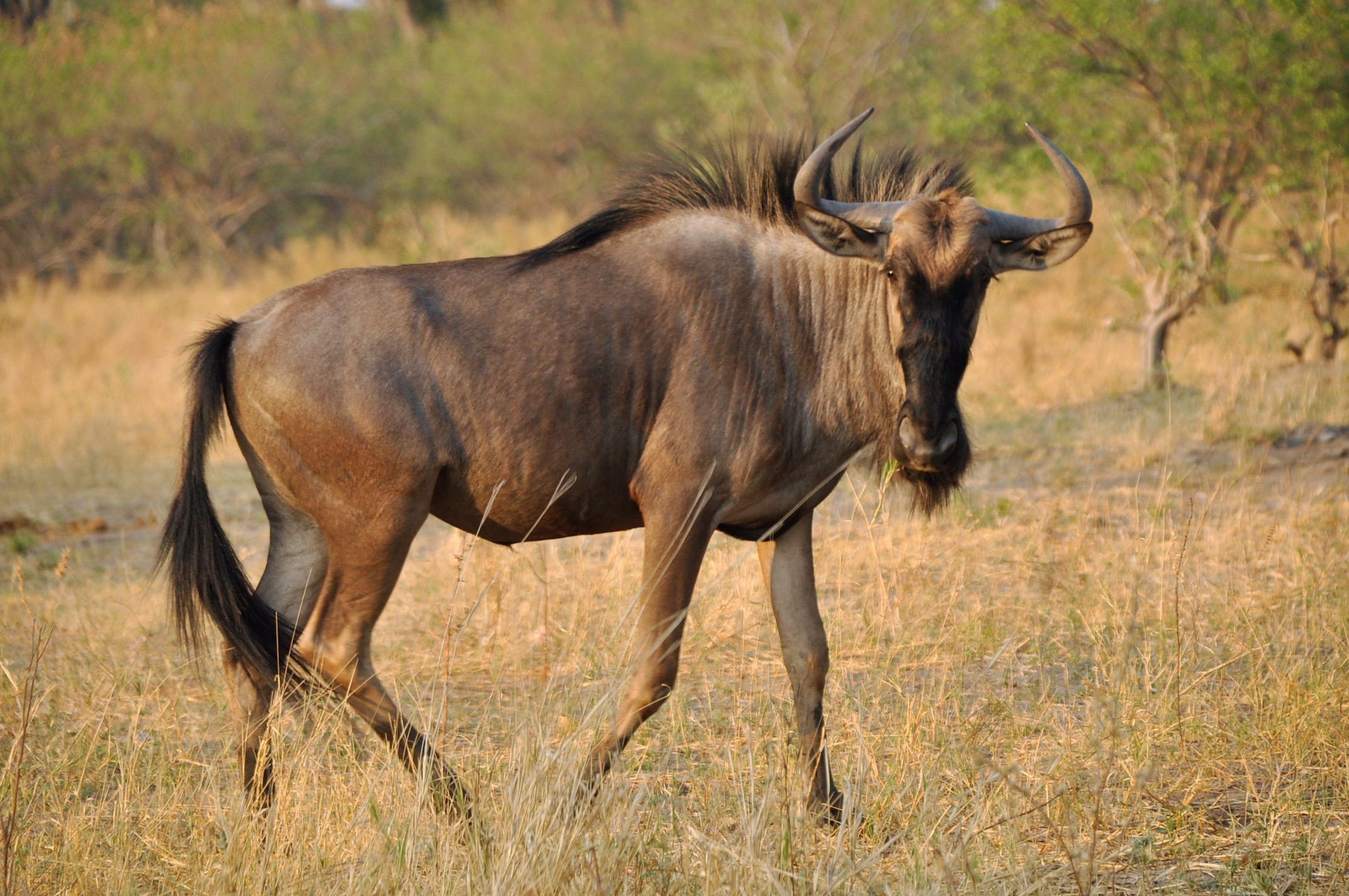
Male blue wildebeest.
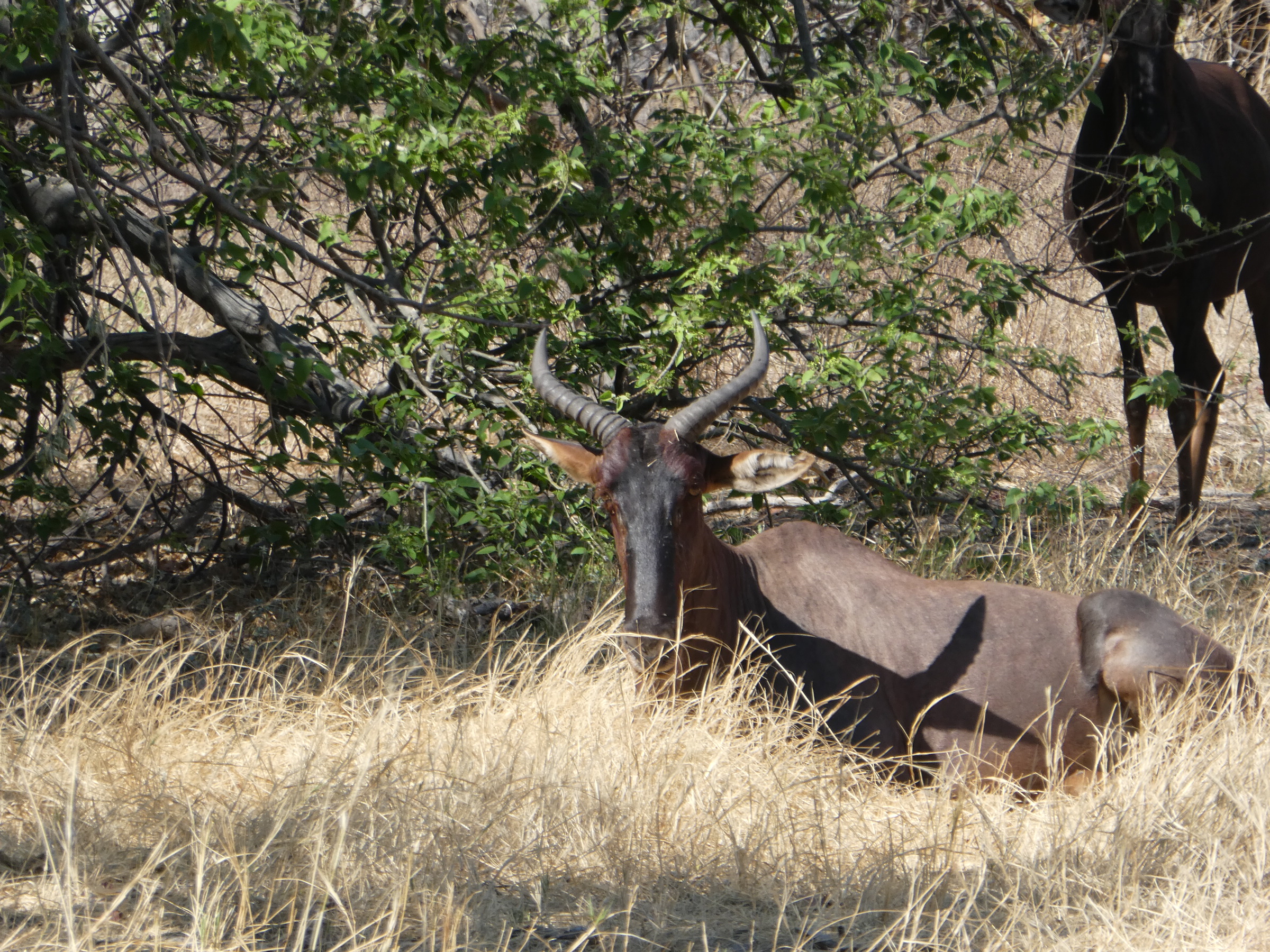
Male tsessebee.
Giraffe horns are covered in hair and present since birth. The females horns are typically closer together and a bit smaller. Females also keep the hair atop their horns for the entirety of their lives. Males however, lose the hair on the tips of their horns when fighting with each other, making bald horns a sure sign of a male giraffe. This happens over time, so the younger males still have hair on top of their horns. A unique behavior giraffes display is they will chew bone from the remains of a predator kill, and the calcium and minerals from the bones will form deposits in the skull. Mostly the deposit is present on the giraffe’s forehead, but in some instances there have been developments of psuedohorns that form behind the real horns. This is wanted by giraffes to add weight to their head, because when they fight with each other they swing their head and neck at each other almost like a wrecking ball. The heavier the head, the more likely a Giraffe is to win the fight.
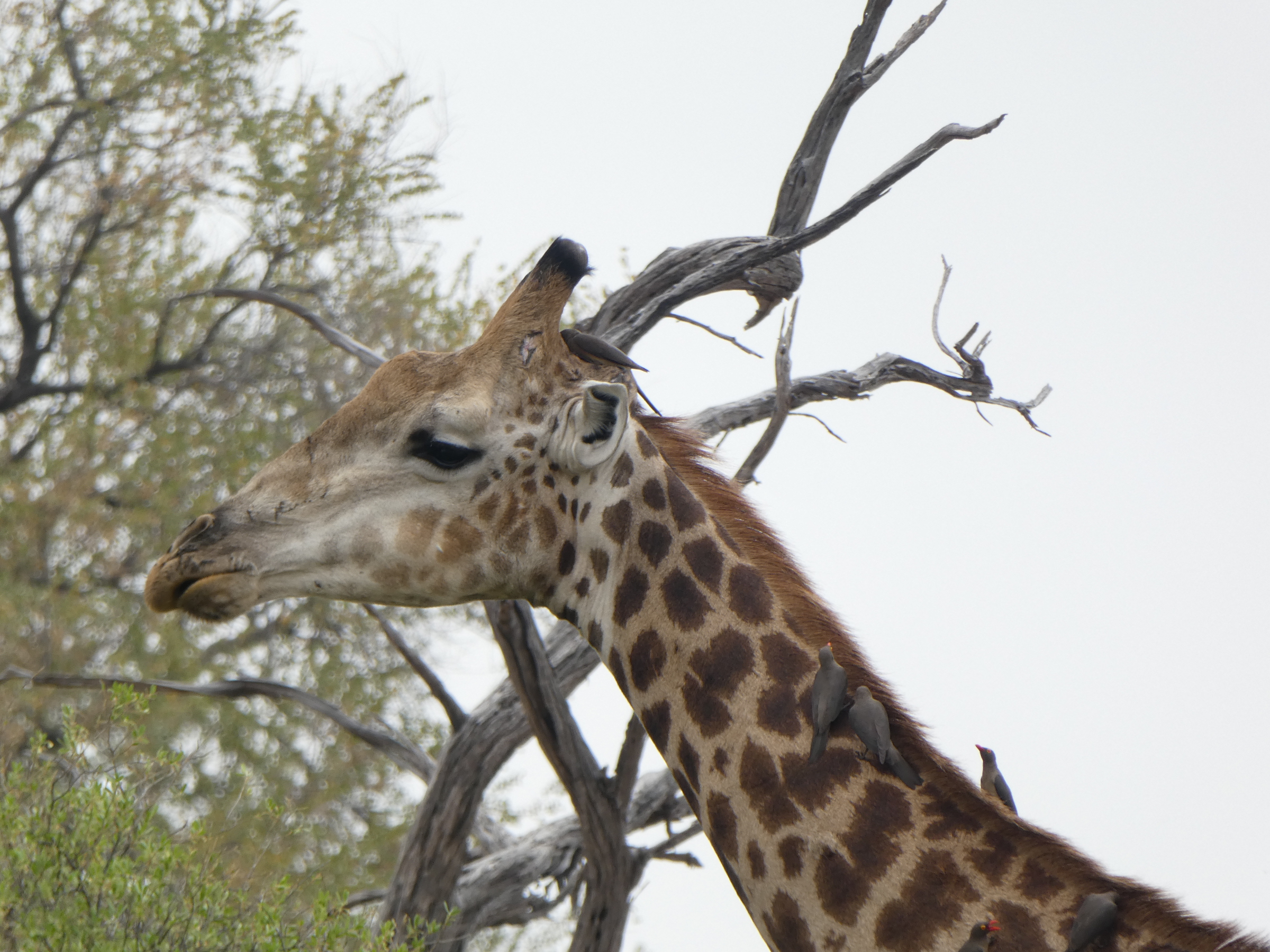
A male Giraffe identified by his hairless horns
The final herbivores do not have horns, they have tusks. Tusks are part of the dental structure and grow from enlarged incisors. Elephants and warthogs use their tusks in different ways. Warthog tusks are used as more of a defense mechanism. With two sets, the bottom tusks are sharpened against the upper jaw making them sharp like a knife. Warthogs, similar to buffalo and sable, will back themselves into their burrow and charge their attacker frantically. Elephants are large enough to where their tusks are not needed in defense, they are used more routinely for feeding. They scrape bark from the trunks of trees with their tusks and often times the force they use will break the pieces of ivory off their face. They will not grow back. A big problem Elephants face is they are heavily poached for their tusks because of the international ivory trade.
Elephant pic 1 and two
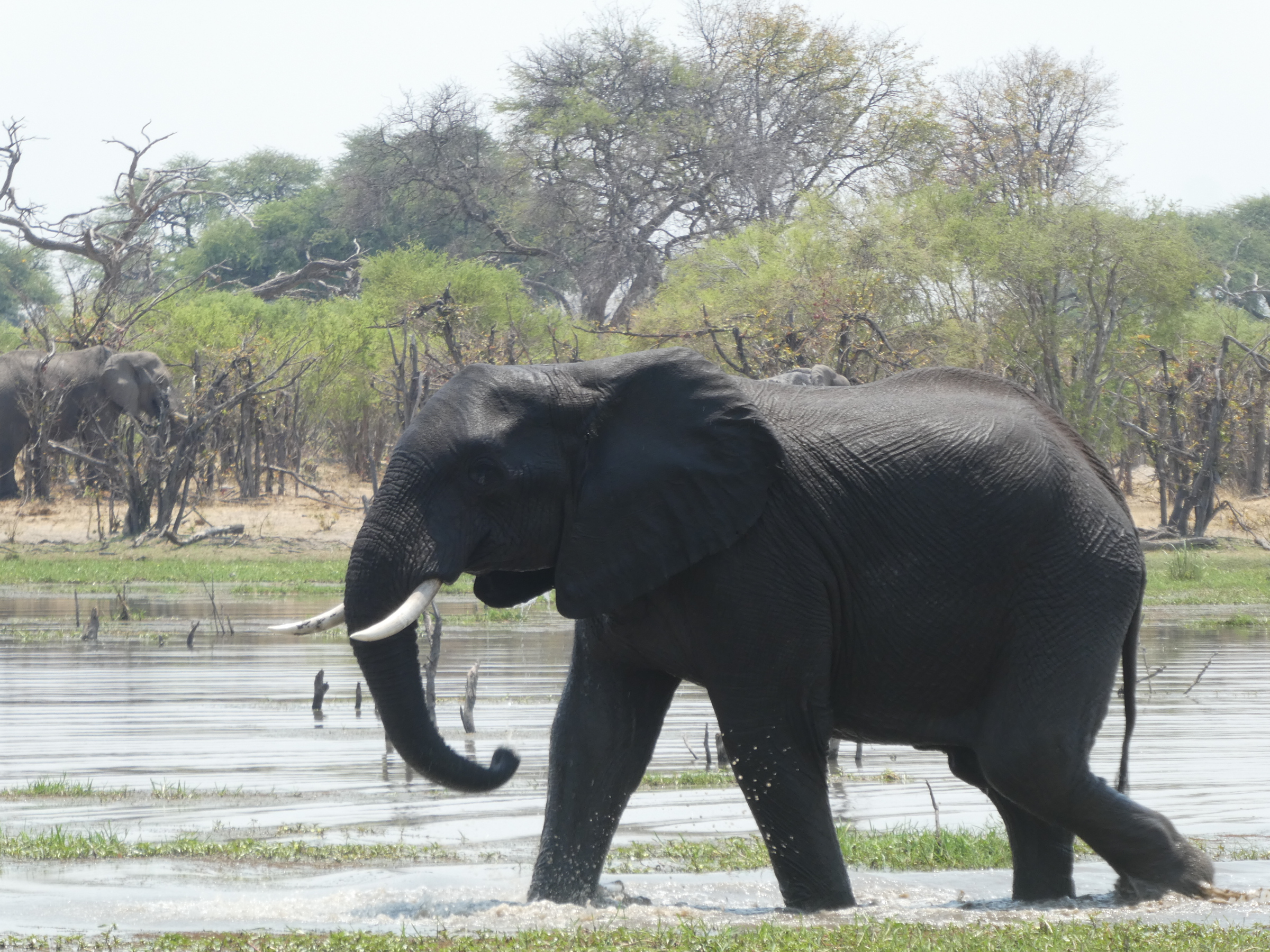
An elephant with both tusks glowing white after a bath
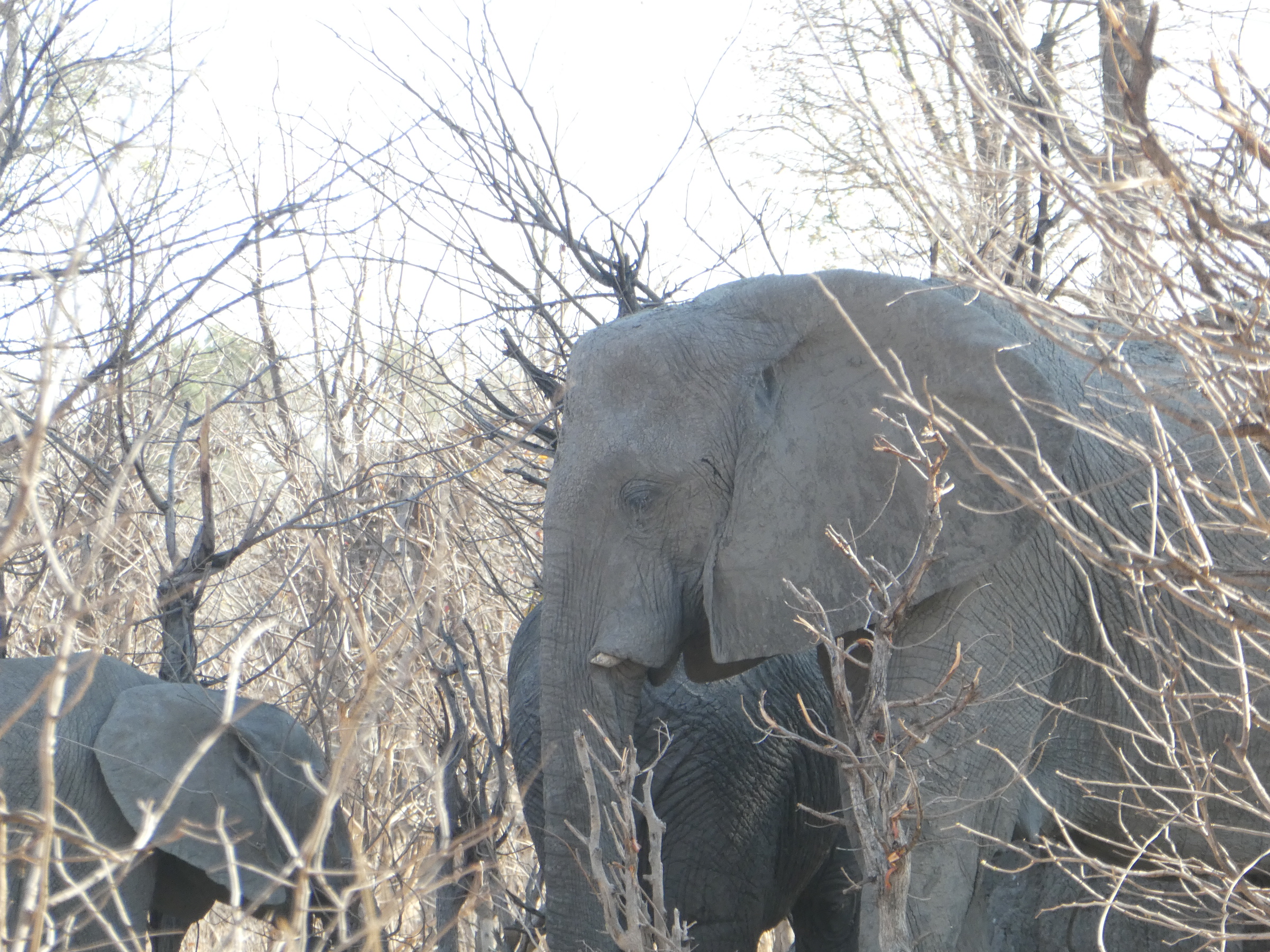
An elephant shown with a broken tusk, commonly seen in elephants in the Delta
All information cited from Okavango Field Guide