
A view from the saddle. Saying our goodbyes as Norma (on horseback) and Gavino as we make our way down to the road.
By Emma Sevier, University of Puget Sound
After collecting ourselves from our last expedition in Cochrane, we set off for homestays with clean clothes in tow. We’d heard stories of fence-building and sheep slaughter, unsure of what lay ahead we piled into the van set for the Maiten region. As we made our way along the winding dirt road, we said goodbye to friends along the way. Finally, we pulled off alongside a gap in the mountains where our host, Gavino, was perched atop a horse.
He greeted us with a warm smile and loaded our overstuffed backpacks into two leather bound saddlebags. We said our goodbyes to our instructor Adam and made our way up the steep scrub slope, bound for the saddle. Gavino stopped frequently, waiting for us to catch up to the horses and pointing out his favorite mountains along the way, our legs gradually waking up from the car ride as we climbed. As we reached the crest of the gentle green slope, we saw Gavino and Norma’s sprawling campo nestled in the valley, our home for the next four days.
Once we reached the campo, Norma welcomed us into their compact, cozy home with a warm pot of chicken soup. She explained the chicken had been killed earlier that day, specially for the occasion. We settled into cheerfully decorated stools nestled around the woodstove, chatting while passing maté. With bungled Spanish and excited gestures, we learned that Gavino had lived on the property his entire life, raising cows, sheep, chickens, and turkeys. We spent the rest of the afternoon turning over soil in the garden, where we removed grass — a particularly persistent weed — and loosened the earth for future plantings of lettuce and chives.
In good time, we settled into the rhythms of the campo, rising around 8:00am to catch friends and neighbors on the radio as we enjoyed a breakfast of bread and farm fresh eggs. Fueled by mate and copious spoonfuls of Milo hot chocolate, we made our way out into the gently sloping hills where we rounded sheep alongside trusty pups Polka, Campeón, and Chiquitita. Our next task was fortifying the fence. Gavino cut down lenga trees into posts using a chainsaw. We used shovels and the barreta, an especially forceful tool to break up the earth, digging holes until we reached bedrock and rooting the posts deeply in the soil. We took breaks often, stopping to admire the shifting clouds or snowcapped peaks, then returning the task as we worked our way down the length of the fence.
Around 12:30 or so, we would stop for lunch, Norma beckoning us into the kitchen with mate. She prepared each meal carefully and skillfully, peeling rhubarb and soaking cabbage with water and salt. We filled our bellies happily, warmth from the woodstove ushering us into siesta. Most days we spent the afternoon napping, slumbering from the morning’s work and replenishing energy for the evening’s activities. Around 5 or so, we emerged from hibernation, waking slowly thanks to shared sips of mate. We returned to the fence in the evenings, planting a few more posts and binding them with wire, watching the sun descend behind the spine of the mountains. Before returning to the house for dinner, we gathered firewood in a wheelbarrow as we made our way back, keeping our eyes out for moreillas, or morel mushrooms, along the way.
On our last night, Norma brought back a liebre, or invasive English hare, a successful kill from her trap. She dispatched the animal quickly, cleanly and skillfully removing flesh from bone before partitioning the meat for the ever-eager crowd of dogs. Our own dinners were simple, perhaps leftovers from a bountiful lunch or soup fortified with homemade bread, always followed by a cup of tea as we gathered around the table recalling stories from the day. On our last night, though, we celebrated. Gavino and Norma brought out a cow shoulder from under the table. Gavino’s brothers had visited the campo throughout the day, riding in on horseback to claim their part of the meat and share in the bounty.
In the evenings, we played games and listened to music. Gavino brought out his accordion and we strummed lightly on the churango or Spanish mandolin. Norma showed us how to dance the waltz and chamame, a particularly vibrant Chilean dance, and Gavino shared his many magic tricks, pulling strings from his pockets and rubbing paper between his thumbs.
Through our time with Gavino and Norma, we happily settled into the rhythms of life on the campo – hard work punctuated by sips of maté and drawn out siestas. Our Spanish improved and our muscles firmed, we took time to get to know the patch of land. On the final day, goodbyes were tough as horses carted our bags out of the sprawling, dandelion-speckled valley down to the road where the van waited to pick us up. Norma assured us she would be in Cochrane on Monday, an 8-hour horse-ride from the campo, so we happily made plans to see her again. One by one we piled back into the car, winding along the dirt road and picking up the friends we had left behind and reminiscing fondly of our time on the campo.
I am grateful to have gotten to spend this time with Norma and Gavino, getting a chance to share in their connection to place and to the land by planting shovels and passing maté. Though we worked hard, we took many breaks to reflect and rest, deriving contentment from a job well done. We paused and sat down for every meal, mustered all of our strength to haul fence posts, and when the work was finished and the dishes were cleared, we danced happily into the night. I hope to bring this sense of balance and fullness into my life own life, offering the same sense of care and attention to my homework assignments with which Gavino tends to his sheep. Although it was difficult to say our ultimate goodbyes, I have full faith Gavino and Norma will continue inspiring the gaucho livelihood’s sense of vibrancy and strength to all they encounter. I hope to visit them again sometime soon.
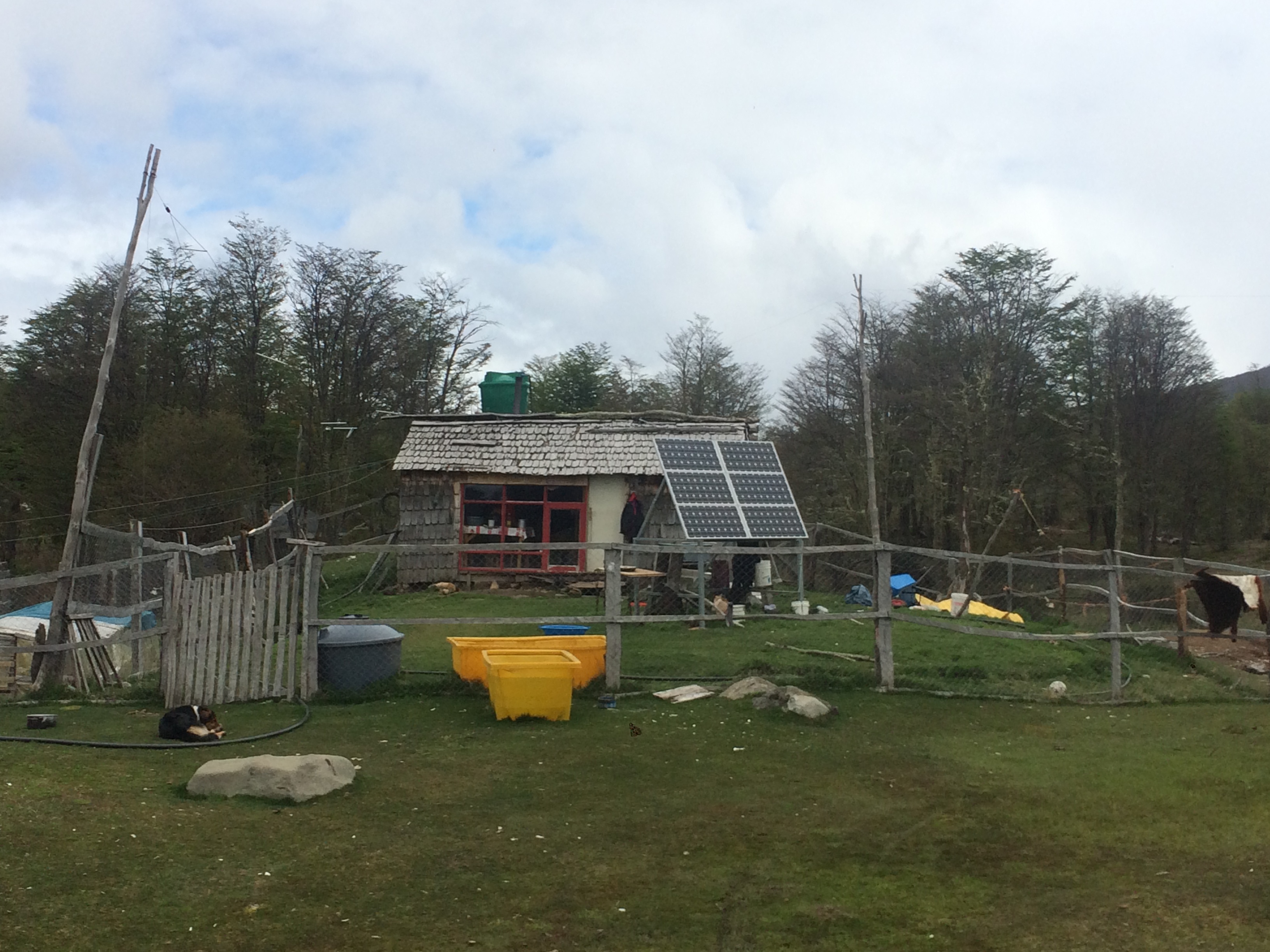
Our home for 4 days — a solar panel and water collection bucket helped to provide some of the campo’s energy and water.
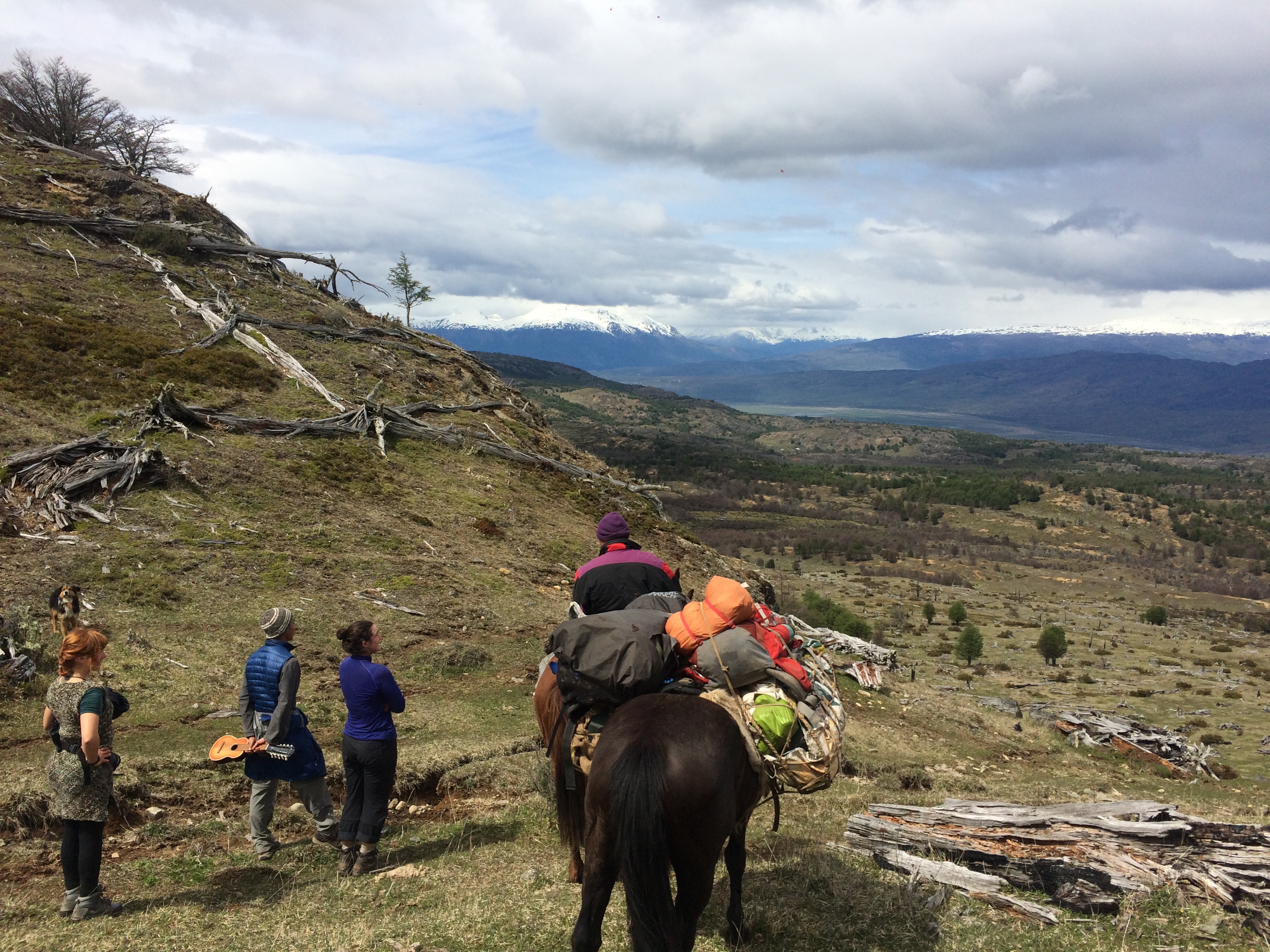
Gavino pointing out his favorite mountain on our walk up to the Campo, his horse fully loaded with our packs.
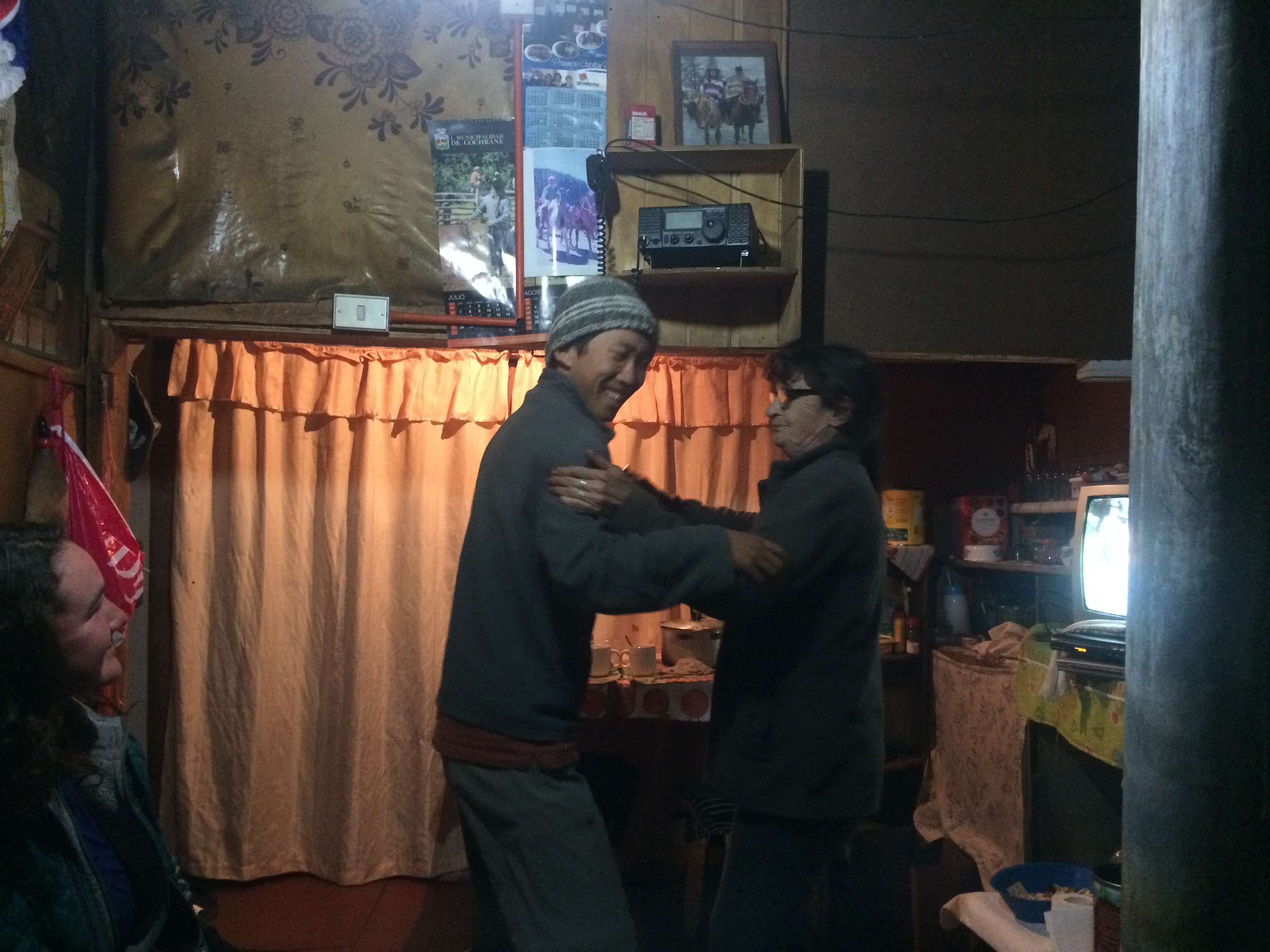
Norma and Park dancing the waltz after a long day of work.
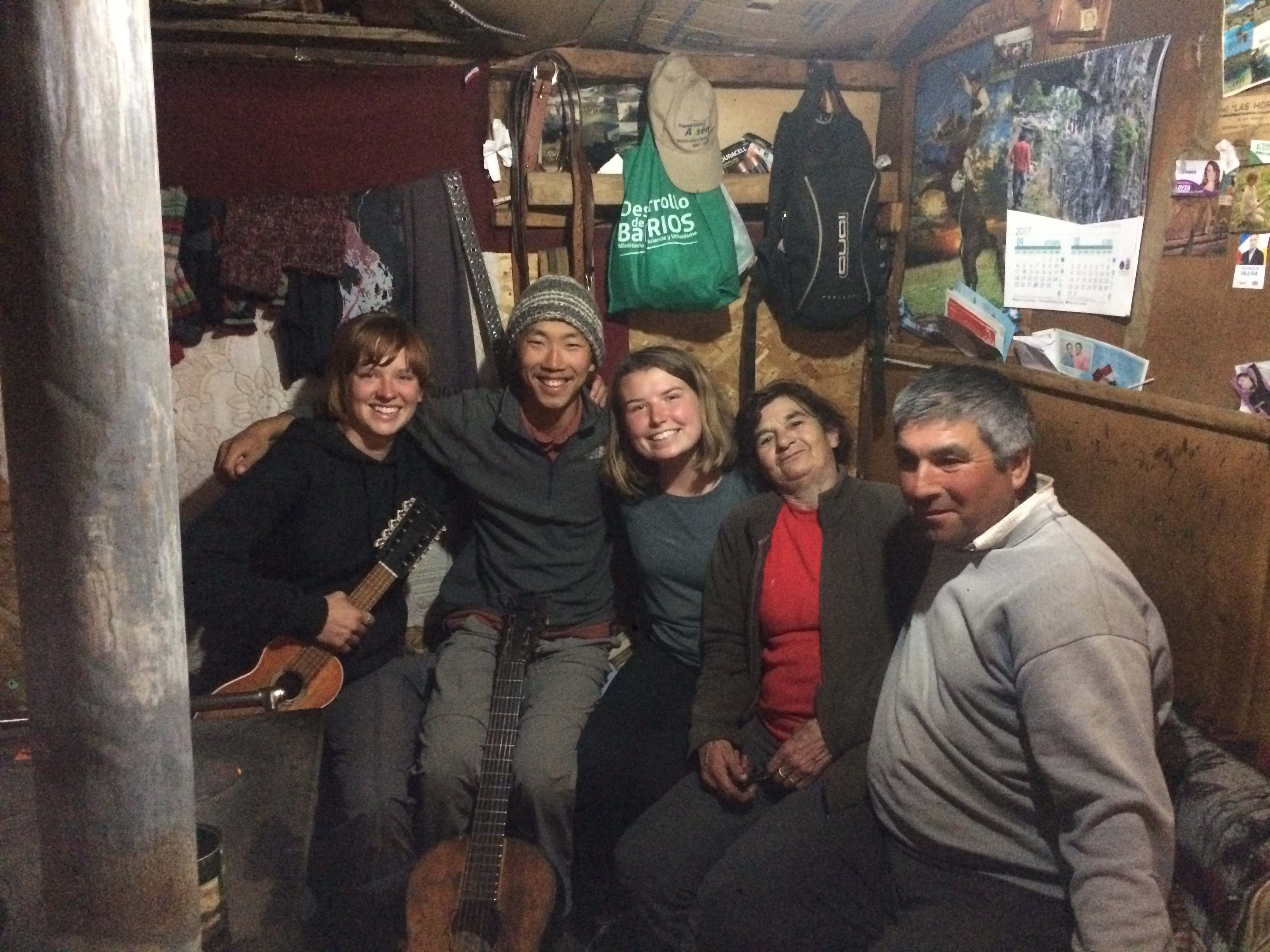
Nestled by the woodstove playing guitar and churango.
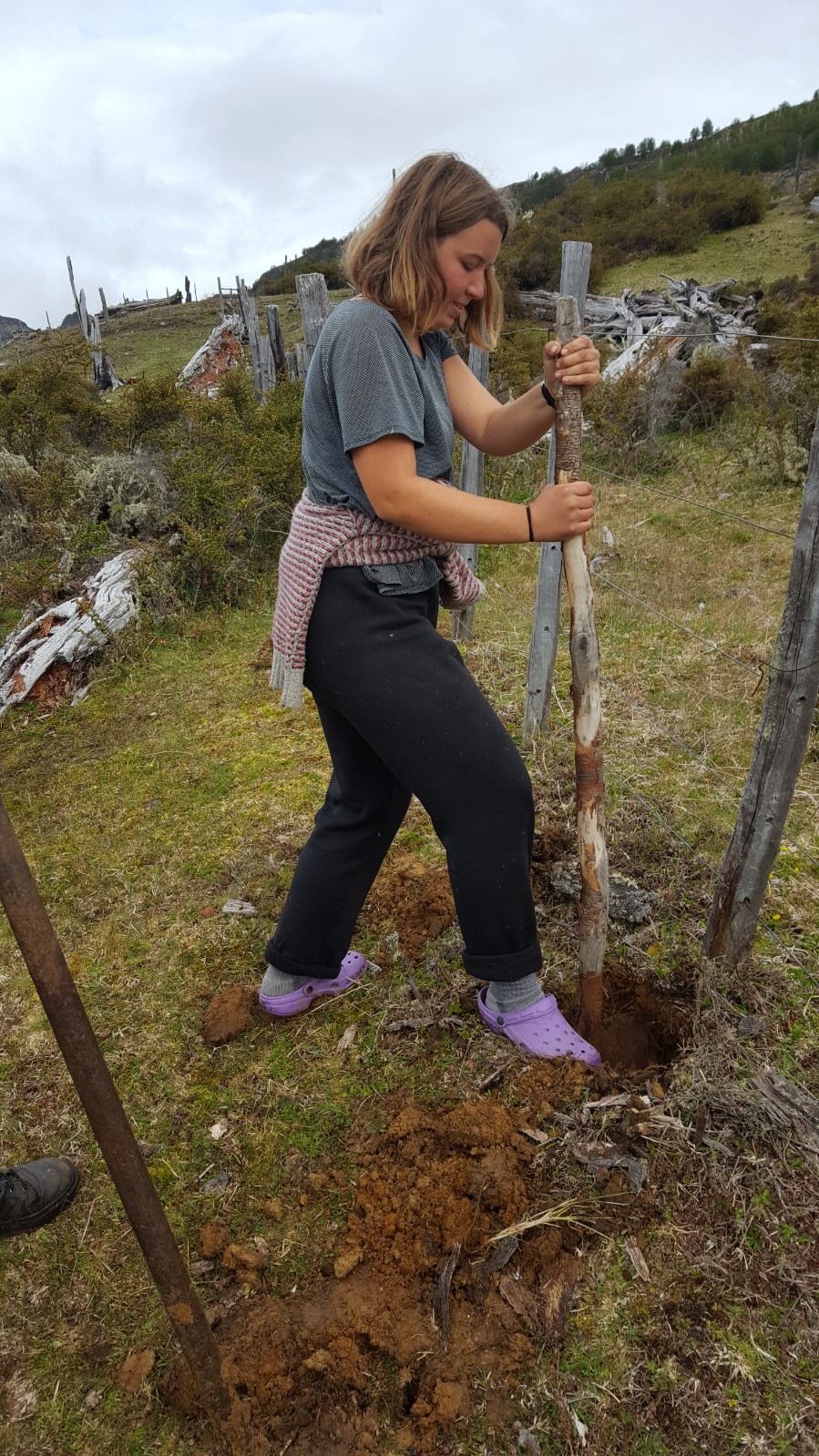
Emma digs a post hole for a new fence. Photo by Shannon Quinn.
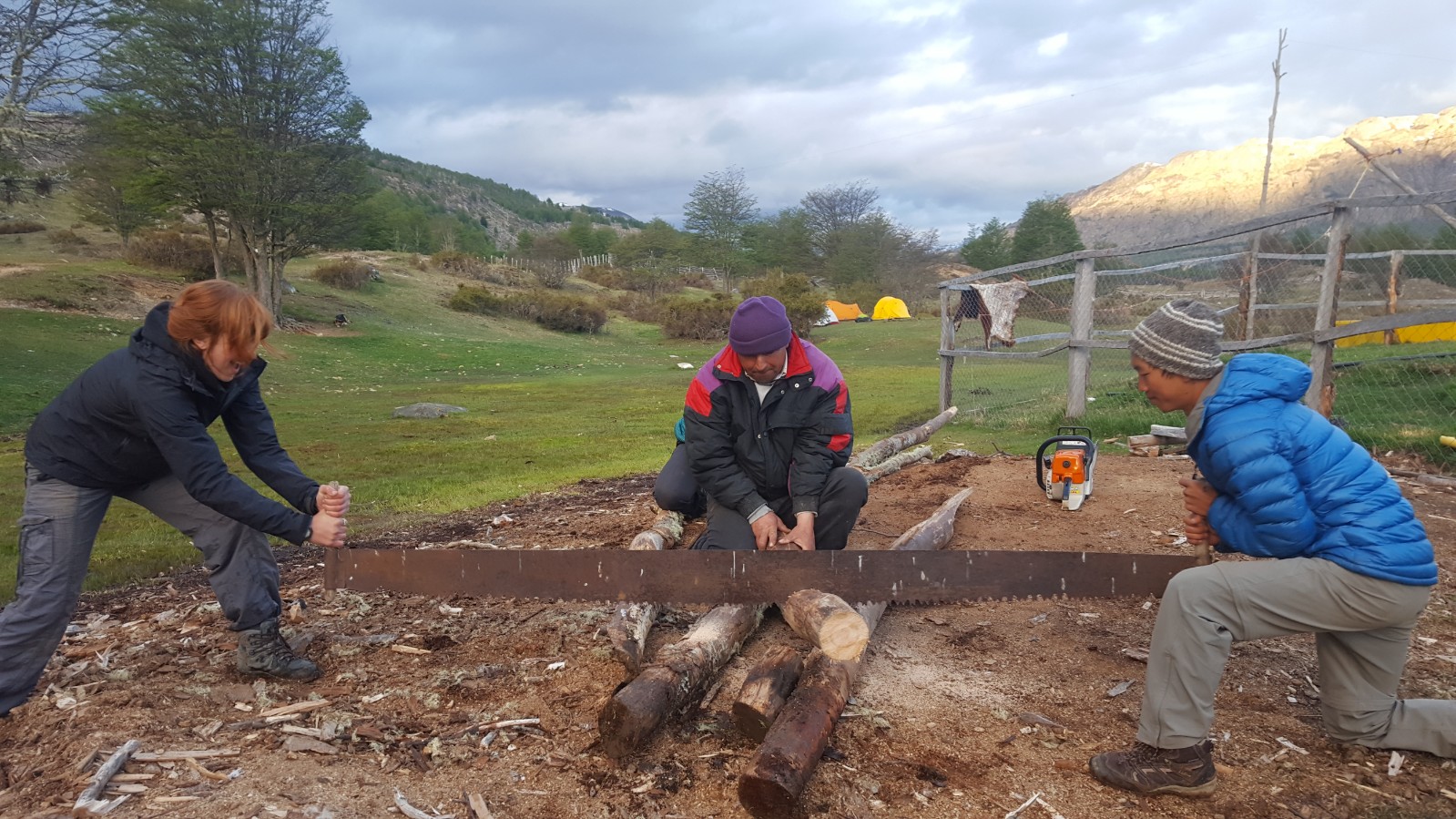
Shannon and Park help Norma saw fence posts. Photo by Shannon Quinn.