
By Anna Messinger of Bowdoin College
Travel south on the Carretera Austral from Cochrane for a few hours. You don’t pass much, just some forests, mysterious dirt roads, and an occasional view of expansive snow-capped peaks. Eventually you’ll see a wooden sign on your left, the words on it hand drawn in black sharpie. It reads: CAMPING. LECHUGA + PAN. FISHING BOAT. Beyond the sign sits a gravel lot filled with assorted things. Old tires scatter the ground, a run-down truck sits on the grass covered by a tarp, and pieces of sheet metal lean against a garage, teetering in the wind. A small house lies in the back of the lot, smoke rising from the tin chimney and the door cracked open. At first, I was unsure that you could actually acquire bread and lettuce here. However, after spending 7 days with Cristian and Rosa in their home, I have eaten more than enough bread and lettuce to prove otherwise.
The first morning after our arrival, I woke up to the warm scent of baking bread. I wandered into the main room of the house where the wood stove was roaring. A huge pot of plum jam was boiling on top, and inside were fresh pancitos, or rolls. “Quieres pan?” Rosa asks. “Do you want bread?” Of course, I always want bread, so I said yes. After a leisurely breakfast, of instant coffee and pancitos with butter, we accompanied Cristian to work.
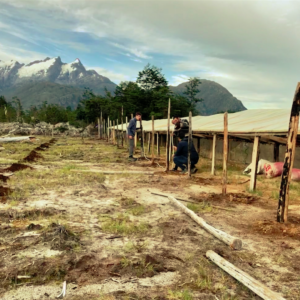
He and his son are building a drying house for sphagnum moss. This is their first year harvesting sphagnum, which is used in numerous household products because of its ability to absorb water.
The methods for constructing the drying house were simple. We began to dig holes for posts that would become the skeleton of the house. Once the hole was 50 cm deep, we put in a post and refilled the hole with dirt, tamping it down with a stick until it was nice and sturdy. At one point, Cristian’s son and his friend used a clear tube with water to make a perfectly straight line of rope. At 11:30, Cristian told us that we can stop. We returned to the house and enjoyed a huge lunch and an outrageously long siesta, until 5:30 pm.
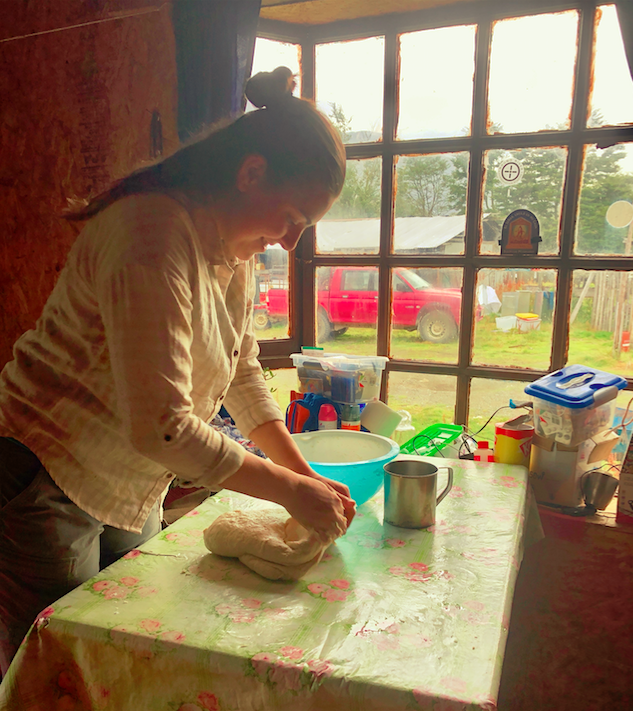
For the next few days, we continued to do small amounts of work around their property. We weeded and watered the greenhouses, which were in the prime season for harvesting fresh lettuce, cilantro and chives. We made bread with Rosa every day, taking turns mixing and kneading the dough. Rosa was a clear expert, with no measurements beyond a few platefuls of flour and a few spoonfuls of yeast. She showed us how to roll out the dough, using an empty wine bottle, and demonstrated punching out the pancitos with a tin can.
One day an employee responsible for harvesting sphagnum walked through the door. She asked Rosa for 5 pieces of bread, handing her 1000 pesos. Rosa grumbled and filled a bag with fresh bread, straight from the wood stove. I caught her slipping in a few extra pieces for the employee. This must happen often, as the employee tried to stop her but is appreciative anyway.
One morning, I woke up to the sound of rain falling on the tin roof. I rolled lazily out of bed, as I know that we would not be asked to work this morning. While we were always ready to help, one of the lovely things about this homestay was Cristian and Rosa’s relaxed attitude about work. Any inclement weather, such as heat or rain, meant that we could spend time reading, knitting and playing Truco, a Chilean card game. After indulging in my daily breakfast bread, a cyclist showed up at the door, soaked from the pouring rain. Rosa had him sit down with us and fed him a hot meal, refilled his water and let him charge his phone. This would happen often; people biking the Carretera Austral would stop and buy bread. Often, they would sit and enjoy mate and make small conversation with us and Rosa.
Cristian and Rosa had seven children and “too many grandchildren to count.” In our last few days, their daughter-in-law and grandson come to stay with us. They are of course welcomed with bread, and we enjoy getting demolished in Truco by Teresa, and playing with her son, Cristian Manuel. Cristian Manuel brings a lot of energy with him, always ready for a game of pretend gauchos or pretend bear attack. Cristian and Rosa adore him, slipping juice boxes, chips and lollipops whenever they got the chance.
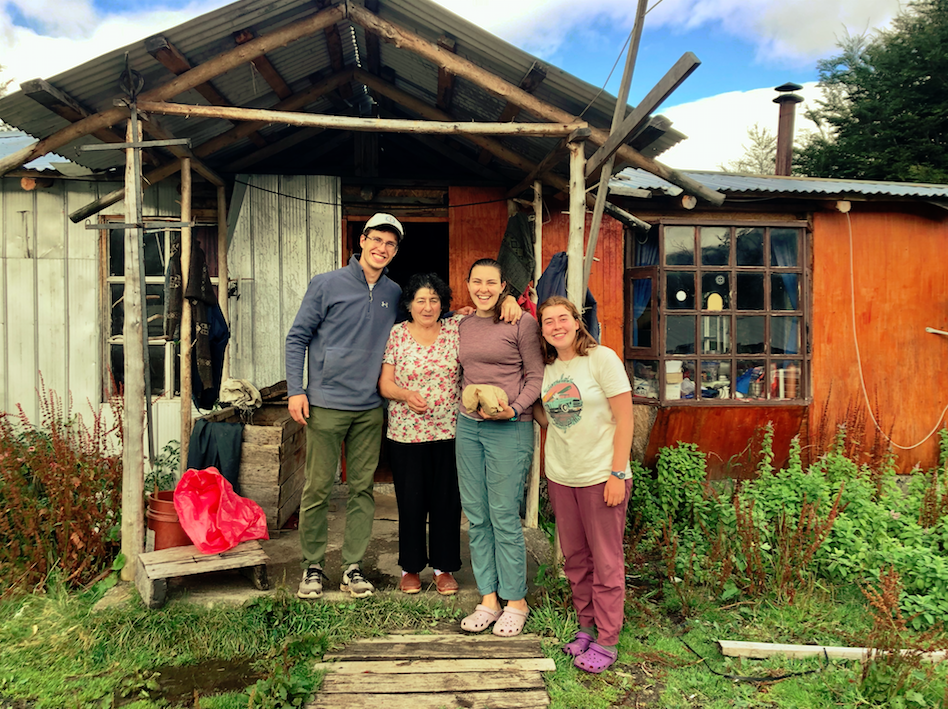
In the seven days we spent at Cristian and Rosa’s home, there were no fewer than four people who had passed through, coming for bread and good company. I learned how wrong my first impressions had been. This home, where I had assumed that I would be isolated, actually allowed for me to meet many people from all around the world. I can now see how good food can grant human connection, even when spoken language is not shared. While I can only speak a few words of Spanish, I didn’t need to know how to say “I would like another pancito, please” for Rosa to hand me another roll. Hospitality is not always a tangible feeling. Achieving a feeling of comfort and warmth for visitors is difficult, but I think that the best way to start is by offering fresh bread.