
by Ian Nadel, of Westminster College
Even before the sun rises, the work begins for Round River staff and students. A sharp 6:00AM departure time calls for a 5:30 alarm- to prepare tools and materials for the morning surveys. The brisk air of the Okavango Delta is almost frigid, even though it is the approaching the hottest time of the year in southern Africa. After a quick cup of cocoa, we hit the bumpy dirt road and get the day started.
Each transect drive requires four sets of hands; a driver, a guide, and two data collecting students. Four keen sets of eyes are also required to spot wildlife through vegetation that can get very thick in some habitats. Even though it is the dry season, many plants and trees are able to keep their leaves through a serious set of adaptations to this intense climate. Depending on the habitat and diversity of the transect, a drive could take anywhere from three to six hours. Drivers make sure to keep a steady 10Km/hr pace to minimize chances of missing camouflaged animals or those who take advantage of the thick bush.
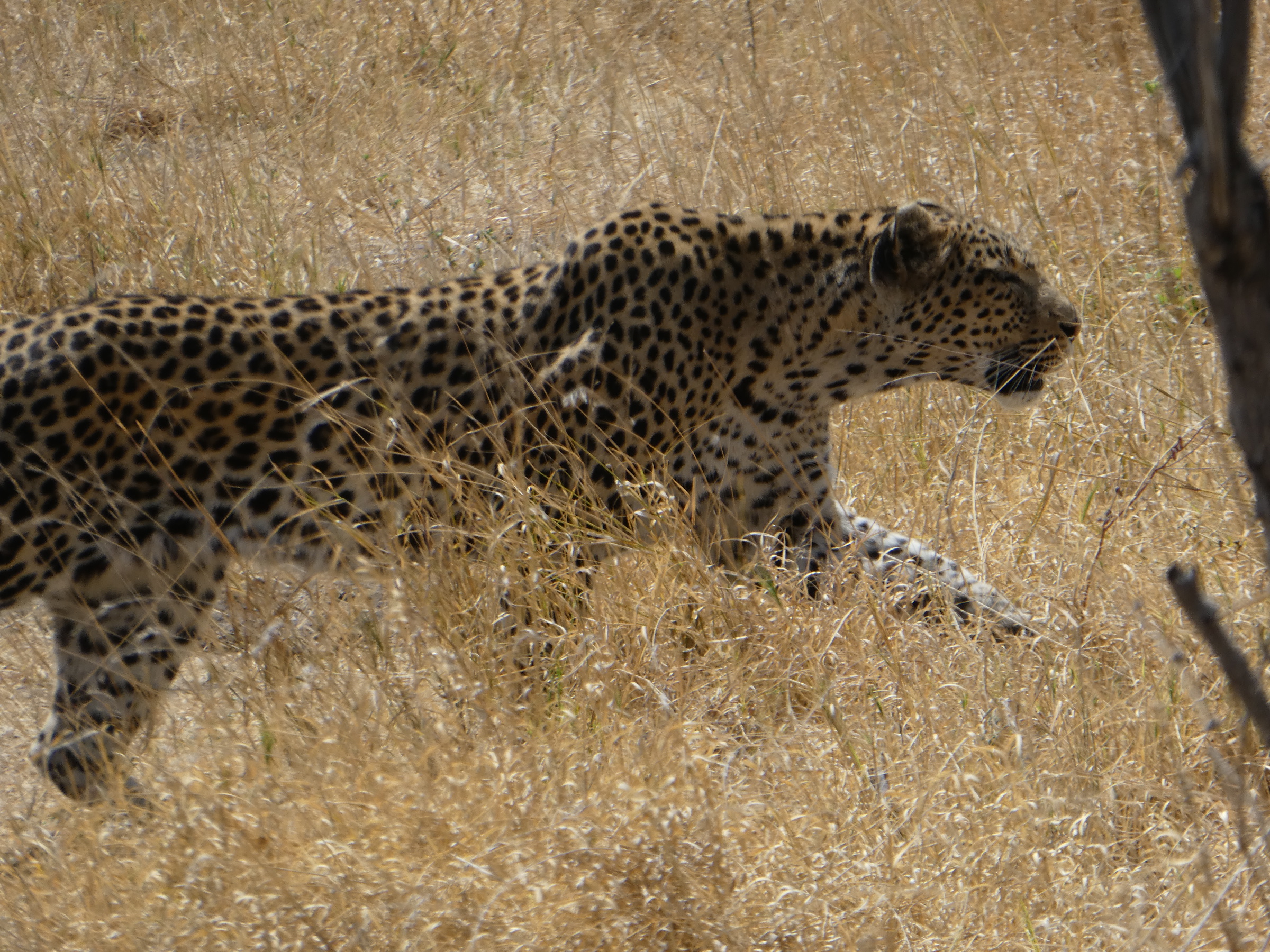
Staying low to blend in with the tall grass
Certain animals are seen in abundance in the delta. It is not unusual to see elephants, impala, giraffe, waterbuck, and hippopotamus. Other animals are not as often seen by people. Examples of those are lions, leopards, sable antelope, and the ground hornbill. All the transect habitats we drive are different and that is what makes each morning unique.
My first transect here in Ngamiland 19 still remains the most memorable one yet. The dry season forces most wildlife to stay near water, and this transect went the opposite direction of the river. Because it was dry, the transect itself was rather quiet- though we did get a brief look at a lone sable antelope. On our drive back to camp however, we took the long way around to pass by the riverside to see what else we could find. Our local guide, Mmapula, had asked earlier in the morning what our favorite animal was. I, of course, told her mine was the leopard- merely thinking she was just making conversation. As we passed the local safari guides, Mmapula would exchange words in Setswana with each one. The conversations varied in length, but a longer exchange with a guide seemed to get Mmapula rather excited. She turned to us in the backseat and explained the man told her there was a leopard in the area.
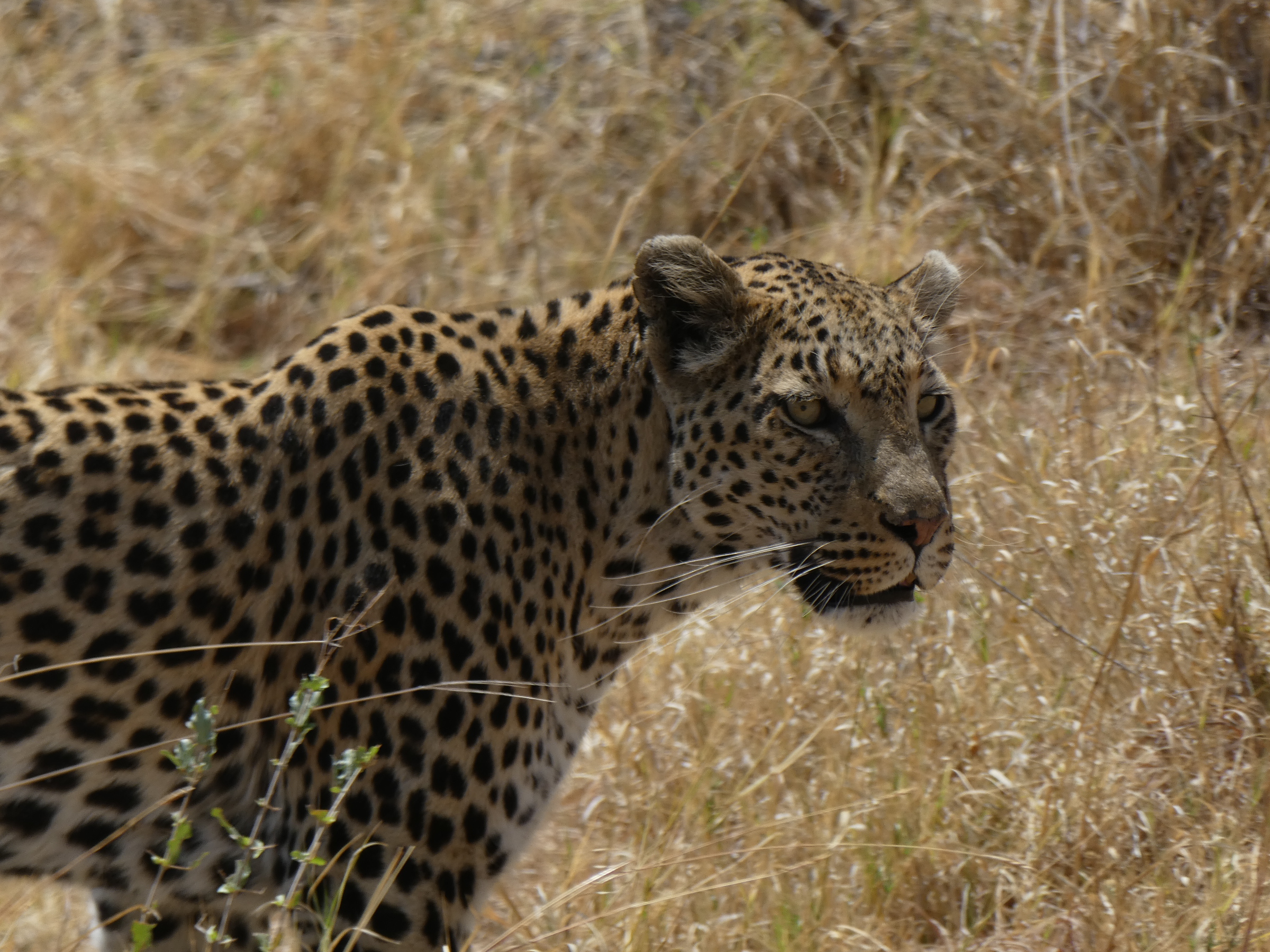
A daunting stare
I tried not to get my hopes up, as I knew that there was still a slim chance we would actually cross paths with this rare animal. She began directing our driver to where the man had instructed her, and we got to an area near the river that three safari vehicles were surrounding a patch of brush. Throughout the day I had picked up that that was a sign of something unique. As we were getting closer, Mmapula points her finger and exclaims “There! Leopard! Do you see it?! Did you see it?!” Following her finger, I got a very distant look at what appeared to be a tail disappearing into the bush. I was a bit disappointed, knowing how we might not get another chance to see a leopard this close. Suddenly, from out of the thicket emerged this magnificent male leopard. At a slow pace, the elegant creature walked for about 20 meters alongside our car and back into the bushes. My classmate Caroline and I were taken aback by the beauty of this animal. The whole car was speechless, except for Mmapula, who had a big grin on her face. This encounter is one I will never forget, coming from my first day in the bush.
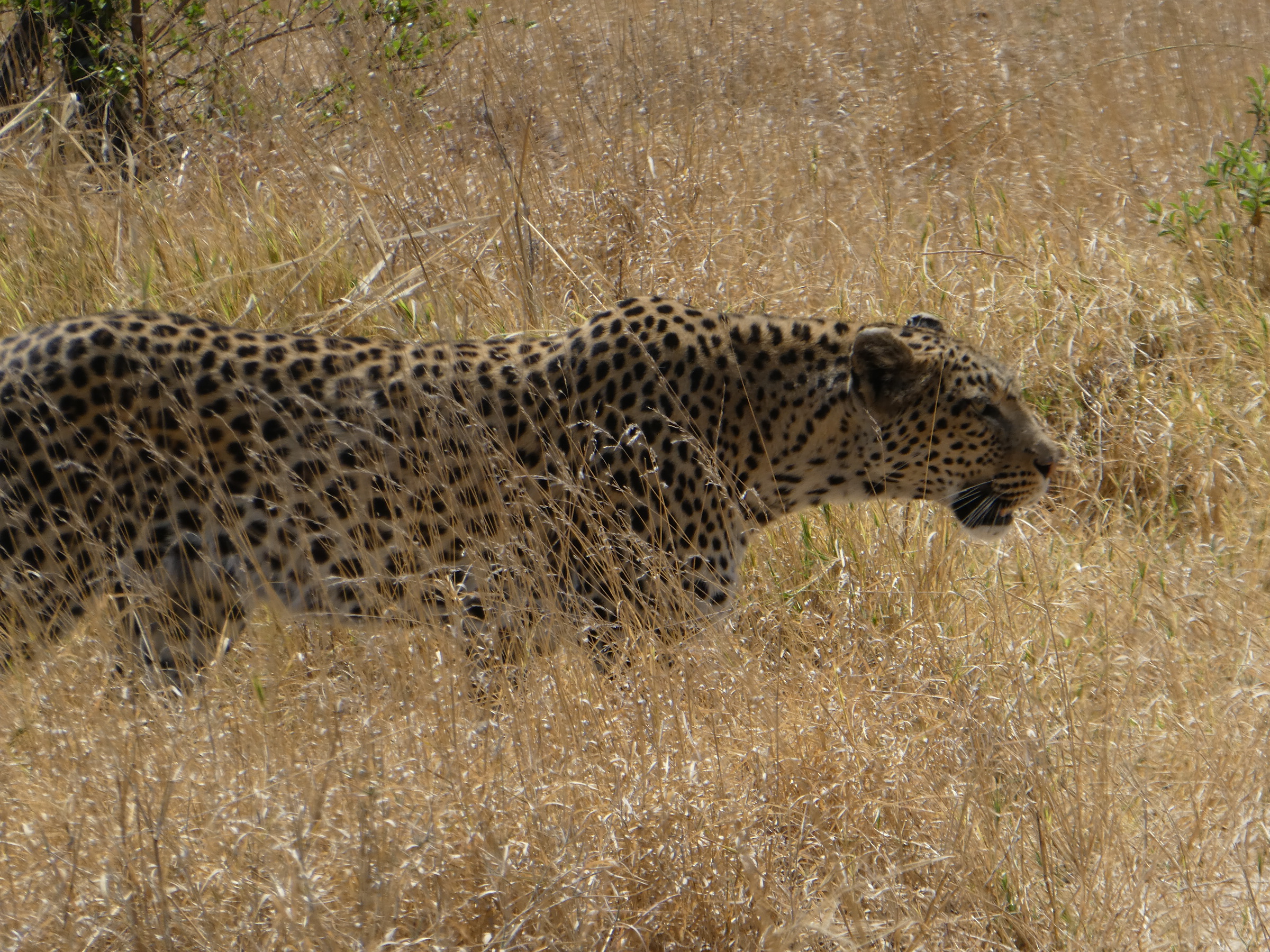
The last moments before disappearing into the bush.