
By Amber Davis, UVM
Living in a canvas tent for three months:
Welcome to our humble abode!
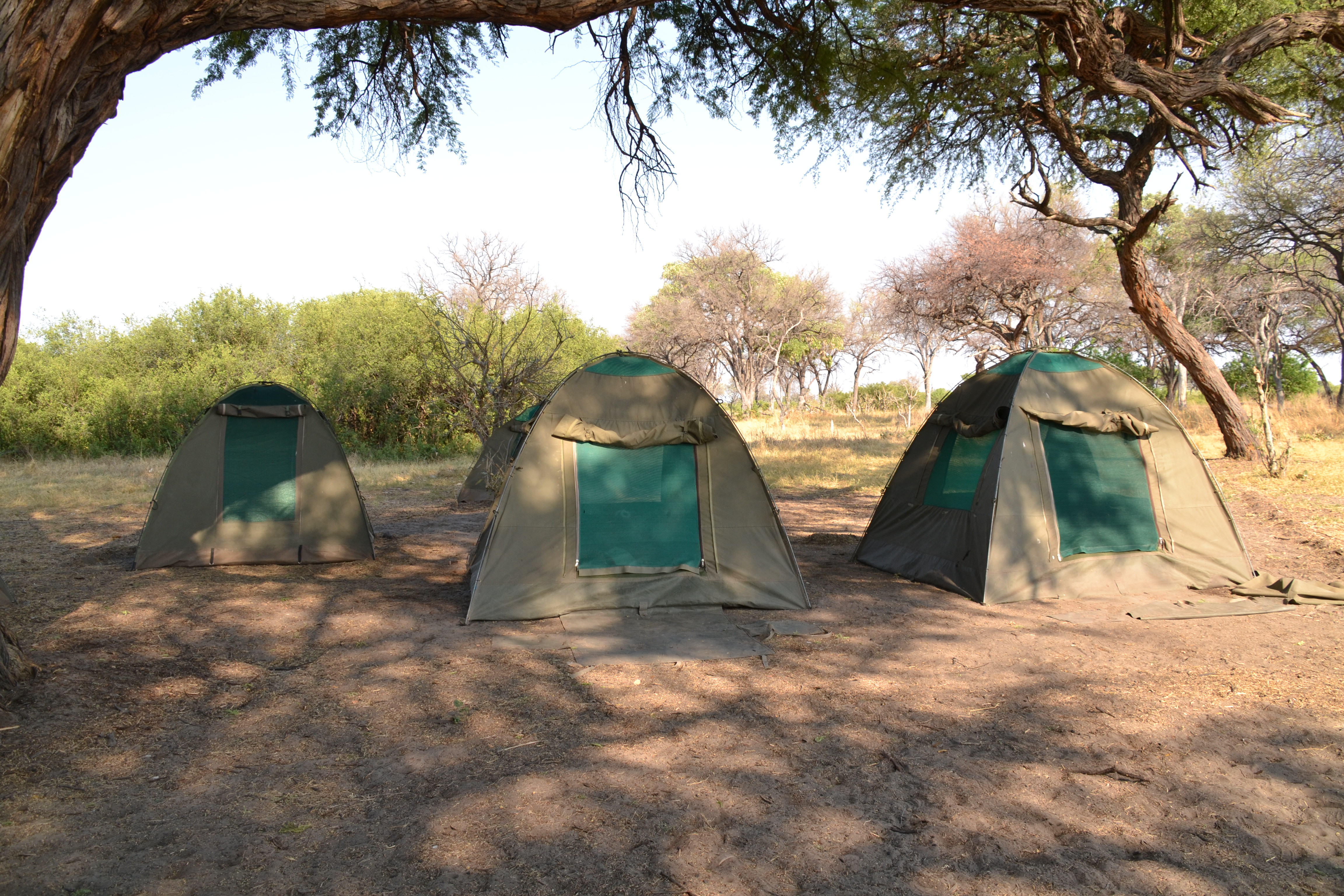
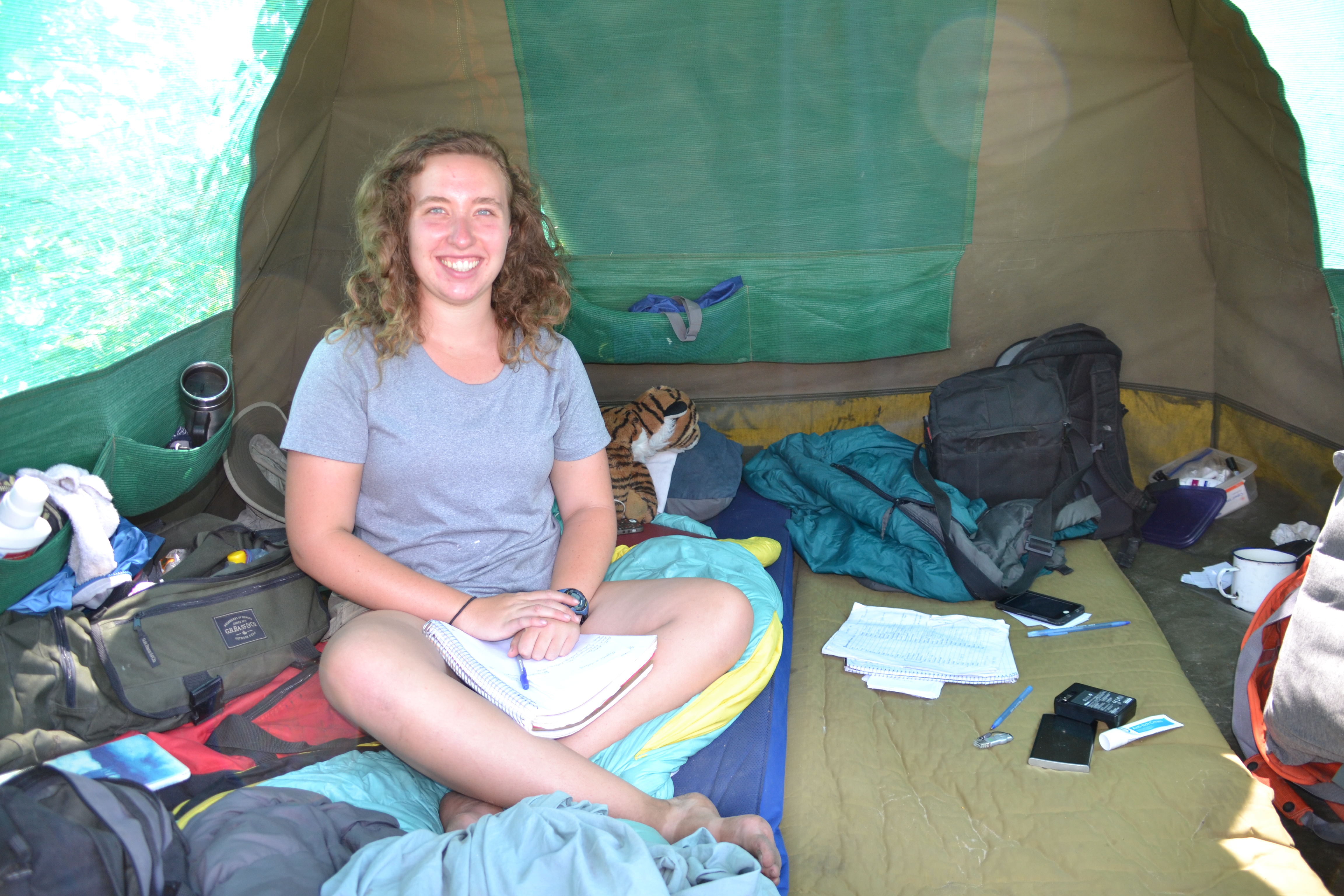
Outside and Inside of Canvass Safari Tents, Photo By: Amber Davis.
We have been sleeping in these tents for the past three months rotating tent mates every couple weeks. They are sturdier than your classic camping tent back in the United States, which I have been more thankful for than I would like to admit. At times, they make me feel restricted from the biota around me but then I remember that they protect us from foreign creatures. Last night before I fell asleep, I was thinking how amazing it would be to have translucent tents so we could see all the wildlife passing by our tents in the middle of the night. Shortly after this late night thought, I remembered why this would be a terrible idea. Our last herbivore-monitoring site was located in the village of Sankuyo and we were staying at the community campsites there called Kazinkini. One night at Kazinkini we gathered around a makeshift projector to watch a movie, but we were interrupted by the loud calls of approaching lions and elephants trumpeting. This was a not so gentle reminder that we are not sitting in a movie theatre back home, but in the middle of the bush.
Later that night my tent mate, Katherine and I, heard about 15 elephants come to the water hole located 15m behind our tent. It was hard to seem them because it was dark, but we could hear them trumpeting in agitation while drinking because there wasn’t much water available. While we were huddled in the middle of our tent trying to look at the elephants, a meteor went shooting across the sky lighting up the night and exposing the elephant congregation. A few seconds later, another one hit earth; BOOM. As the activity around the water hole died down we went to bed, but were awakened from our bodies vibrating around midnight. The lions had made their way to the water hole and were calling to one another. When lions are that close to you, you can feel their call vibrating through your organs like the beat of a loud drum. As much as I would like to see the lions this close to my tent, it would have been mortifying if I actually did. These wildlife incidences occur often in the dead of the night while herbivores graze and predators hunt. Living in a tent for three months entails the uniqueness of your instructors asking you to yell for them in the middle of the night if you have to go to the bathroom because there are predators lurking in the shadows. Living in a tent in the middle of the bush is euphoric.
Hand washing laundry:
Going into this trip, I knew that we would not have access to a washing machine but I hadn’t thought about how much we relied on these machines back in the states. In the bush, we have decided that there is no such thing as staying clean in Africa. We joke about being able to see the true shade of our tan and the actual colors of our clothes upon arriving home and having access to a proper shower and washing machines. Even after we shower we find dirt on ourselves, including our clothes. Being the environmentally conscious students we are, we try to wear our clothes to the last day possible before being too dirty for our sanity or making our friends uncomfortable with our smell. Although, we have recently come to the conclusion that we don’t notice when we smell bad, we only notice when we smell clean and of flowers. We have learned that for many communities in Botswana hand washing laundry is the only way to wash laundry and that the role is placed on the women in the household. The first time that I hand washed laundry here I didn’t have anyone showing me what to do, but one of the escort guides was washing his laundry in the tub next to me. He looked over at me and asked if I needed any help while giggling. Needless to say my laundry didn’t get much cleaner than its previous state. Over the course of the semester, we have become pros at hand washing our laundry and it has become therapeutic to clean it. We have grown to wake up and clean our dirty laundry before starting on our schoolwork on our days off. Each day, we are faced with challenges that are a normal part of the Batswana life have helped us grow in different ways than our first world lives could.
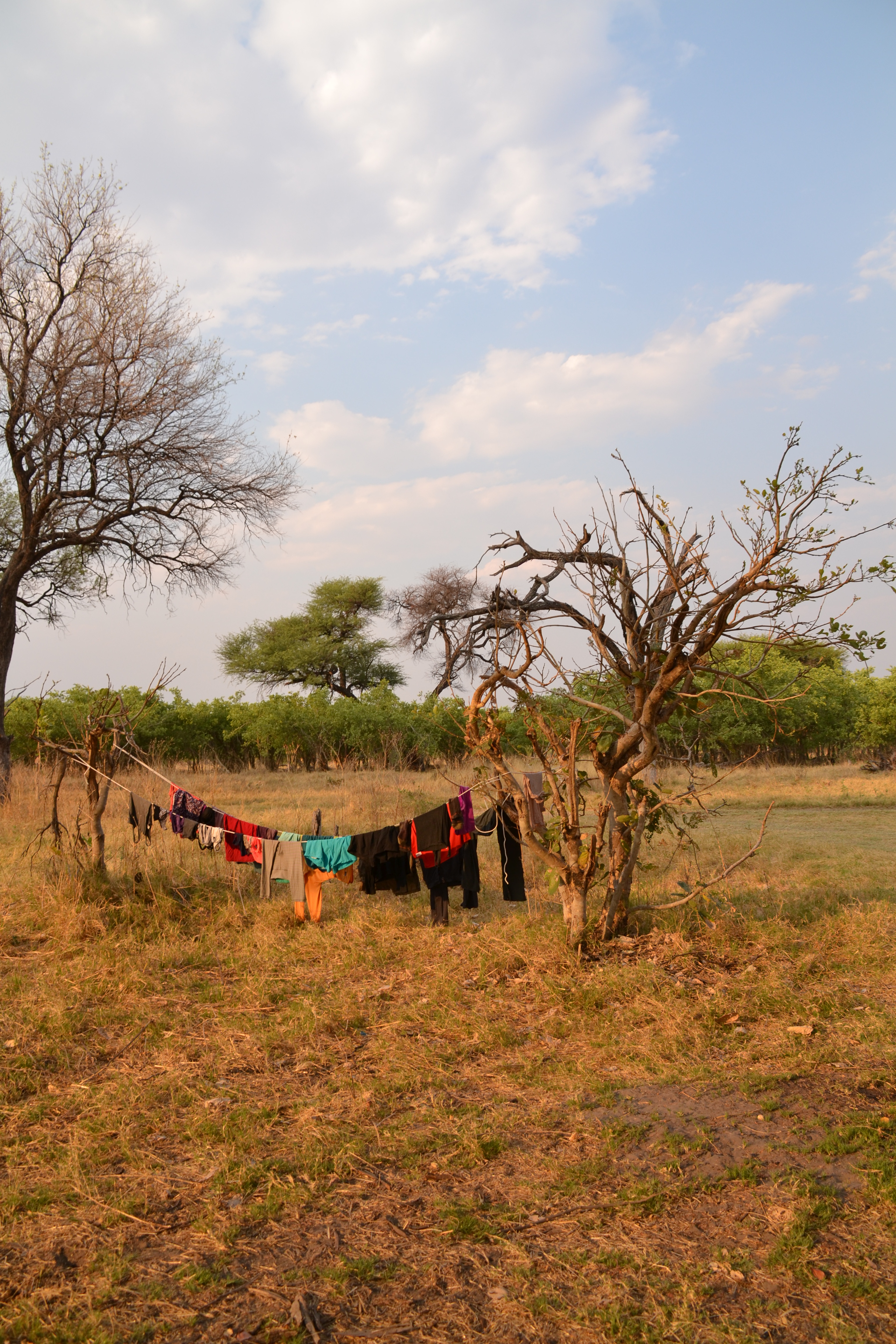
Students’ laundry hanging at Mogothlo Campsite, Khwai. Photo by: Amber Davis.
Camp life community chores:
Living in community settings has its positives and negatives. Co-existing in tight quarters with strangers provides each of us with constant friendship and company but it also means that we all have to share responsibilities that are vital to the functioning of our camp. Every two weeks we rotate a cooking/ cleaning schedule and data entry schedule. For two weeks, each of us is paired with another student or instructor to cook for camp. Whoever is on cooking, cleans the following night for the next cook group
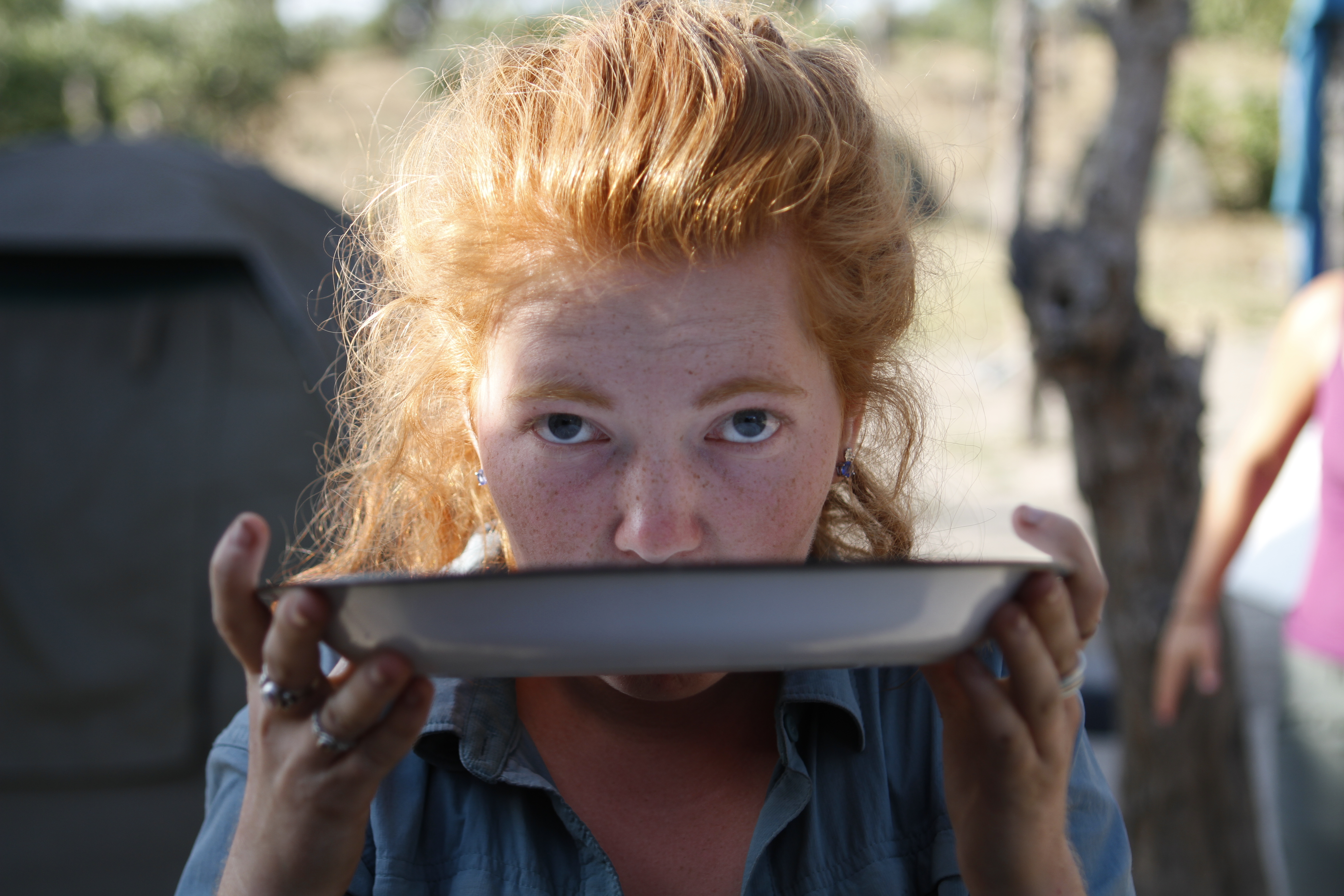
Kristie Weeks drinking water off o a plate. Photo by: Addison Spitzer.
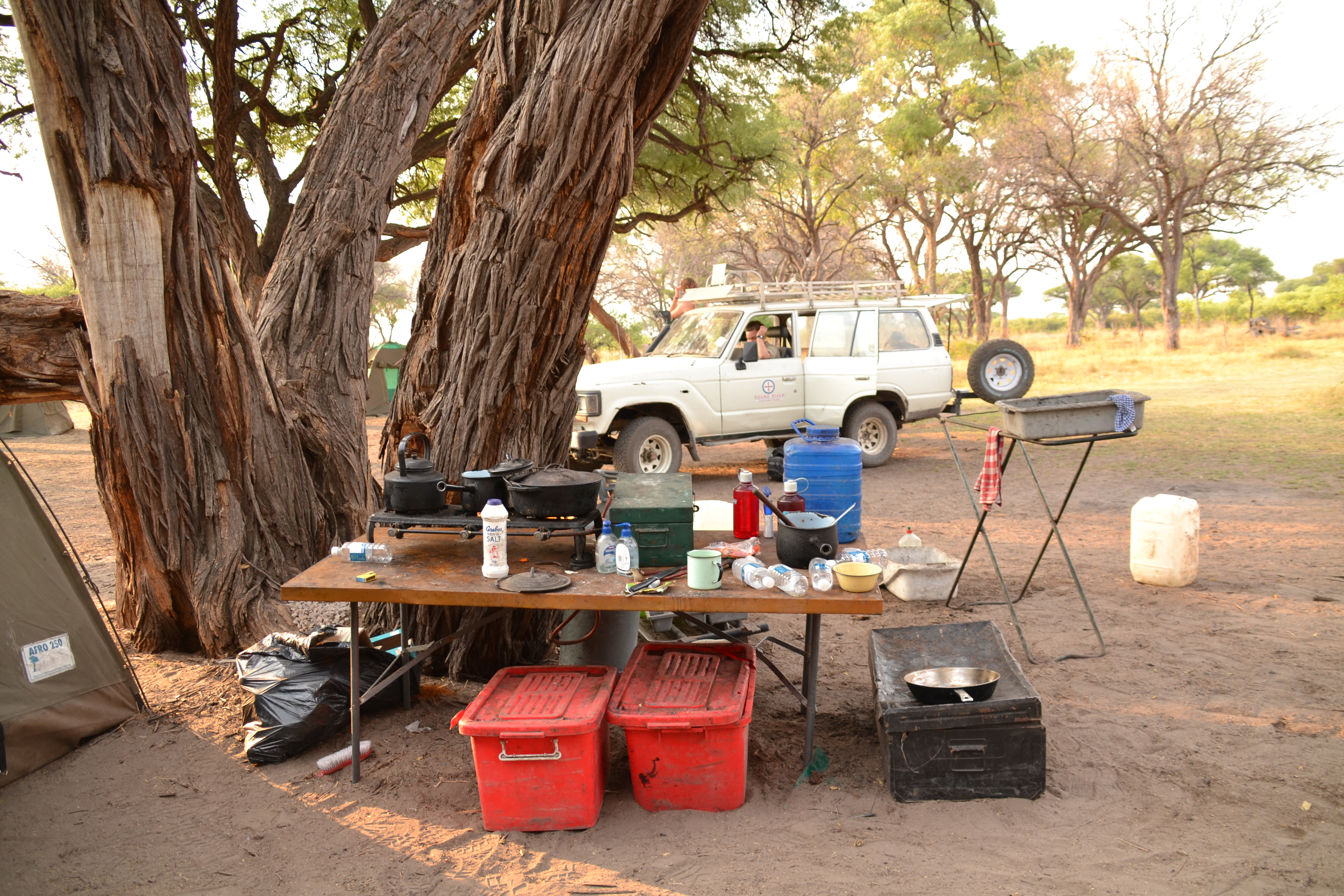
Cooking station. Photo By: Amber Davis.
We are also paired with a different student to enter the data we collect. One of the responsibilities of the data entry group is to teach our escort guides how to use excel and enter the herbivore monitoring data they help us collect. We stick with our cooking buddy and data entry buddy for two weeks before switching. Cooking, cleaning and data entry are daily activities. However, we also have chores that only happen when we move to a new camp. One of the most prized chores is to dig a poop hole. Our beloved friend Sam usually takes one for the team on this chore because he claims he is the best at digging poop holes. He has done a magnificent job at finding and digging poop holes at our campsites because so far no one has fallen into the hole or been walked in on. Thank you Sam.
Campfire and Rainy activities:
As we come to a close on this semester, the nights become more tempestuous; the sky opens up and heavy raindrops fall with the interruption of striking bolts of lightening. This has provided us with opportune times for card games, riddles and games around the campfire to break up our busy final schedule. Over the past couple weeks we have played Kings in the corner, President, Go fish, Mafia, Through the green glass door and Black magic around the campfire. A couple of nights ago we had a relaxing night around the fire as our dear friend Caroline read aloud to us “Round River” by Aldo Leopold. This taught each of us about the foundation upon which this program was built as hyenas howled in the background and the constellations circled above our heads. Over the next two weeks each of us will experience a flood of emotions about leaving the exotic wilderness and returning to our mainstream lives in the first world. Some of these emotions will be joyful and others painful. At this moment, I feel nostalgic about leaving these quirky daily activities that have come to constitute our lives.