
By: Maria Muller, University of Vermont
Round River Patagonia has been an awesome and ridiculous experience. One of the aspects that has made this semester so engaging and fantastic has been the community involvement. Round River students spend the majority of our time with just the 14 of us and our instructors, and although I love everyone in our cohort dearly, it’s always exciting to add some new perspectives into the mix.
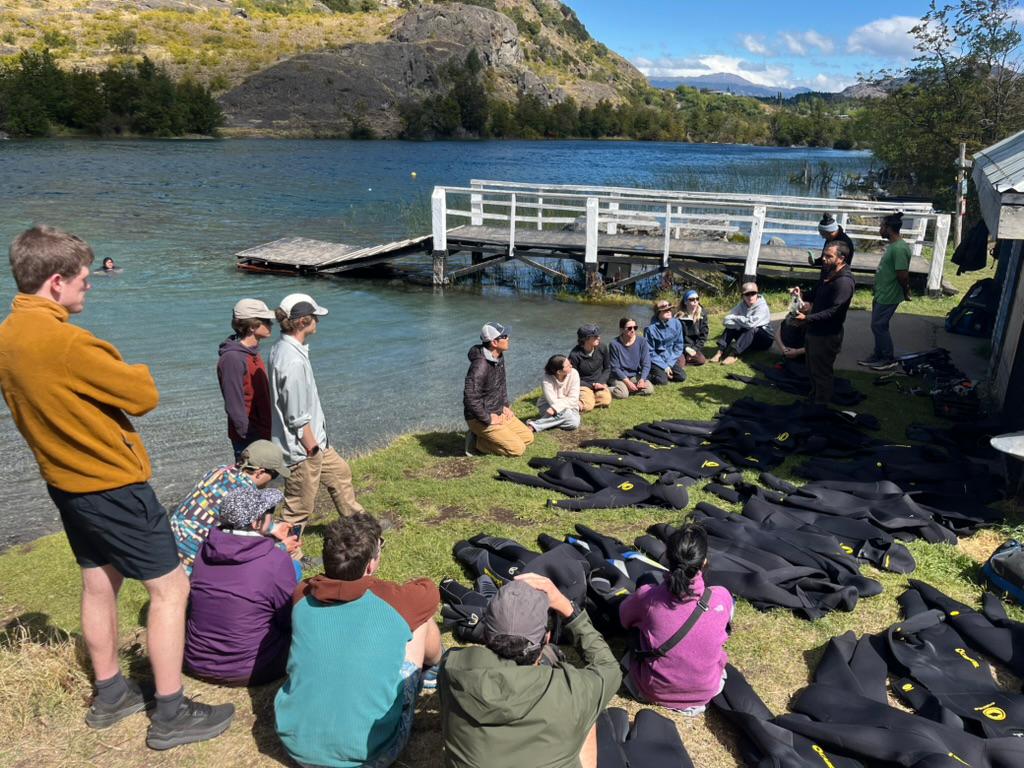
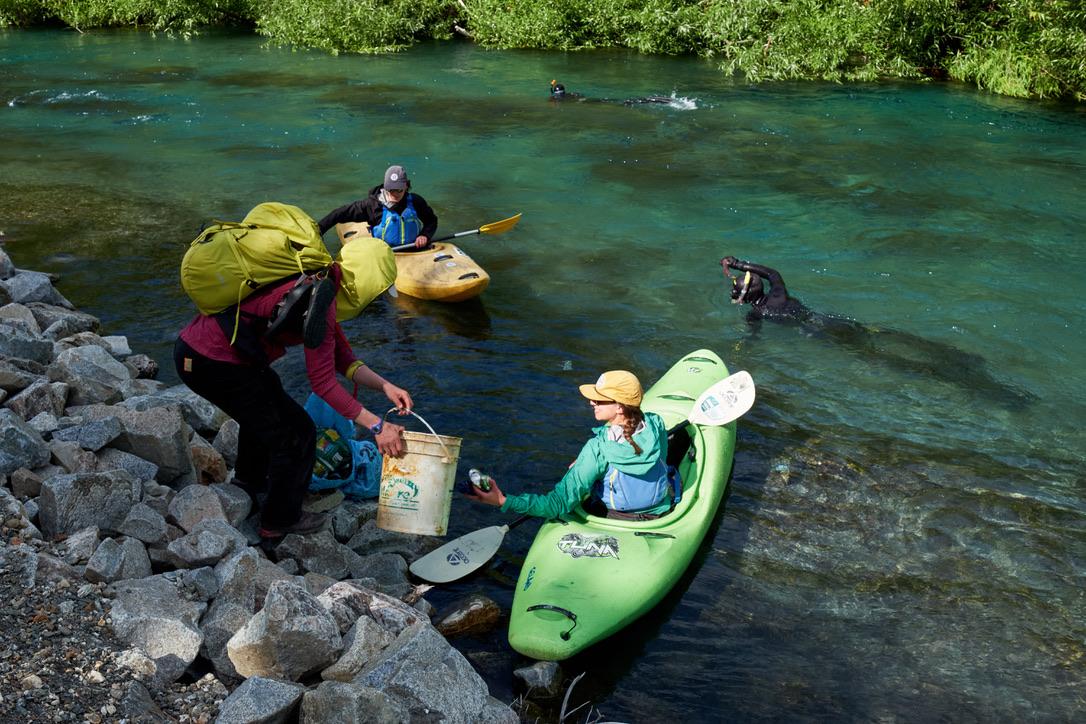
Immediately after arriving to Aquasol (our home-base campsite) for the first time, we got to connect with Descubriendo Cochrane, a community organization seeking to further connect local residents to their environment. On our first day with Descubriendo, we quickly suited up (the use of quickly is hyperbole… I had never put a wetsuit on before and I felt like an al dente noodle trying to slip warm wet seal skin over my body) and learned the basics of snorkeling from Christian, Pauli, and Telo. We also got to work in the Descrubiendo garden and learn about the common garden plants grown in the area. The next day we woke up bright and early and reapplied the still-wet seal skins to jump into Rio Cochrane! Our goal, which took me a while to understand through the full-face snorkeling masks, was to clean the river of trash. The fast-moving and crystal clear water made me want to just float and observe the beautiful ecosystem, but after a few reminders, I quickly picked up on the proper technique and timing for diving down in time to pick up a 40 year old wine bottle you see in the distance. When you come back up, you have to make sure you’re not aiming head first for one of our kayaking, trash-carrying friends or a willow tree. Multiple times I came up in the middle of many willow trees and saw my life flash before my eyes as the moving river attempted to split my body in two. This was one of the coolest experiences of my life. We picked up 300 pounds of trash!
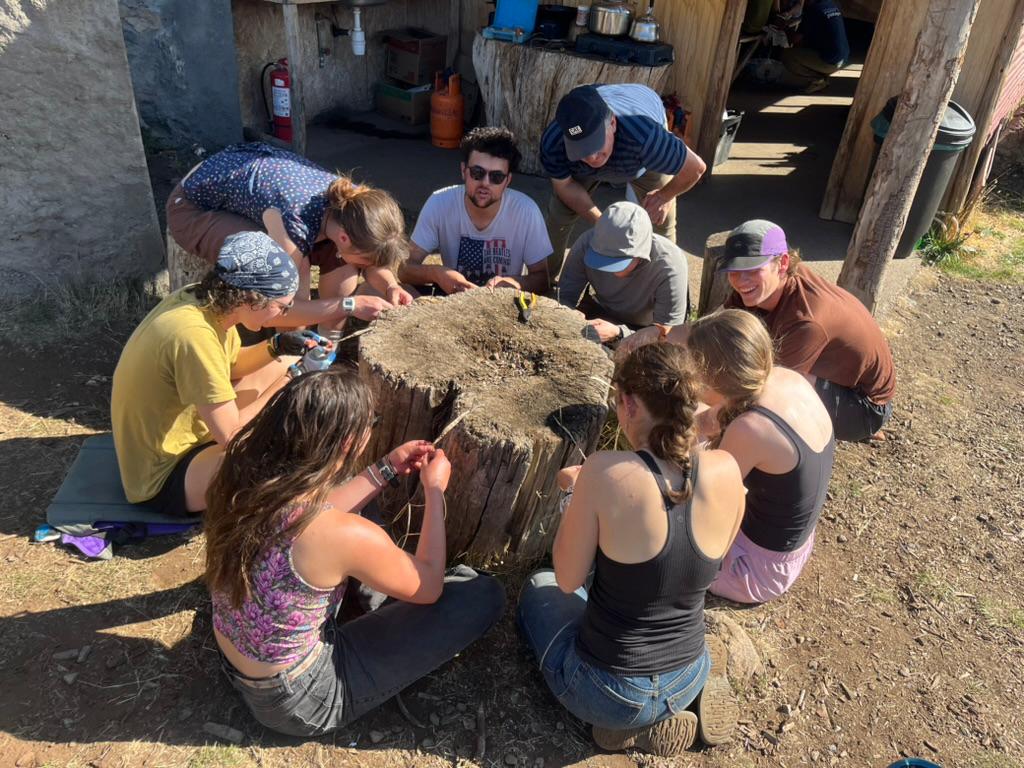
We later got a visit from Nelson and Marisol at basecamp, an absolute power couple from Cochrane. Nelson taught some of us how to make bracelets from horse leather while Marisol taught the rest of us how to embroider beautiful flowers. Although we struggled to understand Nelson very well, we picked up on some critical phrases that were sure to get a chuckle from him, such as “VIVA CHILE!” when an Argentinian license plate drove by. I completed a semi-mediocre horse leather bracelet that got a sideways thumbs up from Nelson, while Alice blew him away with her braiding skills and Teagan was told that it’s better to try and fail then not try at all. The embroiderers produced some beautiful flowers on hand towels, although I was told that the best stitches were the ones done by Marisol herself as an example.
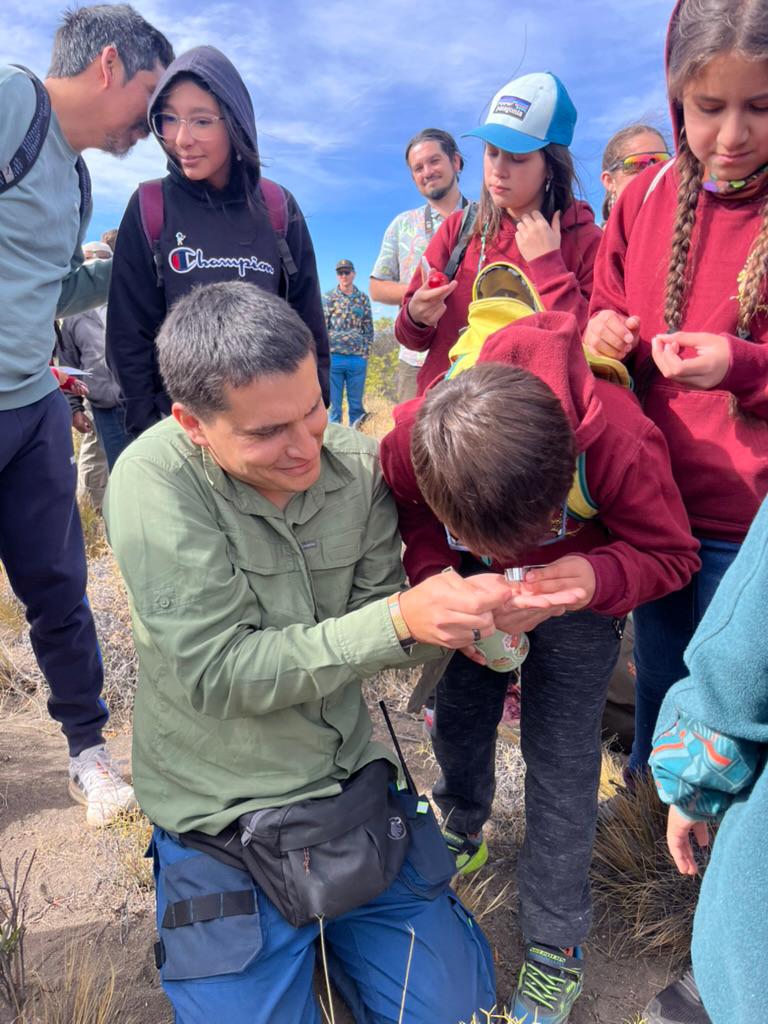
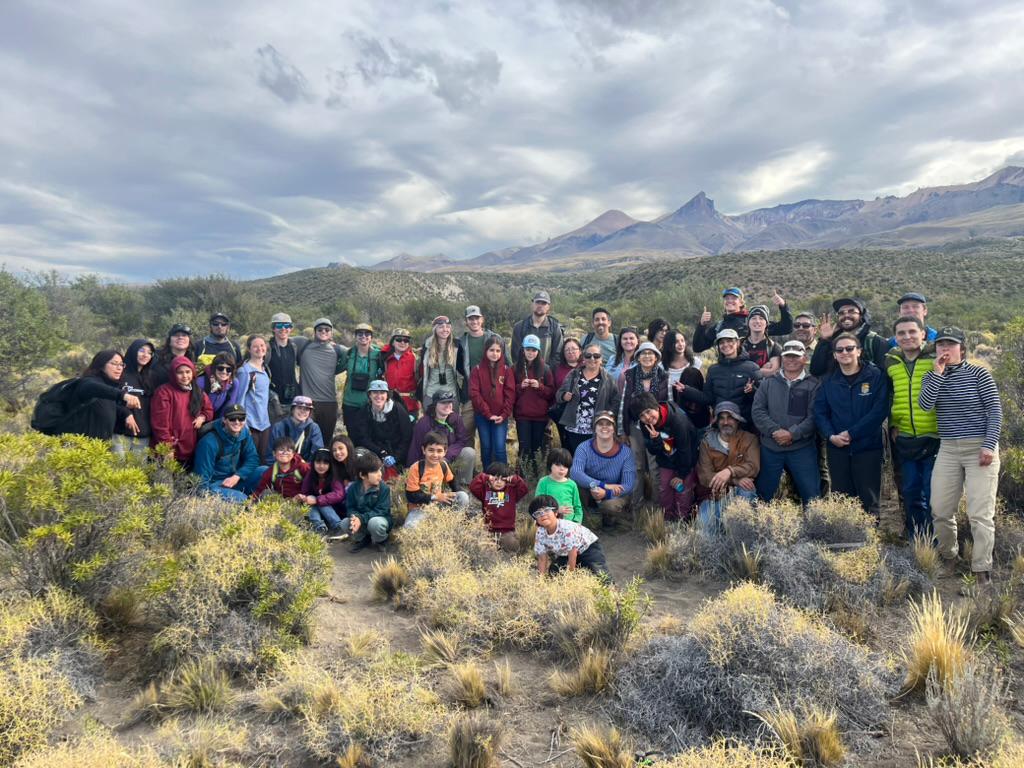
Later in Chile Chico we got to collaborate with Raíces de Calafate in the Chile Chico steppe to do a species identification workshop with local elementary schoolers. Raíces de Calafate is a community organization that focuses on reconnecting children to their land and culture. We met with a community of students and their families and worked together to document the species we found within the steppe. It was so cool to see these young kids so easily identifying the species that us Round River students had been drilling each other on for weeks. I think we left the experience learning more from them than they did from us. Later, Charlie and I somehow made it on the local news for being able to speak mediocre Spanish. Remember, a smile and a nod can get you a long way until you’re being asked a direct question about environmental education in front of a film camera and 10 small Chilean children.
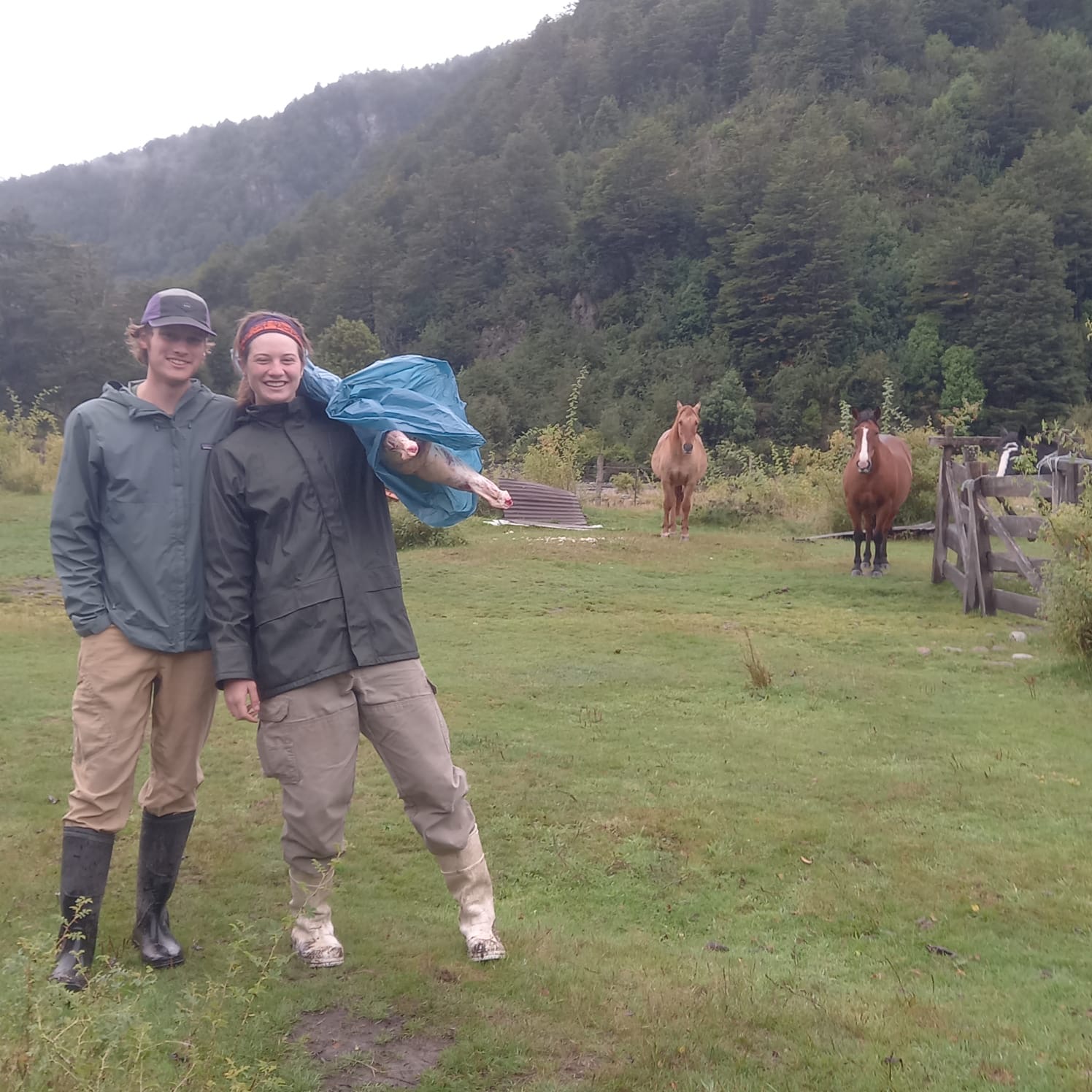
One of the most unique experiences I’ve ever had was during our week-long homestays. Round River students were split off in groups of two or three and sent to live on a local campo, helping with daily chores and participating in the day to day lives of real Chilean families. Brayden and I got placed with our wonderful camp coordinator Danny’s family, and we had an absolutely marvelous week. Within the first 2 hours of our arrival, we were taken to the corral to help give the cows their yearly vaccinations. Our presence was certainly a hindrance to the smoothness of operations, but I’d like to think our intense gringo enthusiasm balanced that out. Our week consisted of chopping wood, collecting Rosa Mosqueta for jam, interacting with tourists, building a Refugio, losing three cows, playing guitar while Nivia (our host mom) shredded on the accordion, and watching “Into the Wild” in Spanish, which Nivia was a huge fan of.
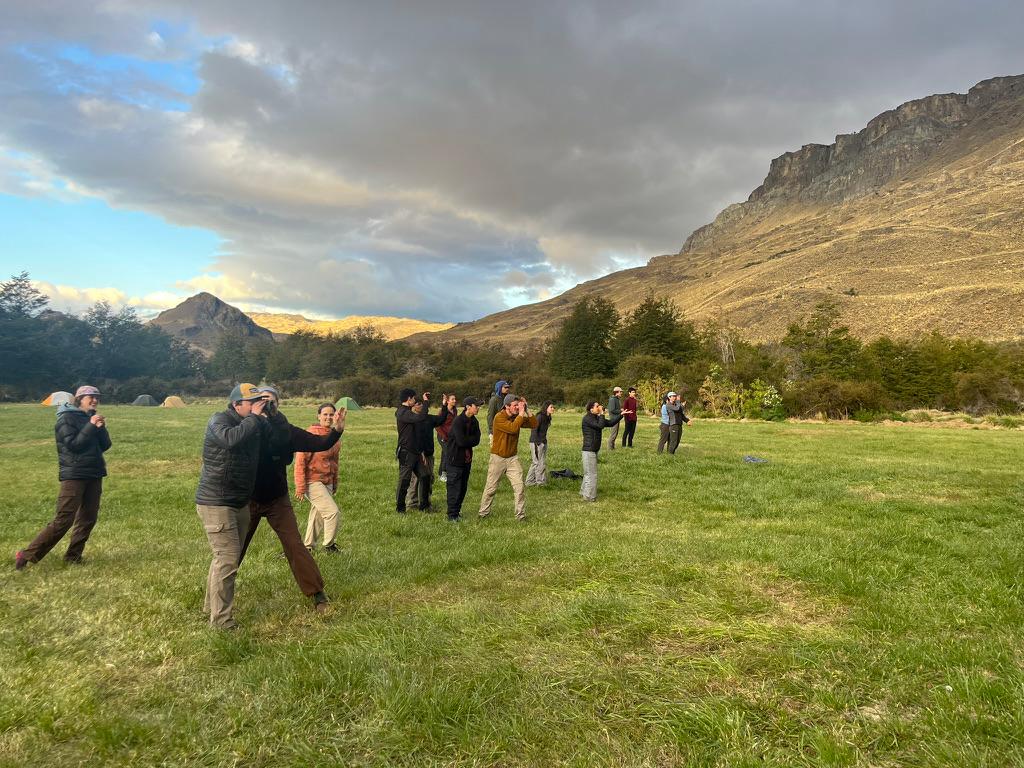
In the Chacabuco Valley sector of Patagonia National Park, we also had some more incredible community experiences. We were in the park to monitor the guanaco and ñandu populations, which entailed walking transects for about six hours a day. On one of the days of transects, we were joined by nine high school kids from Cochrane with Descubriendo. A lot of them had done guanaco surveys before and were able to teach us how to actually perform the surveys. I also got to do a daily transect with a CONAF employee, Benja, and had an excellent time carrying our jokes between English and Spanish and learning that PinkPantheress is an international legend.
When we’re hanging out around basecamp, we like to boost the local Cochrane economy by eating our weight in chocolate cake from Cafe Kokoro. The staff now know us there and it seems like they get excited when I arrive to the cafe first and let them know that 13 other gringos will be making their way over momentarily. The staff of the supermercado Melero also know us quite well and seem surprised with the amount of snacks we’re able to stomach at a time. Liz, Josie, and I also finally found a yarn shop that we started happily buzzing in the other day and frantically purchased a sheep’s worth of yarn. I later tried on the delightful owner’s personal hat thinking it was for sale- every day I’m in Cochrane, I inadvertently test the limits of my social anxiety.
Overall, the most memorable moments from my semester abroad have been from our interactions with the local community, and I can’t wait to share my new experiences and Chilean slang with my friends and family at home.