
By: Brady Creller, University of Vermont
While at Mababe Camp, I spent several days with Godfrey, one of the camp’s leaders, trying to see the bush the way he does—paying attention to the small things, figuring out how to handle challenges, and making the most of life at camp. I wanted to get a better sense of who he is as a leader and what keeps him excited, so I asked him a few questions. Spending so much time with him also gave me the chance to watch how he moves through camp and deals with the everyday challenges that come up.
Our camp sits among Shepherd’s and rain trees, with barely any shade and no electricity. Even simple tasks, like fetching water or pitching a tent, turn into little adventures, usually the kind where I realize halfway through that I’m doing it wrong and have to ask Godfrey for help. Godfrey, of course, never misses a chance to make fun of my patchy tan lines and bright red sunburns. When I asked him to tell me a bit about himself, I was struck by how much he cares—both for the land and for the people around him—as he talked about growing up in the area and why he loves environmental work. Being around him made me notice things I usually overlook in the bush, like the way the sunlight shifts through the trees or tiny tracks in the dirt. He’s also been helping me pick up a few more Setswana words and phrases, doing his best not to laugh at my terrible pronunciation.
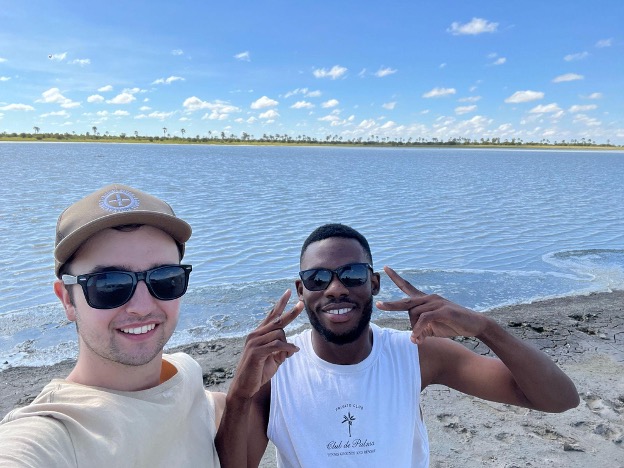
Honestly, I probably asked him a hundred questions while at camp—like I always do in the field. Somehow, no matter how many I threw at him, he always had a thoughtful answer. That’s part of what makes camp life so rewarding: even the smallest details become learning moments, and there’s always someone ready to help you see them. Watching Godfrey, not just listening to him, taught me a lot too. The way he pauses to spot animal tracks or points out subtle changes in the landscape reminded me to slow down and really pay attention, even though I still can’t learn from watching him how to win a game of chess against him. And I’m still waiting on that promised leopard sighting this semester. Being out in the field with Godfrey, I realized some things are essential to our survival here—like water, coffee and of course, lollipops.
When I asked him what made him decide to be a guide for the Round River Program, he immediately started talking about the past adventures leading students through the field. He wanted his future students to feel the same excitement in the field. This really came through as he shared stories about field camps and challenges he had encountered. I came to realize that leadership is less about following standard procedures and more about taking notice of little things, appreciating the present moment, and helping others to do the same. Godfrey’s level of enthusiasm and care made me reconsider my expectations for myself as a leader, at camp as well as in the team-oriented jobs I will hold in the future.
When I asked how long he’d been with Round River and about his journey so far, he shared some of his favorite moments and the lessons he’s picked up along the way. You could tell he really loves what he’s doing, and seeing how he approaches the field with curiosity and patience made me reflect on how I can bring that same care and attention into my own time at camp—and even into daily life. Even small things, like noticing an unusual bird call or helping someone with their gear, felt more meaningful after seeing how he values every detail.
Finally, I asked what the most important takeaway from camp should be. Without hesitation, he said it’s about noticing the little details and appreciating where you are—something I felt firsthand at Mababe Camp. Whether it was the sunrise through the trees, the quiet hum of insects in the evening, or staring at the stars in total silence, I kept finding myself amazed at everything around me. Even while wiping dust off my notebook or carefully stepping over roots, I couldn’t stop noticing the little moments that make the experience stick with you.
Spending time with Godfrey taught me that Mababe Camp—well, all field time—is more than just looking at animals or collecting data; it’s about being attentive to the details, listening to people who care, and savoring the moments that turn an experience into one you will never forget. And while there were many hilarious moments, like trying to create a selfie with Godfrey while he was laughing at one of my horrible puns, those light-hearted moments combined with the lessons I learned as well as the peaceful beauty of the bush, created an exceptional experience at camp. By spending time with Godfrey and seeing his curiosity, care, and attention to detail, I was also reminded how to make great experiences out of normal ones through my own curiosity, care, and attention to detail.
Check out Brady’s interview with Godfrey!