By: Teagan James, University of Vermont
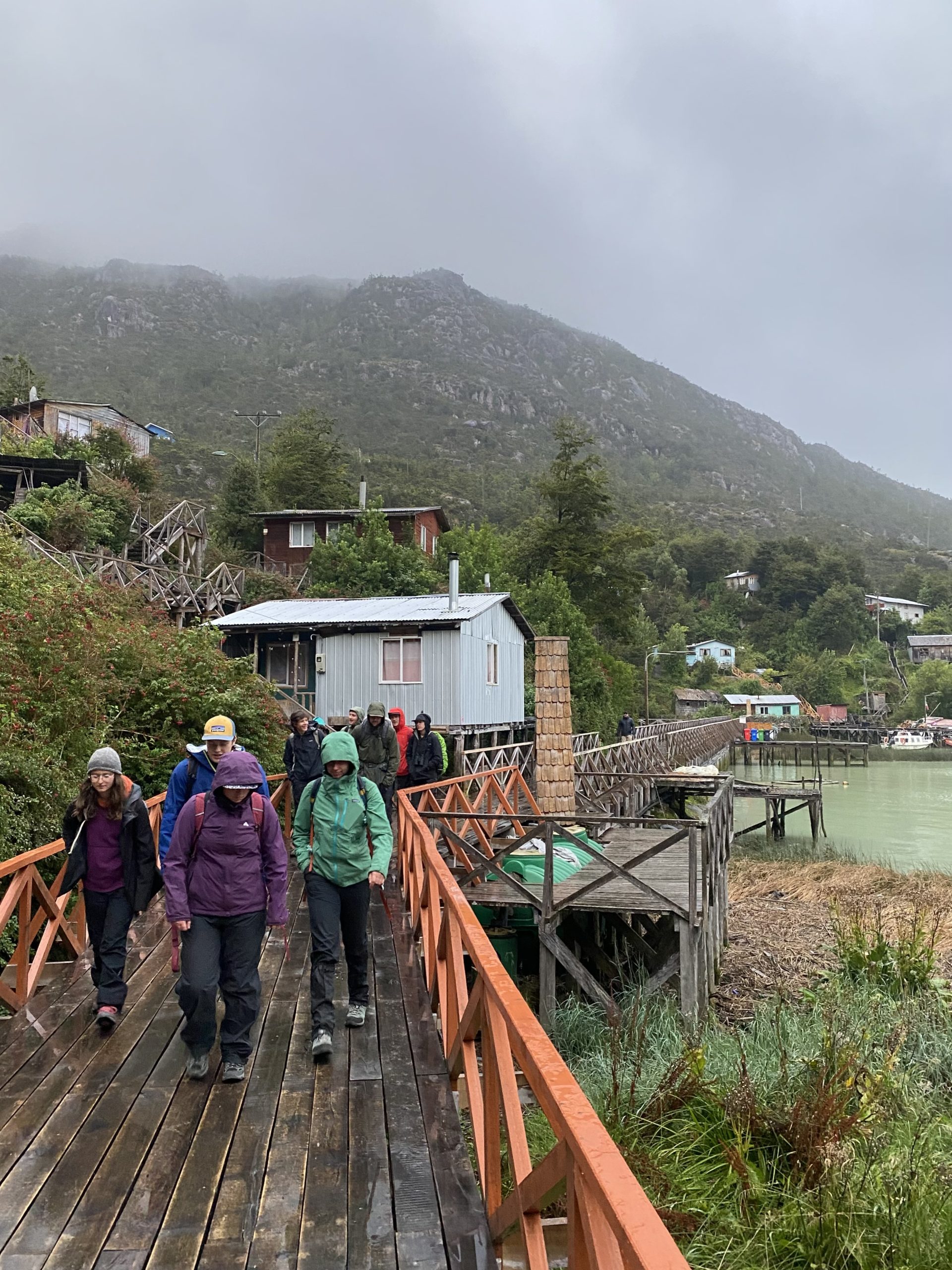
After a few days of classes at basecamp in Cochrane, our group packed our things (minus our tents and back country bidets) and hit the road yet again! This time we went south to Caleta Tortel, a small village situated at the northernmost edge of the Southern Patagonian Icefield. Being right at the mouth of the Rio Baker, and in proximity to expansive old-growth Guaitecas Cypress forests, Tortel was originally founded as a logging community in 1955. However, being in such a remote area, the town wasn’t connected by road to the rest of Chile until 2003. This history can still be seen today in Tortel’s most memorable aspect: there are no roads! Due to the steep terrain and proximity to water, all of the houses, shops, and piers are interconnected by over 6 kilometers (or just under 4 miles for the American audience) of elevated wooden boardwalks. Tortel is situated in a temperate rainforest, making it one of the wettest places in Chile, ensuring that our rain gear was put to good use.
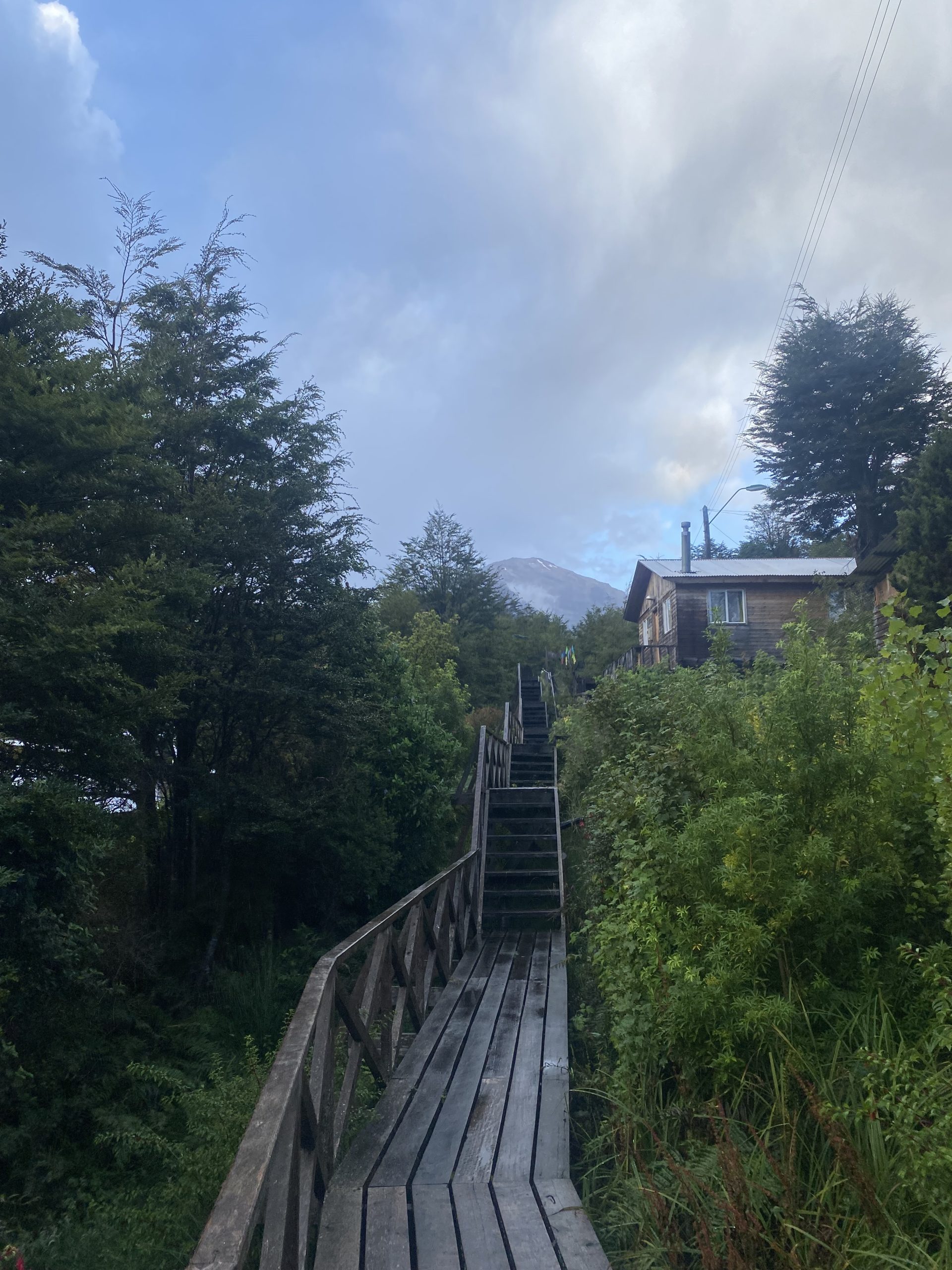
For this trip, our group stayed in a hostel with the following luxurious amenities: 3 showers, 2 wood stoves, 1 cushy topbunk (for me), and most importantly a good roof. After parking our vehicles in the town center, we hauled our personal and group gear through the winding wooden streets which quickly taught me my first important lessons about Tortel: 1) wooden streets can have potholes (look no further than Maria’s twisted ankle), 2) there’s no need for a gym membership if you live here; the stairs are intense, and 3) Tortel is incredibly beautiful and one of the most unique places I’ve ever been.
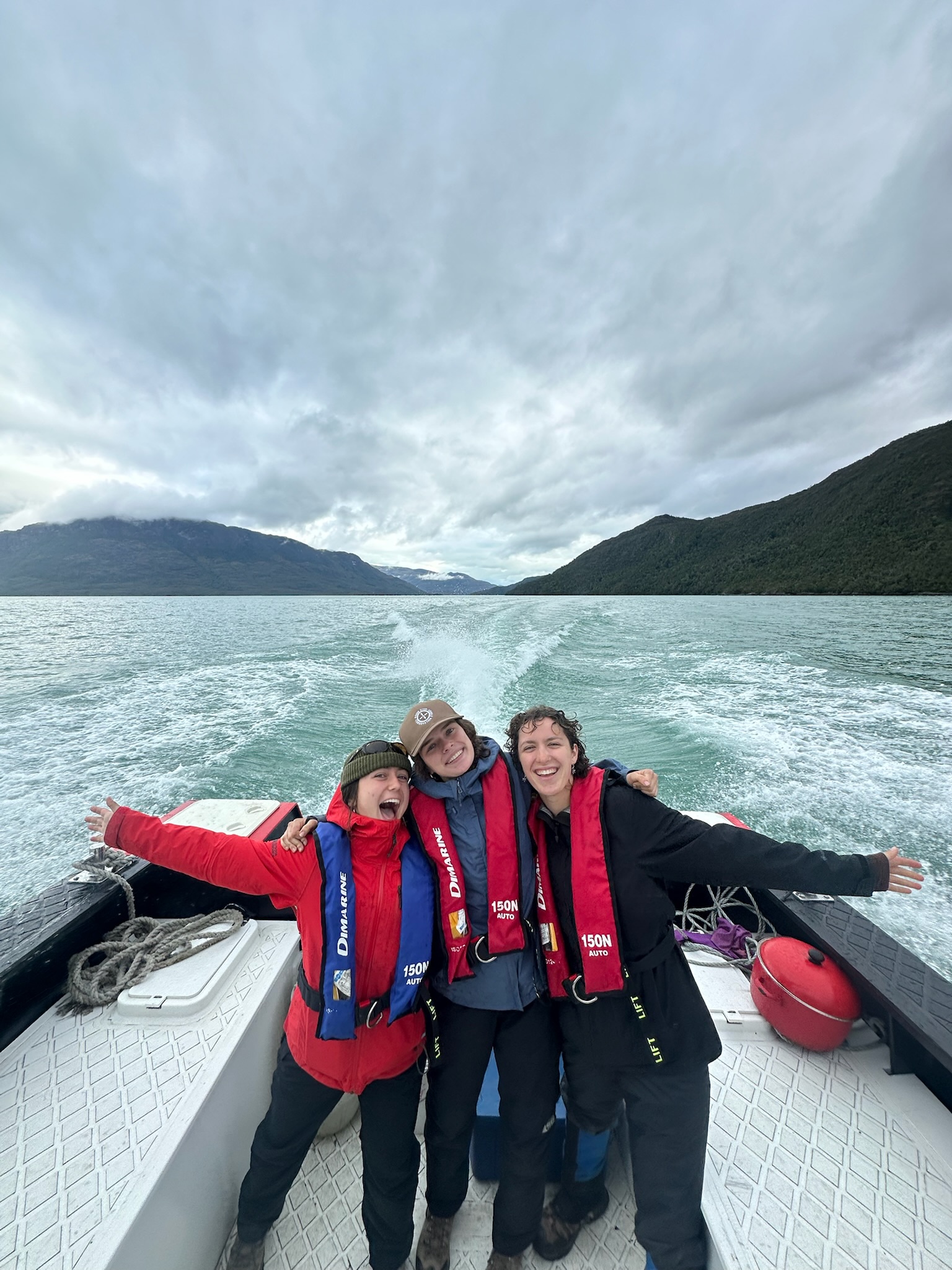
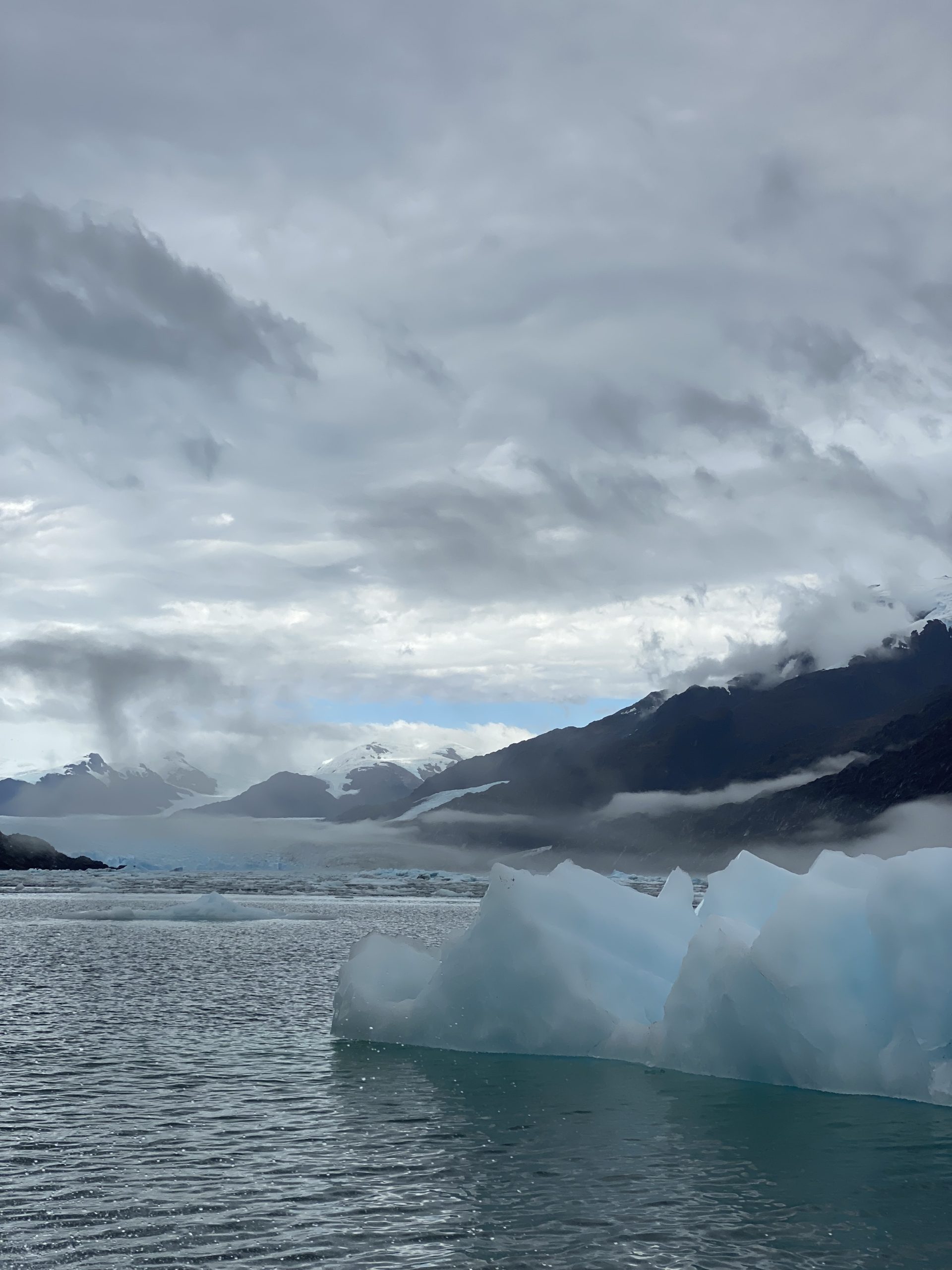
The highlight of our short stay in Tortel was the boat trip to the Jorge Montt Glacier. We had a speedy 2 hour boat ride south through the fjord where we passed waterfalls, spotted a rainbow, and eventually weaved between icebergs that had broken off from the glacier (there were more than a few Titanic references here). The Jorge Montt Glacier is a massive tidewater glacier, meaning it flows directly into the ocean, or in this case the fjord. It is also a rapidly shrinking glacier, the rate at which is shocking to see first hand. As we approached the glacier, we looked through our pre-downloaded lines on the Gaia app that told us where the glacier used to extend from 1945 to today. When we passed where the glacier used to be in 2011, I was shocked at the amount it had receded in such a short time.
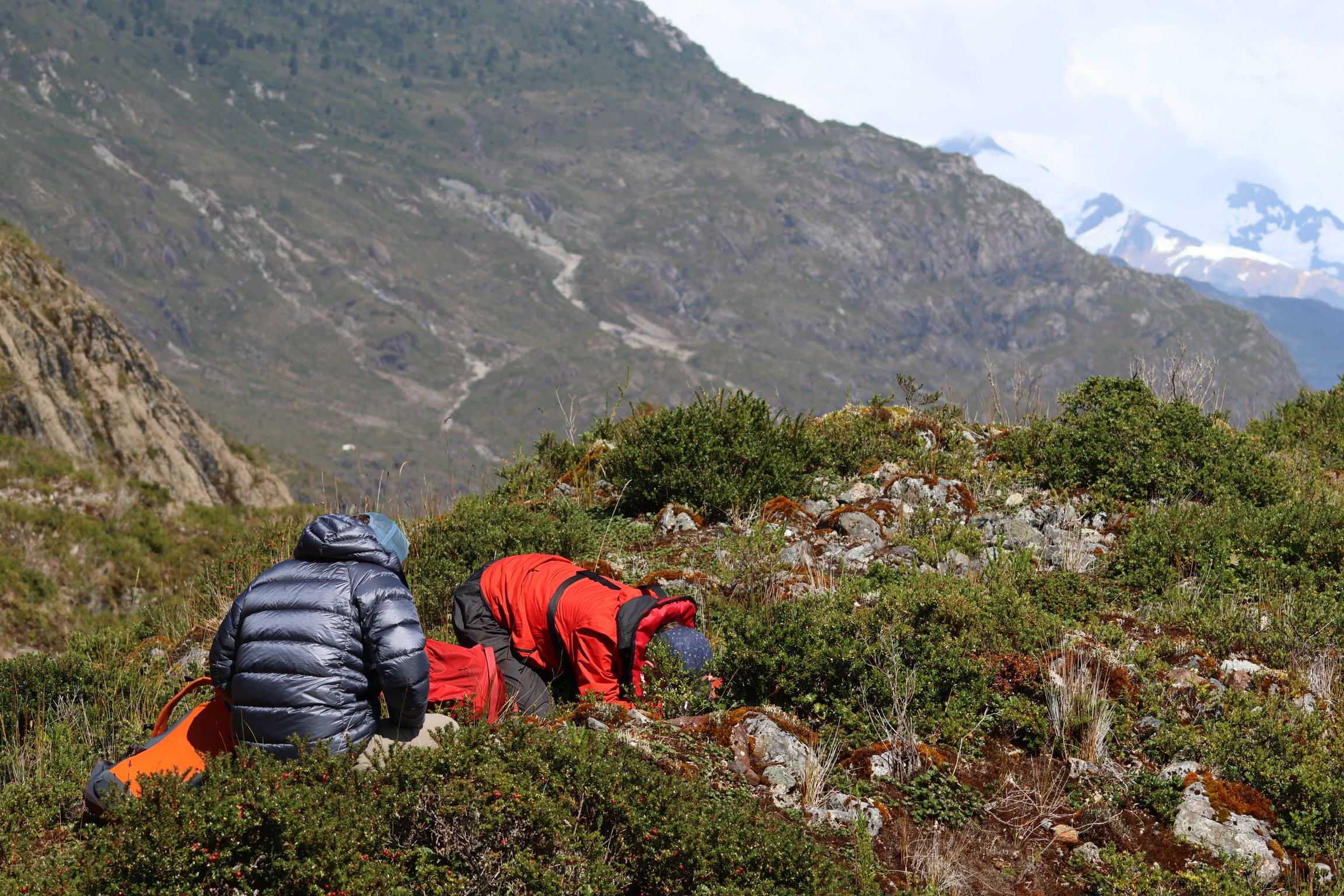
One of the main objectives of our trip was to learn about non-vascular plants such as bryophytes (mosses, liverworts, and hornworts) and lichen (crustose, foliose, and fruticose) that are common in the sub-antarctic ecoregion. To observe the mosses and lichen, we were able to get off the boat and use our hand-lenses to get an up close look at these “miniature forests.” As the old saying goes, “If you’re not flat on your stomach with your face in the dirt, you’re not looking at nonvascular plants right!” Bryophytes and lichens are often easily overlooked, but they are invaluable because they store carbon, they are important bioindicators, and they even regulate atmospheric humidity.
At our stop, we were able to get a good look at the glacier and a few of us, myself included, decided to take a polar plunge. I rationalized this decision by asking myself, “When else will I get the chance to swim this close to a glacier?” This reasoning did not seem strong enough once I was in the freezing cold water. After drying off and getting back on the boat, we had some snacks and drinks complete with glacial ice, before stepping off the boat again to do more field observation. After a windy and wet boat ride back, we had dinner at a local restaurant and returned to our hostel to prepare for our Applied Ecology midterm the following day. Protip: be careful climbing into the top bunk if you still have your sea legs.
On our last full day in Tortel we spent most of the morning taking our midterm exam and did a nature walk in the afternoon to learn more about the local plants for our Natural History class. The coolest find of the day was Chilean Sundew (Drosera uniforma), which is a tiny carnivorous plant that uses its sticky arms to catch prey. After the nature walk, our group split up with some going on a hike, and others getting to know the town a little more. A few of us went to a local yarn shop to get our fill of handmade yarn, before walking back for our final dinner in Tortel.
Our time in Tortel, although short, has been one of the highlights of my semester so far. Tortel is the farthest south our group will travel, and being closer to the ocean, we were able to experience an entirely new biome that felt completely unique from the other areas of the Aysén Region we have visited so far. As glaciers retreat globally and the areas they are in continue to experience massive changes, our group did not take for granted how lucky we were to have this unforgettable experience.