
By: Sophie Pentz, Duke University
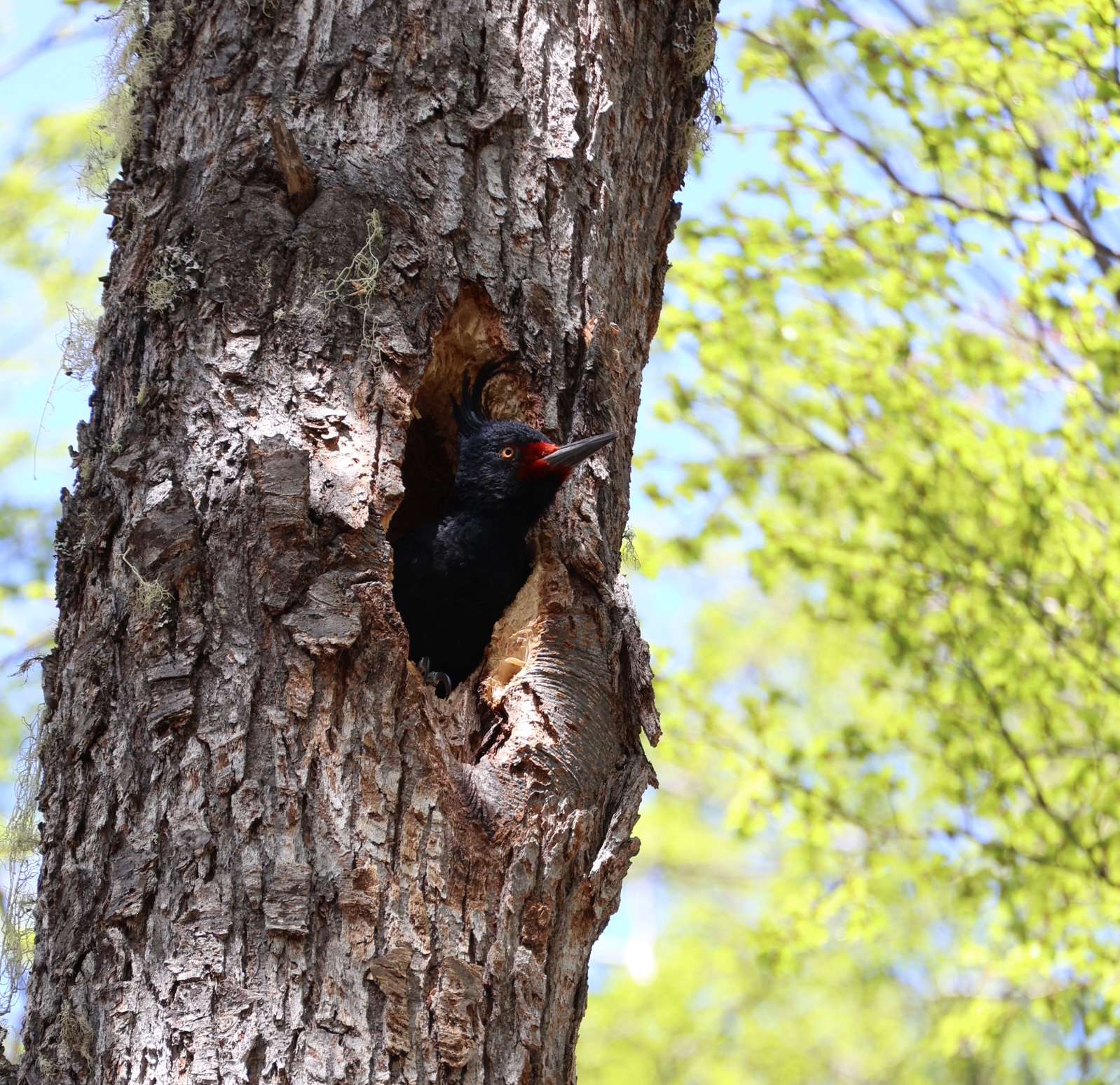
I was halfway through my lunch when a small red head emerged from a hole above me, head turning, one yellow eye glancing curiously down at us far below. Then suddenly, in a flurry of feathers, it’s off, soaring through the trees with its majestic wings outstretched. We’ve found a woodpecker! Instantly, everyone is on their feet, research gear is being pulled out, and I turn on my GPS ready to follow the bird through the forest.
We’re in the Jeinimeni sector of Patagonia National Park, an arid region about 65 km south of Chile Chico to study the Magellanic woodpecker (Campephilus magellanicus), a large bird endemic to Patagonia. They can be found in old growth lenga (Nothofagus pumilio) forests as well as in bamboo-choked temperate rainforests and open woodlands. We studied a small population of this species that live in the maduro and sobre maduro lenga forests of Jeinimeni Reserve. Maduro (“mature”) and sobre maduro (“over-mature”) are the Spanish labels for the age of the lenga trees and can be calculated using diameter [of the tree] at breast height (DBH). In a maduro forest, most trees have a DBH of 30-80 cm; in a sobre-maduro forest, most trees have a DBH of >80 cm. The Magellanic woodpecker is often found foraging in sobre-maduro forests and nesting in maduro forests. The reliance of this species on old growth forests makes them at risk in their natural habitat, especially since lenga wood is prized by the Chilean logging industry.

We started our day bright and early at 7:00 AM with breakfast at “El Silencio” campground. Then, we hopped on our bikes, following a bumpy road that takes us around Lago Jeinimeni into an area of forest called “El Estadio.” We find a good spot for our bikes nestled by some calafate (Berberis microphylla) bushes before setting off on foot with Gaia GPS and our compasses as guides. Our days consist of bushwhacking through woody plants such as the small-leafed current (Ribes cuculatum), nire (Nothofagus antarctica), and dwarf maiden (Maytenus disticha) all while keeping our eyes focused on the treetops searching for the signature red and blacks of the woodpeckers. It’s 12:30 PM now, and I’ve sat down for lunch under an old lenga tree, and that’s when I spotted him.
Spotting the woodpecker is only the first step; tracking them is much harder. I’m joined by Maria Paz Quercia, one of our program instructors, and together, we weave through trees and dead trunks to follow the woodpecker. We’re searching for the distinctive bright red head of the male Magellanic woodpecker— females have all black heads with a distinctive tuft. Though we can’t see him right now, we can hear a distant drumming echoing through the trees. Drumming is a well-documented behavior of this species and is defined as rapid bill strikes on wood to communicate territory presence. It’s late November, and soon, the woodpeckers will be laying their eggs for the year. This may be why the male is trying to warn us as we maneuver closer. We follow the sound of the drumming but don’t see a small bright red head peeking through the trees. After several moments of silence, we return to the nest in defeat only to find the very woodpecker we’ve been searching for crawling back into his nest.
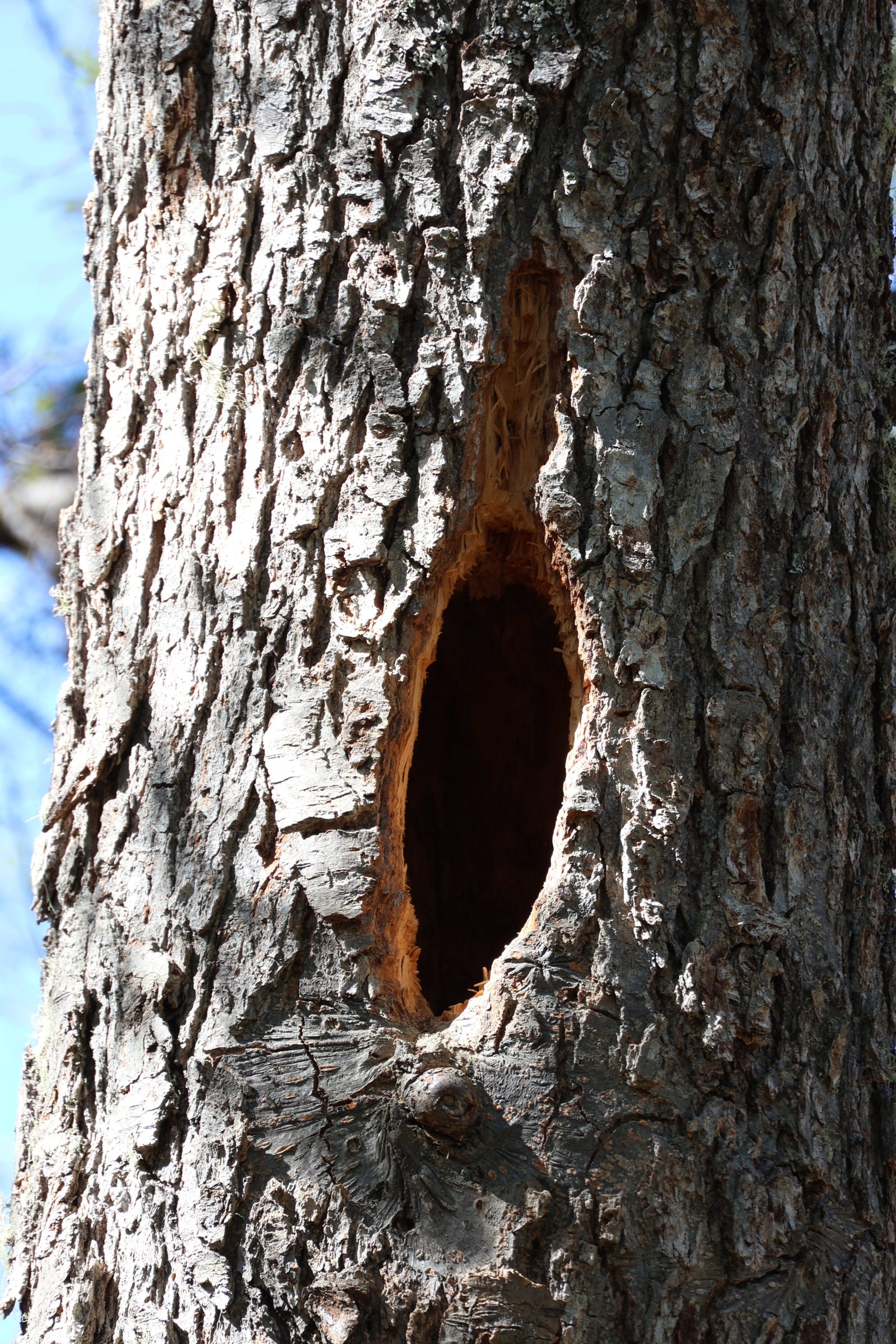
The Magellanic woodpecker is often referred to as an ecosystem engineer, a species that shapes its environment in a way that changes it for other individuals. The abandoned tear-drop shaped holes that the birds carve into the trees are used by other avian species such as the rufous-legged owl (Strix rufipes). Some scientists argue that this skill also makes the Magellanic woodpecker a keystone species meaning that it has a disproportionally large effect on its natural environment. Not all these effects are positive, though. The nests affect the trees by making them more susceptible to invasive organisms and disease. Nevertheless, the woodpeckers also aid in regulating insect populations, decomposition, and seed dispersal, making them key parts of this ecosystem.
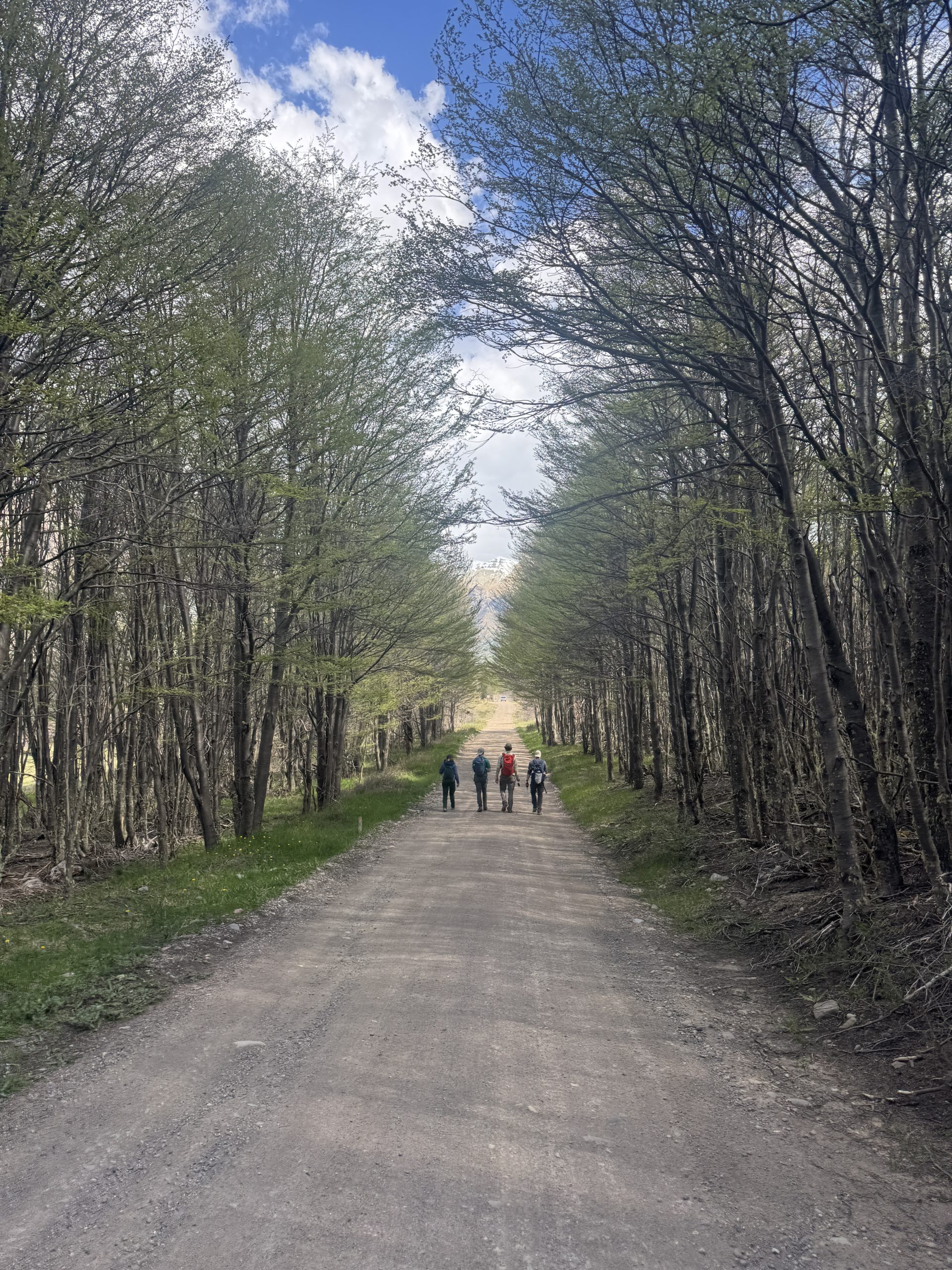
It’s 16:30 PM now and it’s time to head back to camp. As we hop back on our bikes, I can hear the distant drumming of the woodpecker reverberating through the trees. It reminds me of how fragile yet important this population of just 16 woodpeckers is to the entire ecosystem. Through organizations like Round River, we continue the legacy of the essential work seeking to preserve the Magellanic woodpecker.