
By Grace Stein (of UVM) and Lauren Dunn (of St. Michael’s College)
Since our backpacking trip, which was a big highlight for many of us, we started our week of heavy academics. We all finished field notes, data organization, and started our first full drafts of our research papers. We visited the river near our camp and castrated yaks for study breaks (not kidding…), and then returned to our papers. Our main priority was finishing and polishing our presentations to present to the park staff, rangers, and Tumursukh, the director of the Ulaan Taiga National Park.
A few days after our backpacking trip, we presented our data to the rangers and park staff. We put on our nicest (and cleanest… maybe) clothes, and went to the park’s office in Ulaan Uul. They were very impressed with our data and our thorough approach to the research.
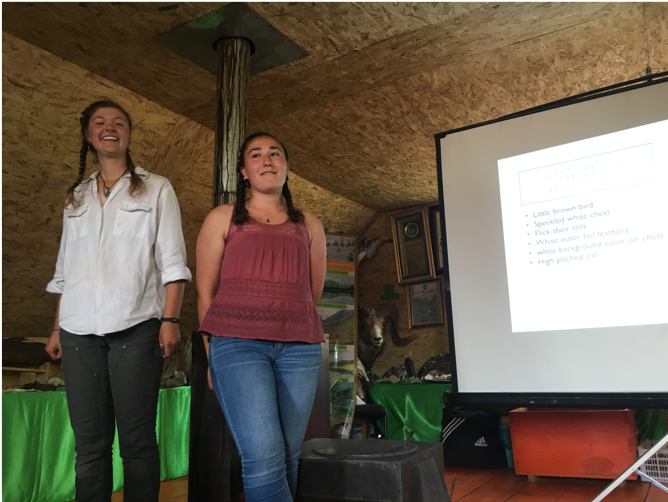
Here’s a picture of Grace S. and Alyssa C. presenting on Passerines in the Darhad. Photo by Lauren D.
Tumursukh gave us many compliments, which was important because we were hoping to develop a good relationship with him, as well as the park. The opinion of Tumursukh meant a lot to us because he is a very accomplished man and has had a great impact on the conservation policies of the park. His voice carries a lot of weight around the Darhad Valley. He invited us back anytime we wanted, and told us he wished he could adopt us as his grandkids. He told us “you are the good kind of kids”.
That night, the rangers and park staff came over for what we thought was going to be a small barbecue. First, they made a small fire to cook the goat they brought. They heated up stones in the fire, then placed the meat and stones into a big pressure cooker-type-thing that was shaped like an urn and probably held 10 gallons. They placed the urn over the fire for about an hour. Once the meat was done, we sat in a circle enjoying potatoes, carrots, and of course, the goat.
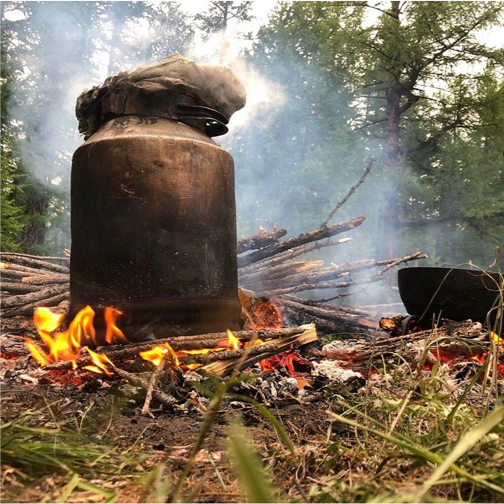
This is the urn that the goat was cooked in. Inside were hot rocks and goat meat. Photo by Finn T.
After the delicious meal, the rangers all dispersed into the forest and returned with a mound of dead trees. We should have known that Mongolians do not make “small” fires. They built up the fire until it was about 15feet high.
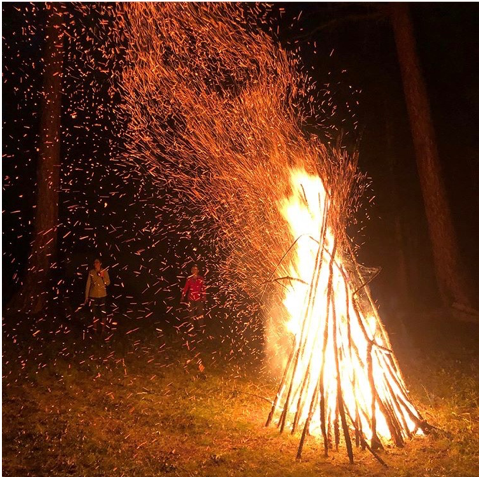
This fire was built up with small trees found outside of camp and you could feel the heat from 20 feet away. Photo by Finn T.
Then, they pulled out a huge amp and a generator and played us some of their music. They taught us how to waltz, spinning us in circles around the fire. Tumursukh even showed us some of his dance moves. We then sat around the fire while the rangers sang us traditional Mongolian songs, and the students attempted to sing some American pop songs, the most popular being, All Star by Smash Mouth. Their music was better and they were much better singers than us, but we all had fun sharing our different cultures despite the language barrier. It was quite the night. It was amazing to see the different cultures interacting and everyone was enjoying themselves and letting loose. It was one of the best moments of the trip and for most of us, it was the cultural experience we had been waiting for.
We then spent the day after the presentation finishing our papers and packing. The next day was an emotional day as we were leaving Mongash camp. On the way out, we stopped at the ovoos at the entrance of the park. There is a large ovoo that you go around three times, each time adding a rock to the pile, and then there were 12 other ovoos, each dedicated to a part of the lunar calendar. We picked the animal that represented the year we were born, and then circled around that one three times as well.
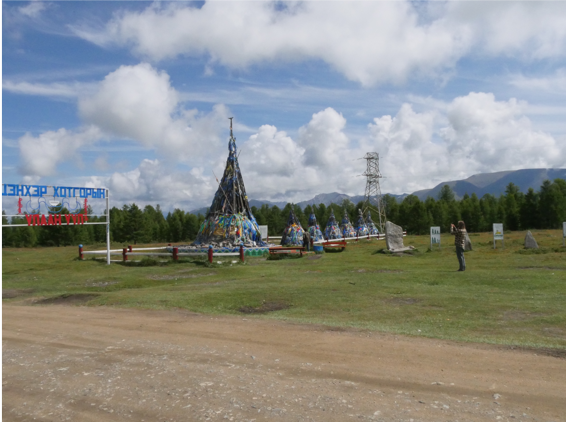
This picture shows the ovoos and the entrance to the park. Photo by Lauren D.
After a sad but fulfilling exit from the park, we drove 5 hours to Lake Hovsgol, where we took a boat to Tumursuuk’s wife’s tourist camp. It was absolutely amazing, with great food, a warm sauna, and hot showers.
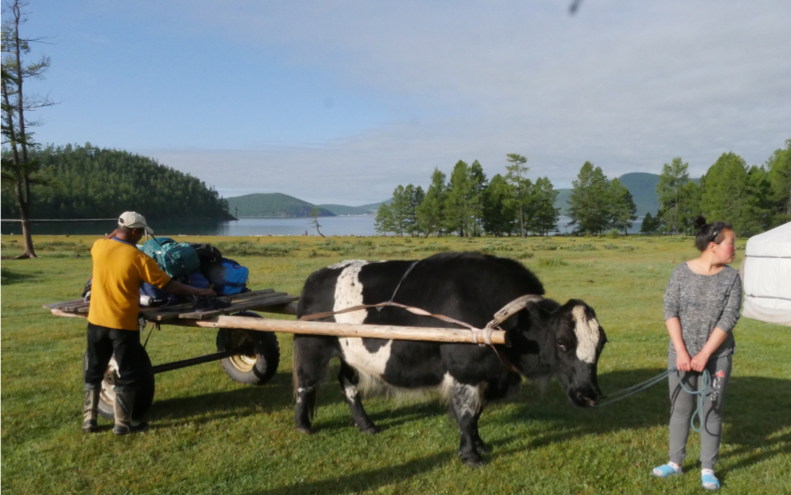
This shows the yak cart that brought our bags to our gers. It was boat to ger service! Photo by Lauren D.
When we arrived, we all had a great time swimming in the clear, cold water. After a filling dinner, some of the students enjoyed heating up in the sauna, and then cooling off by running into the lake. The camp staff also started another massive bonfire for us, and we watched as the embers “added more stars to the sky.” We spent the next two days driving back to UB.
The last night outside of the city was an interesting one. We set up camp on top of a hill, overlooking much of the countryside. Baagi, our instructor Badmaa’s husband, had bought a marmot from a family earlier that day and was determined to have us try it before we left Mongolia. He left camp to go ask a nearby family if he could borrow their pot to cook the marmot. When Baagi was off cooking, we did some reflection on all of the memories we had made over the last 6 weeks. We watched as a huge lightning storm came over our campsite and our tents were just about flattened by strong winds. We took shelter in the furagon and as we debated sleeping in the car, Baagi came back with the fully cooked marmot. There we were, eating marmot, sitting in the Russian military vehicle, in the middle of a lightning storm. It was bliss (and the first time Grace ever ate ribs). The storm passed and we all made it out to our tents for a good night’s rest.
The next day, we woke up around 7 and piled back into the furagon. We made it into the city that evening and had a shock at how different it was from the countryside. Our last day in UB was spent taking a final exam, getting final souvenirs, and finishing up other academic pieces, plus, Monty Python and the Holy Grail.
Summer 2018 Mongolia Student Reflections from Round River Conservation Studies on Vimeo.