
By Adele Daniel (Carleton College ’14)
Hello from Cochrane, Chile!
We are in town today for a food re-supply. Thirteen people eat a lot of food. Our last, celebratory night in Cristián’s Geosur Lodge in Monreál was over a week ago. Since then, our adventures and car troubles have compounded.
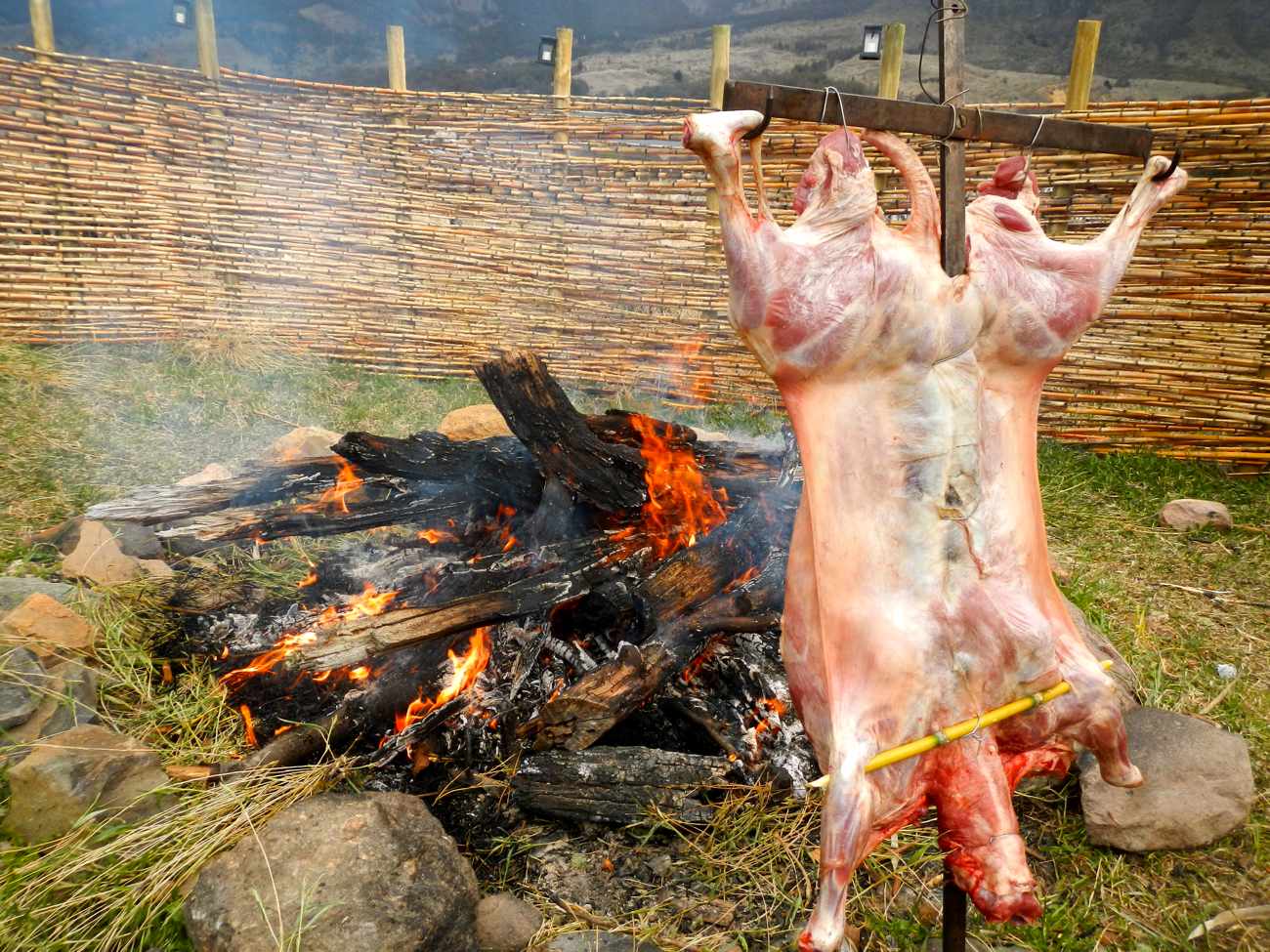
Cristian bid us “Adios!” in style. On the way back from Coyhaique, he purchased, slaughtered, and cleaned a lamb for an “asado,” a traditional Patagonian barbecue. At the lodge, the lamb, splayed out in front of a fire, cooked for five hours. As per gaucho custom, we passed around maté and shared the cooked heart. Two students prepared the excellent, if non-traditional, sides: salad, falafel, garlic and onion potatoes, and fresh bread. That night, we danced until the power ran out. Then we sang and drummed until our own energy ran out.
)
)
The next morning, we cleaned, packed the cars, and drove to Cerro Castillo, a reserve nestled among scenic Andean peaks. As the forest service rangers in Coyhaique had warned us, a few feet of snow remained in the campground. Our industrious crew gathered wood for a campfire and made a five-foot snowy wind block. A more artistic student made a short snowman. By sharing tents and wearing layers we passed a relatively warm night. The next morning we set out to hike a trail, but a plethora of bird-watching opportunities and deep snow cut our trek short.
)
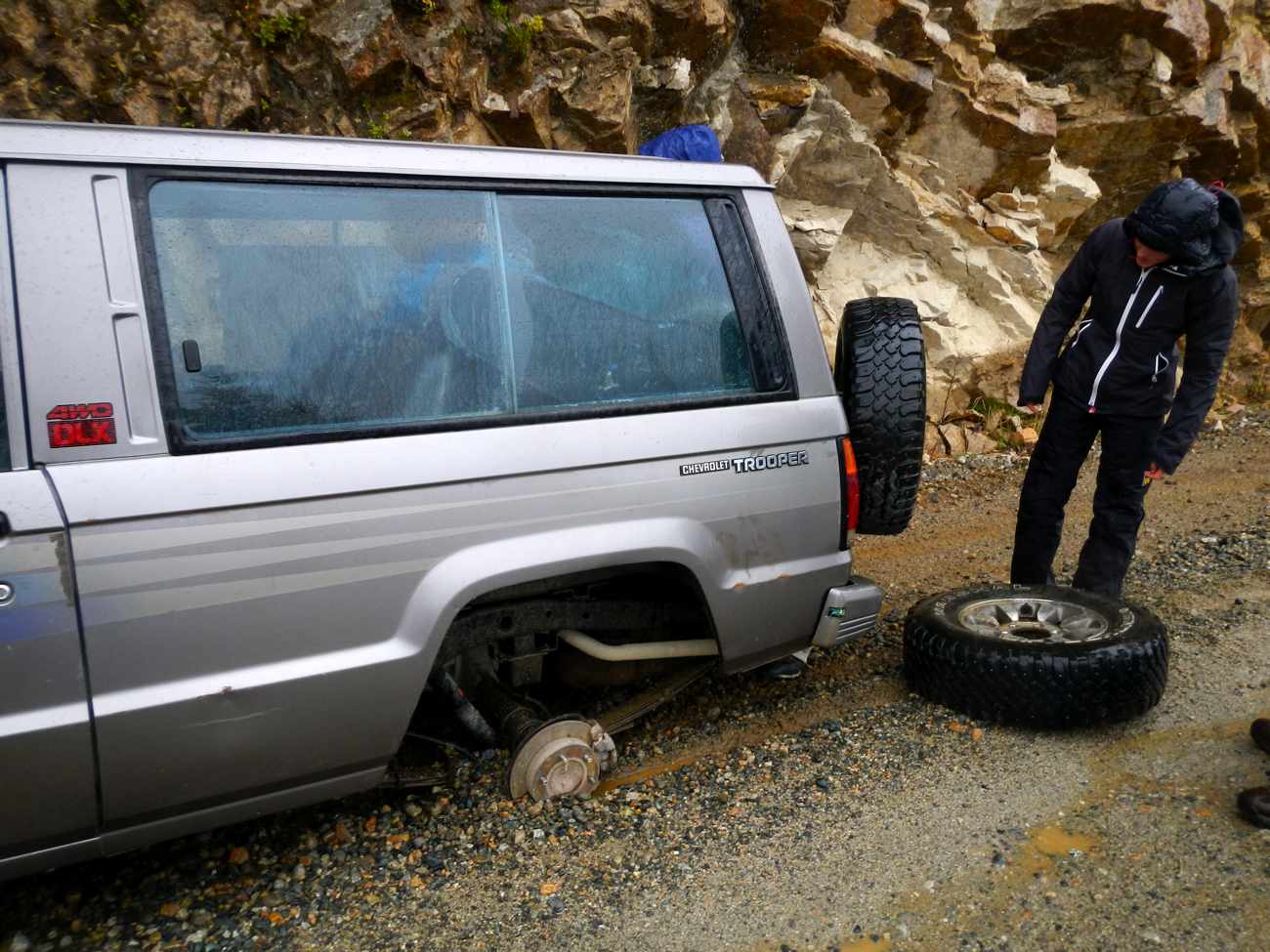
That afternoon we drove through a downpour and snow towards Puerto Tranquillo, a small town on the shore of Lago General Carrera. Almost three hours in, one of the tires from the Super Trooper rolled off. Our very capable instructor Fernando, shaken but not stirred, guided the vehicle to the side of the road. Some helpful truckers informed the rest of our caravan of the incident. Within twenty minutes we had collected the rouge bolts, but were experiencing some difficulty with the car jacks. Luckily, two Israelis and some police officers stopped to help, and the Super Trooper was rolling again in about an hour.
Still, because of this setback, we arrived in Puerto Castillo after the regular public campgrounds had closed. The instructors attempted to remedy the situation while the students, happy just to be dry, ate empanadas in Marisol’s restaurant. At last Kari, Ryan, and Fernando managed to contact Don Juan, who lent us his woodshed, where we overlapped our mats and slept warm and squished. We spent the next morning getting the trucks checked out (we awoke to a flat tire), eating at Marisol’s, and exploring the rocky shoreline. In the afternoon we drove a gorgeous tourist route, admiring and photographing about thirty waterfalls, fifteen species of birds, two lakes, and a bright blue glacier. We returned to Marisol’s for roasted chicken and rice, then walked to our new camp in one Don Manuel’s backyard.
The next day, we finally headed to the Chacabuco Valley, where we will spend the remainder of the semester. Along the way we stopped to add new species to our lists.Our route first followed the shore of Lago General Carrera. About twenty minutes after the lake ended, we began to see HidroAysén’s billboard propaganda. Soon after, we reached the beginning of the Rio Baker, the glacier-fed neon turquoise river that the electricity conglomerate HidroAysén wants to dam. We paused to skip rocks and marvel at the color (seriously, it’slike “blue-raspberry”-flavored candy) and force of the water. Our next stop was the confluence of the Rio Baker and Rio Neff. At this site, our picnic lunch grounds, the Baker rumbled down a waterfall before blending with the dull green Neff. The sight, sound, and feel of the river confluence reinvigorated our team.
)
)
As we neared the Valley during the final leg of the drive, our excitement grew. When we turned off the Carretera Austral and on to the road to Conservación Patagonia’s headquarters, we immediately started seeing guanaco everywhere. We also observed a watering hole with about fifty birds. At the headquarters, fancy new visitor buildings were under construction. We drove a further down the road to our first basecamp, a field of grass with a few shelters and an unfinished bathroom. It’s the posh life. Within minutes we established ourselves and our tent city, surrounded by the wild Patagonian landscape.
Since our arrival, we have toured parts of the Valley by car, worked on our journals, and started classes. The muffler on one of the vehicles broke. Nights are cold, but days in the glorious sunlight are warm. A guanaco herd visits our campsite daily. One night, we called to an Austral Pygmy owl that continuously zipped over our heads. A Southern Lapwing laid three dark-green spotted eggs in a nest in the middle of field; she and her mate guard them from Black-faced Ibis and Guanacos. One afternoon, we met with Dago, the park superintendent. He spoke to us about the government policy and controversy involved in the formation of the future National Park, before inviting us to enjoy the first lunch served by the new visitor restaurant. We all feel so lucky to be living and studying with friends in Patagonia. Tomorrow we begin our first true backpack, to scout the lakes where we will do our bird surveys. We look forward to showers and a functional bathroom upon returning; perhaps you can look forward to another blog post!
)
)
)
)
Blog entry by Adele Daniel (Carleton College ’14)
Photos by Colin Cummings (Colby College ’14)