
By Bailey Fuhrmann of the University of Puget Sound
On October 3rd we left for Valle Chacabuco to conduct guanaco (Lama guanacoe) research for the week. The goal of our research was to map the extent of guanaco and estimate the total population size in Patagonia National Park. Round River has been conducting this research every Fall and Spring semester since 2015, so we were able to add our research to this collection of data and continue to critically analyze the guanaco demographic trends over time. The research methodology has changed over time to more effectively gather accurate data on the population.
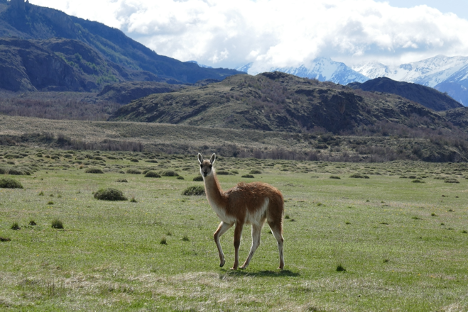
In 2019, Round River began conducting walking transects. These consisted of groups walking North or South on transects that are two kilometers apart from each other. We continued with this methodology, completing 18 walking transects traveling North and South at each as well as a few trails and one driving transect out the East side of the valley to the Argentina border. Our first day in Valle Chacabuco was spent training on the research methodology to achieve the most consistent data throughout the week. This included learning how to use a GPS to follow a transect directly North or South, which presented some intense mountain climbing and bushwacking as we stayed on course. We worked on our compass and binocular skills as well.
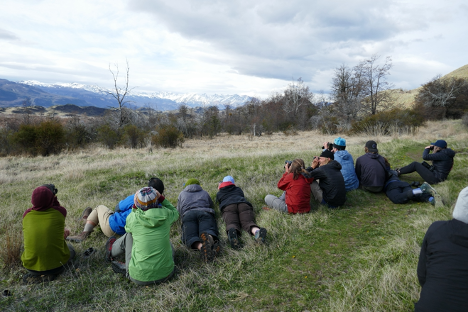
Our transects were spread out over the first four days of our time in Valle Chacabuco. We were fortunate to have the help of the National Forest Corporation (CONAF), Explora, and Rewilding members while collecting our data. They met us each morning to walk the transects, and it was a fun opportunity for us to practice our Spanish.
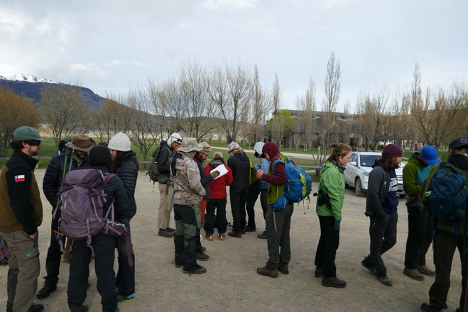
It was wonderful having their help navigating the Patagonian steppe and locating and identifying details about the guanaco. Each time we saw a guanaco we recorded the time, trip odometer, GPS coordinates, distance from observers, direction from observer, total number of guanaco and age of the guanaco. The transects ranged from seeing no guanacos to over one hundred guanacos. In total, we collected data on over eight hundred guanaco across the four days of surveying. Another aspect of our research that was new this semester was surveying for domestic animals, like cows and horses. This ties into the history of the valley that we learned about throughout this trip. Before the land was purchased by the Tompkins and turned into Patagonia National Park, it was prime grazing land for ranchers in the area and had a lot of value to the local people. Today, people are still grazing their cows on the land, so we collected this data to help the park gather data to determine management techniques. We counted over three hundred domestic animals, most of which were cows.
While we conducted our research in the field, we continued with academic work. Part of our field methods class includes completing daily field journals and a Grinnell research journal on each trip. Our field journals consisted of our observations throughout each day and theories about patterns in the landscape and about species. These ranged from discussing the guanaco in the habitat to the geological formations seen to what new plant and bird species people saw. The Grinnell journal is a field journal that requires intricate detailing of every aspect of the day. When people were “Grinnelling”, notebooks would be out the entire day to take notes on each habitat, plant, mammal, and bird observed as well as all other observations. All these notes were then compiled into an extremely detailed field journal focused on an examination of natural history and environmental patterns. These journals were great opportunities to learn about the flora and fauna and natural history of the area. This trip was an exciting introduction into conducting research and made us all excited about the upcoming research projects!