by Wren Garrison, of University of Vermont
Sky Island Borderlands Student Program Spring 2021 – WEEK 1
Photos by Perrin Milliken.
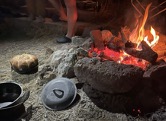
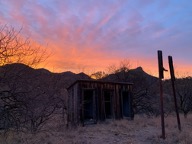
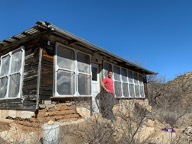
From the first moment I stepped foot in the abandoned old mining town of Ruby, my home for the next three months, I knew a new chapter in my life had started. This chapter was undeniably one outside of my normal comfort zone, but I could not resist the feeling of excitement and adventure to come. The terrain and ecosystem – so different and unusual to my east coast bones – of dry grassy ground cover, mesquite trees, and succulents, was paired with the dry air that warmed so quickly by the sun in the day and cooled just as rapidly as the sun went over the horizon at night. The cyclically transitioning temperatures are a relief in the morning and evenings, as I am always ready for the intense warmth of the sun after chilly nights and compromisingly eager for the nippy night air after the hot days in the throbbing sun, coupled by a fire3 to talk, eat, and laugh around. In three days, my skin had tanned and leathered in the bright, relentless sun (note to self – wear more sunscreen!) and I found myself diving into the second Ruby Lake to rinse off and cool down every time I had the chance.


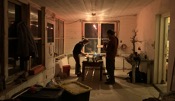
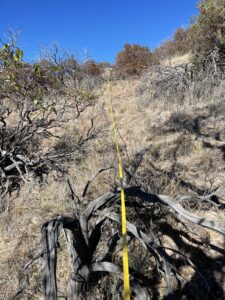
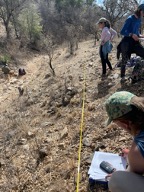
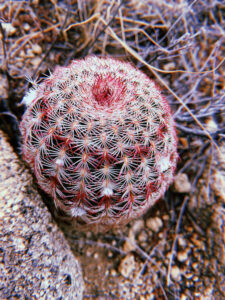
Once we had all received negative COVID tests after a week of classes2, social distancing, and learning about the history1 and biodiversity of our new base camp at Ruby, the team of six Round River students and our two fearless leaders, Eli Brunner and Ben Szydlowski, headed to the field to record data on the vegetation along the border4 for the Sky Island Alliance (SIA). We met up with two of the SIA staff, Bryon Lichtenhan and Zoe Fulem, who proved to be extremely valuable resources for vegetation identification and data collection protocol. While in the field, we learned the specifics on how to take transect data, use a compass properly, stay organized while in the backcountry, perform maintenance checks on camera traps, and endless information on the wildlife in the ecosystem we are inhabiting. Some of my personal favorite organisms thus far are the Arizona rainbow cacti7 and the Coue’s white-tailed deer6.
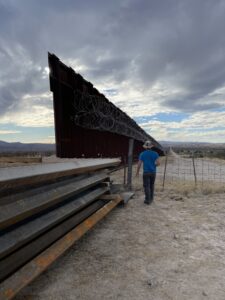
This semester with Round River is lush with opportunities: to learn, to explore, to push my comfort zone, and to challenge my perspective on globally relevant issues of immigration and the conservation of biodiversity in threatened areas. The most heart-wrenching moment of the first week and a half in the Sky Island area was the up close and personal interaction we had with the border wall5. Considering the widespread impacts of such a rushed and expensive project is a tough cookie to chew on, but it is important internal work for every citizen of the United States. I am proud to be one of the students working on collecting data that will assist the Sky Island Alliance with their efforts to advocate for the removal of the most damaging sections of the wall, which block valuable wildlife corridors for the birds and mammals of the area, including Ferruginous Pygmy Owls, Elf Owls, mountain lions, ocelots, jaguars, and the white-nosed coati, amongst a total of 30 mammal species, 48 bird species, and 28 insect/reptile species. This week on the ground, we learned that the federal US government waived 41 laws that protected public lands and endangered species in order to rush construction, and saw how the completed sections of the wall were built in a way that did not account for monsoon floods. Poor engineering will almost certainly create wall failures in the sections that are built over unconsolidated fill in washes that will flood during the monsoon season that occurs once a year.
I could not be more committed and passionate about the work that our group of Round River students and leaders are putting into the basecamp at Ruby and surrounding borderlands. The partnership with Sky Island Alliance is both inspirational and full of mutual respect, appreciation, and shared knowledge. I am grateful to be a part of a brand new program at Round River Conservation Studies and cannot wait for the rest of the semester to unfold, watching our hard work manifest into useful scientific journals as well as honed field research and backcountry survival skills.