
by Hannah Thorne, University of Vermont
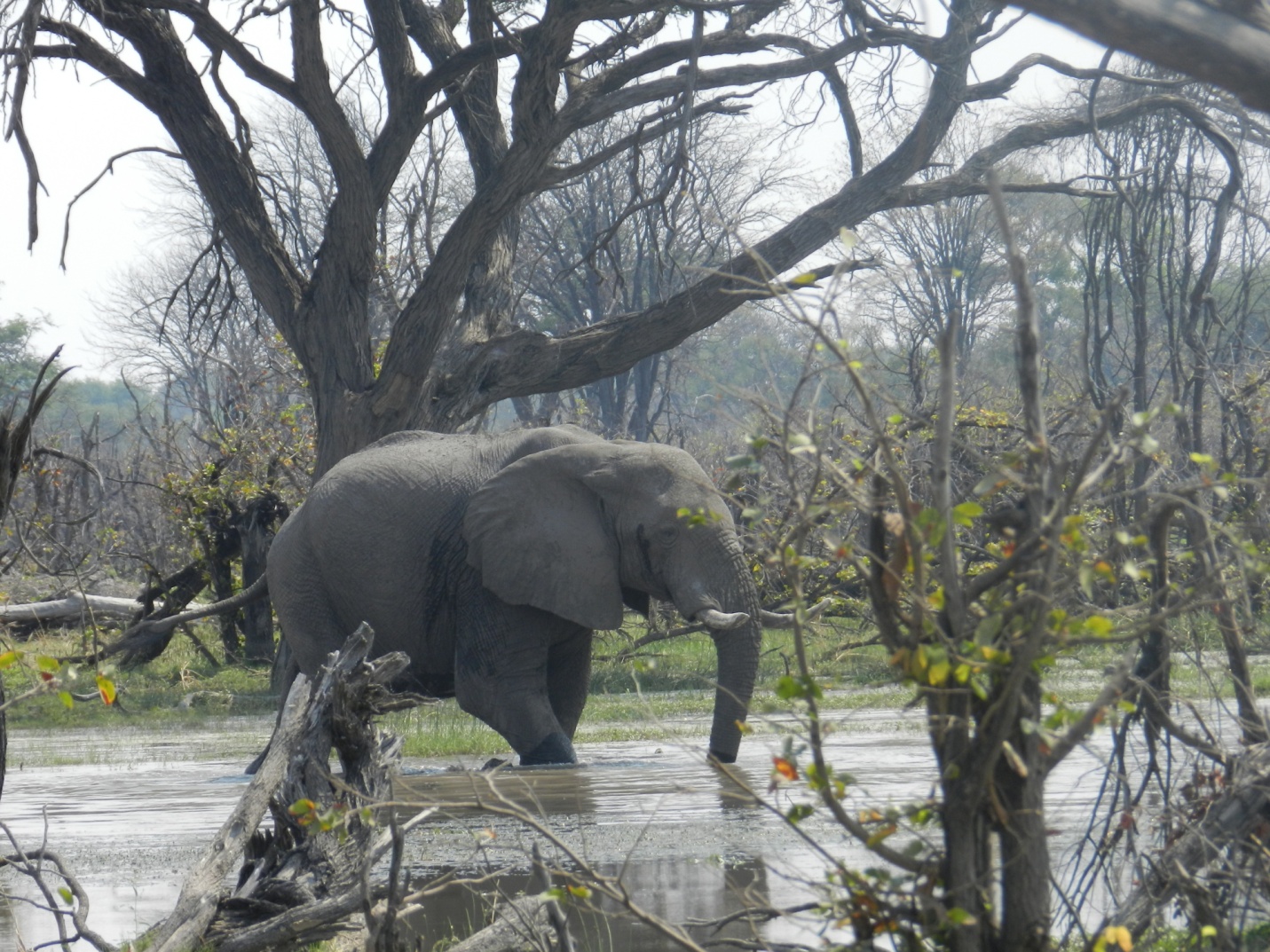
Adult elephant wading in the water by Mababe on the drive into the bush
After a tiresome, day-long cross-continental journey, nine weary travelers stepped off the last of three plane rides into week one of our Botswana adventure. We began our journey at a poolside paradise: The Island Safari Lodge. Nestled in Maun by the Thamalakane River, our first campsite offered us a chance to settle in to our new tent homes and enjoy the luxurious amenities of having hot showers and toilets. After learning the ropes of the camp-lifestyle, and all the duties expected of us, we began our classes. Class is a little different when you don’t have a classroom to keep you focused. There is certainly a learning curve to honing your attention away from mischievous Vervet Monkeys raiding the camp and squirrels alarm-calling for no apparent reason. With that said, the outdoor classroom setting of thirteen chairs arranged in a circle is very conducive to open discussion of the topics we are learning about, and is quite refreshing. And so, with five days under our belt we broke down our campsite and headed out to the bush.
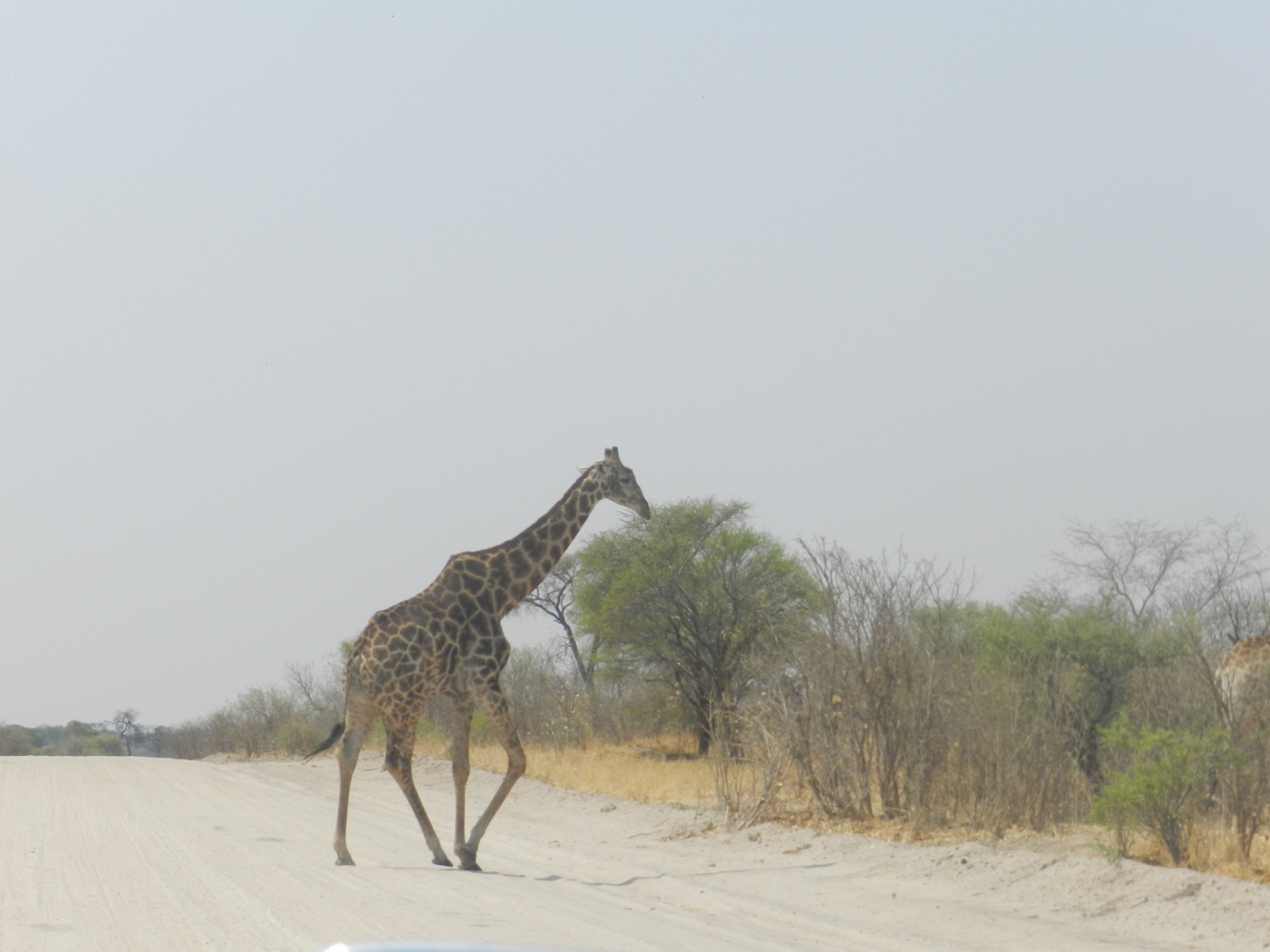
The first giraffe sighting along the way
Four hour car rides are exceptionally exciting with all the sights to be seen in Botswana. Eager to get our first glimpse of the wildlife, we sat with eyes glued to the horizon, and low and behold the first creatures to welcome us were the majestic elephants. They peered out from waves of golden grasslands and brought each of our three cars to a halt. Little did we know this was only the beginning. The coming hours brought sights of ostriches, impalas, steenboks, zebras, hippos, crocodiles, waterbuck, and ever-so-graceful giraffes (yes, I cried when I saw these guys). After arriving at our campsite in Concession NG19, we took our place amongst the wildlife. It was here that we set up our new home for the next nine days. But the excitement didn’t stop there. Once our camp was made, we heard word of a pride of lions on a fresh kill only about 5 km away from where we were staying. As the sun was setting, we spent our evening watching three males and one female tearing apart a giraffe by the waterside.
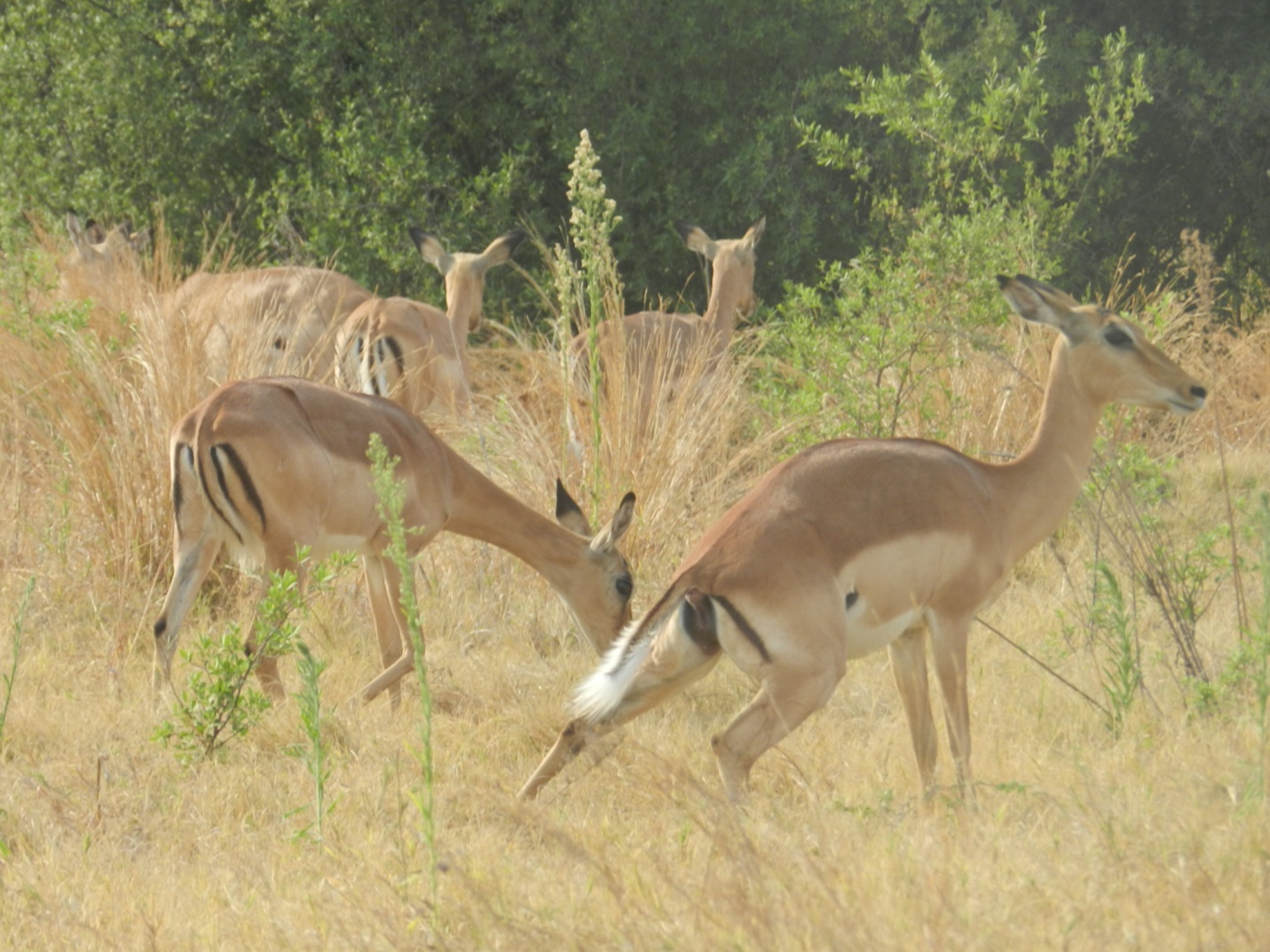
A herd of female Impalas. Here you can see one of them pooping
The next morning, data collection on our designated transects began bright and early at 6:00 a.m. This entails getting up at 5:30 to check the research box and make sure we have all the necessary data sheets and equipment that we need. We then drive along a road, looking out all the windows for any large herbivores, predators, or birds of concern. Once spotted, we stop the car and record the animal’s distance from the transect, angle from north, age, sex, and how many individuals there are along with accompanying GPS coordinates. After finishing the transect, we drove back to the sight of the lion kill to see the pride during the daytime. With full bellies, most of them were relaxing happily in the shade nearby. However, the female lion was still feeding intermittently. She appeared to be lactating, and we surmised that she may be hiding cubs somewhere nearby. This fearless mama defended her kill from crocodiles creeping in from the river. With a morning full of more fantastic animal sightings, we headed back to camp.
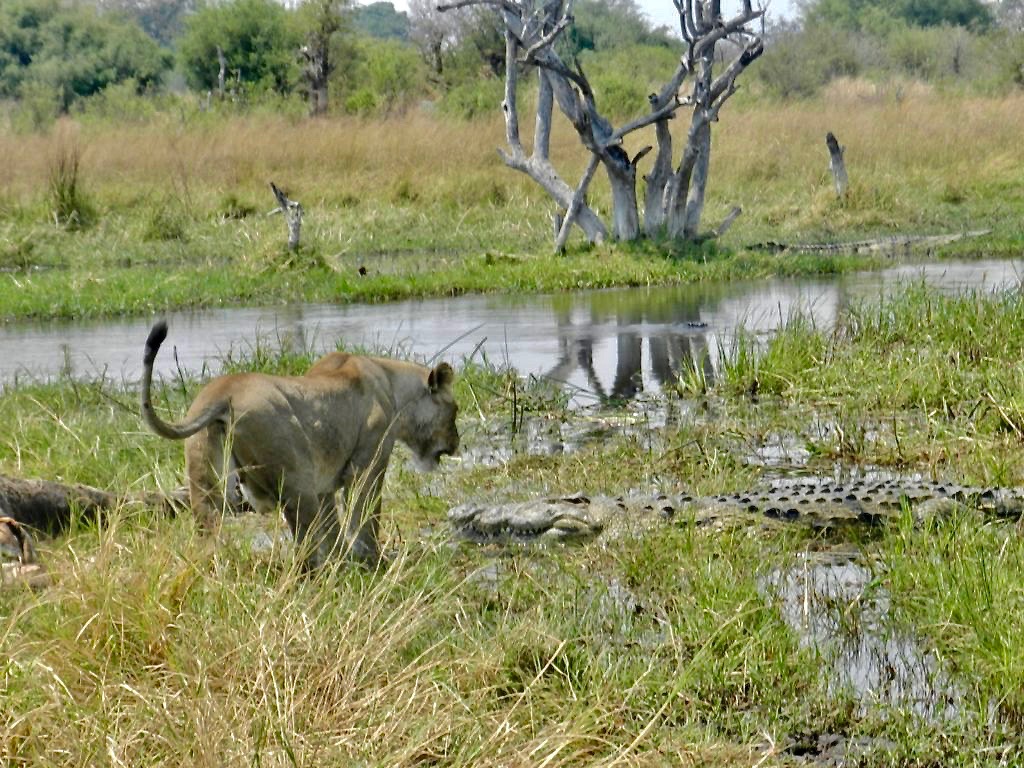
A lioness defends her giraffe kill against imposing crocodiles
Camp life in the bush is very different from camp life in Maun. You are dirty most of the time, although you can remedy this by taking bucket showers. The bathroom is a hole in the ground inside of a bush, and you can’t go on walks by yourself no matter the time of day. There is wildlife all around you at all times, and you must stay close by so you don’t stumble upon a hippo or a lion. All of these factors expedite the bonding process to say the least. With just over a week under our belts at this point, most of us feel like we have known each other for much longer. We are excited to continue in our adventure together and to learn all that we can about this special place.
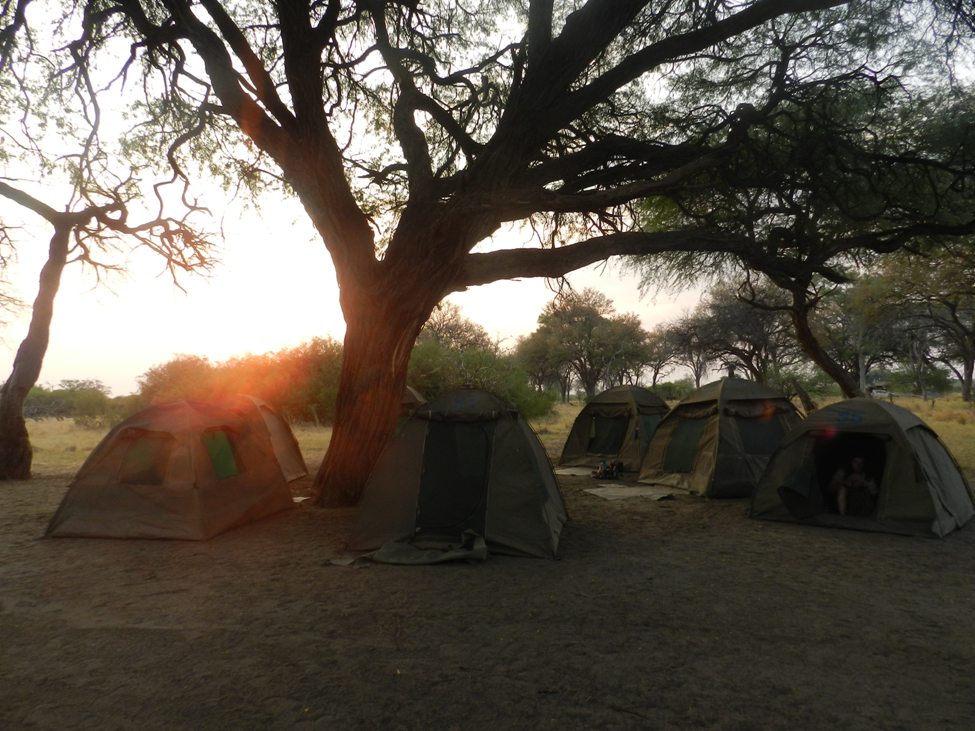
Our campsite set up in NG19