
By Sergei Bluman, of the University of Vermont
Round River Botswana puts students on the ground to immerse them in both the natural environment as well as the cultural and social environments in northern Botswana. We are learning about the natural history, culture, and some political science of Botswana, and how the natural sciences meet the socioeconomic and political standing that Matswana (people from Botswana) experience today. Community-based natural resource management (CBNRM) is the primary talking point that engages the issues of conservation in the context of rural communities in the Okavango Delta. To better understand how CBNRM works – and all its complexities – we are taught by Cosmos and Sixteen (Round River instructors from Botswana), meet and talk to local guides, and visit rural villages.
Having the opportunity to learn from Matswana people is an invaluable resource to the program. Simply by picking their brains or sharing a conversation you can learn a lot about what it’s like to live in Botswana – in all aspects. Cosmos and Sixteen have an ocean of knowledge into the history, economics, politics, culture, and language of Botswana.
Cosmos is a former governmental officer in the Department of Wildlife and National Parks, and he is always eager to teach us about the policies, problems (old and current) in conservation, and interesting experiences he’s had in the field and in government. Being in his 50s, he gives an in-depth view into Botswana’s political, cultural, and economic history – and it’s interesting to see the social and cultural differences between him and his younger counterpart.
Sixteen is in his 30s, and has lived between Maun (the largest city in northern Botswana) and Sankuyo (the rural village where he grew up) for years. He has a ton of field experience, and provides the knowledge and experience from the other side of the spectrum of CBNRM. As an important role in his community in the delta, he holds traditional ecological knowledge and understands exactly what rural communities need, do, and struggle with in relation to the wildlife that they live in close proximity to and monitor.
Both Cosmos and Sixteen have seen firsthand how changes in policy have affected the communities in the Delta, and how those impacts have brought Botswana to its current standing. Despite their differences in circumstance and generational nuances, they both hold their traditional culture close to heart, and teach and learn together through Round River.
Along our trips we have met various field guides who have assisted us on transects and in teaching species identification of vegetation, wildlife tracks, and wildlife in the Bush. In return, we taught them computer skills in a workshop and one-on-one tutorials. One of my favorite interactions was in Maun, a few weeks ago, at the Computer Training Workshop. There, I worked with Ron (the head escort guide of Khwai). After teaching him the Google Earth lesson, we did some general internet searches and started looking up different wildlife. His face lit up, and we had so much fun exchanging wildlife factoids, stories, and videos. It was really gratifying to see someone so bright to be blown away by the technology I have so readily available (that I often take for granted), and to teach him something in exchange for his guidance and knowledge in the field.
While staying in Kaziikini, Sankuyo, we were allowed to take a cultural tour of the village, where we learned about games that taught basic mathematics, spoke to a traditional doctor about medicinal plants, were shown how to make three traditional hunting traps, and participated in depictions of two ceremonies.
In the second ceremony, men from the village had to trot and dance around a girl ready for marriage to get her attention and offer gifts in affection. If she accepts a gift, she will be engaged and shortly after wed to that man. I had a lot of fun learning some of their traditional customs interacting with the locals – sharing songs and dances.
We recently stayed in Mopane Camp (a camp 20 km into the mopane woodlands in the far reaches of Sankuyo). A few days ago, Kaggie drove Emmie, Anna, and me through our transect, and back into the village to get more water for the group. Emmie, Anna, and I had the chance to play soccer with some kids in the road. The children were playing freely without a care in the world, and I quickly befriended the two boys as we showed off our soccer skills. At first they were shy, so I went to meet them by introducing myself in both Setswana and English. They introduced themselves, and we had fun trying the keep the ball away from each other – they all had big smiles on their faces and we shared many laughs. It was rewarding to hang out with them and they effortlessly made our day.
I hope to learn more from the people of Botswana, crack more jokes, exchange more knowledge and stories, and make more memories. All the guides, children, and teachers are so genuine, curious, friendly, and unique. I hope to share more together and they have made my time here so rewarding and memorable.
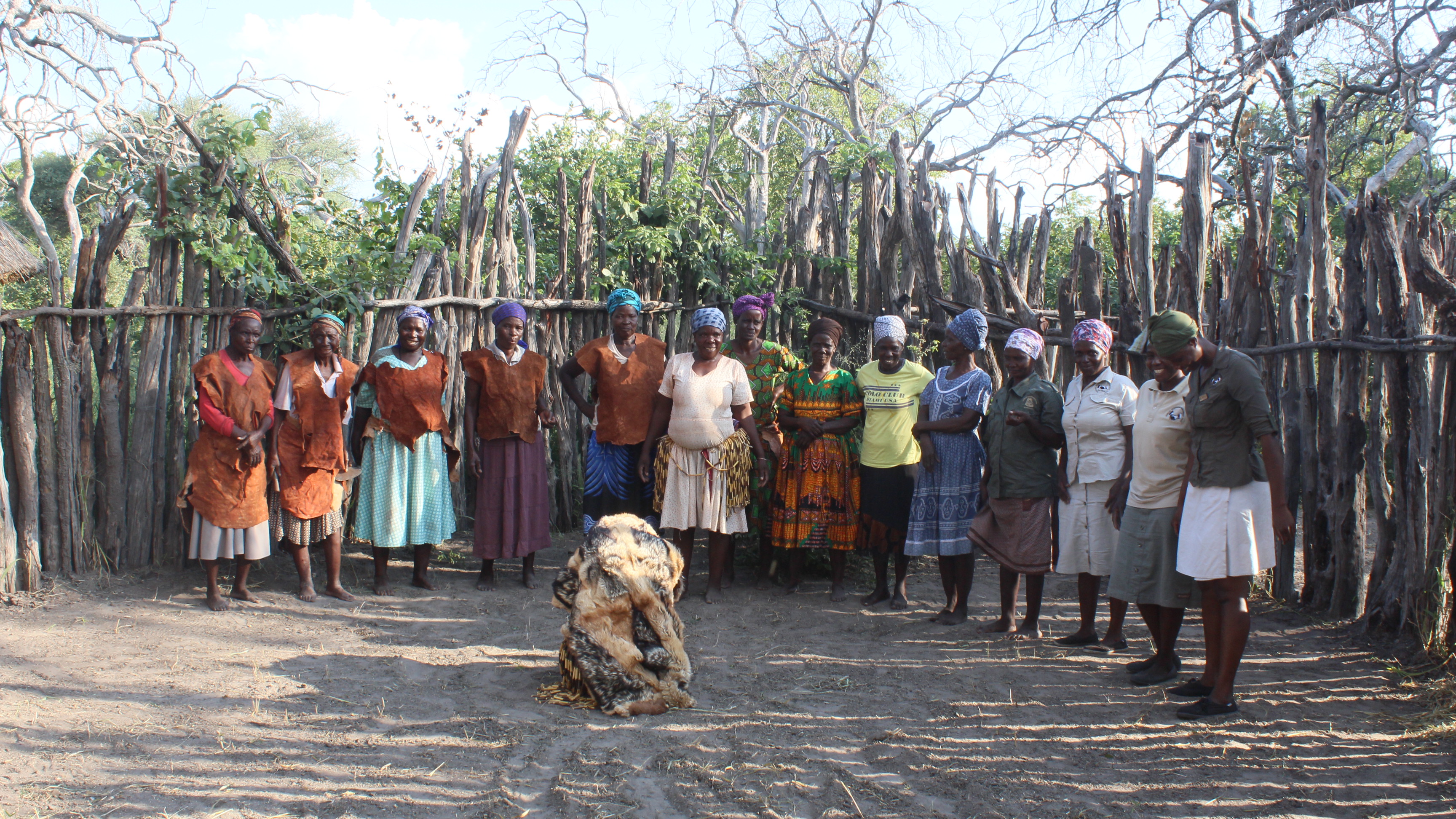
Women from Sankuyo after their dance performance in the Cultural Presentation organized by the Community Trust.
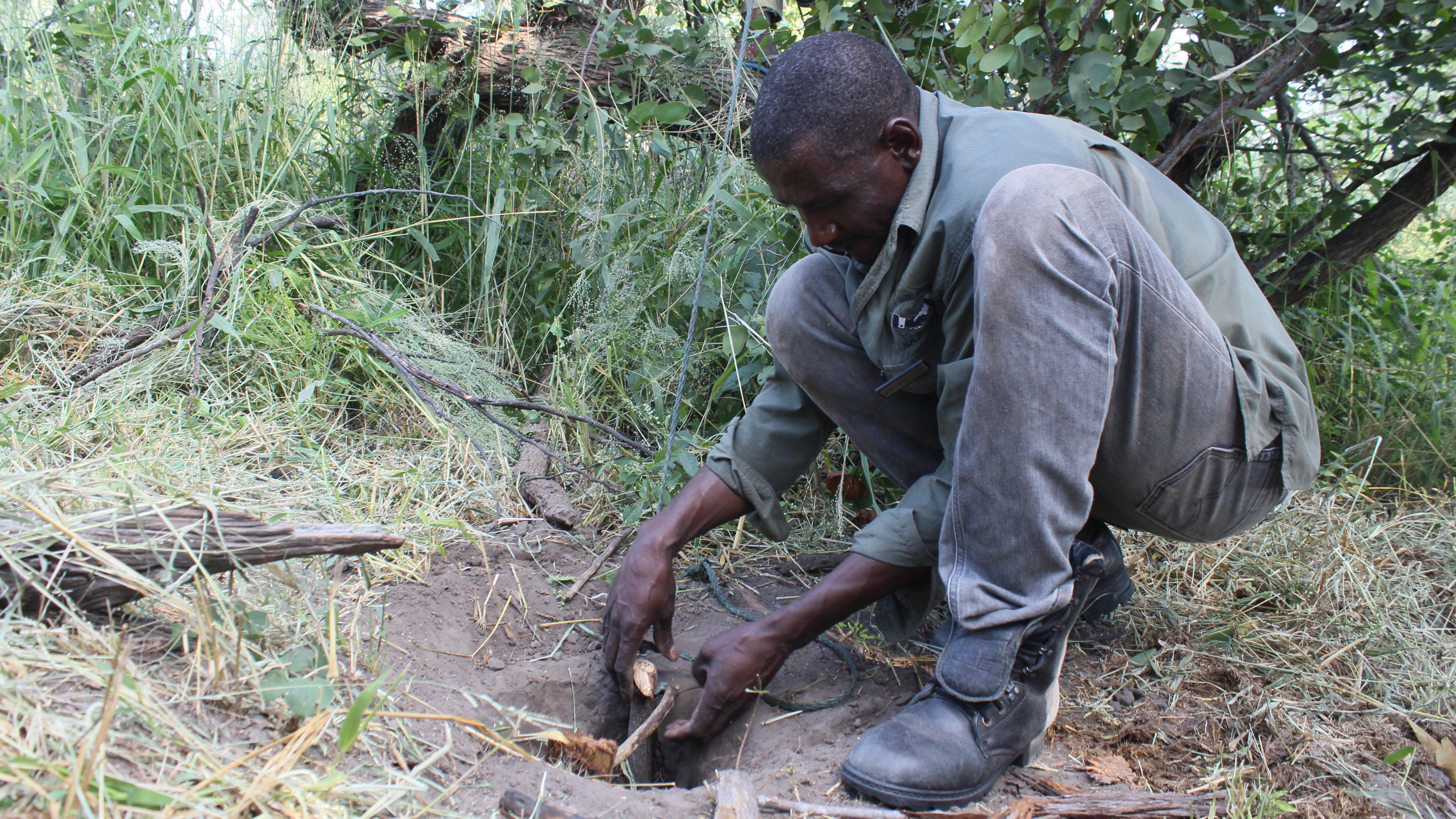
Innocent, a former escort guide, shows us how to set a traditional trap.