
By Paige Mathison, of Westminster College
I start my day waking up to the sunrise shining through acacia trees. I head over to the kitchen tent and grab corn flakes and peanut butter for breakfast. I sit and eat to the sound of birds calling all around me. After I wash my dishes, I prepare the data sheets and transect gear for the transect drive in the morning. Most importantly I grab the cookies for the drive and hop in one of our cars. We head out for our Transect around 6:15 am. Our drives typically have a Round River instructor, an escort guide, and two students. Every transect is different. Some are filled with dense Mopane woodlands and others have wide open grasslands and gorgeous running rivers. I’ve gone on transects where we don’t see a single animal and other transects where we fill up the entire data sheet with all sorts of different sightings. Transects are my favorite part of the day because the mornings are quiet and peaceful, and the animals are out enjoying the day as well.
Once we arrive at the beginning of the transect, we write down the date, time, weather, GPS point, and a few other details. Then we start slowly driving and searching for animals. We are primarily looking for herbivores, but we also have data sheets for birds of concern, opportunistic predator sightings, and a whole sheet just for elephants. As we drive along the transect route we stop whenever we spot one of these species and start recording data. First, I start a timer to record how long it took us to collect data for each species spotted, then we write the species name, initial count, sex, age, distance from road, direction from North, odometer, GPS point, vegetation type/habitat code, and the percent of animal covered. At each concession, we have three or four transects to drive and sample animals and we typically drive three replicates of each transect. On transect we see lots of Impala Aepyceros melampus, Elephant Loxodonta Africana, Zebra Equus quagga burchelli, and many other species. When our transect route comes to the end, we drive back to camp usually before lunch time.
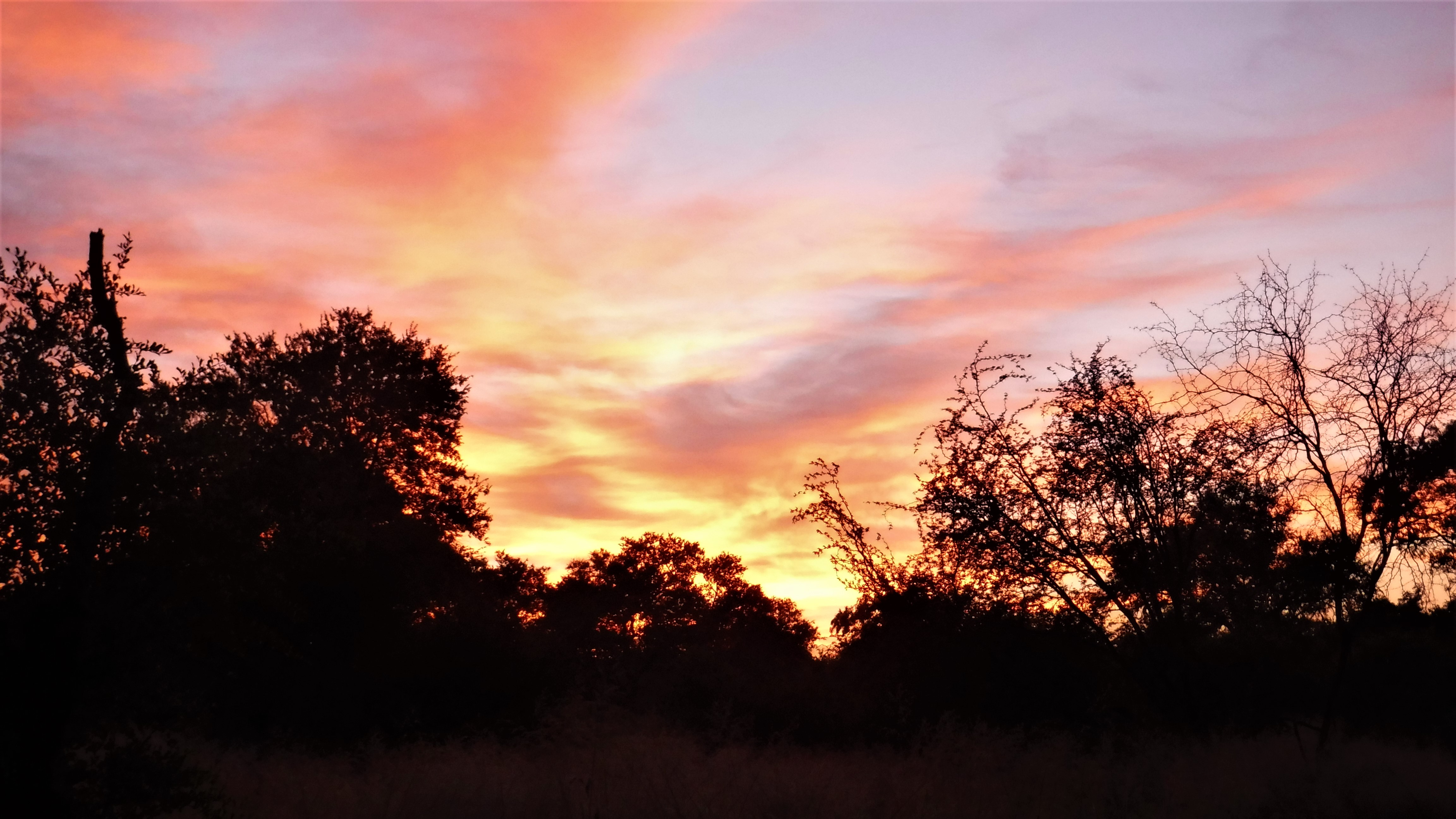
Sunrise on 19th of March before transect outing.
The three students that are on base or camp duty for the day, prepare and cook lunch. Some of the most common meals are rice, beans, pasta, potatoes, pap (maize meal), and lots of cooked vegies. After lunch, I usually have at least one class. Our classes include Conservation Biology, Natural History, Humans and the Environment, Community Based Natural Resource Management, and Field Methods. Sometimes elephants walk by our camp and interrupt class for a few minutes while we pause and admire them. Cosmos and 16 are teaching us Setswana. We use it often and try to practice basic phrases whenever we can. If we don’t have a class in the afternoon than we might have a nature walk or a species drive where we go and learn about trees, grasses, wildflowers, birds, tracks, etc. One of my favorite nature walks was a bird lesson our group did in Maun where we spotted and identified over seventy bird species within 3 hours.
There is always something to do at camp. I spend my free time playing cards, writing Grinnell journals or species accounts, reading scientific papers for class, entering transect data, working on camp chores, doing arts and crafts, and a few other things. Towards the end of the day the students on camp cook dinner before it gets too dark. After dinner we have a nice fire to all sit around and chat. Mmapula, one of the escort guides from NG19 taught our group how to make pap and bread. We make bread from scratch and cook it with the coals from the fire. On occasion we have also made pie and fried dough for dessert which is quite the treat. The stars are incredible here and I often sit and stare up at the night sky for a while every night. After I get ready for bed and climb into my tent, I fall asleep to the sound of hyenas calling in the distance.
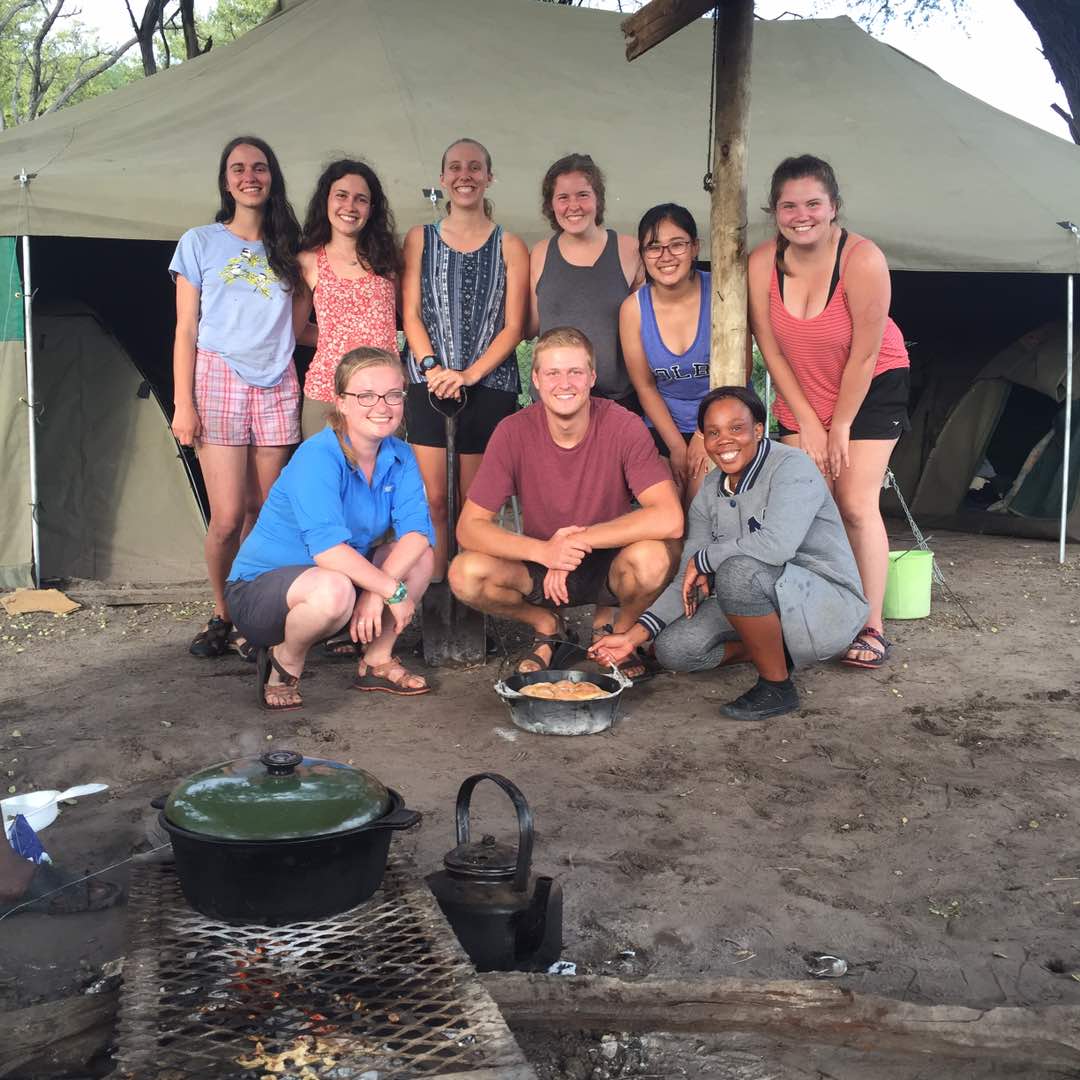
Mmapula and the Round River crew with delicious camp baked bread.