
Image 1: One of our only sources of light pollution in the bush. Photo by Sam Christopher.
By Sam Christopher, of the University of Vermont
As the rainy season has started to spare us from constant clouds and rain, we have started to be able to enjoy the stars. Every night in NG34 (Sankuyo) we have had clear skies which makes for the perfect times to stargaze. All of us find ourselves looking to the sky at night whether it’s while we’re eating dinner, sitting around the campfire, or even taking night time showers.
I am amazed by the magnitude of stars. Although I knew that there are more stars in the universe than all of the grains of sand of every beach in the entire world, it’s still unbelievable to see the millions of stars in person. One of the reasons I rarely see this many stars back home is from light pollution. Light pollution is when man-made technology such as street lamps or spotlights brighten the night sky which hinders our view of stars and planets. At home I rarely have the opportunity to see more stars than just the conspicuous constellations due to the increased number of lights. At night there are lights in houses, on streets, in parking lots, etc. The large amount of lights throughout our cities and towns in the U.S. takes away our opportunities to see the vast amount of stars in our night sky. In the bush our only lights are our campfire, flashlights, and headlamps which give us the chance to see the millions of stars and even the cloudy Milky Way which is fairly rare to see amongst the lights and technology back in the U.S.
Both familiar and unfamiliar constellations rotate through our sky. Canis Major which can be identified by the brightest star in our sky, Sirius, chases the constellations Orion, Taurus and the Pleiades into the western horizon. Every night when I look up at the sky I have the comfort of seeing Orion the hunter. Orion is the most well-known constellation in the northern hemisphere. Many people who know nothing about constellations can recognize the three bright stars in a row (Alnitak, Alnilam, and Mintaka) that make up his belt. Some people can go as far as recognizing the other prominent stars that make up the constellation of the hunter. Orion’s right shoulder is the star Betelgeuse which if it explodes (or possibly already has exploded and the light hasn’t reached us yet since we are so far away) would look like another sun in our sky from the light emitted. Rigel is another well-known star in this constellation which is his left foot. Just these few stars can help viewers to determine the general outline of Orion.
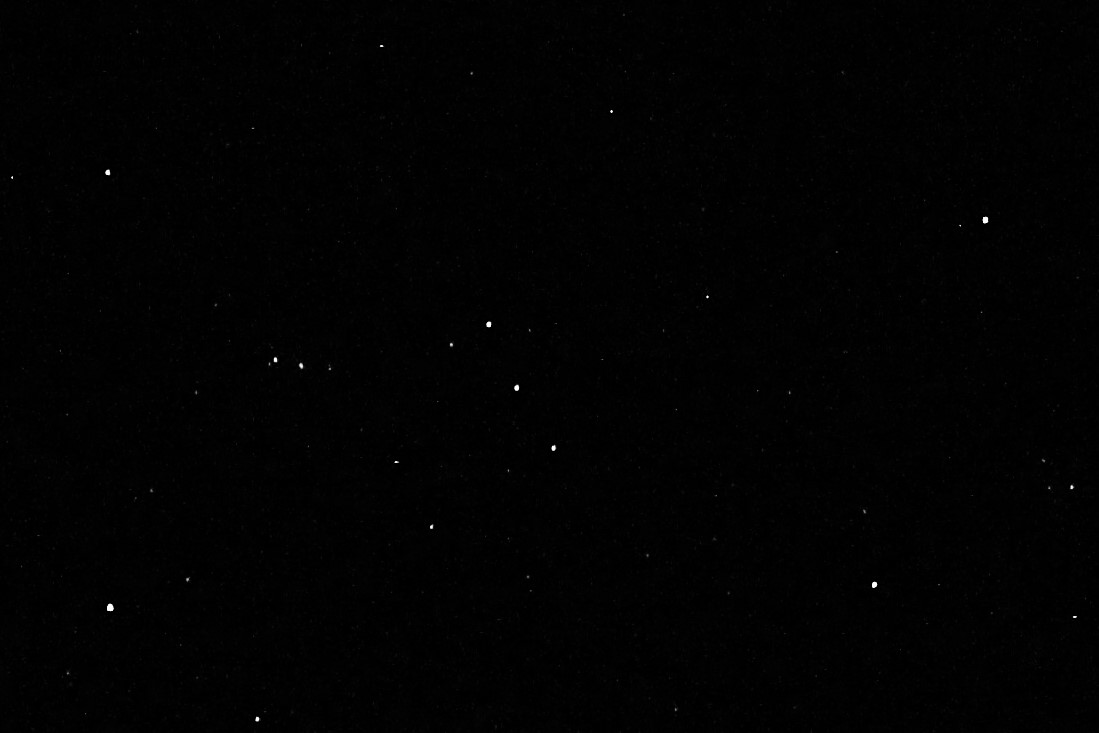
Image 2a: The constellation Orion the Hunter. Photo by Sergei Bluman.
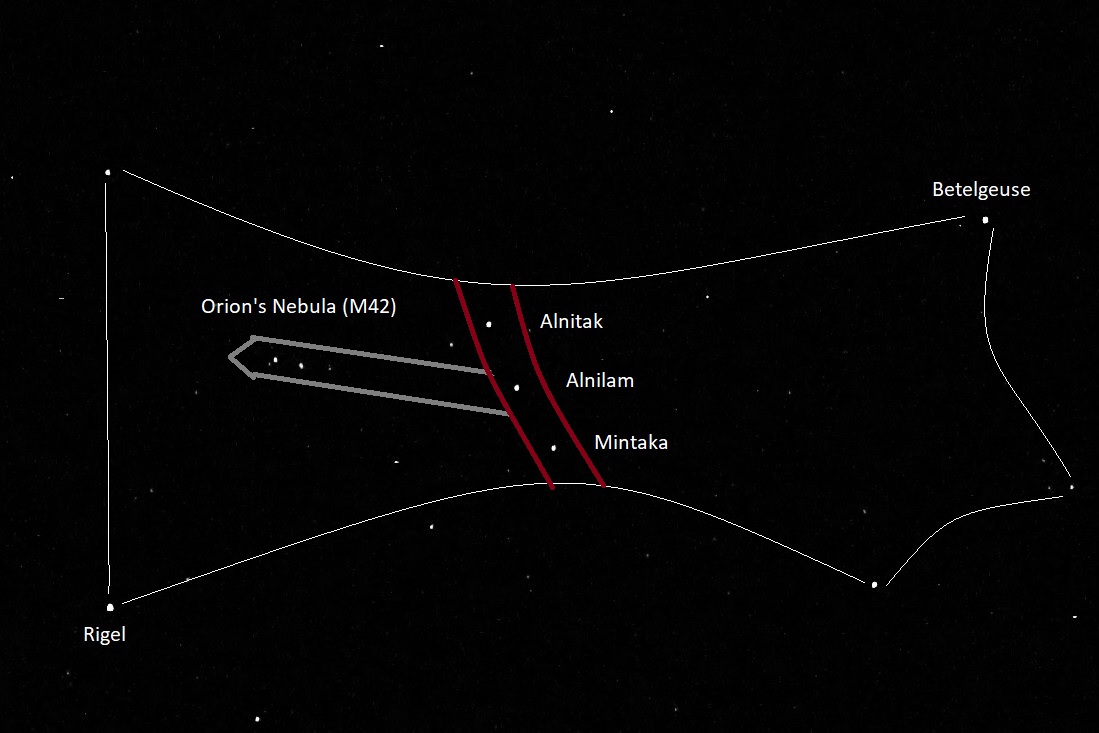
Image 2b: The constellation Orion the Hunter. Photo by Sergei Bluman.
In the northern hemisphere we can determine the direction of north based off of the constellation Ursa Minor, otherwise known as the Little Dipper. This constellation looks like a ladle with a curved handle. The star at the tip of the ladle is the star, Polaris, which is oriented in space directly above the North Pole. Since the Earth rotates around the same axis that Polaris is located it creates the illusion that all of the constellations circle around Polaris. Its stationary position allows us to use Polaris as an indicator of the northern direction. Although Ursa Minor and Polaris are not visible in Botswana since we are located below the equator, we can use the Southern Cross to determine directions. The Southern Cross appears as a sideways kite just coming above the horizon as the sun sets during this time of year. As the Earth continues to rotate throughout the night, more stars come into view. These include the stars α-Centauri and β-Centauri. To determine the direction, south, you have to draw two imaginary lines. One of these lines cuts through the top of the kite through the bottom of the kite (in our case through the furthest left star and past the furthest right star since the kite is on its side). The other imaginary line is formed by drawing a perpendicular line in between the alpha and beta stars below the Southern Cross. The point where these two lines intersect is the direction, South.
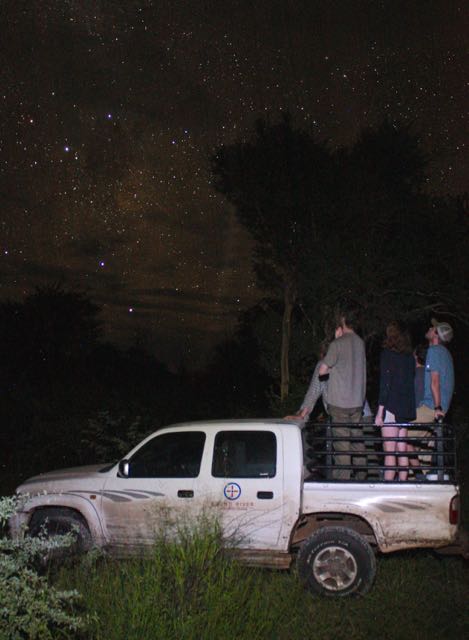
Image 3a: Students from a previous semester (Wet Season 2016) observing The Southern Cross constellation along with α-Centauri and β-Centauri. Photo by Kaggie Orrick.
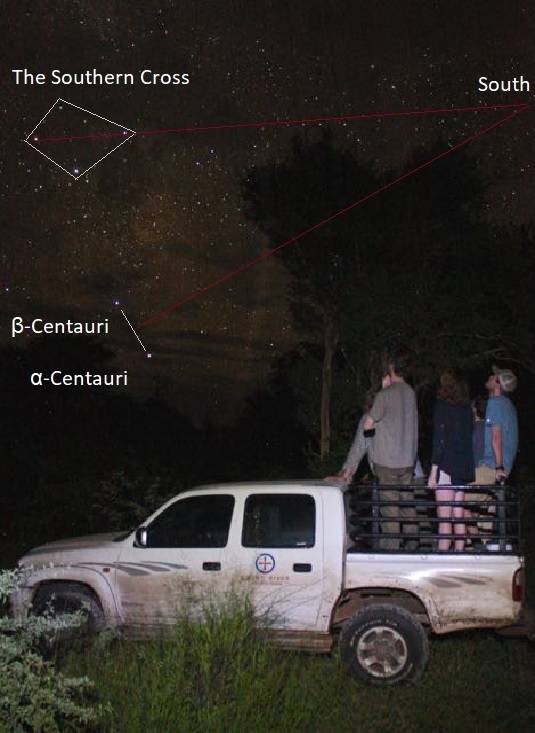
Image 3b: Students from a previous semester (Wet Season 2016) observing The Southern Cross constellation along with α-Centauri and β-Centauri. Photo by Kaggie Orrick.
Looking to the sky is both a comfort and a challenge. My favorite constellations from home give me a sense of security while the hundreds of new stars challenge me to learn the new patterns and constellations found in the southern hemisphere that I’ve never encountered before.