
Group of Oryx.
By Kristie Weeks, University of Vermont
A few years ago, I began trying to write one full page of things that I am thankful for each day. Last week, I took a break from homework and sat down in my hammock to journal one of these lists. I enjoy these, because they force me to take a step back and process my emotions, be more aware of my surroundings, and record the highlights and low-lights of life. Here is an excerpt of a list of things that I am thankful for in Botswana:
16/10/17 7:57 a.m.
‘Today:
Hugs. Deep sleep. Shade. That it’s only over 100 degrees for 9 hours a day and not 12. Lions. My hammock. The way my hammock sways in the wind. Lions roaring around camp. Learning what a lion track looks like from tracks 20 feet from my tent. Stargazing. Lions. The way the stars look through binoculars. That the light from even the closes star takes 2.4 years to travel to earth, so I’m looking into the past when I see a star. How immense the sky is. Lions. Back massages. Campfires. People who always speak their thoughts. People who are slow to speak and quick to think. Patience. The sunrise. Cold coffee and rusks for breakfast. Lions. Early morning transects. Lime, yellow, and dark, bright green grass. The way that the sun breaks up the grass into sections and gently lights up the fallen leaves. Lions. The way that I can’t see the wind but know that it’s there, because the Bluebush leaves are dancing. Bucket showers. Elephants who hang out by camp and look like they’re smiling when they sleep. The people here (Kaggie, Samara, Sixteen, Sam, Addy, Amber, Katherine, Caroline, & Lori). People that I miss and love back home. That I am able to miss because I have people that I love. Unknowns about what life will be like when I return. Peace. Raindrops that bounce on my head. Lions.’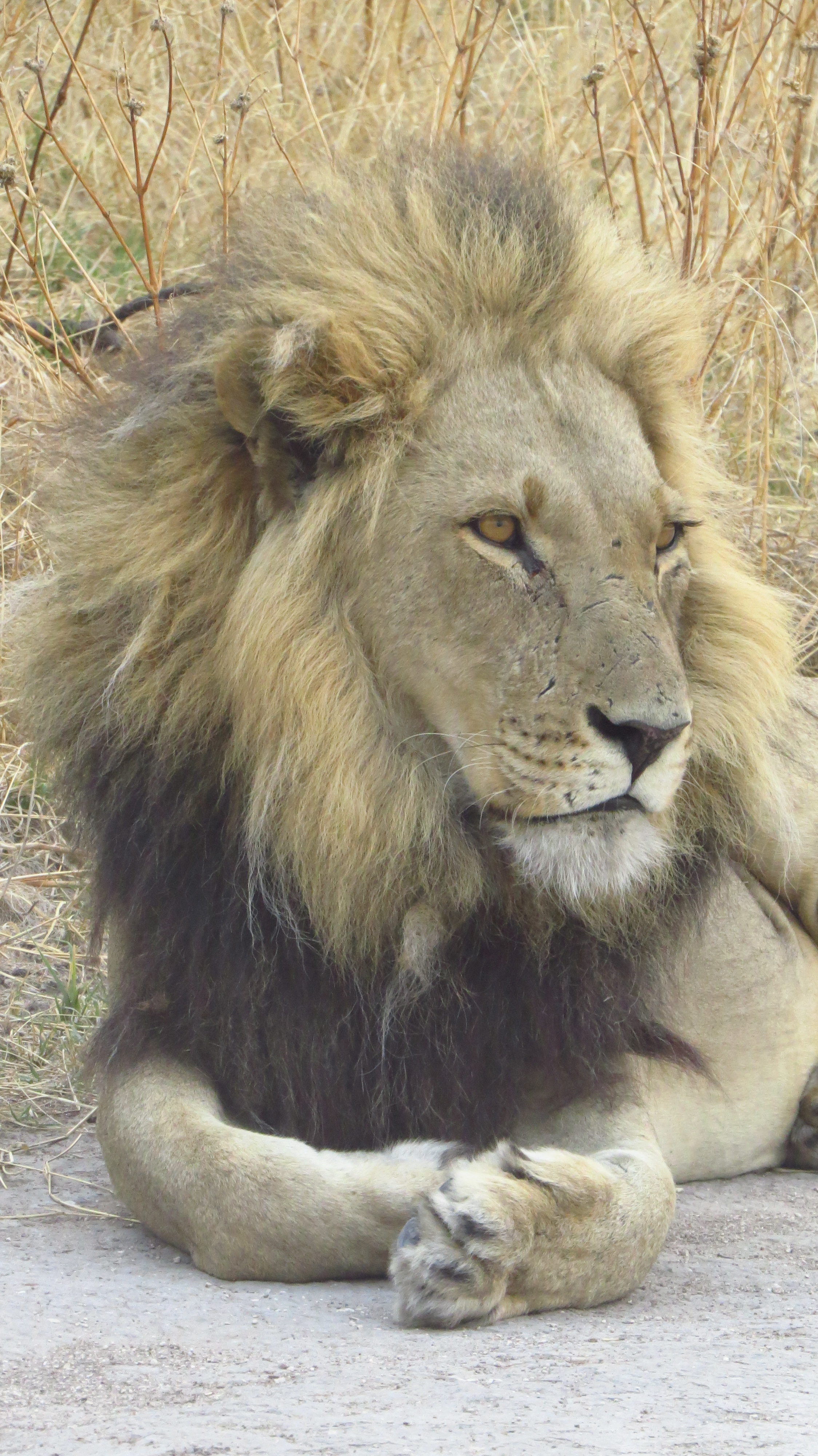
Though each of these items has a story behind it, I’d like to focus on one and tell you about how we stumbled upon a pair of incredibly handsome male lions. Last week, we drove about 9 hours to the Central Kalahari. Our days consisted of going out on drive in the cool of the morning and evening to see wildlife and hunkering down to work the rest of the day when it was about 110 degrees Fahrenheit and animals were inactive. Drives through the Kalahari were always breathtaking, and sightings of oryx, bat-eared foxes, black-backed jackals, and springboks pronking were common in the area.
Most of all, we were excited to see cheetahs and lions. We kept asking our instructor, Kaggie, to show us cheetahs so we knew that we were in for a treat on our first evening drive when Kaggie leaped onto the side of the jeep, whipped out her binoculars, and started jumping up and down. She began excitedly making jumbled statements, handed her binoculars to one of the students and jokingly said, “You’re welcome!”. Everyone quickly scrambled to get a better vantage point. About two football fields away, three gorgeous cheetahs lounged in the grass. Even from a distance, we could see how lean and muscular they were and how their striking coats effectively blended them into the landscape.While returning to camp, we ran into tourists who said that they watched the cheetahs stalk then successfully chase and kill a springbok! After seeing and hearing how powerful these animals are, we were astounded to learn that cheetahs are one of the lowest cats on the food chain because of their delicate frame. If cheetahs and lions meet, lions will steal cheetahs’ food and sometimes kill them.
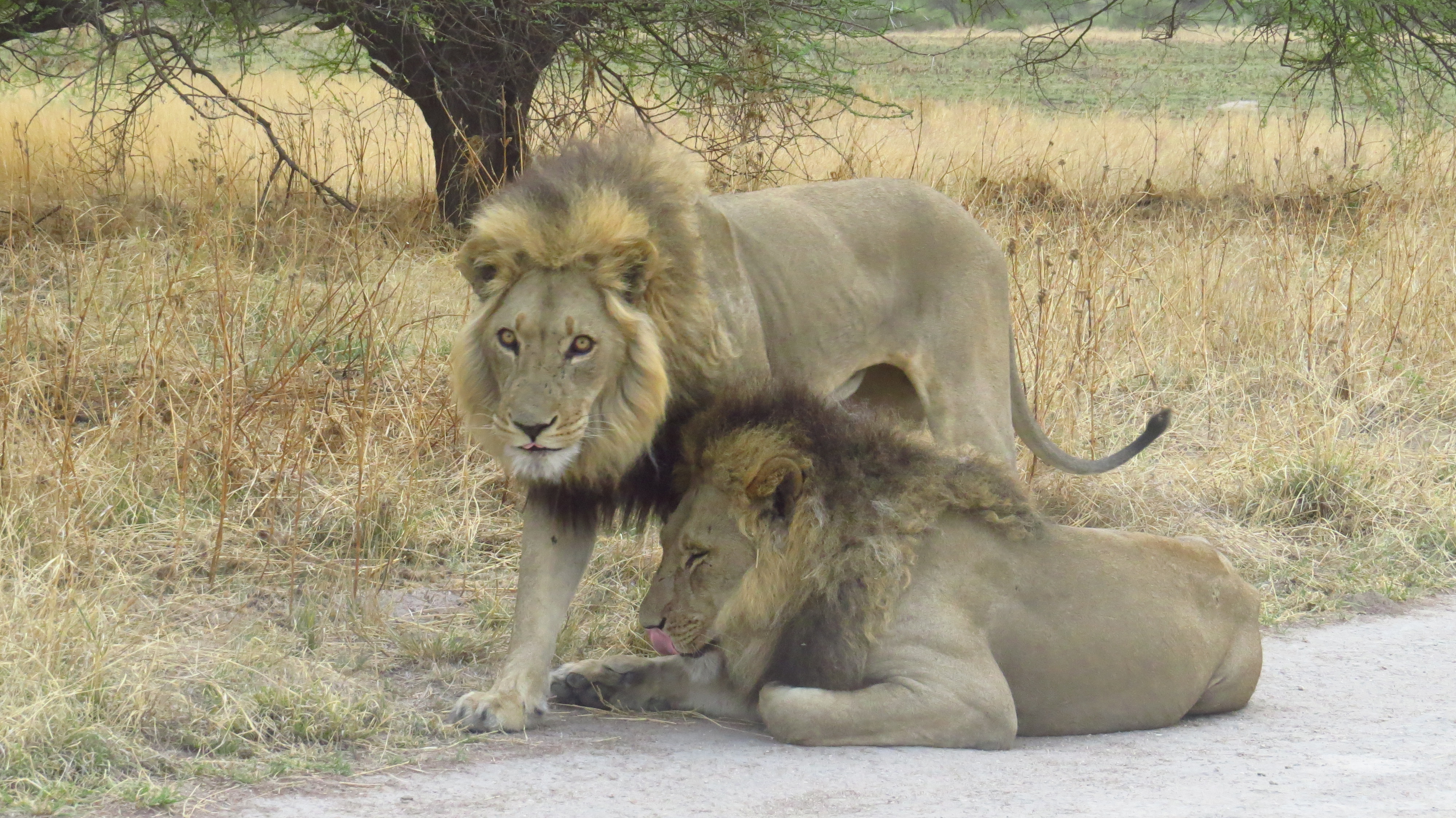 At five-thirty the next morning, we left camp in search of the cheetahs. As we passed the area where the cheetahs rested the night before, a curve in the road obstructed our view. When we came around the curve, a road block stopped us from continuing. In the middle of the road, two magnificent male lions sat staring at us! They were extremely healthy and probably in their prime, or about 6-8 years old. Their manes were darker than most of the lions we’d seen throughout the rest of Botswana, which is common for Kalahari lions. Scars covered their noses, their feet were fuzzy and large enough to easily swat down prey, and they observed us with intelligent eyes. We watched them in awe as they slept, stretched, and sauntered about 5 feet away past the cars. Once the bigger of the males’ pupils began to shrink, a tell-tale sign of annoyance and dominance in lions, we left the lions to enjoy their morning. As the sun peeked over the trees, we drove away with klebogile hearts- thankful.